

Finding the best business consulting partner can transform your organization from struggling to stay competitive into a market leader that consistently outpaces rivals. In 2026, businesses face unprecedented challenges and opportunities driven by artificial intelligence, rapidly evolving customer expectations, and market disruption across every industry. The most effective consulting engagements no longer simply provide recommendations; they build lasting innovation capabilities that enable organizations to discover new growth pathways and execute strategic transformations independently.
What Defines the Best Business Consulting in 2026
The landscape of professional advisory services has evolved dramatically. Modern consulting excellence requires three core competencies: strategic foresight powered by data analytics, practical implementation frameworks that deliver measurable results, and capability-building approaches that empower internal teams.
The best business consulting firms distinguish themselves through their ability to integrate emerging technologies into strategic planning. According to consulting industry trends for 2025 and beyond, transformational technologies like AI and blockchain are reshaping how consultants deliver value. This shift demands advisors who understand both strategic frameworks and technological applications.
Key Differentiators of Top-Tier Consulting
What separates exceptional consulting from mediocre advice? Several critical factors:
- Measurable outcomes tied to revenue growth and profitability metrics
- Innovation methodologies that uncover untapped market opportunities
- Training programs that build internal strategic capabilities
- AI integration that accelerates decision-making and execution
- Industry specialization combined with cross-sector insights
Organizations seeking the best business consulting should evaluate potential partners based on their track record of driving transformation, not just producing reports. The most valuable engagements create lasting competitive advantages through new product development and innovation capabilities.
Strategic Innovation as a Consulting Cornerstone
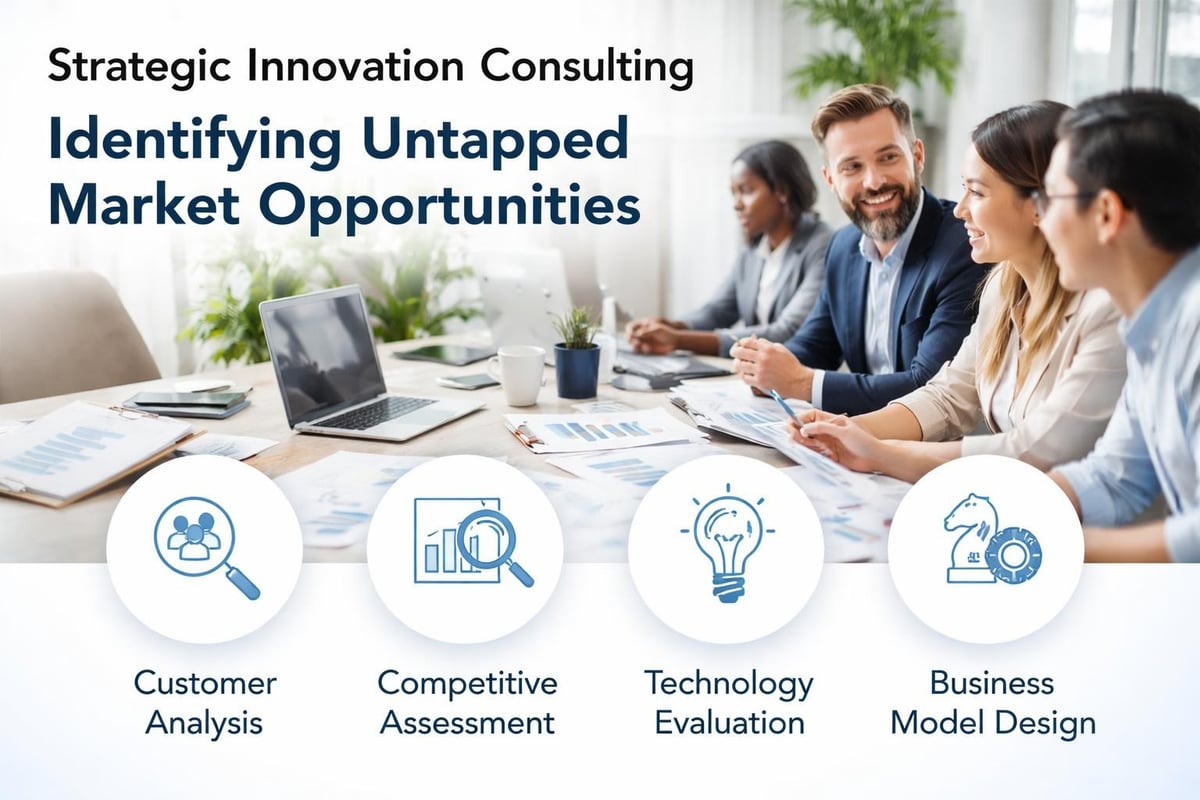
Strategic innovation represents the intersection of market opportunity identification and executable business model design. This approach moves beyond incremental improvements to discover fundamentally new value propositions.
The methodology involves systematic exploration of customer pain points, competitive blind spots, and emerging technology applications. Best-in-class consultants employ structured frameworks like Blue Ocean Strategy to help organizations escape competitive markets and create uncontested space.
The Role of AI in Modern Consulting
Artificial intelligence has transitioned from buzzword to essential tool. The growing demand for IT and software consulting reflects how organizations need guidance integrating AI into operations and strategy.
AI-powered consulting delivers advantages in several areas:
- Predictive analytics for market trend identification
- Customer behavior modeling for product-market fit optimization
- Process automation recommendations that improve efficiency
- Competitive intelligence gathering and analysis
- Scenario planning with greater accuracy and speed
The best business consulting engagements leverage these capabilities while maintaining the strategic thinking and creative problem-solving that only human expertise provides. Top AI consulting companies combine technological sophistication with deep industry knowledge.
Revenue Growth Through Strategic Consulting
Revenue acceleration requires more than cost-cutting or operational efficiency. Sustainable growth comes from discovering new customer segments, developing differentiated offerings, and building business models that capture value effectively.
Strategic consultants help organizations identify three critical growth pathways: market expansion through geographical or demographic reach, product innovation that addresses unmet needs, and business model transformation that changes how value is created and delivered.
| Growth Pathway | Strategic Approach | Expected Timeline | Risk Level |
|---|---|---|---|
| Market Expansion | Geographic/demographic targeting | 6-12 months | Medium |
| Product Innovation | New offering development | 12-18 months | High |
| Business Model Shift | Value creation redesign | 18-24 months | High |
| Customer Experience | Journey optimization | 3-6 months | Low |
These pathways often overlap and reinforce each other. Organizations pursuing the best business consulting should expect integrated strategies that activate multiple growth levers simultaneously.
Building Innovation Capabilities Internally
The most impactful consulting doesn't create dependency. Instead, it transfers knowledge and builds internal capabilities through training programs focused on strategy and transformation.
Capability-building programs should include:
- Framework training on proven innovation methodologies
- Workshop facilitation that generates real project outcomes
- Coaching support for internal innovation champions
- Tool implementation with ongoing guidance
- Performance measurement systems for tracking results
Organizations that invest in building innovation muscle reduce long-term consulting costs while increasing strategic agility. This approach aligns with trends toward empowering businesses to drive their own transformation initiatives.
Selecting the Right Consulting Partner
Choosing among consulting options requires careful evaluation of expertise, methodology, and cultural fit. The selection process should prioritize firms with demonstrated success in your industry and experience with challenges similar to yours.
Evaluation Criteria for Consulting Firms
Start by examining case studies and client testimonials. Look for specific, quantifiable results rather than vague success claims. The best business consulting firms showcase detailed examples of revenue increases, market share gains, or successful product launches.
Request information about their approach to different industries for consulting. While cross-industry insights prove valuable, sector-specific knowledge remains essential for understanding regulatory constraints, competitive dynamics, and customer behavior patterns.
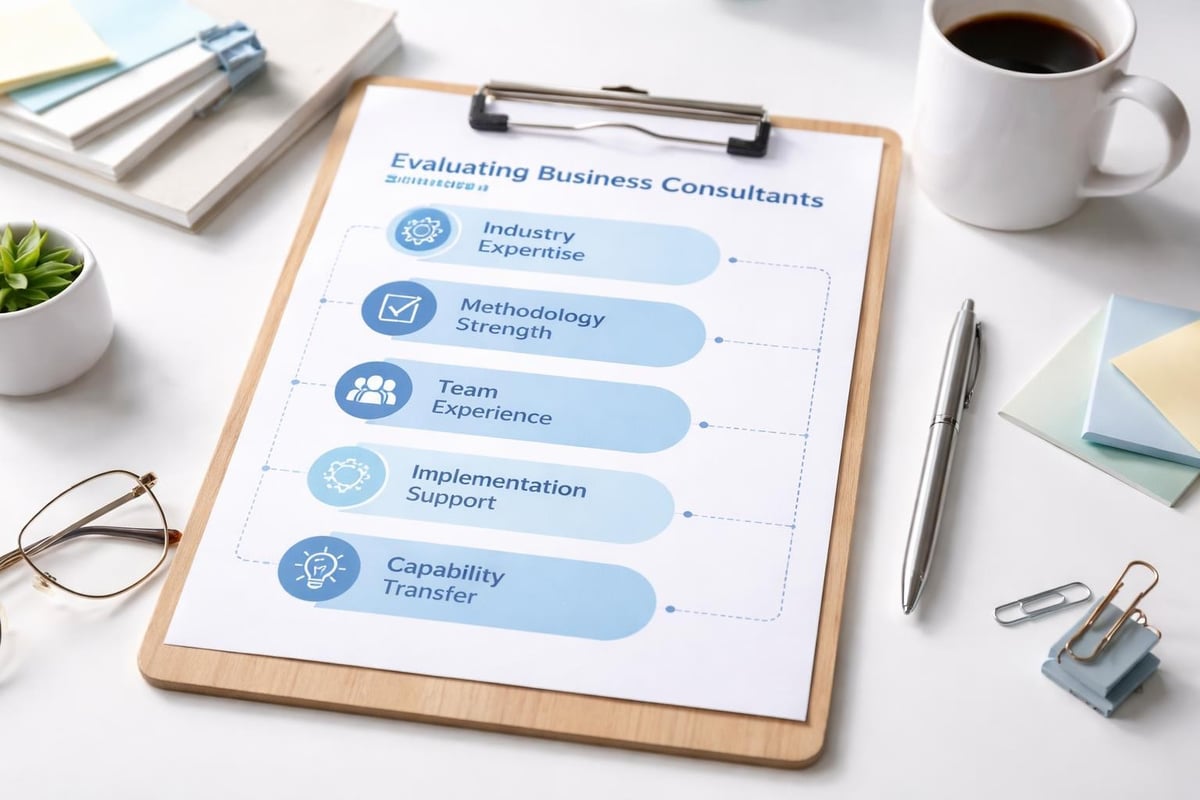
Consider these assessment factors:
- Methodology rigor: Do they use proven frameworks or ad-hoc approaches?
- Team expertise: What relevant experience do assigned consultants possess?
- Collaboration style: How do they work with internal teams?
- Deliverable quality: What tangible outputs will you receive?
- Success metrics: How do they define and measure engagement success?
Innovation Frameworks That Drive Results
Effective consulting relies on structured approaches that guide discovery, development, and implementation. Several frameworks have proven particularly valuable for organizations seeking strategic innovation.
Blue Ocean Strategy helps companies escape competitive markets by creating new demand in uncontested market spaces. This framework provides tools for identifying non-customers, eliminating low-value features, and creating breakthrough value propositions. Organizations can explore this through Blue Ocean Strategy workshops that deliver actionable strategies.
Design Thinking emphasizes customer empathy and rapid prototyping to develop products and experiences customers truly want. The iterative approach reduces development risk while accelerating time-to-market. Design thinking for innovation creates customer-centric solutions through structured exploration.
Implementing Business Model Innovation
Business model innovation addresses how organizations create, deliver, and capture value. The best business consulting engagements examine all components of the business model, including customer segments, value propositions, channels, revenue streams, and cost structures.
This systematic analysis often reveals opportunities invisible to internal teams. External consultants bring fresh perspectives and cross-industry insights that challenge assumptions and expand possibility thinking.
| Business Model Element | Innovation Questions | Potential Outcomes |
|---|---|---|
| Customer Segments | Who else could we serve? | New market access |
| Value Proposition | What jobs remain underserved? | Differentiated offerings |
| Revenue Streams | How else could we monetize value? | Improved profitability |
| Key Activities | What could we outsource or automate? | Enhanced efficiency |
| Partnerships | Who could multiply our impact? | Accelerated growth |
Organizations seeking to identify profitable business models benefit from frameworks that systematically explore alternatives and test assumptions before committing significant resources.
The Consulting Engagement Process
Understanding how effective consulting engagements unfold helps organizations prepare for collaboration and maximize value extraction. The process typically follows several distinct phases, each with specific objectives and deliverables.
Discovery and Diagnosis
Initial phases focus on understanding current state challenges, market dynamics, competitive positioning, and organizational capabilities. The best business consulting partners invest substantial time in this phase, conducting stakeholder interviews, analyzing performance data, and mapping market landscapes.
This diagnostic work reveals root causes rather than symptoms. Surface-level problem identification leads to ineffective solutions, while deep discovery uncovers systemic issues and hidden opportunities.
Strategy Development
Based on diagnostic insights, consultants develop strategic recommendations addressing identified opportunities. This phase generates options, evaluates alternatives, and designs implementation roadmaps.
Strong consulting engagements involve clients throughout strategy development. Collaborative approaches ensure buy-in, incorporate institutional knowledge, and build internal capability. Organizations benefit from business frameworks that structure strategic thinking and decision-making.
Implementation Support
Strategy without execution delivers no value. The best business consulting includes implementation support that translates recommendations into action. This might involve project management, change management, training delivery, or interim executive support.
Implementation phases should include:
- Detailed action planning with responsibilities and timelines
- Resource allocation aligned with strategic priorities
- Performance tracking systems for monitoring progress
- Adjustment protocols for addressing obstacles
- Capability transfer to sustain momentum after engagement ends
Measuring Consulting ROI
Quantifying consulting value ensures accountability and justifies investment. Organizations should establish clear success metrics before engagements begin, then track progress systematically throughout.
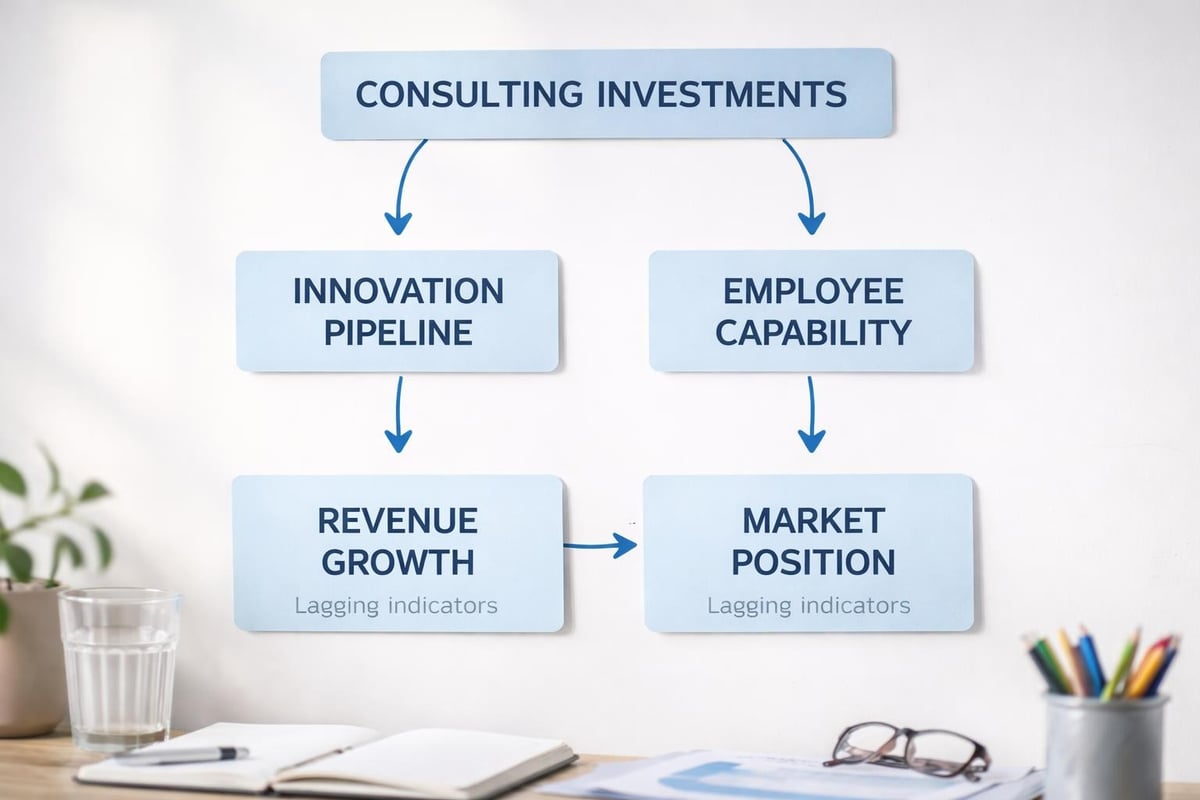
Financial metrics provide the clearest ROI indicators: revenue growth, profit margin improvement, cost reduction, or market share gains. However, these outcomes often lag months or years behind strategic initiatives.
Leading indicators offer earlier performance signals. These might include innovation pipeline strength, customer satisfaction improvements, employee engagement scores, or process efficiency gains. The most comprehensive measurement systems track both leading and lagging indicators.
Long-Term Value Creation
The highest-value consulting creates lasting organizational transformation. This happens when engagements build capabilities that continue generating benefits long after consultants depart.
Measuring long-term value requires tracking:
- Innovation output sustained over time
- Internal capability growth in strategic planning
- Market position improvements versus competitors
- Financial performance trajectory changes
- Organizational agility in responding to market shifts
Organizations working with best strategy consulting companies should expect both immediate project deliverables and enduring capability enhancements.
Emerging Trends Shaping Consulting Excellence
The consulting industry continues evolving rapidly. Staying current with emerging trends helps organizations select partners positioned for future challenges rather than yesterday's problems.
Sustainability and ESG consulting has expanded dramatically as stakeholders demand environmental and social responsibility. Organizations need guidance navigating ESG compliance and strategy development, creating new consulting opportunities focused on sustainable business models.
Specialized niche expertise increasingly differentiates top firms. Clients seek consultants with deep knowledge in specific domains rather than generalist advice. This trend toward specialization means the best business consulting comes from firms that understand your particular challenges intimately.
Data-driven decision-making has become foundational. Consultants must combine analytical rigor with strategic creativity, using data to inform rather than dictate recommendations. This balance distinguishes valuable insights from mere number crunching.
Digital transformation remains essential, with advanced technologies like AI and IoT creating both opportunities and imperatives. Organizations need partners who understand technology's strategic implications, not just technical implementation.
Building Competitive Advantage Through Consulting
Sustainable competitive advantage requires more than temporary market position. It demands capabilities that enable continuous adaptation and innovation as markets evolve.
The best business consulting helps organizations develop these dynamic capabilities through systematic approaches to opportunity identification, rapid experimentation, and strategic learning. This moves beyond one-time strategic plans to build innovation as an organizational competency.
Customer experience innovation represents a particularly powerful advantage source. Organizations that deeply understand customer needs and design exceptional experiences create loyalty that transcends price competition. Standing out with exceptional customer experience requires both strategic vision and execution excellence.
Creating Innovation Cultures
Culture change proves among the most challenging yet valuable consulting outcomes. Organizations with strong innovation cultures consistently outperform competitors through faster adaptation and more effective opportunity capture.
Building innovation culture involves several elements:
- Leadership commitment to experimentation and learning
- Resource allocation supporting innovation initiatives
- Recognition systems rewarding creative problem-solving
- Failure tolerance that enables calculated risk-taking
- Cross-functional collaboration breaking down silos
These cultural shifts rarely happen through top-down mandates alone. They require sustained effort combining leadership training, process redesign, and capability development.
Maximizing Consulting Partnership Value
Organizations extract maximum value from consulting engagements through active participation and strategic preparation. The client-consultant relationship works best as true partnership rather than transactional service delivery.
Preparation matters significantly. Before engagements begin, clarify objectives, gather relevant data, identify key stakeholders, and communicate expectations broadly. This groundwork accelerates initial phases and ensures alignment.
During engagements, maintain open communication channels, provide candid feedback, challenge assumptions constructively, and commit necessary resources. The best business consulting outcomes emerge from collaborative exploration rather than passive acceptance of recommendations.
After formal engagements conclude, sustain momentum through disciplined implementation, ongoing capability development, and periodic progress reviews. Many organizations benefit from discovering faster, smarter ways to grow through continued strategic partnership.
The best business consulting in 2026 combines strategic innovation frameworks, AI-powered analytics, and capability-building approaches that create lasting competitive advantages. Organizations that invest in strategic partnerships focused on revenue growth, market opportunity discovery, and innovation capability development position themselves to thrive amid ongoing market disruption. Six Paths Consulting helps ambitious leaders transform their organizations through AI-powered strategic innovation, developing breakthrough business models and building internal capabilities that sustain growth long after initial engagements conclude.