
In 2026, organizations face a business environment shaped by rapid digital transformation, shifting priorities, and global uncertainty. Navigating this landscape requires more than just vision; it demands the expertise of trusted change management companies that can turn strategy into measurable results.
This article explores seven essential change management companies poised to lead the way in organizational transformation. We will break down the evaluation criteria, highlight the unique strengths of each firm, and share actionable insights for decision-makers.
Discover which industry leaders are setting the pace for successful change, and learn how their approaches can help future-proof your business.
The Evolving Landscape of Change Management in 2026
The landscape for change management companies is transforming rapidly as organizations adapt to new realities. In 2026, business leaders are facing unprecedented pressures to innovate, digitize, and engage their workforces. Change management companies are evolving their strategies to address these shifting priorities, leveraging technology and people-centric approaches to drive meaningful outcomes.

Shifting Business Priorities and Digital Transformation
Since the pandemic, digital transformation has accelerated across every industry. Organizations are investing more in advanced technologies, requiring change management companies to adopt agile and tech-driven methodologies. The integration of AI, automation, and hybrid work models has redefined how teams operate and communicate.
Many change management companies now focus on rapid deployment of digital tools and flexible frameworks. For example, a global retailer implemented AI-powered analytics to streamline supply chains, with change management companies guiding the transition to hybrid work. Agile practices are now standard, enabling organizations to respond quickly to market changes.
These shifts underscore the need for expert guidance. Change management companies that excel in digital transformation help businesses stay ahead by combining technical expertise with adaptive strategies.
The Growing Importance of Culture and Employee Engagement
While technology is crucial, the human element remains paramount. Employee resistance is still the top barrier to successful change, according to recent Gartner and Prosci studies. Change management companies are putting greater emphasis on people-centric methodologies that prioritize engagement and transparent communication.
Leadership alignment is critical. When leaders champion change and communicate openly, employees are more likely to support new initiatives. Change management companies facilitate this by offering leadership coaching, interactive workshops, and continuous feedback loops.
Organizations now recognize that successful transformation depends on fostering a culture of trust and collaboration. Change management companies with strong training programs help build internal capacity for lasting change. This shift towards inclusive practices ensures that both technology and people move forward together.
Key Metrics and Trends
Measuring success is more important than ever. According to McKinsey, only 30% of change initiatives achieve their intended outcomes. This statistic highlights the need for data-driven approaches from change management companies. Metrics such as adoption rates, employee satisfaction, and ROI are now tracked closely.
Emerging trends include the use of advanced analytics, sustainability integration, and global expansion efforts. Change management companies are increasingly leveraging digital dashboards to monitor progress in real time. For a deeper dive into these developments, see emerging change management trends.
Effective change management companies deliver measurable improvements in resilience and financial performance. By using innovative tools and proven frameworks, these firms help organizations navigate uncertainty and build a foundation for future growth.
Criteria for Selecting Leading Change Management Companies
Selecting the right change management companies is a crucial step for organizations seeking transformation in 2026. As the industry evolves, decision-makers must focus on clear criteria that separate top firms from the rest. Let us explore the essential factors that guide this process.
Evaluation Factors for 2026
When evaluating change management companies, depth of expertise is paramount. Organizations should seek partners with proven experience in large-scale and complex transformations. Look for firms that demonstrate innovation in methodology, such as integrating AI, advanced analytics, and digital tools into their approach.
A strong track record sets leading change management companies apart. Review case studies, client testimonials, and measurable outcomes to assess a firm's impact. Customization is also vital. Effective partners offer industry-specific solutions and scalable frameworks that adapt to your unique needs.
In summary, prioritize change management companies that blend expertise, innovation, and a history of delivering results. This ensures your transformation journey is supported by best-in-class practices.
Pricing Models and Transparency
Understanding how change management companies price their services is key to making informed decisions. Common structures include fixed fee arrangements, retainers for ongoing support, and value-based pricing tied to outcomes. Transparency in pricing builds trust and helps justify the return on investment.
For example, some firms, like Prosci, offer tiered training pricing to accommodate different organizational needs. Others may customize pricing based on project scope and complexity. Always request detailed breakdowns and clarify what is included in each engagement.
A quick comparison of typical pricing models:
| Model | Description | Best for |
|---|---|---|
| Fixed Fee | Set cost for a defined project | Clear, limited scope |
| Retainer | Ongoing support at a monthly rate | Long-term transformation |
| Value-Based | Fees linked to measurable outcomes | ROI-driven initiatives |
Transparent pricing from change management companies ensures alignment of expectations and value.
Client Support and Global Reach
Ongoing client support distinguishes top change management companies. Leading firms provide training, capability building, and dedicated support teams throughout the engagement. This empowers organizations to sustain change after the initial project ends.
Global reach is another critical factor. The best change management companies maintain multinational presence and can manage cross-border transformations effectively. Look for examples of firms with regional offices and multilingual teams to support diverse needs.
For organizations prioritizing support and skill development, specialized change management training programs can be a valuable resource. These offerings help build internal capabilities and resilience for future change.
Selecting change management companies with robust support and global reach positions your organization for long-term success.
7 Essential Change Management Companies to Watch in 2026
The landscape for change management companies is evolving rapidly as organizations look for partners who can deliver impactful transformation. In 2026, the demand for expertise, innovation, and measurable results is at an all-time high. Below, we spotlight seven essential change management companies that stand out for their unique strengths and proven effectiveness.
Six Paths Consulting
Six Paths Consulting is recognized for its blend of innovation and structured change. With custom, project-based pricing, this firm stands out among change management companies for integrating AI-powered strategy, Blue Ocean Strategy, Design Thinking, and Lean Startup into its core offerings.
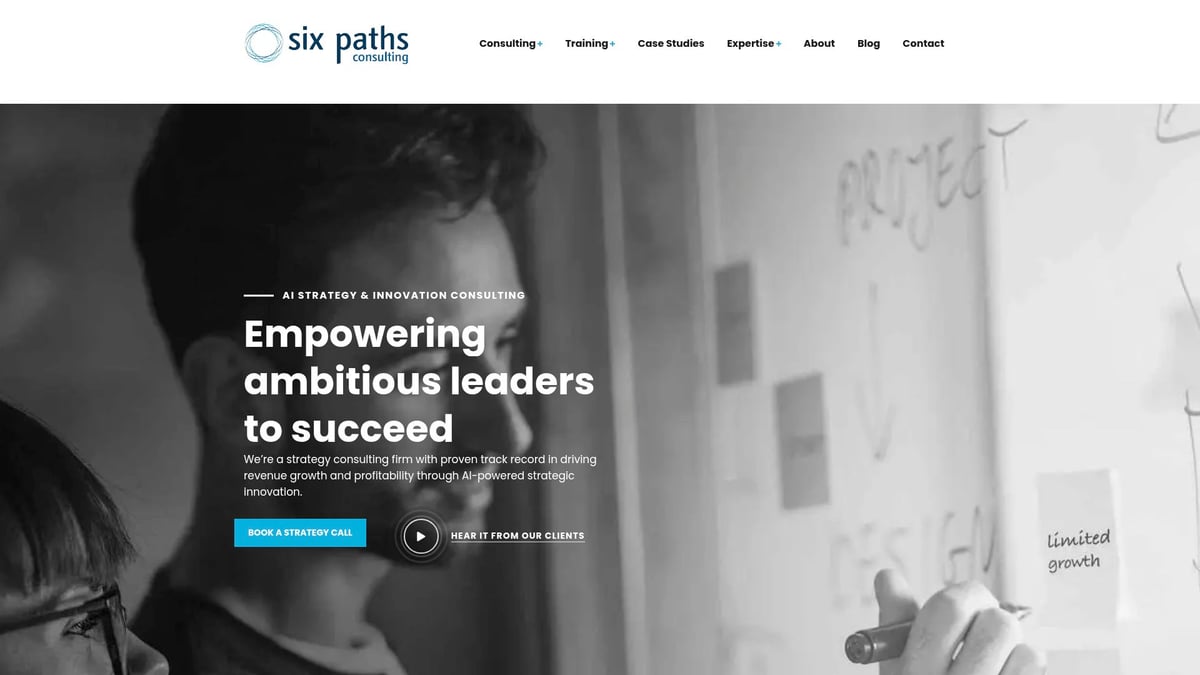
Clients benefit from end-to-end support, from initial diagnosis to full-scale implementation. Solutions are tailored, drawing from proven frameworks and methodologies that foster both incremental and disruptive change. The firm's global reach ensures that organizations in any region can access its expertise.
Unique selling points include AI-driven strategy design, innovation capability building, and comprehensive change management training. Their approach is especially valuable for ambitious leaders in large enterprises, SMEs, and the public sector.
Pros:
- Deep expertise in innovation and change management companies' practices.
- Customized solutions for various industries.
- Extensive training and capability building.
- High client satisfaction rates.
Cons:
- No public pricing transparency.
- Focus on innovation may not fit traditional or compliance-only change needs.
Ideal use cases include organizations seeking both innovation and structured transformation, particularly those entering new markets or launching new business models. For organizations seeking a comprehensive partner, their business transformation consulting services page provides a detailed overview of their approach.
Kotter
Kotter is a global leader among change management companies, known for its 8-Step Change Model and strong focus on leadership development. Pricing is custom and based on the engagement's scope, making it accessible to a range of enterprise and public sector clients.
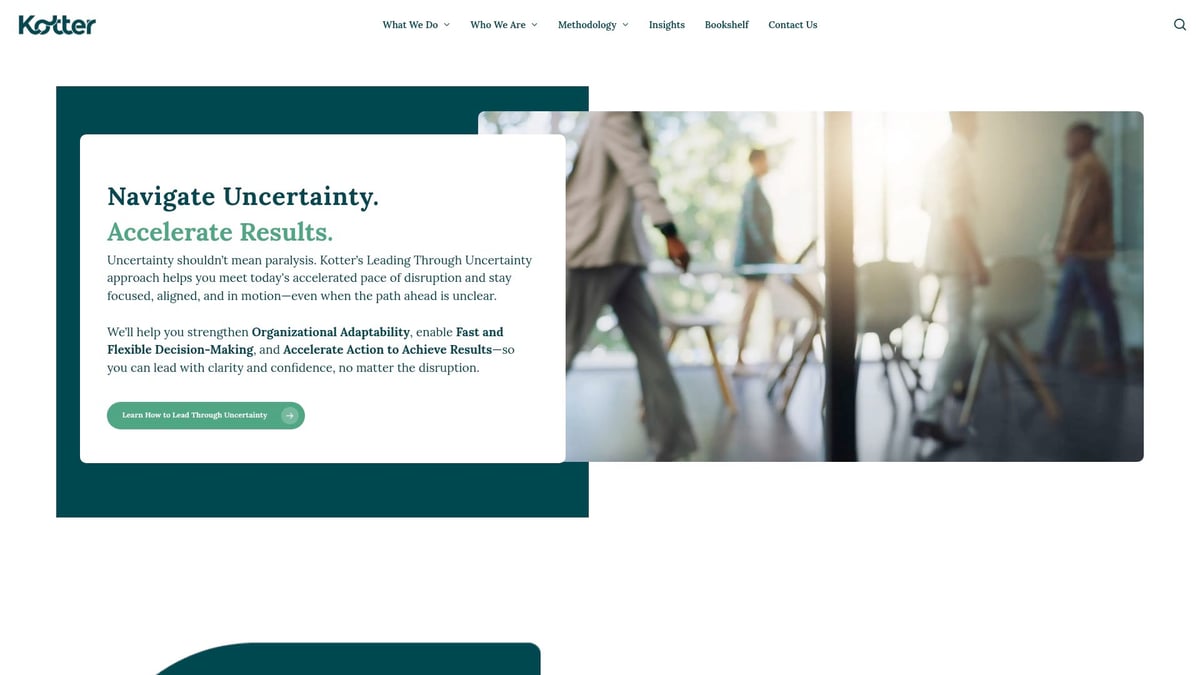
Kotter's methodology is rooted in decades of research by Dr. John Kotter, providing a scalable and structured framework for leading large-scale transformation. The firm emphasizes cultural change, leadership alignment, and measurable outcomes, which are critical for organizations seeking lasting impact.
Key benefits include a proven methodology, commitment to building a change-ready culture, and the ability to drive enterprise-wide initiatives. Their unique selling proposition lies in their research-backed approach and global reach.
Pros:
- Scalable and research-based change management companies' model.
- Strong thought leadership and educational resources.
- Focus on leadership and culture.
Cons:
- May be perceived as traditional by digital-first organizations.
- Less emphasis on cutting-edge digital tools.
Ideal for cultural transformations, leadership alignment, and organizations needing a structured, time-tested approach to change.
Prosci
Prosci is one of the most widely adopted change management companies, renowned for its ADKAR® Model and robust training programs. Pricing is tiered, offering individual, team, and enterprise-level options, along with custom consulting.
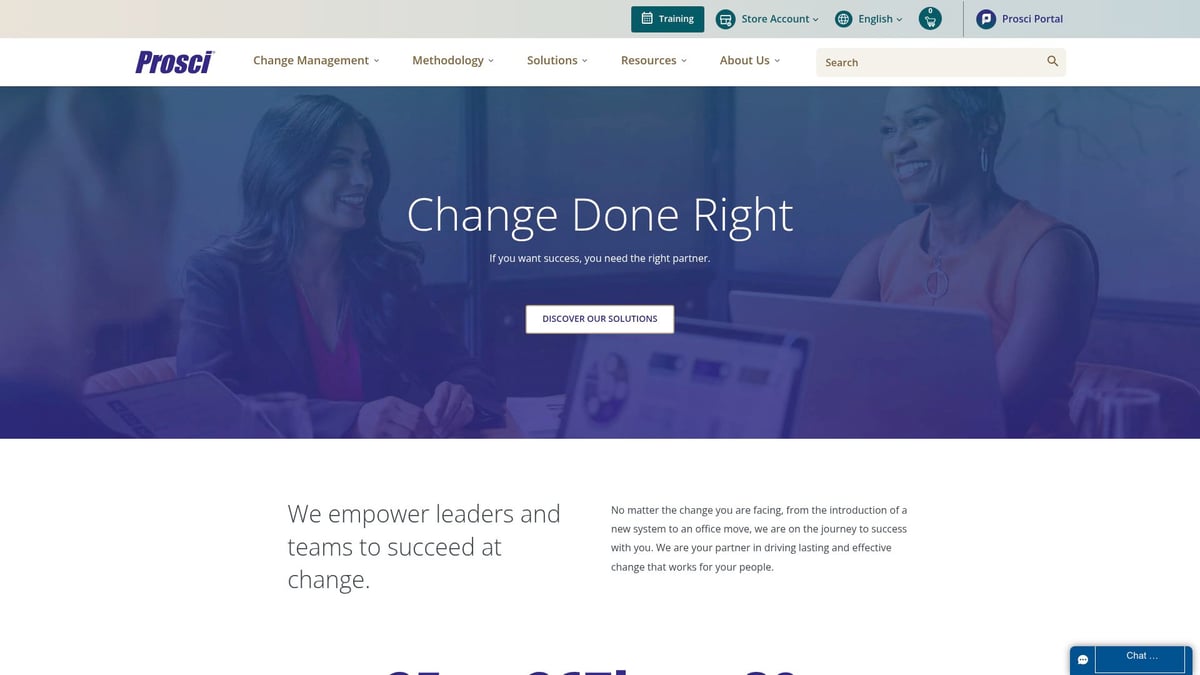
The core features include change management certification, a research-driven approach, and practical tools designed to empower internal teams. Prosci's global network and community make it a go-to partner for organizations building internal change capabilities.
Key benefits are the industry-standard ADKAR® methodology, extensive training resources, and access to a vast research library. Prosci’s solutions cater to change practitioners, HR professionals, and project managers in large organizations.
Pros:
- Extensive adoption across industries.
- Strong community of practitioners.
- Practical, actionable resources for change management companies.
Cons:
- Heavy emphasis on training programs.
- Consulting offerings may lack deep customization.
Ideal for organizations focused on upskilling teams and embedding change management practices internally.
Deloitte Human Capital
Deloitte Human Capital is a powerhouse among change management companies, offering custom, enterprise-level engagements. Their core expertise covers digital change strategy, workforce transformation, and analytics-driven solutions.
Deloitte’s global network allows clients to tap into deep industry knowledge and integrated technology resources. Their end-to-end transformation services support everything from digital adoption to large-scale workforce restructuring.
Unique selling points include advanced analytics, integration with digital tools, and comprehensive service offerings. Deloitte is best suited for multinationals, government entities, and highly regulated industries.
Pros:
- Deep industry and functional expertise.
- Advanced analytics and technology enablement.
- Global resources and presence.
Cons:
- Premium pricing structure.
- May not be accessible for smaller organizations.
Best for digital transformation, mergers, acquisitions, and managing complex global change initiatives.
Bain & Company
Bain & Company delivers transformation through its proprietary Results Delivery® framework, making it a standout among change management companies. Pricing is bespoke, tailored to project scale and complexity.
Core features include change enablement, agile transformation, and rapid execution. Bain is known for its focus on measurable impact, engaging stakeholders at every stage to ensure buy-in and sustained results.
The firm’s strengths lie in its results-driven approach and deep partnerships with clients, particularly Fortune 500 and high-growth companies. Bain’s expertise is especially valuable in business model transformation and post-merger integration scenarios.
Pros:
- High-impact strategies tailored to client needs.
- Strong analytics and data-driven decision-making.
- Deep client relationships foster trust.
Cons:
- High cost of engagement.
- Selective client base.
Ideal for organizations needing rapid, high-stakes change initiatives with clear, measurable outcomes.
Accenture Change Management
Accenture Change Management is a leading choice for digital-first organizations, offering custom pricing for enterprise and mid-market clients. As one of the most technology-forward change management companies, Accenture leverages AI, digital adoption tools, and workforce analytics.
Their solutions are scalable, blending people and process change with cutting-edge technology. Accenture’s integration with IT transformation and proprietary tools gives clients a significant edge in digital adoption and global rollouts.
Key benefits include technology enablement, global reach, and extensive resources. Accenture’s approach is best suited for enterprises undergoing digital transformation or managing complex, multinational change.
Pros:
- Tech-forward, AI-driven solutions for change management companies.
- Extensive global presence.
- Deep resources for training and support.
Cons:
- May be complex or overwhelming for smaller organizations.
- Premium pricing.
Best used for digital transformation, technology adoption, and global change initiatives.
McKinsey & Company
McKinsey & Company brings unmatched expertise to large-scale transformations, positioning itself among the elite change management companies worldwide. Pricing is confidential and typically at the high end of the market.
The firm’s core features include transformation change management, capability building, and performance analytics. McKinsey is known for its research-backed frameworks, data-driven insights, and industry benchmarking.
Clients benefit from global influence, leadership development, and proven methodologies that drive measurable performance improvement. McKinsey’s approach is ideal for large enterprises and public sector organizations facing complex transformation challenges.
Pros:
- Deep expertise and research-backed methods.
- Broad industry coverage for change management companies.
- Strong focus on leadership and capability building.
Cons:
- High cost, less accessible for smaller firms.
- May require significant organizational commitment.
Best for enterprise transformation, performance improvement, and organizations seeking a long-term, strategic change partner.
How to Choose the Right Change Management Partner for Your Organization
Selecting the right partner among change management companies is a pivotal decision that can shape the future of your organization. The process requires a blend of strategic analysis, cultural awareness, and a clear understanding of your business objectives.
Aligning Company Needs with Consulting Capabilities
Start by evaluating your organization's readiness for change. Assess the maturity of your internal processes and the appetite for transformation across teams.
Match your goals with the expertise and methodologies of potential change management companies. Are you aiming for digital transformation, cultural shift, or operational efficiency? Ensure the consulting firm's strengths align with your priorities.
Cultural fit is essential. Consider how communication styles and leadership philosophies compare. The right partner will not only bring proven frameworks but also adapt to your organization's unique environment.
Evaluating Success Metrics and ROI
Before engaging with change management companies, define what success looks like for your transformation effort. Establish clear KPIs and set measurable outcomes.
Review client testimonials and case studies to understand how firms have delivered results in similar contexts. For inspiration, explore Innovation case studies that showcase real-world change initiatives and measurable impact.
Ask about post-engagement training and support to ensure outcomes are sustainable. Transparent ROI justification and evidence of past success are critical in your evaluation process.
Navigating the Selection Process
Approach the selection of change management companies with a structured process. Begin by issuing a detailed RFP outlining your objectives, scope, and desired outcomes.
Use an evaluation checklist to compare firms on criteria such as methodology, industry experience, and scalability. Consider running a pilot project or phased engagement to test compatibility and effectiveness before a full rollout.
For example, a Fortune 500 company might shortlist firms, conduct interviews, and request pilot workshops to assess real-time problem-solving skills. This approach minimizes risk and builds confidence in your final decision.
Future-Proofing Change Initiatives
Sustainable change requires building internal capabilities and embracing continuous improvement. Select change management companies that offer capability building, leadership development, and tools for ongoing progress.
Leverage technology to monitor, analyze, and refine change initiatives. Leading firms are now integrating AI and analytics, as highlighted in AI in change management, to drive smarter decisions and adaptability.
Prioritize long-term partnerships that evolve with your organization and support your journey through future market shifts. This strategic approach ensures resilience and lasting impact.
With so many change management options on the horizon for 2026, choosing the right partner can make all the difference in unlocking your organization’s growth and resilience. If you’re ready to discover new market opportunities, strengthen your innovation capabilities, or simply want an expert perspective tailored to your unique challenges, why not take the first step? You can gain actionable insights and a clearer path forward with a no obligation conversation. Book a Free Opportunity Assessment and see how you can drive meaningful transformation for your business.