
The business world in 2026 is evolving at record speed, presenting both intense challenges and rare opportunities for organizations ready to adapt. As competition rises and disruption becomes the norm, leaders must seek out new ways to unlock growth and outperform their peers.
This growth consult guide is designed to deliver actionable strategies, proven frameworks, and expert insights tailored for breakthrough results and sustainable success. You will discover how growth consulting has transformed, core strategies for modern businesses, a step-by-step process for implementation, methods to measure ROI, and how to choose the best consultant for your needs.
Explore how a growth consult approach, rooted in data and holistic thinking, can help your organization not just survive, but thrive. Use this guide to ignite innovation, align your teams, and unlock your company's full potential in the fast-changing landscape of 2026.
The Evolution of Growth Consulting: Why 2026 Demands a New Approach
The business world in 2026 is moving at an unprecedented pace, and organizations can no longer afford to rely on outdated approaches. The growth consult landscape has transformed, demanding a new mindset and toolkit to stay ahead.

Evolution from Traditional to Modern Growth Consult
Traditional consulting often focused on isolated issues within individual departments, missing the bigger picture. In contrast, the modern growth consult approach is holistic, systems-oriented, and powered by real-time data. Recent studies show that companies adopting these new models see up to 36% higher retention when teams are aligned, and a 40% boost in MQL-to-SQL conversion rates. The shift is clear: businesses need interconnected solutions, not siloed advice.
Cross-Functional Integration and Customer Journey Mapping
2026 demands seamless cross-functional integration. Growth consult experts now map the entire customer journey, breaking down barriers between sales, marketing, and operations. This end-to-end visibility uncovers hidden inefficiencies and ensures every touchpoint is optimized. For example, organizations that embraced unified journey mapping saw dramatic improvements in customer engagement and retention. Integration is no longer optional, it is essential for growth.
Experimentation, A/B Testing, and Agile Feedback Loops
Another hallmark of the growth consult revolution is the embrace of rapid experimentation. Leaders run A/B tests, launch pilot programs, and use agile feedback loops to learn and adapt quickly. This iterative approach reduces risk, accelerates learning cycles, and consistently delivers higher ROI. Businesses that foster a culture of experimentation are outpacing competitors, turning data insights into measurable gains.
Consultants as Orchestrators: AI, Automation, and Digital Transformation
Today’s consultants are not just problem-solvers, they are transformation orchestrators. They leverage advanced tools like AI, automation, and integrated martech stacks to drive smarter decisions and scalable change. According to top business consulting trends for 2026, AI-driven insights and hyper-specialized expertise are now critical for a successful growth consult partnership. The result is more personalized, predictive, and impactful strategies.
Measurable Impact and Future-Proof Growth
The impact of adopting a growth consult mindset is clear. Companies report stronger ROI, shorter sales cycles, and a culture of continuous improvement. In 2026, those who invest in modern growth consult strategies are not just surviving—they are leading their industries.
Core Growth Consulting Strategies for Business Success
Unlocking sustainable growth in 2026 requires more than surface-level improvements. Businesses must adopt a modern growth consult approach, integrating proven strategies across every function. Below, we break down four foundational pillars that drive breakthrough results.

Systems Thinking and Holistic Assessment
A successful growth consult begins with systems thinking. This approach maps the entire business ecosystem, revealing connections between departments that traditional consulting often misses. By breaking down silos, organizations can achieve up to a 40% higher MQL-to-SQL conversion rate, as shown in recent industry studies.
Consider a SaaS provider that struggled with lead handoffs between marketing and sales. A holistic assessment uncovered misaligned messaging, leading to a complete overhaul. Within months, conversions rose by 35%, and cross-department friction dropped significantly.
Isolated improvements rarely lead to lasting change. Evaluating the end-to-end customer journey ensures that every team’s efforts reinforce overall objectives. Common pitfalls—like duplicated efforts or overlooked bottlenecks—are avoided.
To guide this process, many leaders reference frameworks such as the Growth Methodology Overview, which offers structured tools for mapping and assessing business systems. These resources help embed the growth consult mindset at every level, turning hidden inefficiencies into opportunities for transformation.
Experimentation, Data, and Iterative Improvement
The modern growth consult approach rejects static best practices in favor of continuous experimentation. Companies now rely on A/B testing, pilot programs, and rapid feedback loops to drive learning and agility. Organizations that prioritize experimentation report higher ROI and shorten learning cycles by up to 30%.
To foster this culture, start with small tests and monitor data in real time. Encourage teams to celebrate learning from both successes and failures, reinforcing a growth consult mentality. For example, a retail chain piloted new checkout processes in select stores, using live data to refine the rollout. The result was a 15% increase in average transaction value.
Data-driven decisions minimize risk while supporting sustainable, compounding growth. By embedding iterative improvement into daily operations, businesses ensure that every initiative is measured, optimized, and aligned to long-term goals.
Unified Sales and Marketing Alignment
Alignment between sales and marketing teams is a force multiplier for any growth consult strategy. Organizations with unified teams see a 36% increase in customer retention and significantly higher lead quality.
A B2B manufacturer offers a compelling case study. By implementing joint planning, shared KPIs, and integrated dashboards, the company increased qualified leads by 200% in just 90 days. Regular feedback loops and clear communication channels were essential.
Without alignment, opportunities are lost and resources are wasted. Tools for tracking progress and facilitating collaboration are critical. When sales and marketing move as one, incremental improvements become exponential gains.
Technology, Automation, and Martech Stack Optimization
In 2026, optimizing technology and martech stacks is central to effective growth consult engagements. Seamless data flows and automation drive smarter decisions and boost efficiency across all teams.
Strategic martech overhauls have improved forecasting accuracy by 25% in leading firms. AI-powered personalization and predictive analytics now enable businesses to anticipate customer needs and tailor outreach. A thorough audit of tools, platform integrations, and automated workflows ensures teams spend less time on manual tasks and more on high-impact initiatives.
Martech optimization consistently delivers strong ROI, freeing up resources for innovation and scaling. The right tech stack transforms growth consult strategies into tangible, measurable outcomes.
The Growth Consulting Process: Step-by-Step Framework
Unlocking business potential in 2026 requires more than sporadic fixes. It demands a rigorous, methodical approach that ensures every action drives measurable growth. The growth consult process provides a proven, step-by-step framework for transforming vision into results. Let us walk through each phase of this journey, highlighting practical steps, best practices, and real-world impact.

Phase 1: Discovery & Assessment
The foundation of any successful growth consult engagement is a comprehensive understanding of your business’s current state. This phase involves a deep dive into internal operations, customer feedback, and the competitive landscape.
Key activities include:
- Internal and external audits to evaluate processes and outcomes
- Sales funnel reviews to identify bottlenecks and drop-off points
- Direct customer feedback analysis for actionable insights
- Capability and gap analysis to uncover hidden opportunities
Benchmarking against competitors is crucial. For example, businesses following a structured growth consult discovery can identify up to 20% more actionable opportunities compared to ad hoc reviews. Embedding a growth consult mindset early ensures every assessment uncovers both strengths and pain points.
A strong assessment process often leverages tools like SWOT analysis, customer journey mapping, and market benchmarking. One global SaaS provider, after a thorough discovery, realigned their customer success function and saw a 15% boost in retention within six months.
For those considering a deeper dive, Business Growth Consulting Services offers a comprehensive look at how expert assessments set the stage for accelerated growth.
Phase 2: Strategy Development
With a clear picture of the business landscape, the next phase of the growth consult process is translating insights into actionable strategies. This step centers on prioritizing initiatives, defining measurable objectives, and aligning teams around a unified direction.
Key actions include:
- Setting KPIs and OKRs for each growth objective
- Prioritizing projects based on impact and feasibility
- Creating detailed roadmaps with timelines and budgets
Consider a company preparing for a new product launch. Through the growth consult approach, they mapped out a launch plan tied to incremental milestones and regular progress reviews. This clarity prevented wasted resources and kept the team focused on high-value activities.
Strategic clarity and team alignment are critical. Top consultants use frameworks like OGSM (Objectives, Goals, Strategies, Measures) and the Balanced Scorecard to ensure every action links to outcomes. Clear planning at this stage helps avoid costly missteps and builds internal momentum for change.
Phase 3: Implementation Enablement
Strategy means little without effective execution. The third phase of the growth consult framework ensures that plans translate into real-world results through hands-on support and rigorous accountability.
Key enablers include:
- Coaching and upskilling teams to build necessary capabilities
- Project management support to keep initiatives on track
- Progress tracking with regular check-ins and transparent dashboards
For example, a mid-market manufacturer increased close rates by 25% after implementing a growth consult-driven sales enablement program. This success was due to active coaching, clear accountability structures, and ongoing support.
Overcoming resistance is a common challenge. The growth consult process addresses this by involving stakeholders early, celebrating quick wins, and using proven change management tools. Project management platforms like Asana or Monday.com streamline execution and foster transparency, ensuring that every team member knows their role and progress.
Phase 4: Performance Optimization & Continuous Improvement
Sustainable growth relies on ongoing evaluation and adaptation. The final phase of the growth consult process is about embedding a culture of performance optimization and continuous improvement.
Core activities include:
- Regular reporting cycles with data-driven reviews
- Quarterly innovation sessions to identify and act on new opportunities
- Embedding feedback loops to learn from both successes and failures
For instance, companies that adopt continuous improvement frameworks report up to a 20% lift in lead conversions within a year. Client testimonials consistently highlight how this phase sustains momentum and drives compounding gains.
Best practices involve using innovation frameworks like PDCA (Plan, Do, Check, Act) and Lean Six Sigma. These tools help teams stay agile, respond quickly to market changes, and maintain a relentless focus on results. By making performance review a regular habit, businesses transform initial growth consult wins into lasting organizational capability.
Tangible Outcomes: Measuring and Sustaining ROI from Growth Consulting
Unlocking the full value of a growth consult engagement depends on one critical factor: measurable, sustained outcomes. Today, organizations cannot afford to rely on gut feeling or anecdotal wins. Instead, they must anchor every investment in clear, quantifiable returns.
What Does ROI Look Like in Growth Consult?
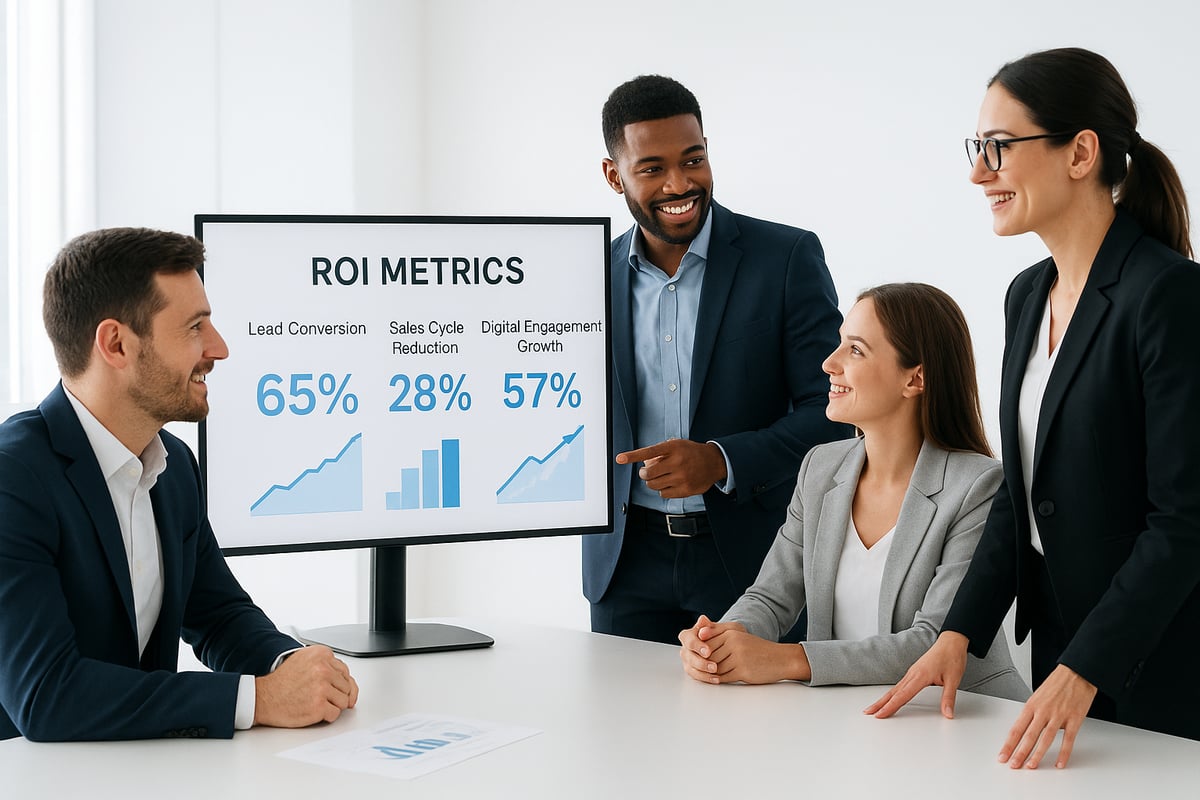
To truly understand the impact of a growth consult, you must look beyond surface-level gains. The most important ROI metrics include lead conversion rates, average sales cycle length, digital engagement levels, and forecasting accuracy. For example, organizations that embrace a growth consult often see lead conversion rates climb from 10 percent to 12–15 percent, digital engagement jump by 30 percent, and sales cycles shrink from 90 days to as little as 60–70 days.
This level of transformation is not hypothetical. It is the result of targeted strategies, unified teams, and relentless focus on outcomes. By benchmarking these metrics before and after a growth consult, companies gain a transparent view of progress and can celebrate tangible wins.
Building a Measurement-Driven Culture
The real power of a growth consult lies in creating a culture where measurement and feedback are part of daily operations. Teams shift from reactive to proactive, using data to drive every decision. Regular reporting cycles, performance dashboards, and rapid feedback loops keep everyone focused on what matters most.
If you want a deeper dive into how to identify and measure business opportunities, explore Measuring Growth Opportunities in Business for actionable frameworks that complement your growth consult program.
When every team member knows the key metrics, and everyone is aligned on goals, accountability rises. This culture helps organizations adapt quickly, driving continuous improvement and compounding results.
Sustaining Results Over Time
Growth consult is not just about the initial lift—it is about sustaining momentum. Consistent measurement, data-driven reviews, and innovation frameworks ensure that early wins are not lost over time. Companies that maintain regular reporting cycles are better equipped to spot new opportunities, address emerging risks, and stay ahead of competitors.
Embedding these practices into the organization's DNA means that improvement is ongoing. As teams adapt, they become more resilient and ready for future challenges, making growth consult an investment that pays dividends well beyond the first engagement.
Real-World Impact and Lasting Momentum
Client stories bring the numbers to life. One company, after launching a growth consult initiative, saw sales cycle times fall by 25 percent and digital engagement soar. Another reported increased team confidence, faster decision-making, and greater readiness to tackle new markets.
These results are not isolated. When you combine consistent measurement with a culture of feedback and innovation, initial gains turn into lasting momentum. Growth consult transforms not just the bottom line, but the entire organization’s ability to thrive in a fast-changing world.
Choosing the Right Growth Consultant for 2026
Selecting the right growth consult is a pivotal decision for businesses seeking breakthrough results in 2026. The consultant you choose will directly impact your ability to innovate, scale, and sustain success in a rapidly shifting market. A strategic approach ensures you find a partner who matches your unique needs and goals.

Essential Criteria & Evaluation Checklist
Start by evaluating the core criteria that distinguish an effective growth consult. Look for consultants with deep industry experience and a proven track record of delivering tangible revenue and growth results. Transparent deliverables, clear pricing, and compatibility with your existing tools and systems are non-negotiable.
A strong cultural fit is equally important. A consultant who understands your values and vision will drive better engagement and outcomes. Use this checklist to guide your selection:
- Relevant industry experience
- Demonstrated growth consult results
- Transparent deliverables and pricing
- Tool and system compatibility
- Cultural and strategic alignment
Applying these standards will help you quickly narrow down the most qualified candidates.
Discovery Call Questions & Industry Data
Once you have a shortlist, use discovery calls to dig deeper. Ask targeted questions to assess the consultant’s approach and fit. Examples include:
- What recent engagement outcomes can you share?
- How do you measure success in a growth consult project?
- How do you handle unexpected roadblocks or resistance?
- What is your process for collaboration and feedback?
Industry data highlights the value of this diligence. Firms that select the right consultant achieve 2 to 3 times faster growth compared to those who do not. The right growth consult will provide not just answers, but clarity and confidence in their methods.
Trends Shaping Consultant Selection
The consulting landscape is evolving quickly. In 2026, AI, agile methodologies, and digital transformation are reshaping what makes a growth consult effective. Consultants must be fluent in technology, data analysis, and systems thinking to drive sustainable results.
Refer to the Management consulting services market analysis for insights on key trends, growth drivers, and emerging best practices. This context helps you assess whether a consultant’s expertise aligns with the demands of today’s dynamic business environment.
Ensuring Alignment & Avoiding Pitfalls
To maximize ROI, ensure your chosen growth consult aligns with your business vision and long-term strategy. Avoid generalists who lack specialization in your industry or hesitate to acknowledge their limitations. Balance the pursuit of quick wins with the need to build lasting internal capabilities.
Tips for success:
- Define your objectives and expectations clearly
- Insist on regular progress reviews and transparent reporting
- Prioritize consultants who value collaboration and knowledge transfer
With the right growth consult, your business will be equipped to achieve sustained, measurable growth well into 2026 and beyond.
When to Hire a Growth Consultant (and When Not To)
Deciding when to engage a growth consult can define the trajectory of your business, especially as the consulting market is projected to surpass $400 billion in 2026. This surge reflects both the opportunities and complexities organizations face in today's rapidly evolving environment. Recognizing the right timing and readiness for a growth consult partnership is critical to unlocking meaningful, measurable results.
When to Hire a Growth Consult: Key Indicators
Choosing to work with a growth consult is ideal when your business has reached certain milestones and is facing clear challenges. Consider hiring when:
- You have achieved product-market fit and a stable customer base.
- Revenue growth has stalled or begun to plateau.
- Operational bottlenecks are limiting efficiency.
- Innovation has slowed and competitors are gaining ground.
- There are significant shifts in your market or customer expectations.
A growth consult brings specialized expertise to help you break through these barriers, providing actionable strategies that align with your unique goals.
When Not to Hire: Red Flags and Risks
However, there are scenarios where a growth consult may not deliver optimal value. Avoid engaging a consultant if:
- Your business model is still unclear or unproven.
- There is a lack of leadership buy-in for change.
- Resources are too limited to support recommended initiatives.
- Team culture resists external input or transparency.
- Short-term survival, rather than long-term growth, is the primary focus.
Jumping into a growth consult engagement prematurely can lead to wasted resources and missed expectations. Instead, address foundational gaps first to ensure your organization is ready to maximize consulting ROI.
Readiness Assessment: Is Your Business Prepared?
Use this checklist to determine if now is the right time for a growth consult:
| Readiness Factor | Yes | No |
|---|---|---|
| Clear product-market fit | [ ] | [ ] |
| Stable customer base | [ ] | [ ] |
| Leadership committed to growth | [ ] | [ ] |
| Defined growth challenges | [ ] | [ ] |
| Resources available for execution | [ ] | [ ] |
| Openness to external expertise | [ ] | [ ] |
If most boxes are checked "Yes," your business is well positioned to benefit from a growth consult partnership.
Maximizing Value: Preparation and Best Practices
To ensure you extract the highest value from your growth consult engagement, take these preparatory steps:
- Align your leadership team on key goals and desired outcomes.
- Secure budget and resources for implementation.
- Foster a culture of transparency and learning.
- Review innovation strategies, such as those found in Innovative Ideas for Business Growth, to prime your team for transformative change.
- Set clear communication channels and accountability structures.
Businesses that invest in readiness and timing often see faster and more sustainable results from their growth consult journey. By assessing your current stage and preparing proactively, you can avoid common pitfalls and turn consulting into a catalyst for lasting success.
Navigating the rapidly changing business landscape in 2026 means you need more than just ideas—you need proven frameworks and practical steps that actually move the needle. If you're serious about unlocking new growth, optimizing your team’s potential, and building lasting capabilities, why not take the next step? I invite you to see where your biggest opportunities lie with a tailored assessment from experts who specialize in AI-powered strategic innovation. Let’s work together to turn your ambitions into measurable results—start by Book a Free Opportunity Assessment.