
By 2026, the worlds of technology and consulting are merging faster than ever, reshaping how organizations operate and compete. Leaders and professionals now face unprecedented opportunities and challenges as technology and consulting become inseparable drivers of transformation.
This essential guide is crafted for those seeking a clear path through rapid change. Inside, you will discover the key trends redefining the industry, from the rise of AI and digital transformation to new service models, best practices for technology adoption, regulatory insights, and proven strategies to future-proof your organization.
Ready to navigate the future with confidence? Dive in for your comprehensive roadmap to success.
The Evolving Landscape of Technology and Consulting
The landscape of technology and consulting is transforming at an unprecedented pace. As 2026 approaches, organizations face new challenges and opportunities. Leaders must understand the forces reshaping consulting services, from digital transformation to the rise of cross-border teams.
This section explores the most significant trends and the impact of globalization on technology and consulting. By examining real-world examples and industry data, you'll gain insight into how to adapt and thrive in this evolving environment.

Key Trends Shaping Technology and Consulting in 2026
Digital transformation has become a non-negotiable imperative for organizations. No longer optional, it sits at the core of every strategic conversation. In 2026, technology and consulting are tightly interwoven, with firms embedding AI, automation, and advanced data analytics into their offerings.
Clients now expect more than advice. They seek integrated technology and consulting solutions that deliver measurable business outcomes. Managed services and platform-based consulting are on the rise, providing ongoing support rather than one-off projects. This shift is evident in McKinsey’s approach, where AI and technology are embedded directly into client teams for real-time impact.
The demand for cross-disciplinary expertise is also growing. Today’s consulting teams blend technical, operational, and strategic skills to address complex challenges. The industry is moving from traditional project-based engagements to long-term partnerships. According to industry reports, more than 70% of consulting clients now request technology-enabled solutions.
A strong example is the adoption of platform-based consulting models. These solutions enable organizations to scale rapidly and adapt to changing market demands. Consulting firms that focus on end-to-end delivery, from strategy to execution, are better positioned for growth.
Market data supports this evolution. The global technology consulting market is projected to surpass $400 billion in revenue by 2026, reflecting the surging demand for tech-driven upgrades and consulting expertise. For more details on this trend, see the Tech Consulting Market Revenue Forecast.
The Impact of Globalization and Remote Work
Globalization and remote work are redefining how technology and consulting services are delivered. Digital collaboration tools have expanded the reach of consulting firms, enabling seamless interaction with clients and colleagues worldwide.
Talent pools are now truly global. Consulting teams can assemble experts from multiple regions, bringing diverse perspectives to every engagement. This approach accelerates innovation and ensures access to the best skills available. For example, Deutsche Telekom launched an AI-powered coaching initiative that upskilled 8,000 professionals remotely, demonstrating the potential of virtual learning at scale.
However, this new reality brings unique challenges. Maintaining close client relationships in a virtual environment requires intentional communication and trust-building. Firms must also navigate the complexities of cross-border security and compliance. With sensitive data moving across jurisdictions, robust protocols and clear governance are essential.
The shift to remote project delivery has also increased the focus on cybersecurity. As technology and consulting become more intertwined, protecting client information is a top priority. Firms that can ensure both seamless collaboration and stringent security will stand out in the global market.
In summary, the evolving landscape of technology and consulting demands agility, innovation, and a commitment to continuous learning. By embracing these trends, organizations can position themselves for long-term success.
The Role of Artificial Intelligence and Advanced Technologies
Artificial intelligence has rapidly become the cornerstone of technology and consulting, fundamentally transforming how organizations innovate, operate, and compete. As we approach 2026, AI is no longer just a tool but a strategic partner, helping consulting firms deliver measurable results, streamline processes, and unlock new value for clients.

AI-Powered Consulting: Capabilities and Use Cases
The integration of AI into technology and consulting is redefining service delivery models. AI now drives business model innovation, automates complex processes, and enhances customer experience, enabling firms to offer solutions that exceed traditional boundaries.
One of the most significant shifts is the use of AI-driven data analysis, which provides faster and more accurate insights than manual methods. Generative AI is streamlining content creation, reporting, and decision support. For instance, Merck and McKinsey achieved a 55% reduction in clinical-reporting time by leveraging generative AI, demonstrating the tangible value AI brings to consulting engagements.
Consulting firms are also adopting AI-powered platforms for spend analytics, ERP transformation, and value orchestration. Tools like McKinsey’s Periscope and Value Finder enable real-time analysis and support strategic decision-making, helping clients identify revenue opportunities and optimize operations.
The rise of AI consulting alliances and ecosystems is another major trend. Firms are partnering with technology providers and forming collaborative networks to offer tailored, cutting-edge solutions. By 2026, over 60% of consulting engagements are expected to involve AI components, reflecting the widespread adoption and demand for intelligent solutions. According to recent projections, the AI Consulting Services Market Growth is set to accelerate as enterprises increasingly seek AI-driven advantages in a competitive landscape.
Key AI Use Cases in Technology and Consulting:
| Use Case | Impact |
|---|---|
| Process Automation | Reduces cost and time, improves accuracy |
| Data Analysis | Accelerates insights, enhances decision-making |
| Generative AI | Streamlines reporting and documentation |
| Value Orchestration | Identifies new growth opportunities |
AI is now integral to technology and consulting, driving innovation and delivering results that were previously unattainable.
Beyond AI: Cloud, Cybersecurity, and Emerging Tech
While AI dominates the conversation, other advanced technologies are critical to the evolution of technology and consulting. Cloud adoption serves as the backbone for many consulting solutions, providing scalable infrastructure, real-time data access, and seamless integration across platforms.
Cybersecurity and data privacy have become essential differentiators for consulting firms. As clients entrust sensitive information to digital platforms, robust security measures and compliance frameworks are paramount. Consulting projects now routinely incorporate advanced analytics, Internet of Things (IoT), and blockchain technologies to address complex business challenges and ensure data integrity.
Cloud-based tools are enabling consultants to deliver real-time revenue impact, as seen with platforms like Periscope. These solutions help clients monitor performance, optimize operations, and respond quickly to market changes. Future-proofing IT architecture is now a strategic priority, ensuring scalability, flexibility, and compliance with evolving regulations.
In summary, the fusion of AI, cloud, cybersecurity, and emerging technologies is reshaping the technology and consulting landscape. Firms that harness these innovations are better positioned to deliver lasting value, navigate risks, and support clients’ long-term growth.
Consulting Service Models: From Strategy to Implementation
The landscape of technology and consulting is evolving rapidly, with service models shifting to meet new business demands. Organizations now expect more than just advice—they seek partners who can deliver practical results, manage complex implementations, and ensure sustainable change. This section explores how consulting firms are transforming their approach, offering end-to-end solutions and empowering clients to thrive in a dynamic environment.

The Shift Toward End-to-End Solutions
In 2026, technology and consulting firms are moving beyond traditional advisory roles. Clients increasingly demand solutions that integrate strategy, technology, and operational execution. This shift is evident in the rise of managed services, outsourcing, and platform-based delivery models.
A recent industry survey shows over 50% of clients now prefer bundled consulting and technology services. This preference reflects a desire for seamless, accountable, and measurable outcomes. Consulting firms like CSC Global exemplify this trend by offering comprehensive fund administration and compliance solutions, managing both strategy and the practical aspects of implementation.
Below is a table summarizing the evolution of consulting service models:
| Model | Focus Area | Client Benefit |
|---|---|---|
| Advisory Only | Strategy & Planning | Expert guidance |
| Project-Based | Defined Deliverables | Targeted solutions |
| End-to-End | Strategy to Execution | Full accountability |
| Managed Services | Ongoing Operations | Long-term partnership |
As technology and consulting become more intertwined, the integration of strategy, technology, and change management is essential. Firms are building long-term client partnerships, ensuring that digital transformation initiatives deliver real business value. The trend toward ongoing collaboration signals a new era where consulting firms are measured by their ability to deliver results, not just recommendations.
Building Internal Capabilities and Change Management
A critical part of modern technology and consulting engagements is empowering client teams. Upskilling has become a core deliverable, helping organizations build the internal capabilities needed for sustained transformation.
Change management frameworks are central to successful technology adoption. Firms employ structured approaches to address resistance, align stakeholders, and embed new ways of working. For example, AI-powered training and personalized learning platforms, such as McKinsey’s Wave, support rapid upskilling at scale.
The main elements of effective change management include:
- Clear communication of transformation goals
- Leadership alignment and sponsorship
- Targeted training and ongoing support
- Measurement of adoption and impact
Case studies show that projects with dedicated change management are far more likely to achieve their objectives. For a deeper dive into these frameworks, see Consulting and change management.
By focusing on both technology and consulting excellence, firms help clients foster a culture of innovation. This approach ensures organizations are equipped not only for immediate transformation but also for long-term resilience and growth.
Technology Implementation: Best Practices and Pitfalls
Implementing new solutions in technology and consulting is a pivotal step that can determine the success or failure of transformation initiatives. While digital change offers vast potential, it also brings unique challenges. Leaders must follow proven best practices to maximize value and avoid setbacks.
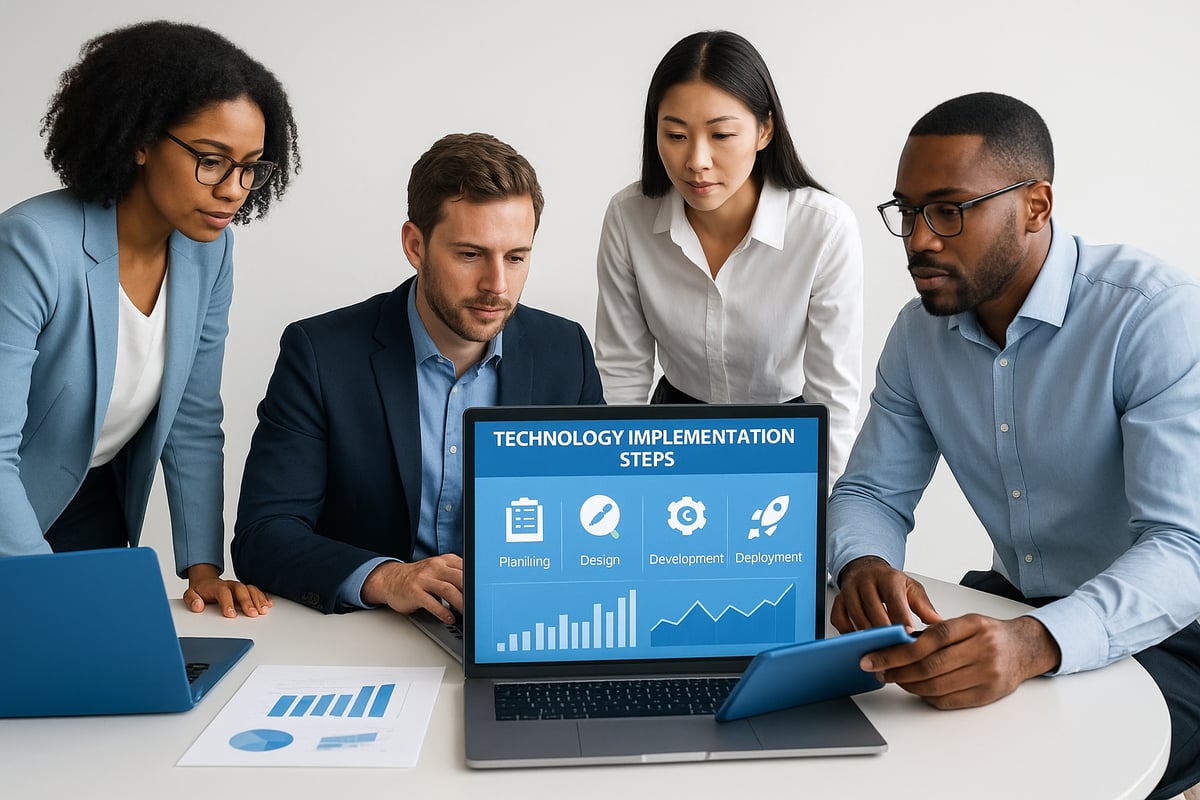
Steps for Successful Technology Adoption in Consulting Projects
To ensure effective technology and consulting outcomes, organizations should embrace a structured approach:
- Assess readiness and set objectives: Evaluate organizational capabilities and define clear, measurable goals for technology and consulting projects.
- Choose scalable solutions: Select technology platforms that are future-proof and align with long-term business needs.
- Engage stakeholders: Foster collaboration between business and IT teams to drive alignment in technology and consulting efforts.
- Develop a robust data strategy: Prioritize data quality and integration to support analytics and informed decision-making.
- Plan for integration and rollout: Use phased implementation to minimize disruption and optimize results.
- Invest in training and change management: Equip teams with the skills needed to adapt to new technology and consulting workflows.
- Monitor and iterate: Continuously track progress, measure outcomes, and refine strategies for ongoing success.
A notable example is Merck’s partnership with McKinsey, which streamlined clinical authoring using Gen AI. By following these steps, Merck reduced reporting time and improved efficiency. Industry research shows that projects with dedicated change management are six times more likely to achieve objectives. For organizations seeking expert guidance, AI strategy and implementation resources offer valuable frameworks tailored to technology and consulting transformations.
Common Pitfalls
Despite careful planning, technology and consulting projects can face obstacles. Common pitfalls include:
- Scope creep, where project requirements expand beyond the original plan
- Lack of executive buy-in, leading to insufficient support or resources
- Underestimating resistance to change among staff
- Poor data quality or integration issues
- Inadequate training, resulting in low adoption rates
Awareness of these challenges is essential. By proactively addressing these pitfalls, leaders can ensure that technology and consulting initiatives deliver sustainable results, drive innovation, and position their organizations for success in 2026 and beyond.
Regulatory, Compliance, and Risk Considerations
As technology and consulting rapidly evolve, organizations face a regulatory environment that is more complex and dynamic than ever. The convergence of global operations and digital transformation has increased scrutiny around data privacy, cybersecurity, and cross-border compliance. Leaders must now navigate a labyrinth of rules, where missteps can lead to financial penalties and reputational damage. For technology and consulting professionals, staying ahead of these changes is not just a best practice but a business necessity.

New regulations in data privacy and cybersecurity are reshaping how companies collect, store, and use information. Consulting firms are playing a central role in helping clients interpret and implement these requirements, from anti-money laundering (AML) and know-your-customer (KYC) processes to regulatory reporting. For example, CSC Global provides integrated solutions for business administration, tax, and compliance, enabling organizations to adapt quickly to shifting standards. These services illustrate how technology and consulting are intertwined with compliance, ensuring that businesses remain agile and secure.
Risk management is now a foundational pillar in technology and consulting engagements. Consulting teams are implementing robust frameworks to identify, assess, and mitigate risks associated with digital transformation projects. Transparent governance, documented audit trails, and strong controls are essential for safeguarding assets and ensuring regulatory alignment. According to industry surveys, 80% of organizations list regulatory compliance as a top concern during technology transformation initiatives.
The impact of new legislation, such as the Corporate Transparency Act and global minimum tax rules, is being felt across consulting projects. These changes require organizations to rethink their strategies, adapt their systems, and ensure continuous monitoring for compliance. Consulting firms are leveraging advanced analytics and digital tools to provide real-time insights and proactive risk mitigation. For leaders navigating technology and consulting challenges, engaging with firms that offer end-to-end support is critical. Firms specializing in strategy and business transformation are uniquely positioned to help organizations align compliance with innovation, setting the foundation for sustainable growth in 2026 and beyond.
Future-Proofing Organizations: Strategies for 2026 and Beyond
As the pace of change accelerates, future-proofing has become a defining priority for organizations seeking to thrive in the technology and consulting landscape. Leaders must cultivate resilience, agility, and innovation to navigate ongoing disruption. The convergence of digital transformation, AI, and evolving consulting models demands a strategic approach that balances rapid adaptation with long-term value creation.
Building Resilient, Agile, and Innovative Enterprises
Organizations that succeed in 2026 will be those that treat technology and consulting as strategic enablers, not just operational tools. Embracing continuous innovation is essential for staying ahead of market shifts and regulatory changes. Companies must develop a culture that encourages experimentation and rapid iteration, allowing teams to adapt quickly to new challenges.
A core strategy is the seamless integration of AI and advanced technologies within core business models. This includes leveraging AI for predictive analytics, automating complex processes, and enhancing customer experiences. For example, QuantumBlack by McKinsey exemplifies scalable AI adoption, helping enterprises unlock new value streams and drive measurable outcomes.
Building in-house capabilities is equally vital. Organizations are investing in upskilling their workforce, fostering cross-functional collaboration, and establishing agile operating models. Strong leadership is required to champion transformation, nurture talent, and ensure alignment between business and IT objectives.
Partnerships with consulting firms amplify these efforts by providing strategic foresight and hands-on execution. The shift toward ongoing consulting relationships, rather than one-off projects, ensures organizations can continuously innovate and respond to changing conditions. According to recent research, organizations with AI-driven innovation strategies are growing revenue twice as fast as their peers.
The adoption of AI within consulting is also changing professional services. As highlighted in AI’s Role in Professional Services, AI is becoming an integral team member, accelerating value delivery and reshaping client engagements. This evolution reinforces the need for organizations to prioritize technology and consulting in their growth strategies.
Empowering Innovation with Six Paths Consulting
For organizations determined to lead in technology and consulting, partnering with a forward-thinking consulting firm is a strategic advantage. Six Paths Consulting stands out for its expertise in AI-powered strategic innovation, guiding clients to discover untapped market opportunities and design future-ready business models.
The team at Six Paths Consulting leverages proven methodologies such as Blue Ocean Strategy and Design Thinking to help organizations break free from competitive constraints. Their approach is deeply hands-on, offering not only tailored advisory but also immersive training programs that empower teams to sustain transformation after the engagement concludes.
Clients benefit from a holistic suite of services, including AI implementation, organizational upskilling, and the development of robust innovation pipelines. Six Paths Consulting’s track record includes delivering measurable growth strategies for both multinationals and SMEs, helping them accelerate revenue, enhance customer experience, and secure long-term market leadership.
What truly differentiates Six Paths Consulting is its commitment to building in-house innovation capabilities. By focusing on practical skill development, organizations become self-sufficient in navigating future waves of change. For those seeking a roadmap to outpace the competition, Six Paths Consulting offers a partnership designed for the complexities of 2026 and beyond.
To learn more about how innovation can be embedded within your organization, explore Six Paths’ Innovation consulting services. Their solutions are crafted to address the unique challenges of technology and consulting, ensuring your enterprise remains resilient and agile in a rapidly evolving world.
As we’ve explored, staying ahead in the rapidly evolving world of technology and consulting calls for both strategic insight and practical innovation. If you’re ready to uncover new market opportunities, elevate your business model, or build your in house innovation capabilities, you don’t have to navigate this journey alone. At Six Paths Consulting, we’re passionate about helping leaders like you accelerate growth and future proof your organization. Curious about where your greatest opportunities lie and how you can take action?
Book a Free Opportunity Assessment
and let’s chart your next steps together.