

Strategy consulting is undergoing rapid transformation as we approach 2026. New technologies, evolving client expectations, and global disruptions are fundamentally altering how firms deliver value.
In this dynamic environment, understanding the top strategy consulting trends is now essential for both consulting firms and their clients. Organizations that adapt quickly will secure a stronger competitive edge and future-proof their strategies.
This article explores the eight most significant trends shaping the future of strategy consulting. We will highlight digital disruption, shifting client demands, and offer actionable insights. Read on to discover which trends will define the industry’s next chapter.
The Evolving Landscape of Strategy Consulting
The world of top strategy consulting is experiencing a profound transformation. As organizations seek new ways to stay ahead, consultants must adapt to rapid technological, organizational, and societal shifts. Let us explore four pillars reshaping this dynamic field as we approach 2026.

Digital Transformation and AI Integration
Digital transformation is at the heart of top strategy consulting’s evolution. Firms are rapidly adopting AI and advanced analytics to enhance market analysis, scenario modeling, and recommendations. Leading names like McKinsey’s QuantumBlack and BCG’s AI Center set the standard for integrating data-driven insights into client solutions.
Over 60% of top firms now offer AI-driven services, according to industry surveys. This shift delivers faster, more accurate project outcomes. However, challenges include talent upskilling and ethical AI use. Clients now expect consultants to provide actionable, data-backed strategies. For a closer look at key players, see Top AI Consulting Companies.
Rise of In-House Strategy Consulting Teams
Many organizations are investing in their own top strategy consulting units. Corporations like Google (BizOps) and Siemens (Advanta) are building internal teams, leveraging institutional knowledge and reducing costs. Internal consultants can execute strategies quickly, thanks to deep business familiarity.
This trend impacts the market share of traditional consulting firms. There is also a noticeable migration of talent from external firms to in-house roles. For example, Capital One’s Strategy Group reports directly to the CEO, highlighting the strategic value of internal consulting. The need for hybrid talent, with both consulting and corporate experience, is rising.
Demand for Sustainable and Purpose-Driven Strategies
Sustainability and ESG now define top strategy consulting projects. Firms like Deloitte and EY-Parthenon have launched specialized ESG practices to address regulatory, investor, and societal demands. These services go beyond compliance, embedding sustainability into core business strategies.
Clients want measurable frameworks like GRI and SASB to demonstrate progress. Sustainability is now a source of innovation and competitive advantage. Consulting revenues from ESG-related projects continue to grow. Integrating purpose and profit has become a central pillar for both firms and their clients.
Expansion of Strategy Consulting into New Sectors and Geographies
Top strategy consulting is expanding into new sectors and emerging markets. Demand is surging in Asia, the Middle East, and Africa, while industries such as healthcare, logistics, and the public sector are attracting more attention. DHL Consulting’s dual internal and external model exemplifies this trend.
Consulting firms are localizing services and acquiring boutique players to navigate regulatory and cultural complexities. Cross-border M&A and global expansion projects are on the rise. Success depends on understanding local nuances and building diverse teams to serve clients worldwide.
8 Top Strategy Consulting Trends Shaping 2026
The world of top strategy consulting is evolving at a rapid pace. As 2026 approaches, organizations are seeking innovative ways to stay ahead. Let’s dive into the eight top strategy consulting trends that are fundamentally changing the industry.

1. Data-Driven Consulting and Predictive Analytics
The shift from intuition-led to data-driven decision-making is redefining top strategy consulting. Firms are deploying advanced analytics tools, big data platforms, and real-time dashboards to extract actionable insights for clients.
Predictive modeling is now central to scenario planning, risk assessment, and market entry analysis. For instance, BCG’s proprietary analytics tools empower consultants to simulate multiple business scenarios, improving the precision of recommendations.
Clients expect measurable ROI and faster, data-backed insights. This growing demand pushes top strategy consulting firms to invest in analytics capabilities. However, challenges remain, such as integrating new data tools with legacy systems and navigating data privacy regulations.
| Benefit | Challenge |
|---|---|
| Increased accuracy | Data privacy |
| Measurable ROI | System integration |
| Faster insights | Talent upskilling |
Top strategy consulting firms that master predictive analytics will maintain a clear edge in a competitive market.
2. AI-Powered Strategic Innovation
AI is now the engine powering business model transformation and product innovation within top strategy consulting. Firms leverage AI for ideation, rapid prototyping, and complex simulations, allowing clients to test strategies before implementation.
McKinsey’s AI-driven projects are prime examples, where AI enhances customer experience initiatives, optimizes supply chains, and refines operations strategies. These capabilities shorten innovation cycles and increase the success rate of transformation programs.
To deliver these services, top strategy consulting firms are hiring data scientists, AI strategists, and design thinkers. Early adopters of AI enjoy a competitive advantage, with the ability to deliver innovative solutions at scale.
The integration of AI is not without hurdles. Firms must address ethical considerations, ensure transparency, and foster a culture of continuous learning. Still, AI-powered consulting is set to remain a core differentiator among top strategy consulting leaders.
3. Customization and Hyper-Personalization of Consulting Services
Top strategy consulting is moving beyond generic solutions towards hyper-personalized offerings. Firms now harness client data and analytics to tailor their recommendations, ensuring strategies align closely with unique business needs.
Modular consulting packages and industry-specific playbooks are becoming standard. Oliver Wyman’s sector-focused teams, for example, deliver highly customized advice that resonates with each client’s industry context.
Technology is a key enabler here, allowing top strategy consulting firms to personalize services at scale. The trend towards outcome-based pricing is also growing, linking consultant fees directly to client results.
Clients benefit from increased satisfaction and loyalty, while consultants gain deeper engagement opportunities. The rise of customization signals a new era for top strategy consulting, where every engagement is bespoke and value-driven.
4. Integration of ESG and Sustainability at the Core
ESG is no longer an add-on but a central pillar of top strategy consulting. Firms embed sustainability into growth, M&A, and transformation projects, responding to regulatory and stakeholder pressures.
Accenture’s sustainability services exemplify this approach, using impact measurement tools to assess progress. ESG is now a source of innovation and differentiation, not just compliance. Tools like carbon footprint analytics and supply chain traceability are mainstream.
Standardization and long-term impact measurement are ongoing challenges. As demand rises, dedicated ESG teams and frameworks become essential. For organizations looking to make sustainability a core strategy, consulting partners offer specialized expertise. Learn more about how sustainability creates a competitive edge in Integration of ESG and Sustainability.
The integration of ESG strengthens the position of top strategy consulting firms, making them vital partners for future-focused organizations.
5. Growth of Internal Consulting and Hybrid Delivery Models
Corporates are rapidly expanding their internal strategy teams, challenging the traditional dominance of external top strategy consulting providers. Hybrid delivery models, where internal and external consultants collaborate, are now common.
For example, Volkswagen Consulting leads internal transformation initiatives, blending deep company knowledge with external best practices. This approach boosts agility, enables cost efficiency, and accelerates execution.
Hybrid models also create new leadership pipelines and talent development opportunities inside organizations. Programs like “consultants-in-residence” help companies nurture in-house expertise while still benefiting from external insights.
The blurring lines between internal and external consulting are reshaping the business models of top strategy consulting firms, driving them to innovate and stay relevant.
6. Emphasis on Digital Transformation and Technology Enablement
Digital transformation remains a top priority for clients and top strategy consulting firms alike. Services now extend from cloud migration to digital operating models and tech-enabled growth strategies.
Consulting firms are investing in digital labs and innovation hubs, such as Deloitte Digital’s end-to-end transformation services. Partnerships with technology giants like AWS, Microsoft, and Salesforce are common, creating robust ecosystems for client success.
The impact is clear: improved business resilience, new revenue streams, and enhanced customer engagement. Top strategy consulting now requires tech-savvy consultants and agile methodologies to deliver results in fast-changing environments.
Clients expect seamless integration of digital tools and a focus on delivering measurable outcomes. As digital transformation accelerates, it remains central to the value proposition of top strategy consulting leaders.
7. Expansion into Non-Traditional Sectors and New Markets
Top strategy consulting is expanding well beyond its traditional strongholds. Firms are seeing rapid growth in logistics, healthcare, public sector, and fintech, driven by sector-specific challenges and opportunities.
DHL Consulting’s logistics transformation projects are a leading example of this trend. Regional expansion is also accelerating, with Africa, Southeast Asia, and the Middle East emerging as key markets.
Consulting firms often partner with local boutiques to navigate regulatory complexity and cultural nuances. New service lines, such as digital health and smart cities, require customized approaches.
Competition from local firms is intensifying, pushing global top strategy consulting providers to adapt and innovate. This expansion unlocks fresh growth avenues and diversifies the consulting landscape.
8. Talent Transformation and New Consulting Skillsets
The top strategy consulting workforce is undergoing a profound shift. Demand for digital, analytical, and change management skills is surging, with firms investing heavily in upskilling.
Consultants now need expertise in AI, data science, ESG, and agile methodologies. Diversity, equity, and inclusion are also priorities, as teams with varied backgrounds deliver better client outcomes.
New career paths are emerging, including design thinking, innovation strategy, and technology consulting. BCG’s surge in digital and analytics hiring shows the scale of transformation underway.
Remote and hybrid work models are now standard. Retention strategies focus on flexible work and purpose-driven cultures. In this new era, top strategy consulting firms that invest in talent transformation will remain ahead of the curve.
Technology and Innovation as Growth Catalysts
Technology and innovation are redefining how top strategy consulting firms deliver value. As digital disruption accelerates, consulting organizations must harness new tools and approaches to stay ahead. This section explores the ways technology is shaping the future of the industry.
The Role of AI and Automation in Strategy Consulting
AI and automation are transforming the core of top strategy consulting. Firms now use AI to streamline research, accelerate market analysis, and enhance scenario modeling. For instance, natural language processing tools can rapidly scan market data, enabling consultants to focus on strategic insights.
Automation eliminates repetitive tasks, leading to cost savings and quicker project delivery. QuantumBlack, McKinsey’s AI arm, has demonstrated how AI-driven acceleration shortens project timelines while maintaining high quality. However, human oversight remains vital for accuracy and ethical outcomes.
Consulting teams must balance the benefits of AI with client expectations for personalized solutions. For a broader perspective on how AI is influencing the field, see AI-Powered Strategy and Predictive Intelligence.
Digital Platforms and Ecosystem Partnerships
Digital platforms are now central to top strategy consulting. Firms build collaborative platforms that allow real-time client engagement, data sharing, and progress tracking. These tools foster transparency and speed up decision-making.
Ecosystem partnerships extend consulting capabilities. By teaming up with tech vendors, startups, and academic institutions, consulting firms gain access to proprietary technologies and fresh perspectives. A prime example is Accenture’s Industry X platform, which brings together clients and partners to co-create innovative solutions.
Such collaborations not only increase client stickiness but also open new recurring revenue streams. As technology evolves, consultants must stay agile and continually expand their digital ecosystem.
Innovation Labs and Accelerators
To maintain a competitive edge, many top strategy consulting firms have established innovation labs and accelerators. These labs create a safe space for rapid prototyping, experimentation, and testing of new business models.
Deloitte’s Greenhouse Labs exemplify how collaborative environments can spark creative solutions. Clients work alongside consultants in agile workshops, iterating on ideas and validating concepts before large-scale rollout.
The lab approach helps reduce risk and accelerates time-to-market for clients. It also nurtures a culture of innovation within consulting teams, ensuring they are prepared for the demands of tomorrow’s business landscape.
AI-Powered Strategic Innovation by Six Paths Consulting
Six Paths Consulting is at the forefront of integrating AI into top strategy consulting. Their services span AI strategy, business model innovation, and customer experience design, addressing the needs of CEOs and innovation leaders.
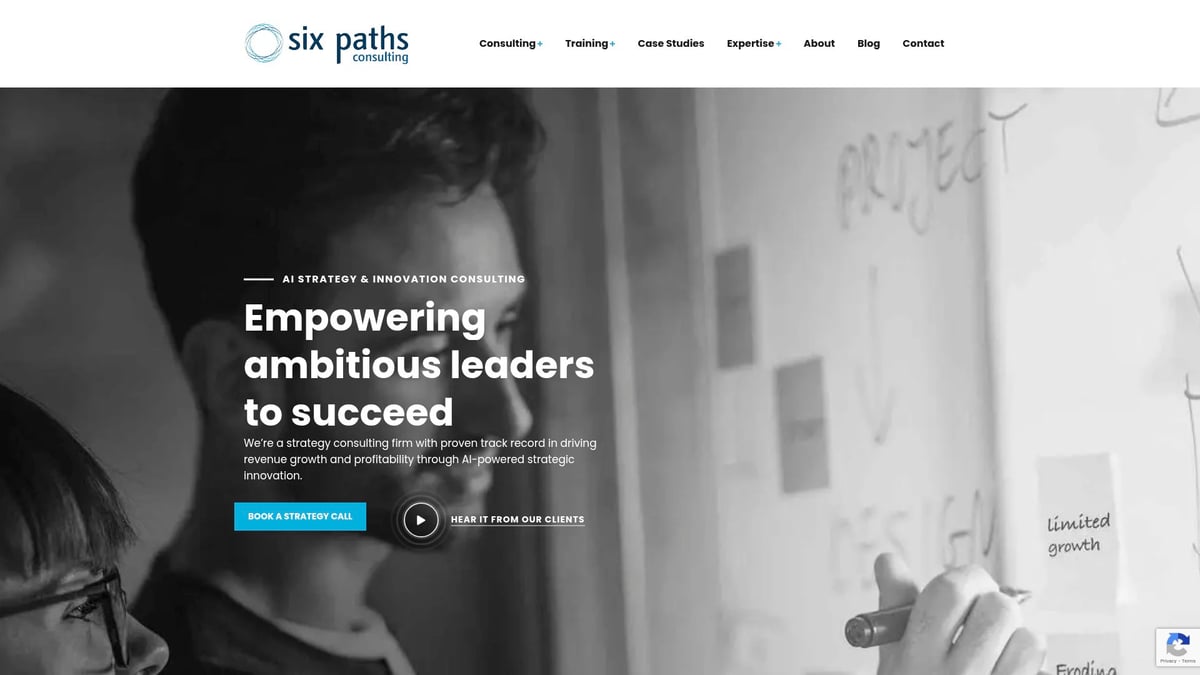
Leveraging methodologies like Blue Ocean Strategy, Design Thinking, and Lean Startup, Six Paths delivers measurable growth and builds lasting in-house capabilities. Their experience covers sectors such as automotive, healthcare, and technology, offering flexible engagement models from consulting to workshops.
For organizations seeking to transform through innovation, Strategy and Transformation Consulting from Six Paths provides actionable insights and proven frameworks to achieve sustainable success in a rapidly changing market.
The Future Client-Consultant Relationship
The future of top strategy consulting is being redefined by evolving client expectations and new delivery models. As organizations seek greater value, transparency, and measurable outcomes, the client-consultant relationship is transforming dramatically. These changes are driving innovation, collaboration, and specialization, ensuring that both clients and consultants remain competitive and agile in a rapidly shifting marketplace.

Shift to Value-Based and Outcome-Oriented Engagements
Clients engaging top strategy consulting firms increasingly demand clear, measurable business outcomes. Traditional fee-for-service models are giving way to value-based contracts, where compensation is linked to achieving agreed-upon performance metrics. This shift encourages deeper alignment, risk-sharing, and accountability between consultants and clients.
For example, many digital transformation projects now include outcome-based pricing, tying fees directly to project impact. This approach enhances trust and transparency, but also challenges both sides to define success metrics up front. As a result, top strategy consulting professionals are focusing on robust measurement tools, regular progress tracking, and continuous improvement to deliver tangible results.
Co-Creation and Collaborative Consulting Models
Co-creation is becoming a cornerstone of top strategy consulting engagements. Rather than delivering solutions in isolation, consultants and clients now form blended teams to develop strategies collaboratively. This model leverages the client’s institutional knowledge and the consultant’s external perspective, producing more tailored and sustainable solutions.
Joint workshops, agile sprints, and design thinking sessions are common practices. These collaborative efforts accelerate buy-in and drive faster implementation. Knowledge transfer is also enhanced, equipping client teams with skills and frameworks for future challenges. Ultimately, this partnership approach leads to longer-term relationships and greater mutual success in top strategy consulting.
Embracing Remote and Hybrid Consulting Delivery
Remote and hybrid consulting delivery has become standard in top strategy consulting since the pandemic. Virtual workshops, digital collaboration platforms, and global teams allow firms to serve clients across geographies with minimal disruption. This flexibility yields cost savings, faster project timelines, and access to a broader talent pool.
However, challenges remain. Maintaining engagement, ensuring data security, and bridging cultural differences require thoughtful planning. Hybrid delivery models, blending in-person and remote work, help address these issues while maximizing the benefits of both approaches. As remote consulting matures, top strategy consulting firms are investing in technology and best practices to optimize client experiences.
The Rise of Boutique and Specialist Consulting Firms
Boutique and specialist firms are gaining ground in the top strategy consulting landscape. Clients increasingly value deep expertise, agile teams, and personalized service, often opting for niche providers over large multi-service firms. These specialists excel in areas such as ESG, digital health, or market entry, providing targeted solutions for unique challenges.
Competition is intensifying, with boutiques collaborating or competing with bigger players. According to Top 10 Consulting Industry Trends 2026, this trend is set to accelerate, as clients seek flexible partners with proven track records in specialized domains. The result is a more dynamic, client-centric ecosystem within top strategy consulting.
As we’ve explored, the strategy consulting landscape is evolving at breakneck speed with AI integration, in-house innovation, and a relentless focus on measurable results. If you’re curious about how these trends can unlock new growth for your organization, now is the perfect time to take action. I invite you to discover untapped opportunities and see how AI-powered strategy can reshape your business. Ready to explore what’s next for your team? Book a Free Opportunity Assessment and let’s chart a path to success together.