
As 2026 approaches, organizations face increasing pressure to adapt in response to rapid technological advances and shifting market demands. Embracing effective business model and innovation strategies is no longer optional—it is essential for survival and growth. Companies that master business model and innovation gain a critical edge, unlocking greater competitiveness, resilience, and profitability. This guide provides a clear, step-by-step roadmap designed to help leaders navigate the evolving landscape. You will discover foundational concepts, proven frameworks, emerging trends, real-world success stories, and actionable steps to implement innovative business models for a thriving future.
Understanding Business Models in 2026
The pace of change in today's business environment is unprecedented. As companies approach 2026, understanding the evolving landscape of business model and innovation is essential for sustainable growth. Organizations must adapt their strategies, reimagine value creation, and harness new technologies to stay competitive.
The Evolution of Business Models
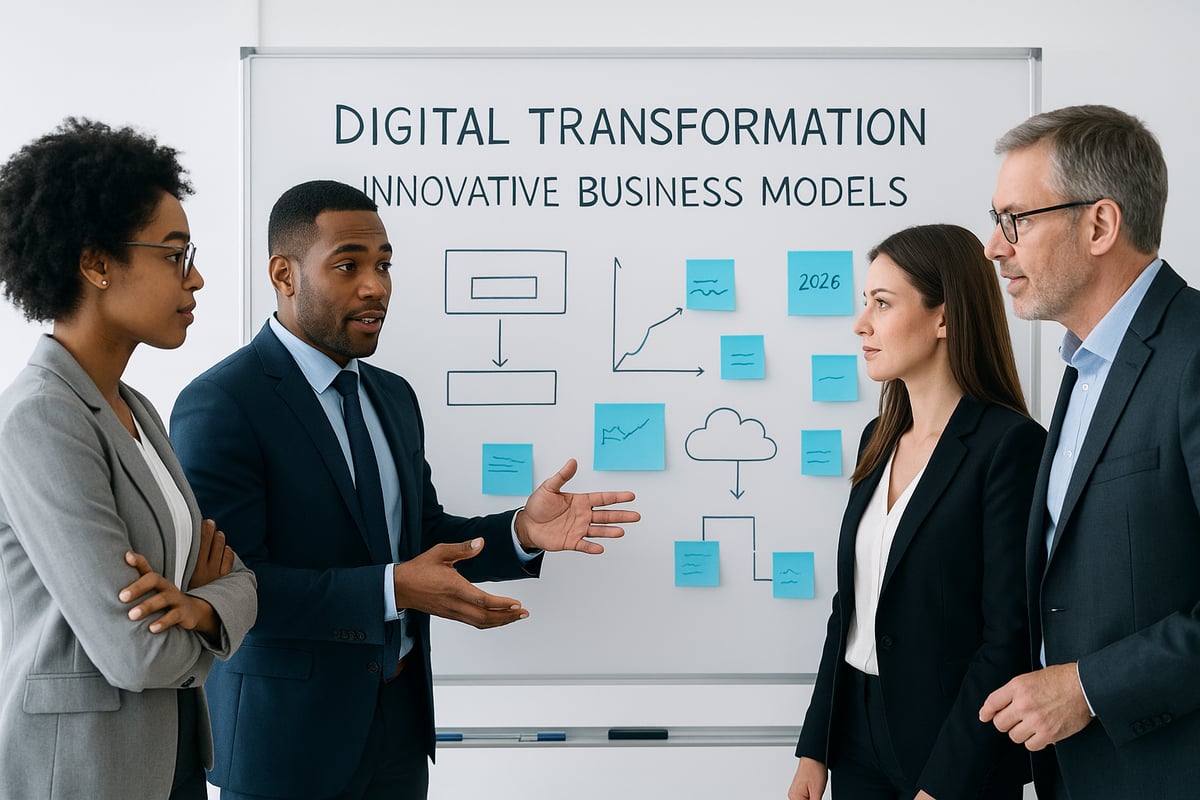
Business models have undergone significant transformation over recent years. Traditional models, once based on linear value chains and direct sales, are giving way to digital and platform-based approaches. Ecosystem and network-driven models are now at the forefront, enabling organizations to collaborate and co-create value with partners, customers, and even competitors.
Globalization and digital transformation have accelerated this shift. Companies like Lego have embraced digital customization, while Sony has pivoted to online music distribution. Both examples highlight how the business model and innovation landscape is shaped by the degree of change required and the time needed for successful implementation.
Key Components of a Modern Business Model
A robust business model and innovation strategy in 2026 requires clarity around foundational components. These include the value proposition, customer segments, channels, revenue streams, and key partnerships. The Business Model Canvas is a widely adopted framework that brings these elements together in a structured way.
Modern business models must prioritize adaptability and scalability. Integration of AI and data-driven decision-making is now a necessity, not a luxury. Customer-centric design also stands out, as organizations tailor offerings to rapidly shifting needs and preferences.
Why Business Model Innovation Matters
Business model and innovation are critical drivers of organizational growth and resilience. Companies that proactively innovate their business models outperform those that cling to outdated approaches. Success stories include organizations that adapted quickly, while others have failed due to stagnation.
Research shows a strong correlation between business model innovation and long-term profitability. According to the 2026 US Business Leaders Outlook, executives are prioritizing innovation strategies to navigate market disruptions. In fast-changing industries, the risks of standing still are higher than ever, making proactive innovation a key competitive advantage.
Challenges and Barriers to Business Model Innovation
Despite its importance, business model and innovation efforts face significant challenges. Organizational inertia, limited resources, and cultural resistance often slow progress. Implementation can be time-intensive, requiring careful change management and strong leadership.
Competitor insights highlight the need to consider organizational context and willingness to embrace change. Companies that succeed in overcoming these barriers typically have visionary leaders and a clear strategic direction. Real-world examples demonstrate that overcoming resistance and fostering a culture of innovation are essential for lasting transformation.
Frameworks and Tools for Business Model Innovation
Adopting the right frameworks is essential for mastering business model and innovation in today’s dynamic environment. These tools help organizations systematically design, analyze, and reinvent their business models. For a deeper dive into proven methodologies, see Frameworks for Business Innovation.

Business Model Canvas and Its Applications
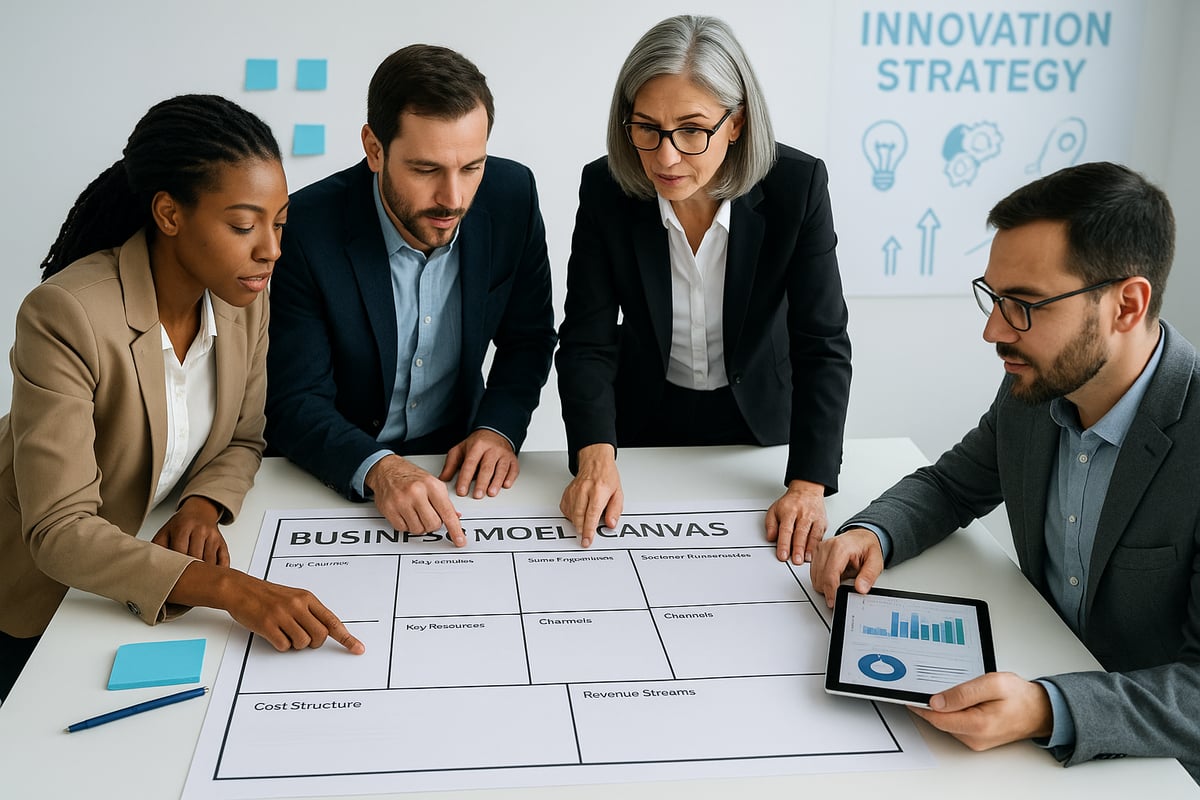
The Business Model Canvas is a foundational tool in business model and innovation strategy. Developed by Dr. Alex Osterwalder, it provides a clear visual structure for mapping out key components:
- Value Proposition
- Customer Segments
- Channels
- Customer Relationships
- Revenue Streams
- Key Resources
- Key Activities
- Key Partnerships
- Cost Structure
Teams use the canvas to prototype new ideas, conduct scenario planning, and align stakeholders. In practice, organizations leverage the canvas to quickly test different approaches, making it indispensable for innovation in 2026.
Value Proposition Design
Value proposition design is central to business model and innovation success. It focuses on identifying what customers truly value and why they choose your offering over competitors. Tools like the Value Proposition Canvas help teams uncover unmet needs and clarify differentiators.
Leading companies such as Apple and Airbnb excel by creating compelling value propositions that resonate with their core markets. Integrating customer insights ensures that your business model delivers distinct value and drives long-term growth.
Blue Ocean Strategy
Blue Ocean Strategy empowers organizations to break away from crowded markets and create new demand. This approach to business model and innovation involves four key actions:
- Eliminate factors customers no longer value
- Reduce elements that are over-served
- Raise aspects that matter most
- Create entirely new offerings
Companies like Cirque du Soleil and Nintendo Wii have found “blue oceans” by redefining industry boundaries. By focusing on uncontested market space, businesses can achieve sustainable differentiation and profitability.
Lean Startup and Agile Innovation
Lean Startup and agile methodologies are powerful for driving business model and innovation. The build-measure-learn feedback loop encourages rapid experimentation and minimizes wasted effort.
Key principles include:
- Starting with a minimum viable product (MVP)
- Testing assumptions with real customers
- Iterating quickly based on feedback
Startups and large enterprises alike use these approaches to adapt swiftly, reduce risks, and stay competitive as market needs evolve.
Digital and AI-Driven Tools
Digital and AI-driven tools have transformed business model and innovation strategies. AI enables advanced data analysis, customer insights, and automation, supporting faster decision-making.
Examples include:
- Predictive analytics for market trends
- AI-powered chatbots for customer engagement
- Automated fulfillment systems
By integrating digital platforms and AI, organizations can scale innovation initiatives and respond to changing market conditions with agility.
Emerging Trends in Business Model Innovation for 2026
Organizations worldwide are rethinking their business model and innovation strategies as 2026 approaches. The pace of change is accelerating, and staying competitive means understanding the leading-edge trends shaping tomorrow’s markets.

Platform and Ecosystem Business Models
Platform and ecosystem models are transforming how companies create value. Instead of linear supply chains, businesses now orchestrate multi-sided networks that connect partners, customers, and developers. This shift in business model and innovation is evident in companies like Amazon and Alibaba, where platforms enable seamless commerce, data exchange, and service integration.
Lego’s digital initiatives further illustrate the move toward ecosystems, as they invite users and partners to co-create products and experiences. The competitive advantage comes from network effects, where the value grows as more participants join. For 2026, expect platform thinking to dominate, with businesses leveraging ecosystem partnerships to scale rapidly and innovate faster.
Subscription and Servitization Models
The trend toward subscription and servitization is reshaping business model and innovation approaches across industries. Companies are moving from one-time sales to ongoing service relationships. This model increases customer loyalty and creates predictable revenue streams.
Netflix and SaaS providers like Adobe have successfully transitioned to subscription models, while automotive brands now offer car subscriptions that bundle maintenance, insurance, and upgrades. By focusing on continuous value delivery, organizations can adapt faster to market shifts and deepen customer engagement. In 2026, subscription and service-based offerings will be vital for sustained growth.
Sustainability and Purpose-Driven Innovation
Sustainability is no longer optional in business model and innovation planning. Consumers, investors, and regulators are demanding environmentally and socially responsible actions. Companies like Patagonia and Unilever have reimagined their models around ESG principles, integrating circular economy practices and transparent supply chains.
Tesla’s commitment to clean energy and ethical sourcing sets new standards for purpose-driven innovation. Data shows that brands with a strong purpose outperform peers in customer retention and profitability. As we look to 2026, expect sustainability to be a core driver of differentiation and long-term success.
Personalization and Customer-Centric Models
Hyper-personalization is taking center stage in business model and innovation. Advanced analytics and AI allow companies to tailor products, services, and experiences to individual preferences. Spotify’s recommendation engine and Nike’s product customization are leading examples.
Customer-centricity requires gathering real-time feedback and using it to shape offerings. Research indicates that businesses prioritizing personalization enjoy higher retention rates and stronger brand loyalty. In 2026, organizations that place customers at the heart of their models will gain a decisive edge in crowded markets.
AI and Automation as Innovation Drivers
AI and automation are revolutionizing business model and innovation strategies. From intelligent chatbots to predictive maintenance, companies are streamlining operations and unlocking new value streams. The integration of AI is not only enhancing efficiency but also enabling entirely new products and services.
Industry forecasts show rapid adoption of AI by 2026, transforming cost structures and scalability. For example, automated fulfillment centers and AI-powered analytics are reshaping how organizations operate. For a deeper dive into how Generative AI is reshaping traditional business models, see Transforming Business with Generative AI.
Globalization and Local Adaptation
Balancing global scale with local adaptation is a critical business model and innovation priority. Companies must be agile enough to respond to diverse market needs while leveraging centralized strengths. McDonald’s local menu adaptations and global e-commerce expansion strategies highlight the importance of flexibility.
Success in 2026 will depend on the ability to customize offerings for regional preferences without losing operational efficiency. Businesses that master this balance will be well-positioned to thrive in both mature and emerging markets.
Step-by-Step Guide to Business Model Innovation
Navigating the evolving landscape for business model and innovation requires a structured approach. By following this step-by-step guide, organizations can unlock new opportunities and position themselves for long-term success in 2026.
Step 1: Assessing Your Current Business Model
Begin your business model and innovation journey by auditing your existing business model. Use tools like the Business Model Canvas to map out your value proposition, customer segments, channels, revenue streams, and partnerships.
Gather feedback from internal teams and external stakeholders to identify strengths and weaknesses. Evaluate your current market fit and compare your model with competitor benchmarks. Scenario analysis can reveal where your model excels and where it needs improvement, setting a strong foundation for future innovation.
Step 2: Identifying Opportunities for Innovation
Next, identify opportunities for business model and innovation by leveraging customer insights, market trends, and competitor analysis. Harness data analytics and AI to uncover unmet needs and emerging demands.
Frameworks such as Blue Ocean Strategy Consulting Insights can help you discover uncontested market spaces and rethink industry boundaries. Encourage cross-functional ideation sessions to generate a diverse set of possibilities, ensuring you explore both incremental and disruptive innovations.
Step 3: Designing and Prototyping New Models
With opportunities in hand, start designing and prototyping alternative business model and innovation options. Use design thinking to iterate quickly, focusing on rapid feedback and learning from potential customers.
Develop prototypes or minimum viable models to test new value propositions and revenue streams. For example, Lego’s digital prototyping enabled them to experiment with digital customization before a full-scale rollout. This phase is about creativity, flexibility, and learning from real user interactions.
Step 4: Evaluating Feasibility and Impact
After prototyping, assess the feasibility and impact of each business model and innovation concept. Consider financial, operational, and cultural factors that could influence success.
Utilize scenario planning and risk analysis to gauge potential outcomes. Prioritize models based on return on investment, alignment with your strategic goals, and the time required for implementation. A comparison table can help clarify which options best fit your organization’s context.
| Criteria | Model A | Model B | Model C |
|---|---|---|---|
| ROI Potential | High | Medium | Low |
| Operational Fit | Strong | Fair | Weak |
| Time to Market | 6 mo | 12 mo | 18 mo |
Step 5: Building Organizational Buy-In
Securing buy-in is essential for business model and innovation success. Clearly communicate the vision and strategic rationale behind the new model to all stakeholders.
Engage leadership early and address cultural resistance by fostering a growth mindset throughout the organization. Share examples of successful change management from within your industry to build confidence and momentum. Empower teams by involving them in the innovation process and recognizing their contributions.
Step 6: Implementing the New Business Model
Effective implementation transforms business model and innovation plans into reality. Develop a phased rollout plan with clear milestones and assign ownership for each stage.
Allocate necessary resources, monitor progress closely, and remain adaptable to feedback or unforeseen challenges. Drawing from competitor insights, ensure your timeline is realistic and that teams are aligned on priorities. Celebrate early wins to build momentum and reinforce commitment.
Step 7: Measuring Success and Iterating
Continuous measurement is vital for business model and innovation effectiveness. Define key performance indicators (KPIs) that track financial, customer, and operational outcomes.
Collect feedback from customers and stakeholders to inform improvements. Use data-driven insights to iterate and refine the model as market conditions evolve. The ability to adapt quickly will be a defining trait of successful organizations in 2026.
Six Paths Consulting: AI-Powered Innovation Support
Six Paths Consulting specializes in guiding organizations through business model and innovation challenges using AI-powered strategies. The firm partners with CEOs and senior leaders to identify new market opportunities and design resilient, future-ready business models.
Services include tailored consulting, interactive training, and hands-on workshops using proven frameworks like Blue Ocean Strategy, Design Thinking, and Lean Startup. Six Paths Consulting helps embed innovation capabilities, accelerate execution, and build lasting competitive advantage.
Trusted by global brands and diverse sectors, the firm offers scalable solutions for corporates, SMEs, and public organizations seeking to master business model and innovation in 2026.
Real-World Case Studies of Business Model Innovation
Real-world examples provide the strongest proof of how business model and innovation strategies drive success. The following case studies highlight organizations that have navigated transformation, disruption, and growth through innovative business model decisions.

Case Study 1: Lego’s Digital Transformation
Lego’s journey showcases the power of incremental business model and innovation. By launching Lego Factory, the company enabled digital customization, allowing users to design unique sets online. This shift modernized their value proposition while maintaining core brand elements.
Lego minimized operational disruption by integrating digital experiences with physical products. The result was increased customer engagement and new revenue streams. Lego’s example proves that even established brands can leverage business model and innovation to remain relevant and competitive.
Case Study 2: Sony Music’s Pivot to Online Distribution
Sony Music faced major disruption as digital technologies transformed the music industry. Their pivot to online distribution required a radical shift in business model and innovation. Moving from physical media to digital sales meant overhauling supply chains, licensing, and revenue models.
This transformation was not without challenges, including cultural resistance and legacy infrastructure. However, Sony’s willingness to rethink its business model and innovation approach enabled it to survive and thrive in a fundamentally changed market.
Case Study 3: Subscription Economy Leaders (Netflix, Adobe)
Netflix and Adobe exemplify how embracing a subscription model can redefine entire sectors. By shifting from one-time sales to recurring revenue, these companies created a more predictable business model and innovation ecosystem.
This approach improved customer loyalty, enabled rapid feature updates, and supported global scalability. According to industry data, the subscription economy has grown exponentially, with leaders like Netflix and Adobe setting the standard for business model and innovation in the digital era.
| Company | Model Shift | Key Benefit |
|---|---|---|
| Netflix | DVD rental to streaming | Global scale, loyalty |
| Adobe | Software sales to SaaS | Recurring revenue, agility |
Case Study 4: Purpose-Driven Innovation (Patagonia, Unilever)
Purpose-driven brands such as Patagonia and Unilever have embedded sustainability into their business model and innovation strategies. By prioritizing environmental and social impact, these companies have strengthened customer trust and brand loyalty.
Patagonia’s circular economy initiatives and Unilever’s sustainable sourcing have set benchmarks for responsible business model and innovation. Consumer trends consistently show a preference for ethical brands, making purpose-driven innovation a key differentiator.
Case Study 5: AI Integration in Manufacturing (Siemens, GE)
Siemens and GE demonstrate how AI is reshaping industrial business model and innovation. Through predictive maintenance and smart factories, these companies have improved operational efficiency and unlocked new revenue streams.
AI-driven solutions have yielded measurable ROI and positioned these manufacturers at the forefront of digital transformation. For a deeper dive into sector-specific examples, see Business Model Innovation in Aerospace, which highlights similar shifts in a highly complex industry.
Key Success Factors and Best Practices for 2026
Adopting a robust business model and innovation strategy is essential for organizations aiming to thrive in 2026. The pace of change demands disciplined leadership, agile structures, ongoing investment in talent, smart use of technology, and a relentless commitment to learning. Let us explore the key factors that set top performers apart.
Leadership and Vision
Strong leadership is the cornerstone of any successful business model and innovation journey. Visionary executives articulate a clear direction, champion new ideas, and inspire teams to embrace change. They set the tone for risk-taking, continuous improvement, and long-term thinking.
Leaders who prioritize business model and innovation foster a culture where experimentation is valued. For example, senior leaders at global tech firms frequently communicate strategic shifts and align resources to support transformation. Without executive sponsorship, even the best ideas can falter.
Vision-driven organizations outperform their peers by anticipating market shifts and mobilizing quickly. Effective leaders empower teams, set measurable goals, and celebrate incremental wins, ensuring everyone moves in the same direction.
Organizational Agility and Change Management
Organizational agility is vital for adapting to new market realities. Companies that excel at business model and innovation often feature flexible structures, rapid decision-making, and cross-functional collaboration.
Best practices for managing change include transparent communication, early involvement of key stakeholders, and robust support systems. Change management frameworks help address resistance and maintain momentum, especially when implementing new business model and innovation approaches.
Competitor analysis shows that organizations with high agility overcome barriers faster and achieve sustainable results. Agile teams respond to feedback, pivot quickly, and drive continuous progress, turning challenges into opportunities for growth.
Investment in Talent and Capabilities
Building a workforce equipped for business model and innovation is a strategic imperative. Companies invest in upskilling, cross-functional training, and fostering a mindset of curiosity and problem-solving.
Access to tools like the Value Proposition Canvas Guide enables teams to design customer-centric solutions and refine core skills. Encouraging collaboration between departments breaks down silos and sparks creative thinking.
Leading organizations prioritize talent development, offering mentorship programs, innovation labs, and regular learning opportunities. The right talent mix ensures new business model and innovation efforts are grounded in practical expertise and market relevance.
Technology Enablement and Data-Driven Decision Making
Leveraging advanced technology is central to business model and innovation success. AI, analytics, and digital platforms offer powerful capabilities for analyzing trends, automating processes, and enabling smarter decisions.
| Technology | Benefit | Example Use Case |
|---|---|---|
| AI & Machine Learning | Predictive analytics | Demand forecasting |
| Digital Platforms | Scalable business models | Subscription services |
| Automation | Efficiency & cost reduction | Automated fulfillment |
Recent studies, such as Artificial Intelligence in Lean Startup Methodology, highlight how AI enhances experimentation and accelerates feedback loops. Organizations that integrate technology into their business model and innovation efforts realize faster time-to-market and improved outcomes.
Continuous Learning and Experimentation
Continuous learning propels business model and innovation forward. Companies that embrace a test-and-learn approach create feedback loops, monitor results, and refine strategies based on real-world data.
Establishing innovation sprints, pilot programs, and regular retrospectives fosters a culture of experimentation. Successful organizations treat failures as learning opportunities and adapt quickly to evolving market conditions.
The most resilient companies in 2026 will be those that embed continuous learning into their DNA, ensuring their business model and innovation strategies remain relevant and impactful across changing landscapes.
As you look ahead to 2026, it’s clear that adapting your business model and embracing innovation are not just competitive advantages—they’re essential for growth and resilience. If you’re ready to explore new market opportunities, harness AI-driven strategies, and future-proof your organization, let’s take the next step together. You don’t have to navigate these changes alone. I invite you to Book a Free Opportunity Assessment so we can identify your unique strengths and discover actionable pathways for innovation tailored to your business goals.