
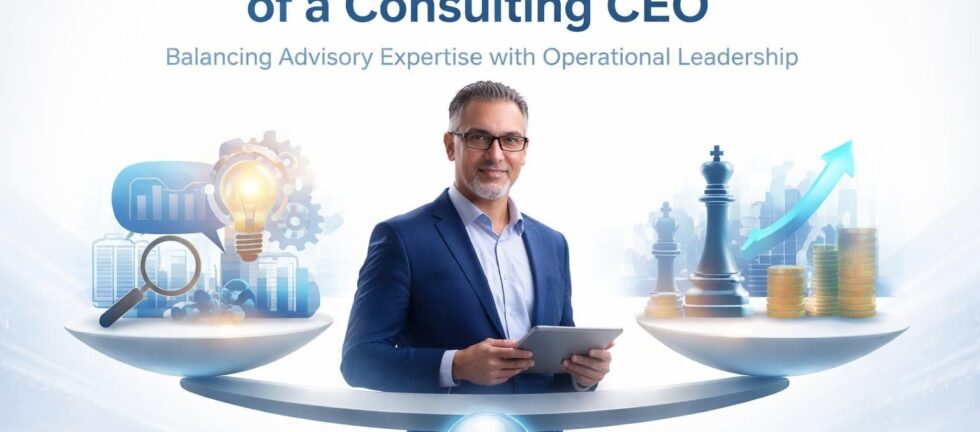
The role of a consulting CEO represents a unique intersection between strategic advisory expertise and operational leadership. As businesses face unprecedented disruption in 2026, the demand for executives who can think like consultants while leading like CEOs has intensified. This specialized leadership approach combines deep analytical capabilities with decisive action, positioning organizations to navigate complexity while identifying breakthrough growth opportunities. Understanding what distinguishes a consulting CEO from traditional leadership models provides critical insights for companies seeking transformative results.
The Evolution of the Consulting CEO Role
The consulting CEO archetype has evolved significantly over the past decade. Unlike traditional chief executives who rose through operational ranks, these leaders bring systematic problem-solving frameworks and strategic innovation methodologies to the corner office.
Key characteristics that define the modern consulting CEO include:
- Strategic thinking rooted in data-driven analysis rather than intuition alone
- Experience identifying market opportunities through structured discovery processes
- Capability to design and implement transformational business models
- Proficiency in leveraging emerging technologies for competitive advantage
This leadership model has gained prominence as organizations recognize that yesterday's success formulas no longer guarantee tomorrow's results. The ability to question assumptions, explore white space, and reimagine value propositions has become essential for sustained growth.
Why Organizations Seek Consulting CEO Leadership
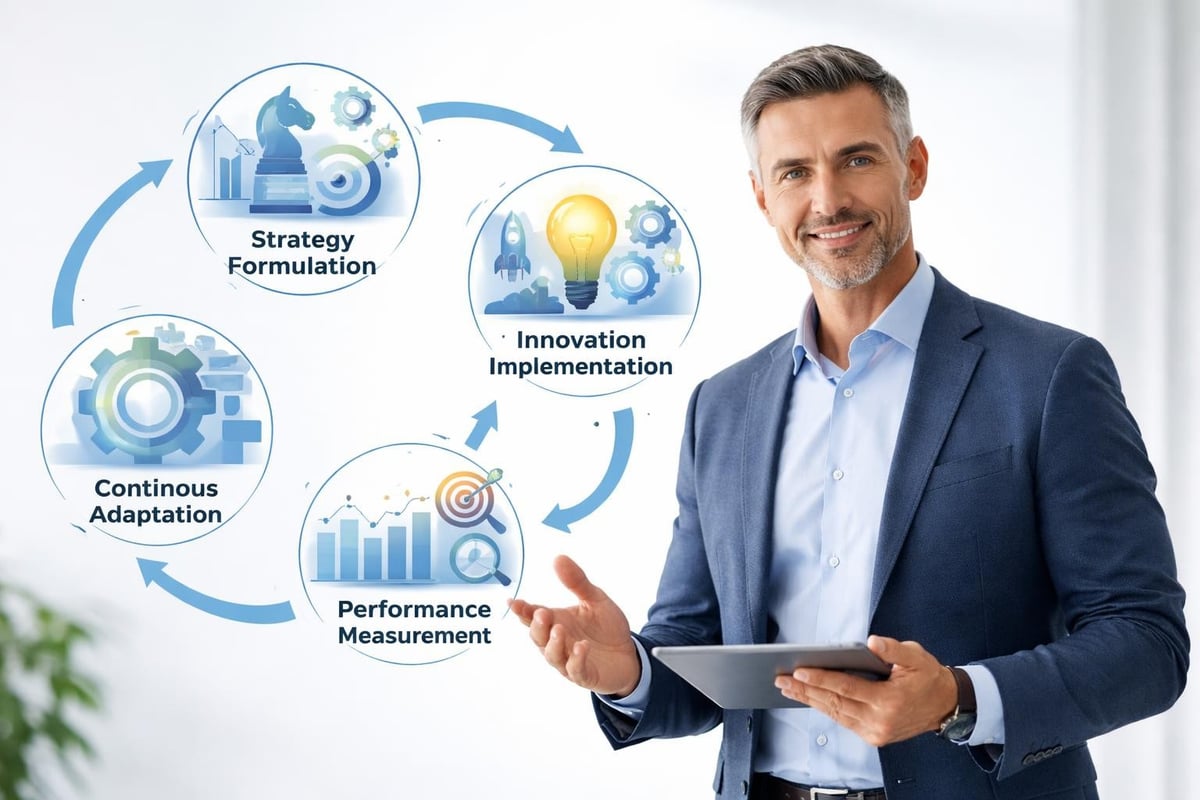
Companies pursuing aggressive growth targets or facing market disruption increasingly turn to executives with consulting backgrounds. These leaders bring methodologies proven across industries, enabling faster identification of revenue opportunities and more rigorous strategic planning.
The best strategy consulting companies have developed frameworks that translate directly into executive decision-making capabilities. When these approaches become embedded in CEO leadership, organizations gain systematic advantages in innovation and market positioning.
Essential Competencies for the Consulting CEO
Transitioning from advisory work to executive leadership requires developing competencies that extend beyond analytical excellence. Research on skills consultants need to become successful CEOs reveals critical capability gaps that must be addressed.
Balancing Strategic Vision with Operational Execution
A consulting CEO must master the tension between long-term strategic positioning and immediate operational demands. While consultants excel at developing five-year roadmaps, chief executives must deliver quarterly results while building future capabilities.
| Strategic Focus | Operational Focus | Integration Approach |
|---|---|---|
| Market opportunity identification | Resource allocation efficiency | Portfolio management balancing both horizons |
| Innovation pipeline development | Performance metric achievement | Innovation accounting linking experiments to KPIs |
| Organizational capability building | Daily execution excellence | Capability deployment in service of strategic goals |
This dual focus requires strategic leadership excellence that acknowledges both dimensions simultaneously. The consulting CEO cannot retreat into strategic abstraction but must ensure ideas translate into measurable business impact.
Building Trust and Organizational Alignment
Consultants often face skepticism when assuming CEO roles, as teams question whether advisory experience translates to operational credibility. Research examining consultants as CEOs highlights this trust deficit as a primary obstacle.
Effective consulting CEOs overcome this barrier through:
- Demonstrating genuine curiosity about operational realities
- Valuing frontline expertise alongside analytical insights
- Making visible commitments to employee development
- Celebrating operational wins with the same enthusiasm as strategic achievements
- Admitting knowledge gaps while mobilizing team expertise to fill them
The consulting CEO who successfully builds this trust foundation unlocks organizational energy that pure strategy cannot generate alone. People follow leaders who respect their contributions and demonstrate commitment to collective success.
Driving Innovation as Core Business Practice
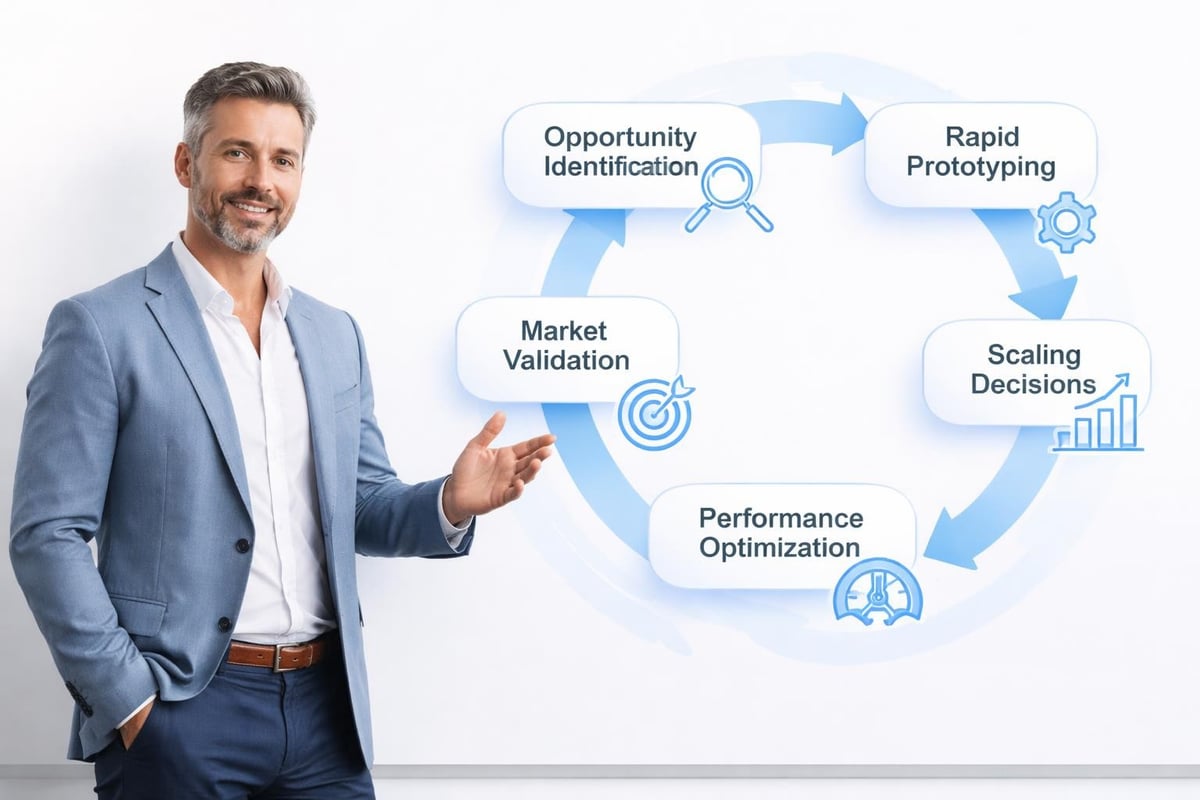
Unlike traditional CEOs who may delegate innovation to specialized teams, the consulting CEO treats strategic innovation as central to leadership responsibility. This approach reflects training in frameworks for innovation that systematize opportunity discovery rather than leaving it to chance.
Innovation under consulting CEO leadership becomes:
- Disciplined: Following proven methodologies rather than random brainstorming
- Measurable: Tracked through clear metrics linking experiments to growth outcomes
- Inclusive: Engaging talent across organizational levels in opportunity identification
- Strategic: Aligned with market positioning and competitive differentiation goals
This systematic approach to driving innovation distinguishes consulting CEOs from executives who view innovation as periodic initiatives rather than continuous organizational capability.
Navigating Contemporary CEO Challenges Through a Consulting Lens
The challenges defining CEOs in 2025 and beyond demand precisely the analytical rigor and strategic frameworks that consulting-trained leaders bring to executive roles.
Unlocking Growth Through Strategic Cost Management
The consulting CEO approaches cost optimization not as indiscriminate reduction but as strategic reallocation. This perspective recognizes that resources freed from low-value activities can fund high-impact innovation initiatives.
Applying consulting methodologies to cost management involves:
- Zero-based analysis questioning every expenditure against strategic contribution
- Activity-based costing revealing true economics of products, channels, and customer segments
- Benchmarking identifying performance gaps and efficiency opportunities
- Scenario modeling testing resource allocation alternatives
This analytical approach to financial stewardship enables the consulting CEO to simultaneously reduce waste and increase investment in growth engines. The result is improved profitability coupled with enhanced competitive positioning.
Fostering Organizational Unity in Fragmented Environments
Modern organizations face increasing internal fragmentation across geographies, functions, and business units. The consulting CEO addresses this challenge through structured alignment processes rather than inspirational messaging alone.
Effective unification strategies include:
| Challenge | Consulting CEO Approach | Expected Outcome |
|---|---|---|
| Siloed functions | Cross-functional strategy development workshops | Shared ownership of enterprise goals |
| Competing priorities | Portfolio governance with transparent trade-off criteria | Resource allocation clarity |
| Cultural fragmentation | Values-based decision frameworks | Consistent behavioral norms |
| Communication gaps | Structured feedback mechanisms with action accountability | Trust through responsiveness |
These systematic interventions reflect consulting discipline applied to organizational dynamics. The consulting CEO treats cultural alignment as a strategic priority requiring the same rigor as market analysis.
Balancing Short-Term Performance with Long-Term Value Creation
Among the major hurdles CEOs face, the tension between immediate results and sustainable value creation consistently ranks highest. Consulting training in scenario planning and portfolio management provides mental models for navigating this complexity.
The consulting CEO establishes dual operating systems:
- Performance engine: Optimizing current business model for efficiency and profitability
- Innovation engine: Exploring new opportunities for future growth and relevance
Rather than viewing these as competing priorities, the consulting CEO manages them as complementary portfolios requiring different success metrics, governance processes, and resource commitments. This approach, drawn from strategy and transformation consulting methodologies, enables simultaneous execution and exploration.
Implementing AI-Powered Strategic Innovation
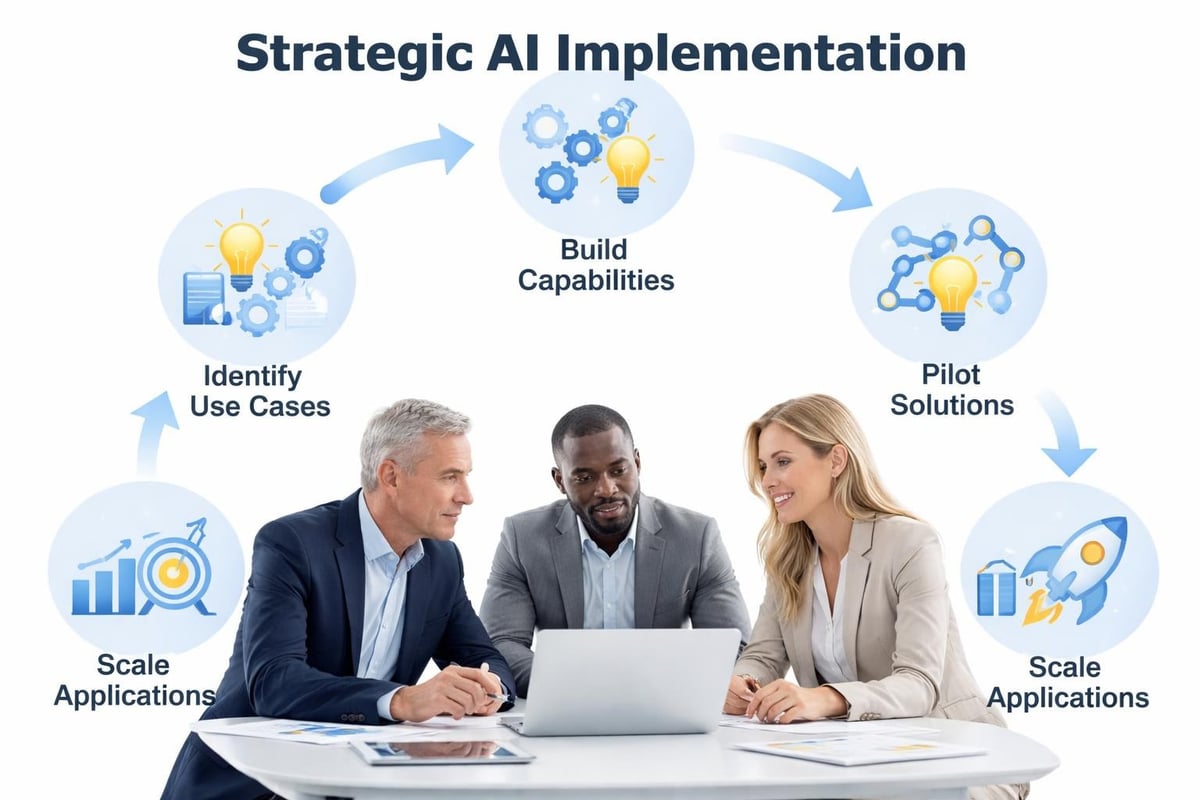
The consulting CEO in 2026 must master artificial intelligence not as a technical specialist but as a strategic enabler of competitive advantage. This requires understanding AI's potential to transform business models, customer experiences, and operational processes.
Identifying High-Impact AI Applications
Rather than pursuing AI adoption for its own sake, the consulting CEO applies structured frameworks to identify applications delivering measurable business value. This involves:
- Mapping customer journey pain points addressable through AI-enhanced experiences
- Analyzing operational processes where AI automation yields significant efficiency gains
- Evaluating product enhancement opportunities through embedded intelligence
- Assessing new business model possibilities enabled by AI capabilities
The systematic approach to AI strategy and implementation ensures technology investments align with strategic priorities rather than following industry hype cycles.
Building AI-Ready Organizational Capabilities
Technology alone cannot deliver transformation. The consulting CEO recognizes that AI success requires parallel development of data infrastructure, technical talent, and organizational change management capabilities.
Critical capability-building priorities include:
- Data governance establishing quality standards and access protocols
- Technical skill development through training and selective hiring
- Experimentation culture encouraging rapid testing and learning
- Cross-functional collaboration breaking down data and knowledge silos
- Ethics frameworks ensuring responsible AI deployment
This holistic capability perspective reflects consulting methodology applied to technology transformation. The consulting CEO treats AI adoption as an organizational change initiative requiring attention to people, processes, and systems simultaneously.
Leveraging External Expertise for Accelerated Results
Even consulting CEOs benefit from external perspectives that challenge internal assumptions and introduce proven methodologies. Strategic partnerships with innovation consulting services can accelerate breakthrough thinking and implementation.
When to Engage External Strategic Partners
The consulting CEO recognizes specific situations where external expertise adds disproportionate value:
- Major strategic inflection points: Market disruption requiring fundamental business model reimagination
- Capability gaps: Specialized knowledge unavailable within current organization
- Accelerated timelines: Compressed transformation schedules demanding additional resources
- Objective perspective: Politically sensitive situations benefiting from neutral third-party analysis
- Proven methodologies: Access to frameworks and tools validated across industries
Rather than viewing external engagement as admission of internal inadequacy, the consulting CEO treats it as strategic leverage that amplifies organizational capabilities. The best consulting agencies become force multipliers enabling faster, more confident decision-making.
Maximizing Value from Consulting Partnerships
The consulting CEO approaches external engagements differently than executives lacking advisory experience. Having worked as consultants themselves, these leaders structure partnerships for maximum knowledge transfer and sustainable capability building.
Value maximization strategies include:
| Approach Element | Traditional CEO | Consulting CEO |
|---|---|---|
| Engagement structure | Outsource problem-solving | Co-create solutions with team involvement |
| Knowledge transfer | Receive deliverables | Embed methodologies in organizational processes |
| Success metrics | Project completion | Capability development and sustained results |
| Team involvement | Limit distraction | Maximize learning opportunities |
This sophisticated approach to external partnerships reflects understanding of how consulting relationships create lasting value beyond immediate deliverables. The consulting CEO invests in building internal capabilities that persist after engagement completion.
Developing the Next Generation of Consulting CEOs
Organizations seeking to cultivate consulting CEO capabilities within their leadership pipeline must implement deliberate development strategies. Innovation training programs build the analytical and strategic skills that distinguish this leadership model.
Essential Development Experiences
Emerging leaders benefit from experiences that replicate the consulting CEO mindset:
- Cross-functional strategic projects exposing them to enterprise-level decision-making
- Innovation initiatives requiring structured opportunity discovery and validation
- Turnaround assignments demanding analytical problem diagnosis and solution design
- External strategy exposure through partnerships with consulting firms
- Executive education in strategic frameworks and innovation methodologies
These experiences develop pattern recognition across business situations and build confidence in systematic problem-solving approaches. The consulting CEO emerges from diverse challenges rather than single-function career progression.
Cultivating Analytical Rigor with Strategic Intuition
The most effective consulting CEOs combine data-driven analysis with strategic intuition honed through experience. Development programs must address both dimensions rather than treating them as opposing competencies.
Balanced development requires:
- Analytical skill building through case method learning and real business problems
- Decision-making under uncertainty through simulations and scenario planning
- Strategic pattern recognition through exposure to diverse industries and situations
- Intuition validation by testing assumptions against data and market feedback
- Reflection practices connecting experiences into coherent mental models
This comprehensive development approach, supported by CEO best practices, prepares leaders for the complexity they will face in executive roles.
Measuring Consulting CEO Impact
The consulting CEO establishes clear metrics connecting strategic initiatives to business outcomes. This measurement discipline distinguishes consulting-trained leaders from those who pursue innovation without accountability for results.
Strategic Innovation Metrics
Rather than tracking activity levels, the consulting CEO measures outcomes:
- Revenue from new offerings: Percentage of total revenue from products or services launched within specified timeframe
- Market expansion success: Growth in new customer segments or geographic markets
- Business model evolution: Revenue diversity across traditional and innovative models
- Competitive positioning: Market share gains and premium pricing sustainability
- Innovation pipeline health: Qualified opportunities at each stage from concept to scale
These metrics create accountability for strategic choices while providing early warning signals when initiatives underperform. The consulting CEO uses measurement not as retrospective judgment but as real-time navigation guidance.
Organizational Capability Indicators
Beyond financial outcomes, the consulting CEO tracks capability development that enables sustained competitive advantage:
- Employee innovation participation rates and quality of submitted ideas
- Speed from opportunity identification to market launch
- Cross-functional collaboration effectiveness in strategic projects
- Strategic decision quality as measured by outcome achievement
- Organizational learning velocity and knowledge application
These indicators reveal whether the organization is building muscles for continuous innovation rather than depending on individual CEO brilliance. The consulting CEO's ultimate success lies in creating systems that outlast their tenure.
The consulting CEO represents a powerful leadership model for organizations navigating uncertainty while pursuing ambitious growth objectives. By combining strategic frameworks with operational accountability and analytical rigor with organizational empowerment, these leaders position companies for breakthrough performance. Whether you are developing internal talent or seeking to accelerate strategic transformation, understanding the consulting CEO approach provides valuable insights for leadership effectiveness. Six Paths Consulting specializes in developing strategic innovation capabilities and leadership approaches that drive measurable revenue growth, helping ambitious leaders discover new market opportunities and build the organizational capabilities required for sustained competitive advantage.