

Businesses today face unprecedented pressure to innovate continuously. Market disruption, evolving customer expectations, and technological advancement demand fresh thinking and novel solutions. Yet many organizations struggle to tap into their teams' creative potential, relying instead on conventional approaches that yield incremental improvements rather than transformative breakthroughs. A creativity workshop for teams provides a structured environment where employees can break free from routine thinking patterns, explore unconventional ideas, and develop innovative solutions that drive measurable business results. These workshops transform how teams approach challenges, fostering a culture where creativity becomes a strategic advantage rather than an occasional accident.
Why Teams Need Dedicated Creativity Workshops
Traditional business environments often suppress creative thinking unintentionally. Hierarchical structures, risk-averse cultures, and time pressures push employees toward safe, proven solutions rather than experimental approaches. Teams become trapped in habitual thinking patterns, applying yesterday's solutions to tomorrow's problems.
A creativity workshop for teams disrupts these patterns by creating a dedicated space for exploration. Participants step away from daily pressures and engage in structured activities designed to unlock fresh perspectives. This separation from routine work proves essential because creativity requires psychological safety, time for divergent thinking, and permission to propose ideas that might initially seem impractical.
Research shows that creative problem-solving capabilities directly correlate with organizational innovation success. Companies that invest in developing these skills through creativity workshops for business report higher innovation output, improved employee engagement, and stronger competitive positioning. The workshop environment provides the framework teams need to develop and practice creative thinking systematically.
Building Blocks of Effective Creative Sessions
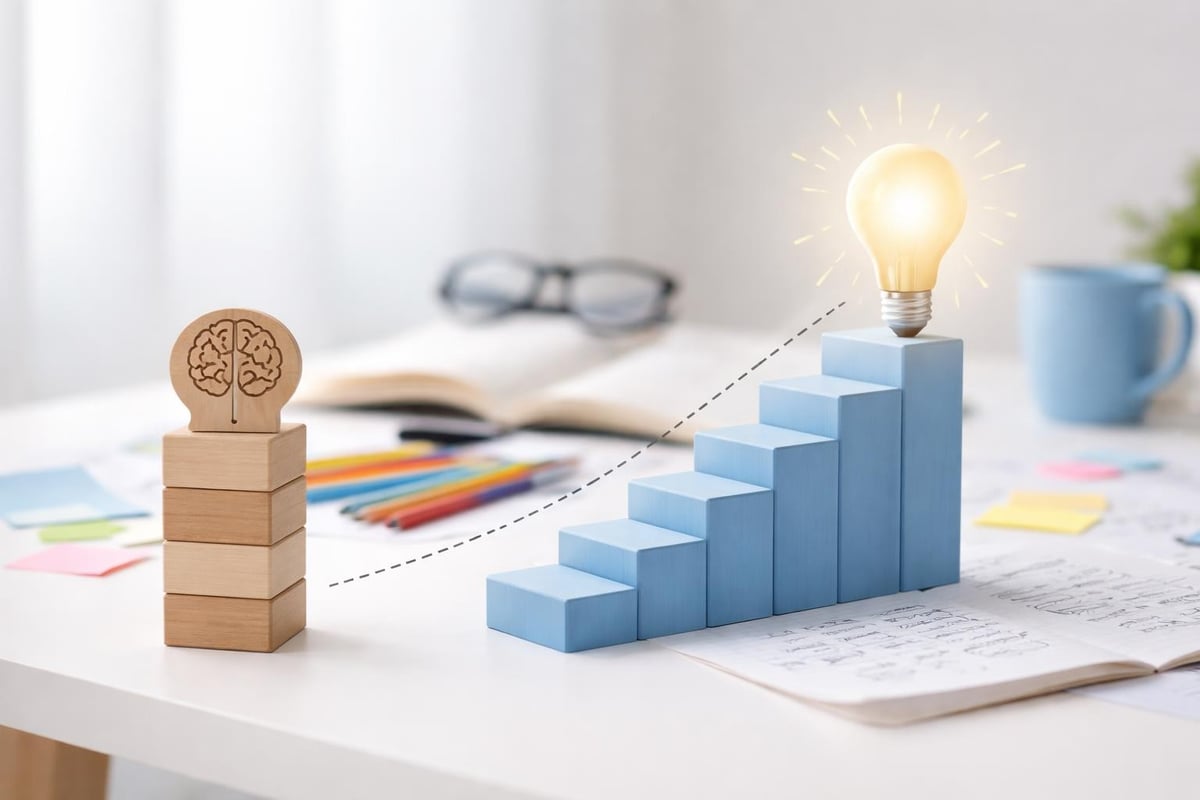
Successful creativity workshops share common structural elements that maximize participant engagement and output. Understanding these components helps organizations design sessions that deliver tangible results rather than superficial entertainment.
Core workshop components include:
- Psychological safety establishment through clear ground rules
- Divergent thinking exercises that generate multiple possibilities
- Convergent thinking activities that refine and focus ideas
- Cross-functional participation bringing diverse perspectives
- Facilitation expertise guiding productive creative processes
- Documentation systems capturing insights for future implementation
The workshop duration matters significantly. Sessions lasting 90 minutes to full days each serve different purposes. Shorter workshops work well for specific problem-solving challenges, while extended sessions enable deeper exploration of complex strategic questions.
Timing also influences outcomes. Morning sessions often yield higher energy and engagement, though afternoon workshops can leverage accumulated insights from earlier work. Organizations should consider participant schedules, attention spans, and the complexity of challenges being addressed when planning session timing.
Popular Workshop Formats That Drive Results
Different creativity workshop formats suit different organizational needs and challenges. Selecting the appropriate approach depends on the specific innovation goals, team composition, and time available.
Design Thinking Sessions
Design thinking workshops emphasize human-centered problem-solving through empathy, ideation, and rapid prototyping. Teams follow a structured process that begins with understanding user needs, defines core problems, generates potential solutions, and creates testable prototypes. This approach proves particularly valuable when developing new products, services, or customer experiences.
Running a design thinking workshop requires careful facilitation to ensure teams progress through each phase effectively. The iterative nature allows teams to test assumptions quickly, gather feedback, and refine ideas before significant resource investment occurs.
| Design Thinking Phase | Primary Activities | Expected Outputs |
|---|---|---|
| Empathize | User interviews, observation, experience mapping | Deep user insights, pain point identification |
| Define | Problem framing, needs synthesis, opportunity statements | Clear problem definitions, focused challenges |
| Ideate | Brainstorming, sketching, concept generation | Diverse solution possibilities, creative options |
| Prototype | Mockups, models, minimum viable products | Tangible representations of ideas |
| Test | User feedback, iteration, refinement | Validated concepts, improvement directions |
Innovation Sprint Workshops
Innovation sprints compress months of development work into intensive focused sessions. Teams tackle specific business challenges using time-boxed activities that force rapid decision-making and eliminate perfectionism. These workshops work exceptionally well for innovation and change initiatives requiring quick market response.
The sprint format typically spans three to five days, with each day focused on specific deliverables. Day one involves challenge mapping and opportunity identification. Subsequent days progress through solution sketching, decision-making, prototyping, and validation. The compressed timeline creates urgency that pushes teams beyond conventional thinking.
Sprint participants should include decision-makers with authority to greenlight promising concepts. Without executive involvement, even brilliant ideas may languish in approval processes after the workshop concludes. Cross-functional representation ensures diverse perspectives and reduces implementation barriers.
Creative Problem-Solving Workshops
These sessions apply structured creativity techniques to specific business challenges. Unlike broader innovation workshops, creative problem-solving focuses on generating solutions for defined issues. Teams might address questions like reducing customer churn, improving operational efficiency, or entering new market segments.
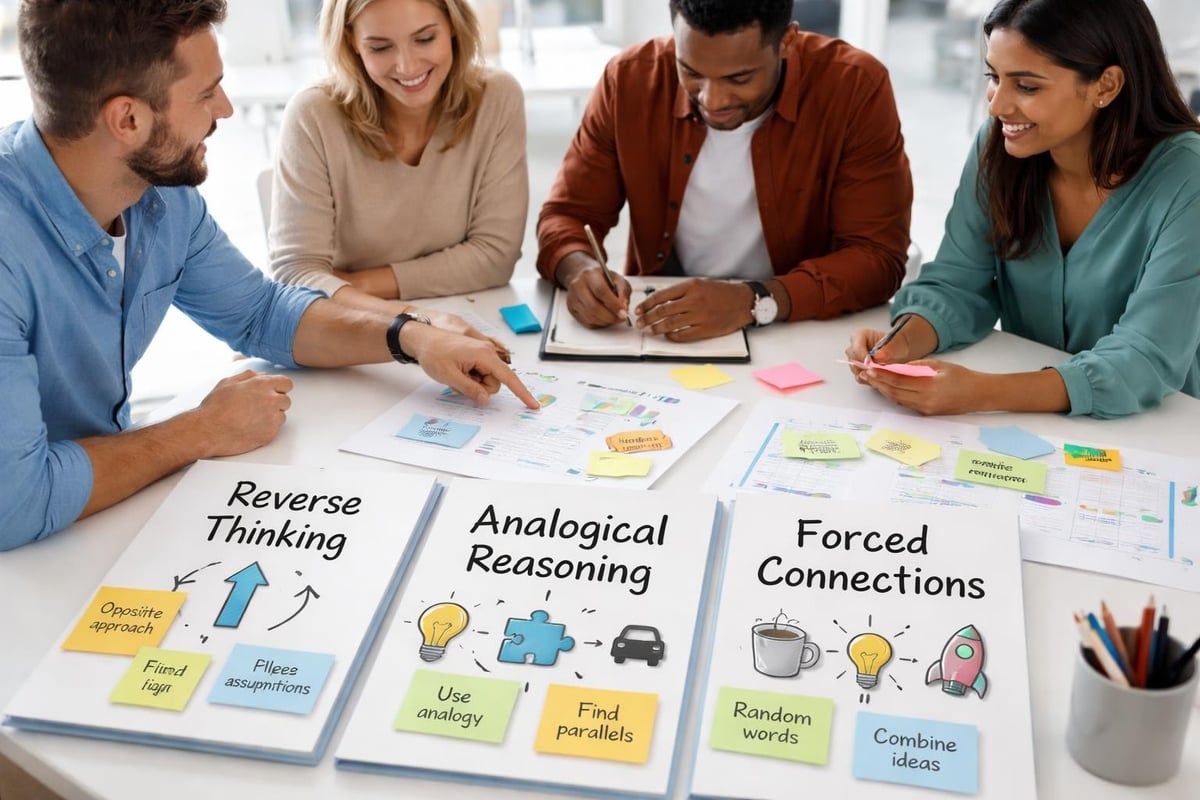
Facilitators guide teams through proven creative team workshop activities that stimulate novel thinking. Techniques include reverse thinking, random word association, forced connections, and analogical reasoning. Each method disrupts habitual thought patterns and reveals unexpected solution pathways.
Effective problem-solving workshops follow this progression:
- Challenge clarification and reframing from multiple angles
- Individual ideation capturing diverse perspectives
- Group sharing and idea building
- Concept clustering and pattern identification
- Solution development and feasibility assessment
- Action planning with clear ownership and timelines
Designing Your Creativity Workshop for Teams
Successful workshop design requires careful planning that aligns activities with specific outcomes. Generic creativity exercises may entertain participants without producing actionable results. Strategic design ensures time invested yields measurable innovation progress.
Pre-Workshop Preparation
Preparation determines workshop success more than in-session activities. Organizations should define clear objectives, identify appropriate participants, and gather relevant background information before the session begins. What specific innovation challenge needs addressing? Clarity here focuses creative energy productively.
Participant selection significantly impacts outcomes. Homogeneous teams often generate similar ideas reflecting shared backgrounds and experiences. Diverse teams bring varied perspectives that spark unexpected connections and novel solutions. Consider including participants from different departments, hierarchy levels, and areas of expertise.
Background materials help participants arrive prepared to contribute. Sharing relevant market research, customer insights, competitive analyses, or internal performance data provides context for creative exploration. However, avoid overwhelming participants with excessive information that constrains rather than informs ideation.
Facilitation Excellence
Professional facilitation transforms good workshops into exceptional ones. Skilled facilitators create environments where all voices contribute, manage group dynamics constructively, and guide teams through productive creative processes without dictating outcomes.
Facilitators should establish clear ground rules emphasizing judgment deferral, building on others' ideas, encouraging wild thinking, and maintaining focus. These principles create psychological safety essential for authentic creative risk-taking. Participants must feel comfortable proposing unconventional ideas without fear of criticism or ridicule.
Energy management throughout sessions requires attention to pacing, activity variety, and participant engagement levels. Alternating between individual work, small group discussions, and full team sharing maintains involvement while accommodating different working styles. Strategic breaks prevent fatigue and allow subconscious processing that often yields breakthrough insights.
Workshop Environment Considerations
Physical and psychological environments both influence creative output. Space configuration, materials availability, and atmospheric elements impact how freely teams generate ideas. Workshop locations should differ from standard meeting rooms, signaling that different thinking modes are expected and welcomed.
Flexible seating arrangements enable easy transitions between activity types. Movable chairs, standing work areas, and breakout spaces support varied collaboration modes. Wall space for posting ideas, sketching concepts, and organizing thoughts proves essential for visual thinking and group synthesis.
Materials matter more than organizations often recognize. Providing diverse creative supplies beyond standard whiteboards encourages hands-on prototyping and visual communication. Sticky notes, markers, modeling clay, construction materials, and digital collaboration tools expand expression possibilities. Unique workshop activities often rely on unexpected materials that stimulate novel thinking approaches.
Maximizing Workshop Impact and Follow-Through
Many creativity workshops generate excellent ideas that never reach implementation. Translating workshop insights into business results requires intentional follow-through processes built into the session design and post-workshop planning.
Capturing and Organizing Ideas
Documentation during sessions ensures valuable concepts survive beyond initial enthusiasm. Assigned note-takers, visual recording, photography, and video capture preserve both ideas and the energy behind them. Digital collaboration platforms enable real-time documentation accessible to all participants and stakeholders unable to attend.
Organization systems help teams sort through dozens or hundreds of ideas generated. Clustering similar concepts, identifying themes, and mapping ideas against strategic priorities creates structure from creative chaos. This organization should happen during the workshop while context and reasoning remain fresh in participants' minds.
Evaluation criteria should balance innovation potential against implementation feasibility. Assessing ideas across dimensions like customer impact, revenue potential, resource requirements, timeline, and strategic alignment helps identify which concepts deserve further development. However, avoid premature elimination of ideas that seem impractical but might inspire breakthrough thinking with additional exploration.
Building Implementation Momentum
The transition from workshop to execution determines whether creativity produces results. Successful organizations establish clear next steps before participants leave the session. Who owns each promising concept? What resources support further development? When will progress reviews occur?
Action planning assigns specific responsibilities with concrete deadlines. Vague commitments to "explore this further" rarely produce results amid competing priorities. Instead, designate project champions, allocate dedicated time or budget, and schedule milestone reviews that maintain accountability.
Quick wins build momentum and credibility for ongoing innovation efforts. Identifying concepts that can be tested or implemented rapidly demonstrates the creativity workshop's value. Early successes create organizational appetite for continued creative experimentation and larger innovation investments.
Developing Ongoing Creative Capabilities
A single creativity workshop for teams provides value, but sustained innovation requires developing ongoing capabilities. Organizations should view workshops as skill-building opportunities that enhance how teams approach challenges long after facilitators depart.
Training programs that build in-house innovation capabilities prove most valuable for organizations committed to continuous innovation. Teams learn creativity techniques they can apply independently, reducing dependence on external facilitation for every creative challenge. This capability development transforms how mid-size organizations compete against larger competitors.
Establishing regular innovation rituals maintains creative momentum between formal workshops. Weekly ideation sessions, monthly innovation challenges, or quarterly strategy sprints keep creative muscles exercised. These smaller, frequent practices often yield incremental improvements that accumulate into significant competitive advantages.

Advanced Techniques for Experienced Teams
Teams with creativity workshop experience benefit from advanced techniques that challenge their evolved capabilities. These approaches push beyond basic brainstorming into sophisticated innovation methodologies.
Provocative Question Frameworks
Advanced facilitators use provocative questions that challenge fundamental business assumptions. Rather than asking "How can we improve our product?" they pose "What if our product became completely obsolete?" or "How would we destroy our own business?" These inversions force teams to examine opportunities and threats from radically different angles.
Assumption reversal exercises identify beliefs teams take for granted, then systematically question each assumption's validity. This technique often reveals limiting beliefs that constrain innovation unnecessarily. Teams discover possibilities previously invisible because underlying assumptions remained unexamined.
Cross-Industry Innovation Exploration
Examining how other industries solve analogous problems sparks fresh thinking. Teams studying customer experience innovation might explore hospitality, entertainment, or healthcare approaches rather than only analyzing direct competitors. These cross-pollination exercises import successful concepts from unrelated contexts.
Inspiring team creativity often requires looking beyond familiar territory. Site visits to innovative companies, guest speakers from different sectors, or case studies from unrelated industries inject new perspectives that challenge conventional wisdom within your industry.
AI-Augmented Creative Processes
Emerging technologies create new possibilities for creativity workshops. Generative AI tools assist with research, concept generation, and rapid prototyping in ways that amplify human creativity rather than replacing it. Teams can explore more possibilities faster, testing ideas through AI-generated mockups or analyzing concepts against vast data sets.
However, integrating AI tools effectively requires thoughtful workshop design that positions technology as an enabler rather than a crutch. Human judgment, emotional intelligence, and strategic thinking remain essential for evaluating AI-generated concepts and identifying truly innovative opportunities. The workshop facilitator guides appropriate AI usage that enhances rather than diminishes creative thinking development.
Measuring Workshop Success and ROI
Organizations investing in creativity workshops rightfully expect measurable returns. Defining success metrics before workshops begin enables objective assessment of value delivered.
Immediate Outcome Metrics
Short-term measures capture workshop productivity and participant engagement. Quantity and quality of ideas generated, participant satisfaction scores, and breadth of perspectives represented provide immediate feedback on session effectiveness. These metrics help refine future workshop designs based on what works best for your team.
Key immediate metrics include:
- Total ideas generated per participant hour
- Percentage of participants actively contributing
- Diversity of idea categories explored
- Number of concepts advancing to development
- Participant learning and capability growth
- Satisfaction with facilitation and process
Long-Term Impact Assessment
Meaningful innovation impact emerges over months or years rather than days. Tracking which workshop concepts reach implementation, revenue generated from new initiatives, customer satisfaction improvements, or market share gains demonstrates true value. However, attribution challenges arise when multiple factors influence these outcomes.
Establishing control comparisons helps isolate workshop impact. Comparing innovation output from teams participating in creativity workshops against similar teams without such training reveals performance differences attributable to capability development. Performance tracking over time shows whether improvements sustain or fade without reinforcement.
Cultural Transformation Indicators
Perhaps the most valuable yet hardest-to-measure workshop outcome involves cultural shift toward innovation. Organizations successfully building creative capabilities see changes in how teams approach challenges, willingness to experiment, psychological safety for proposing unconventional ideas, and cross-functional collaboration quality.
Employee engagement surveys, innovation participation rates, and idea submission frequencies provide proxy measures for cultural evolution. Observing whether teams independently apply creativity techniques learned in workshops signals genuine capability development beyond single-session outcomes.
Common Pitfalls and How to Avoid Them
Even well-intentioned creativity workshops can fail to deliver expected value. Understanding common mistakes helps organizations design more effective sessions.
Insufficient Leadership Support
Creativity workshops flounder without visible executive sponsorship and resource commitment. When senior leaders view workshops as team-building entertainment rather than strategic innovation investments, promising concepts stall during implementation. Securing leadership participation in workshops and post-session review processes demonstrates organizational seriousness about innovation.
Mismatched Expectations
Participants arriving with unclear or misaligned expectations about workshop purposes, expected outcomes, or required contributions create frustration and disengagement. Comprehensive pre-workshop communication clarifying objectives, participant roles, preparation requirements, and anticipated deliverables aligns everyone toward productive collaboration.
One-and-Done Mentality
Organizations treating creativity workshops as isolated events rather than ongoing capability development initiatives see limited lasting impact. Single sessions may generate valuable ideas but fail to build sustainable innovation capacity. Establishing workshop series, follow-up sessions, and continuous learning opportunities compounds benefits over time.
Insufficient Diversity
Homogeneous workshop participation limits perspective variety essential for breakthrough thinking. Including only senior leaders, or only one department, or only one type of expertise constrains creative possibilities. Effective team creativity practices emphasize cognitive diversity, varied experiences, and multiple viewpoints.
Creativity workshops for teams provide structured pathways for unlocking innovation potential that drives competitive advantage and revenue growth. When designed strategically with clear objectives, diverse participation, skilled facilitation, and robust follow-through processes, these workshops transform how organizations approach challenges and identify opportunities. Organizations ready to build systematic innovation capabilities through creativity training and strategic guidance can partner with Six Paths Consulting to develop customized programs that align creative exploration with business strategy, accelerate idea-to-market processes, and establish sustainable competitive differentiation through continuous innovation.