

Organizations that master innovation change don't just survive market disruptions-they create them. In 2026, the pace of technological advancement and shifting customer expectations demands that businesses continuously evolve their products, services, and operating models. However, innovation change represents far more than adopting new technologies or launching novel products. It encompasses the fundamental transformation of organizational culture, processes, and mindsets necessary to sustain competitive advantage in dynamic markets. Understanding how to navigate this complex landscape separates industry leaders from those struggling to maintain relevance.
The Foundation of Innovation Change
Innovation change begins with recognizing that transformation isn't a one-time event but an ongoing organizational capability. Companies that excel at this understand that sources of innovation emerge from multiple directions-demographic shifts, evolving customer perceptions, technological breakthroughs, and process inefficiencies all present opportunities for meaningful change.
The most successful innovation change initiatives establish clear connections between strategic objectives and operational execution. This alignment ensures that innovation efforts directly contribute to revenue growth and profitability rather than becoming isolated experiments disconnected from business outcomes.
Building the Innovation Change Infrastructure
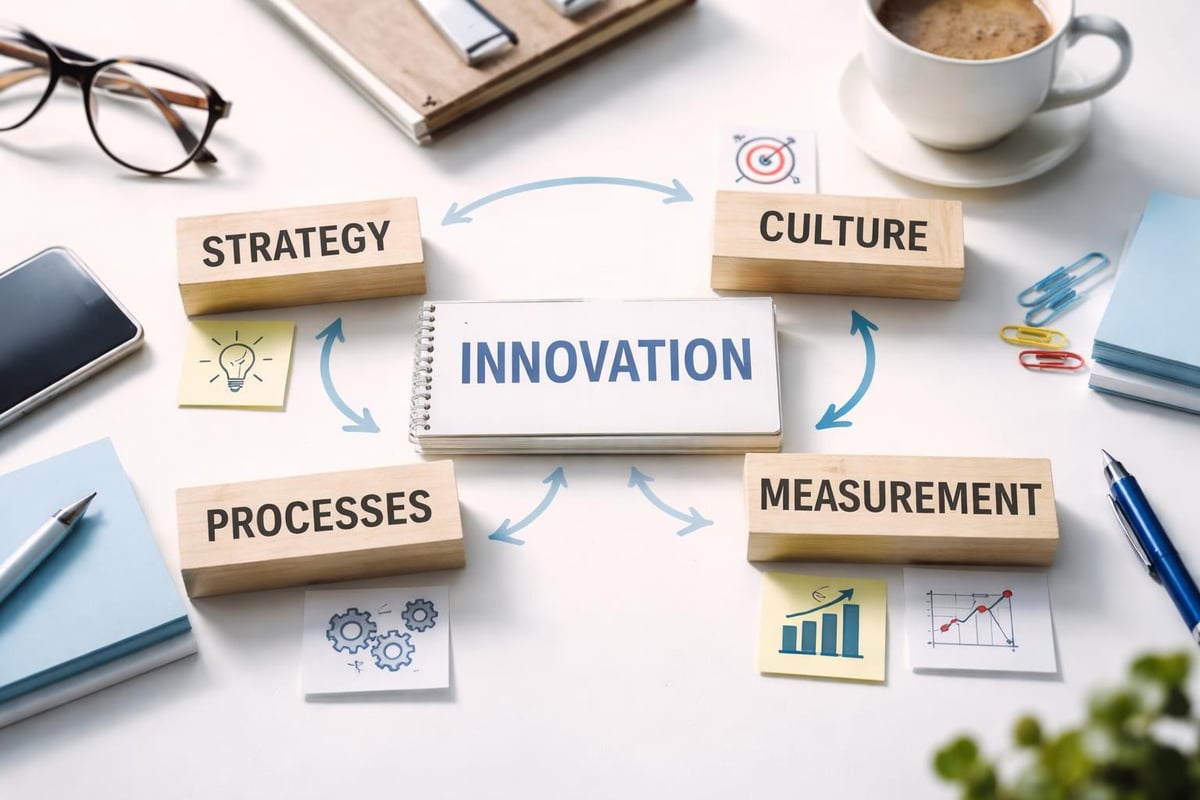
Organizations need robust frameworks to support continuous innovation change. This infrastructure includes:
- Dedicated innovation teams with clear mandates and resources
- Cross-functional collaboration mechanisms that break down organizational silos
- Measurement systems tracking both leading and lagging innovation indicators
- Decision-making processes that balance risk-taking with accountability
- Knowledge management platforms capturing lessons learned and best practices
Research on management skills and organizational culture as sources of innovation demonstrates that leadership capabilities and cultural attributes significantly influence innovation performance, particularly for organizations in challenging competitive environments.
Overcoming Resistance to Innovation Change
Resistance represents the single greatest obstacle to successful innovation change. Employees, managers, and even executives naturally gravitate toward familiar approaches and established routines. Understanding the psychology behind this resistance enables leaders to address concerns proactively rather than forcing change through organizational hierarchy.
Common Sources of Innovation Resistance
| Resistance Type | Root Cause | Strategic Response |
|---|---|---|
| Fear of Obsolescence | Concerns about job security and skill relevance | Comprehensive reskilling programs and transparent communication |
| Resource Competition | Perception that innovation diverts resources from core operations | Clear ROI frameworks demonstrating innovation value |
| Uncertainty Aversion | Discomfort with ambiguous outcomes | Pilot programs and iterative approaches reducing risk exposure |
| Not Invented Here Syndrome | Preference for internal ideas over external insights | Collaborative ideation processes valuing diverse perspectives |
Overcoming resistance to innovation implementation requires addressing these concerns through targeted interventions. Organizations pursuing innovation strategy consulting gain external perspectives that challenge internal assumptions and identify blind spots impeding progress.
Building coalition support represents another critical dimension. Innovation change succeeds when influential stakeholders become active champions rather than passive observers. These champions communicate the vision, address concerns, and model the behaviors necessary for transformation.
Strategic Approaches to Innovation Change Management
Different innovation change scenarios demand tailored approaches. Incremental improvements to existing products require different management techniques than radical business model transformations or entirely new market creation.
The Innovation Change Spectrum
Organizations should recognize where their initiatives fall along the innovation spectrum:
- Continuous Improvement: Optimizing existing processes, products, and services
- Adjacent Innovation: Extending current offerings into new customer segments or use cases
- Transformational Innovation: Creating entirely new value propositions or business models
- Disruptive Innovation: Fundamentally reshaping industry dynamics and competitive landscapes
Each category demands different resource allocations, risk tolerances, and success metrics. Companies excelling at innovation change maintain portfolios spanning this spectrum rather than concentrating exclusively on any single approach.
The concept of creative destruction and destructive creation helps organizations understand that breakthrough innovations often emerge from contexts of discord and disorder. Rather than seeking perfect conditions before pursuing innovation change, successful organizations embrace productive tension as a catalyst for breakthrough thinking.
Implementing Structured Innovation Processes
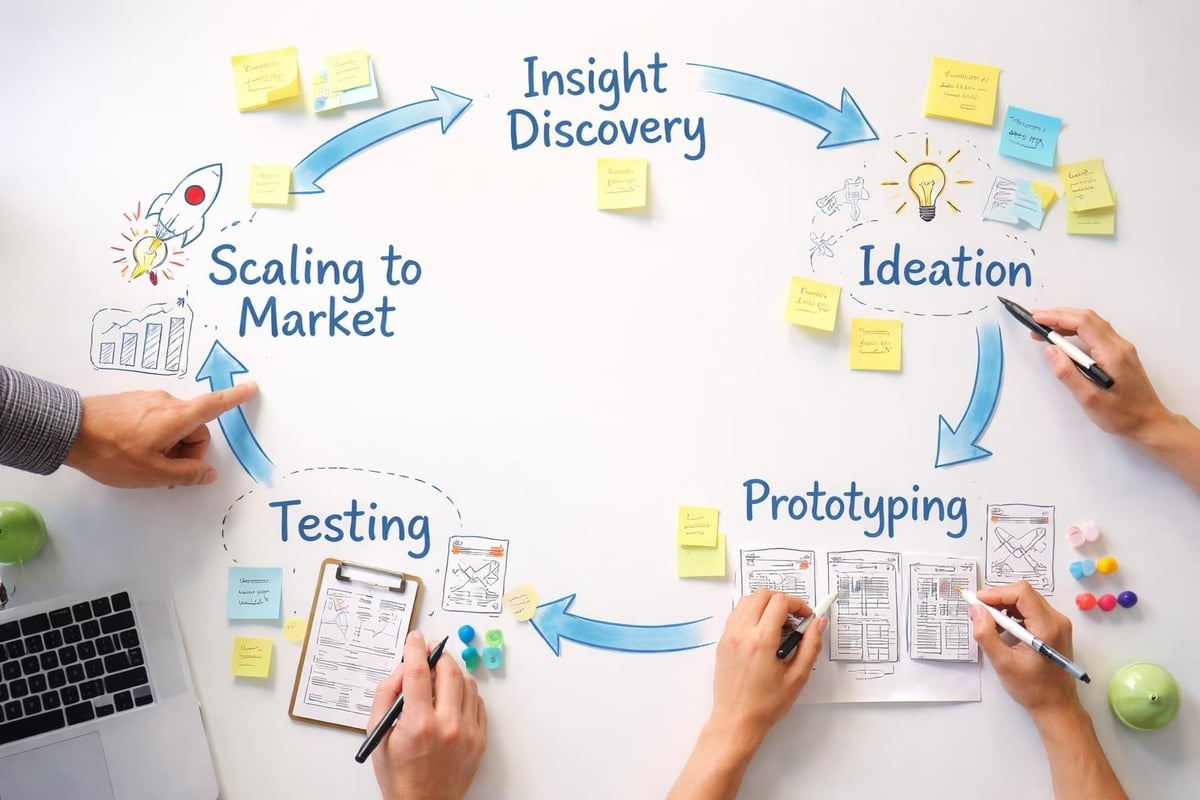
Structured methodologies prevent innovation change from becoming chaotic or unfocused. Organizations implementing design thinking for innovation follow systematic approaches that balance creativity with commercial viability:
- Empathy and Discovery: Deep customer research uncovering unmet needs and latent desires
- Problem Definition: Framing challenges in ways that inspire creative solutions
- Ideation: Generating diverse possibilities without premature evaluation
- Prototyping: Creating tangible representations enabling feedback and iteration
- Testing and Refinement: Validating assumptions and improving solutions based on real-world evidence
This disciplined approach to innovation change reduces waste while increasing the probability of market success. Companies developing new products and innovations benefit from frameworks that accelerate development cycles without sacrificing quality or customer fit.
Organizational Culture and Innovation Change
Culture either accelerates or suffocates innovation change. Organizations with innovation-friendly cultures encourage experimentation, tolerate intelligent failures, and reward learning regardless of immediate commercial outcomes. Conversely, cultures emphasizing perfection, punishing mistakes, and maintaining rigid hierarchies systematically suppress the risk-taking necessary for breakthrough innovation.
Cultural Attributes Supporting Innovation Change
Psychological Safety: Team members feel comfortable sharing unconventional ideas without fear of ridicule or career consequences. This foundation enables the honest dialogue necessary for identifying problems and exploring solutions.
Customer Obsession: Organizations orient around solving real customer problems rather than defending existing solutions. This external focus prevents internal politics from derailing valuable innovation change initiatives.
Learning Orientation: Failures become opportunities for insight rather than reasons for punishment. Companies practicing change management excellence institutionalize post-mortems that extract lessons from both successes and setbacks.
Collaborative Mindset: Innovation change thrives when diverse perspectives combine to solve complex challenges. Siloed organizations struggle to achieve the cross-functional integration necessary for transformational innovation.
Leaders shape culture through both explicit policies and implicit behaviors. When executives personally engage with innovation initiatives, allocate meaningful resources, and celebrate both progress and learning, they signal that innovation change represents a strategic priority rather than peripheral activity.
Technology's Role in Accelerating Innovation Change
Technology serves as both a driver and enabler of innovation change. Artificial intelligence, advanced analytics, and digital platforms fundamentally alter what's possible in terms of customer experience, operational efficiency, and business model design.
Organizations leveraging AI-powered strategic innovation gain significant advantages over competitors relying exclusively on traditional approaches. Machine learning algorithms identify patterns in customer behavior that human analysts might miss. Predictive models forecast market trends with increasing accuracy. Automation handles routine tasks, freeing human creativity for higher-value problem-solving.
Technology Integration Framework
| Technology Category | Innovation Change Application | Business Impact |
|---|---|---|
| Artificial Intelligence | Personalized customer experiences, predictive maintenance, automated decision-making | Enhanced customer satisfaction, reduced operational costs |
| Advanced Analytics | Market opportunity identification, customer segmentation, performance optimization | Data-driven strategy formulation, improved resource allocation |
| Digital Platforms | Ecosystem orchestration, rapid experimentation, scalable distribution | New revenue streams, accelerated market entry |
| Internet of Things | Real-time operational insights, product-as-service models, predictive capabilities | Enhanced product value, recurring revenue opportunities |
However, technology alone never guarantees successful innovation change. Organizations must combine technological capabilities with strategic clarity, organizational alignment, and customer insight. Top AI consulting companies help businesses navigate this complexity by identifying high-impact applications aligned with strategic objectives.
Measuring Innovation Change Success
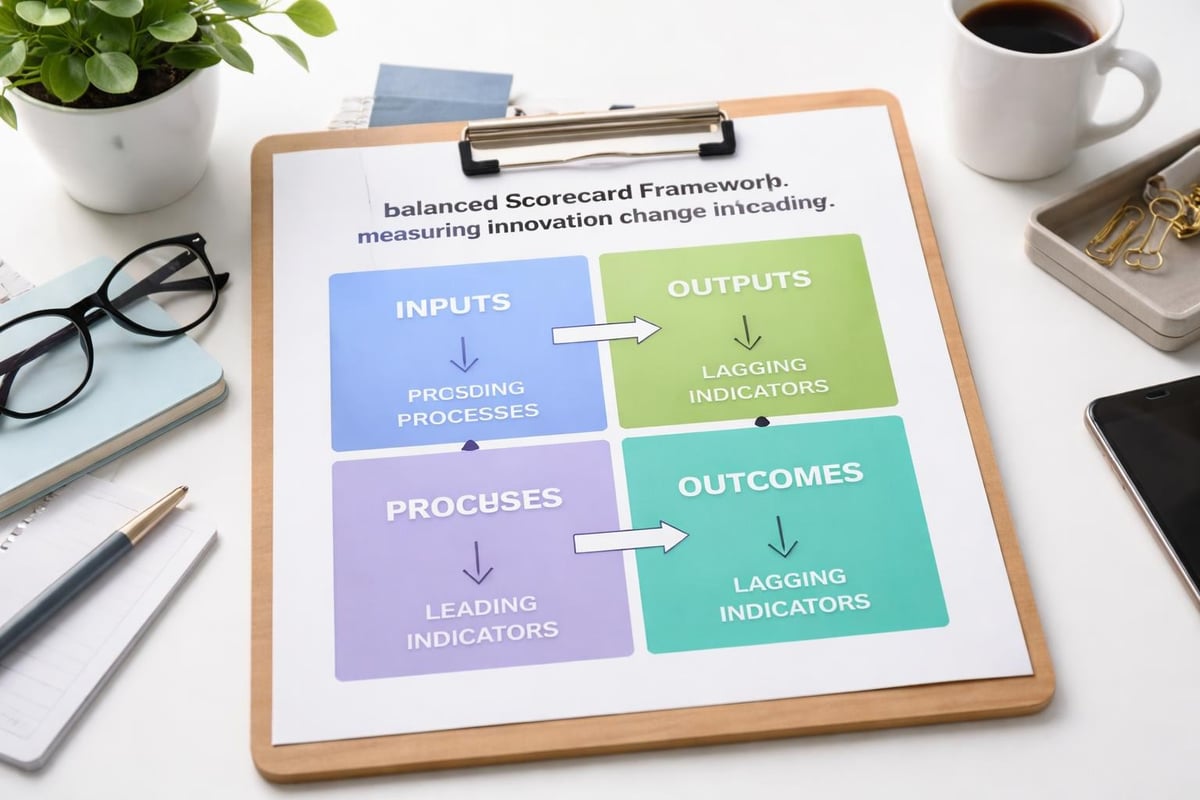
What gets measured gets managed. Organizations serious about innovation change establish comprehensive measurement frameworks tracking progress across multiple dimensions. These metrics should balance short-term outputs with long-term outcomes, quantitative results with qualitative insights.
Key Innovation Change Metrics
Input Metrics:
- Investment in innovation activities as percentage of revenue
- Time allocated to innovation by key personnel
- Number of active innovation projects across the portfolio
Process Metrics:
- Cycle time from concept to market launch
- Idea conversion rates through innovation funnel stages
- Cross-functional collaboration frequency and effectiveness
Output Metrics:
- Revenue from products launched in past 24 months
- Patent applications and intellectual property development
- Market share gains in target segments
Outcome Metrics:
- Customer satisfaction improvements attributable to innovation
- Competitive differentiation as measured by customer perception
- Long-term shareholder value creation
The dynamic network approach to breakthrough innovation reveals how individual innovations build upon prior discoveries, suggesting that organizations should also track knowledge flows and citation patterns within their innovation portfolios.
Building Innovation Change Capabilities
Sustainable innovation change requires developing internal capabilities rather than depending exclusively on external consultants. While outside perspectives provide valuable insights and accelerate progress, organizations must cultivate their own innovation expertise to maintain momentum over time.
Training programs focused on creativity and innovation equip employees with practical tools for generating ideas, evaluating opportunities, and driving implementation. These capabilities compound over time as more team members apply innovation methodologies to their daily work.
Essential Innovation Capabilities
- Opportunity Recognition: Identifying market gaps, customer pain points, and emerging trends before competitors
- Strategic Thinking: Connecting innovation initiatives to business strategy and competitive positioning
- Rapid Experimentation: Testing assumptions quickly and cheaply through minimum viable products and pilot programs
- **Business Model Innovation**: Reimagining how value is created, delivered, and captured
- Change Leadership: Mobilizing organizational support and navigating resistance throughout transformation journeys
Organizations building these capabilities internally accelerate their innovation change efforts while reducing dependence on external resources. The investment in skill development pays dividends across multiple initiatives and over extended timeframes.
Innovation Change in Different Organizational Contexts
Innovation change manifests differently across organizational types, sizes, and industries. Startups naturally emphasize innovation but often struggle with scaling proven concepts. Established enterprises possess resources and market access but frequently battle organizational inertia and legacy constraints.
Small and medium-sized businesses face unique innovation change challenges. Limited resources demand focused prioritization. Lack of dedicated innovation roles means employees must balance innovation with operational responsibilities. However, organizational agility and proximity to customers create advantages that larger competitors cannot easily replicate.
Industry context also shapes innovation change approaches. Highly regulated sectors like healthcare and financial services navigate compliance requirements that constrain experimentation. Technology industries face rapid obsolescence requiring constant reinvention. Manufacturing organizations balance physical infrastructure investments with digital transformation imperatives.
Successful innovation change strategies acknowledge these contextual factors rather than applying one-size-fits-all methodologies. Companies pursuing strategy and transformation consulting benefit from customized approaches reflecting their unique circumstances, competitive dynamics, and organizational capabilities.
The Human Dimension of Innovation Change
Technology and strategy matter, but people ultimately determine innovation change success or failure. Talented individuals passionate about solving meaningful problems drive transformation. Engaged teams collaborating across boundaries generate breakthrough ideas. Leaders modeling innovation behaviors create cultures where change flourishes.
Recruiting and retaining innovation talent requires thoughtful approaches. Top innovators seek organizations offering meaningful challenges, creative freedom, and opportunities to make substantial impact. They value learning and growth over purely financial compensation. Organizations communicating clear innovation visions and providing resources to pursue them attract stronger candidates than those treating innovation as peripheral activity.
Recognition systems should celebrate innovation contributions across the full spectrum. Not every initiative succeeds commercially, but thoughtful experiments generate valuable learning. Organizations rewarding both successful launches and intelligent failures encourage the risk-taking necessary for breakthrough innovation change.
Professional development investments demonstrate commitment to employee growth while building organizational capabilities. Sponsoring attendance at innovation conferences, funding advanced education, and creating internal knowledge-sharing forums all contribute to developing innovation-focused talent.
Future Trends Shaping Innovation Change
Looking ahead, several trends will increasingly influence how organizations approach innovation change. Understanding these dynamics enables proactive preparation rather than reactive scrambling.
Sustainability and environmental responsibility are transitioning from nice-to-have differentiators to essential business requirements. Customers, regulators, and investors increasingly demand that companies demonstrate environmental and social responsibility. This shift creates both challenges and opportunities for innovation change as organizations reimagine products, services, and operations through sustainability lenses.
Ecosystem thinking replaces purely competitive mindsets. Rather than attempting to own entire value chains, leading organizations orchestrate networks of partners, suppliers, and even competitors to deliver superior customer value. This collaborative approach to innovation change requires new capabilities in relationship management, platform design, and value sharing.
Personalization continues advancing as data analytics and AI enable customization at scale. Mass production economics combined with individualized experiences create competitive advantages difficult for less sophisticated competitors to match. Innovation change in this context focuses on building flexible systems accommodating individual preferences without sacrificing efficiency.
The democratization of innovation tools enables broader participation in innovation change. No-code development platforms, accessible AI services, and collaborative design tools lower barriers to experimentation. Organizations can engage more diverse contributors in innovation activities rather than restricting participation to specialized roles.
Mastering innovation change requires combining strategic clarity with operational excellence, technological capabilities with human creativity, and bold vision with disciplined execution. Organizations that build systematic approaches to identifying opportunities, managing resistance, and scaling successful innovations position themselves for sustained competitive advantage in increasingly dynamic markets. Six Paths Consulting partners with ambitious leaders to accelerate innovation change through AI-powered strategic frameworks, practical training programs, and customized transformation roadmaps that drive measurable revenue growth and lasting competitive differentiation.