

Customer consulting has evolved from traditional advisory services into a strategic partnership that drives measurable business outcomes through innovation and deep market understanding. In 2026, organizations face unprecedented challenges in maintaining competitive advantage while meeting rapidly changing customer expectations. The integration of artificial intelligence, data analytics, and human-centered design has transformed how consultants collaborate with clients to unlock new revenue streams and build sustainable growth models. This strategic approach goes beyond surface-level recommendations to create lasting organizational capabilities that empower teams to innovate independently.
The Foundation of Effective Customer Consulting
Customer consulting represents a specialized discipline that combines strategic thinking with practical implementation expertise. Unlike generic business consulting, this approach centers on understanding the complete customer journey and identifying opportunities where innovation can create differentiation.
The most successful consulting engagements begin with comprehensive discovery processes that examine current business models, competitive positioning, and untapped market opportunities. Consultants work alongside leadership teams to map existing customer touchpoints, analyze pain points, and identify gaps between current offerings and market demands.
Key Components of Strategic Consulting Frameworks
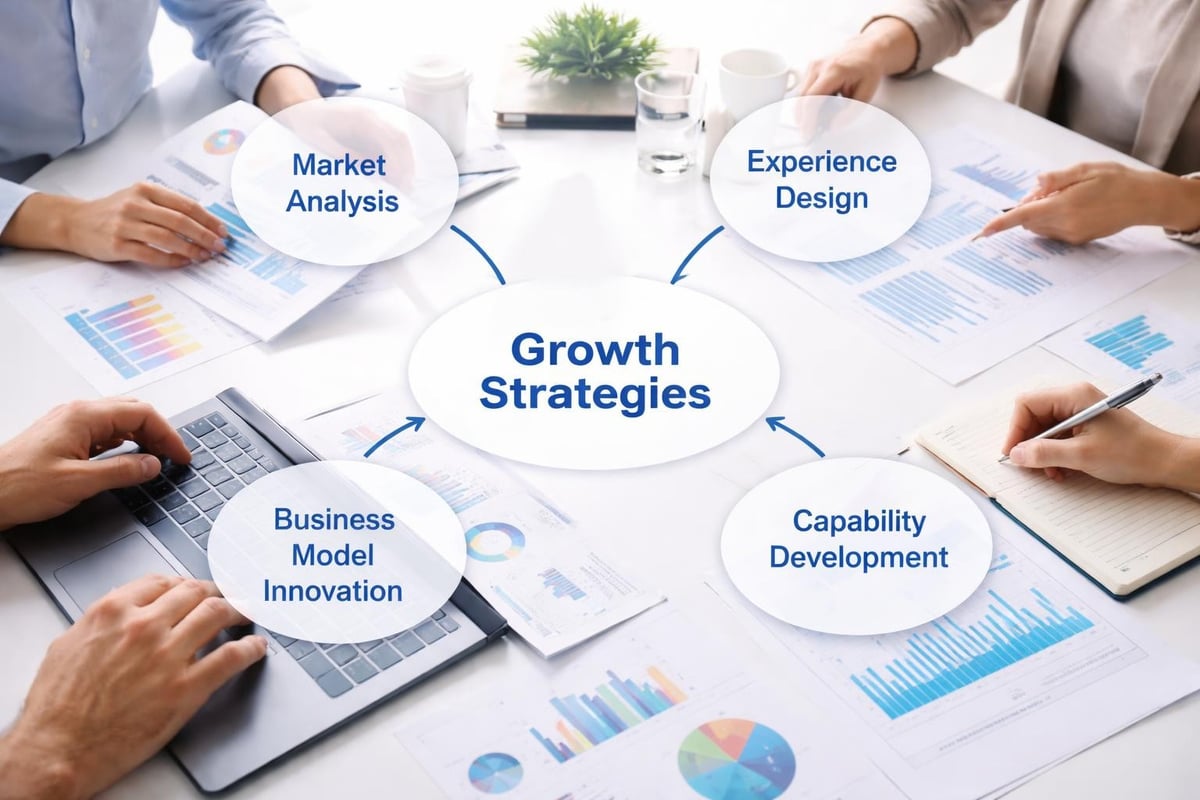
Modern customer consulting frameworks incorporate multiple analytical dimensions:
- Market opportunity assessment to identify white space and emerging trends
- Customer experience mapping across all touchpoints and channels
- Business model innovation to unlock new revenue streams
- Capability building to ensure sustainable long-term results
- Performance metrics that track impact and ROI
These components work together to create comprehensive transformation roadmaps. The emphasis on capability building distinguishes strategic consulting from transactional advisory relationships, as consultants transfer knowledge and methodologies that enable organizations to continue innovating after the engagement concludes.
Driving Innovation Through Customer-Centric Approaches
Innovation consulting succeeds when it maintains unwavering focus on customer needs while pushing organizational boundaries. This balance requires sophisticated methodologies that combine quantitative analysis with qualitative insights.
Customer consulting in the innovation space leverages advanced tools and frameworks to uncover hidden opportunities. Design thinking workshops, jobs-to-be-done analysis, and blue ocean strategy methodologies help teams break free from competitive red oceans and discover uncontested market spaces. The goal is not incremental improvement but transformative change that redefines value propositions.
Implementing AI-Powered Strategic Innovation
Artificial intelligence has fundamentally changed how consultants analyze customer data and predict market trends. Machine learning algorithms can process vast datasets to identify patterns that human analysts might miss, revealing customer segments, behavioral trends, and opportunity areas with unprecedented precision.
| Innovation Approach | Traditional Method | AI-Enhanced Method |
|---|---|---|
| Customer Segmentation | Demographic grouping | Behavioral pattern analysis |
| Trend Identification | Manual market research | Predictive analytics |
| Opportunity Sizing | Historical extrapolation | Real-time market modeling |
| Testing Cycles | Months-long pilots | Rapid digital prototyping |
The integration of technology and consulting capabilities enables faster, more accurate decision-making. Consultants can simulate different scenarios, test hypotheses digitally, and validate concepts before committing significant resources to full-scale implementation.
Customer consulting engagements that leverage AI tools deliver measurable advantages. Organizations gain real-time visibility into customer preferences, competitive movements, and market dynamics. This intelligence informs strategic decisions about product development, pricing strategies, and go-to-market approaches.
Building Sustainable Business Models
The ultimate measure of customer consulting success is the creation of sustainable, profitable business models that generate long-term value. This requires moving beyond short-term tactics to develop fundamental strategic advantages.
Consultants guide organizations through systematic business model innovation processes. These engagements examine revenue streams, cost structures, key partnerships, and value propositions to identify optimization opportunities. The best consulting relationships challenge conventional thinking and encourage experimentation with novel approaches.
Revenue Growth Through Strategic Positioning
Customer consulting focuses intensely on revenue generation because profitability drives sustainability. Consultants analyze pricing strategies, customer acquisition costs, lifetime value metrics, and expansion opportunities to maximize financial performance.
Strategic positioning work helps organizations differentiate themselves in crowded markets. By understanding customer jobs-to-be-done and unmet needs, consultants identify positioning opportunities that command premium pricing and build customer loyalty. This strategic clarity cascades through all organizational functions, from product development to marketing messaging.
The connection between strategy and execution remains critical. Customer experience consulting demonstrates how theoretical frameworks must translate into practical implementation plans. Consultants develop detailed roadmaps with milestones, resource requirements, and success metrics that guide transformation efforts.
Developing Innovation Capabilities Internally
One of the most valuable aspects of customer consulting is capability transfer. Rather than creating dependency on external advisors, strategic consultants empower internal teams to become innovation leaders themselves.
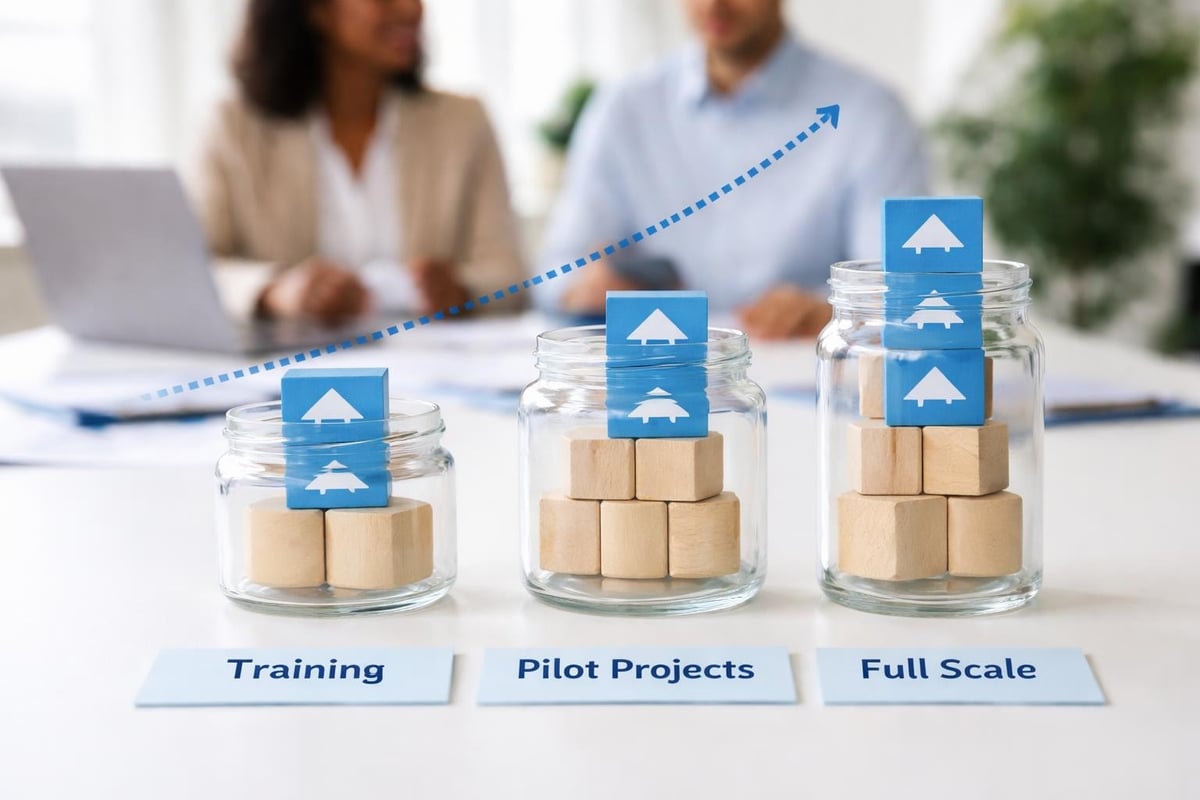
Training programs form the cornerstone of capability development initiatives. Workshops, coaching sessions, and hands-on projects teach teams proven innovation methodologies they can apply independently. This investment in human capital generates compounding returns as skilled employees drive continuous improvement.
Creating Innovation Excellence Centers
Leading organizations establish dedicated innovation teams or centers of excellence that institutionalize customer-centric thinking. These groups serve as internal consultants, spreading best practices throughout the organization and maintaining momentum after external consulting engagements conclude.
The structure of these centers varies by organizational size and industry:
- Assessment phase evaluating current innovation maturity
- Design phase creating governance structures and processes
- Pilot phase testing methodologies with selected initiatives
- Scale phase expanding capabilities across business units
- Optimization phase refining approaches based on results
Customer consulting engagements often include establishing these centers as deliverables. Consultants provide frameworks, tools, templates, and training materials that enable teams to operate independently. This approach maximizes return on consulting investment while building lasting organizational strength.
Measuring Impact and Accelerating Results
Accountability distinguishes professional customer consulting from generic advice. Rigorous measurement frameworks track progress against defined objectives and demonstrate tangible business impact.
Effective consulting engagements establish clear success metrics during initial scoping. These might include revenue growth targets, customer satisfaction improvements, time-to-market reductions, or cost savings. Regular check-ins assess progress and allow course corrections as market conditions evolve.
Key Performance Indicators for Consulting Success
Different stakeholders care about different metrics. Executive leadership focuses on financial outcomes, while operational teams track process improvements and efficiency gains. Comprehensive measurement frameworks address multiple perspectives:
| Stakeholder Group | Primary Metrics | Secondary Metrics |
|---|---|---|
| C-Suite | Revenue growth, Profitability | Market share, Brand value |
| Product Teams | Launch velocity, Adoption rates | Feature usage, Customer feedback |
| Sales Teams | Conversion rates, Deal size | Pipeline quality, Win rates |
| Customer Success | Retention rates, NPS scores | Support ticket volume, Resolution time |
Following customer success best practices ensures that consulting initiatives deliver sustained value. Analytics platforms track these metrics in real-time, providing visibility into program performance and enabling data-driven optimization.
The acceleration of results separates exceptional customer consulting from mediocre engagements. Top consultants leverage proprietary methodologies, industry expertise, and proven frameworks to compress transformation timelines. What might take organizations years to accomplish independently can often be achieved in months with expert guidance.
Real-World Applications Across Industries
Customer consulting principles apply across diverse industry contexts, though specific approaches vary based on sector dynamics and competitive landscapes. Understanding these applications helps organizations identify relevant opportunities within their own markets.
Technology companies use customer consulting to identify adjacent market opportunities and develop platform strategies. Healthcare organizations leverage these services to improve patient experiences while managing regulatory complexity. Manufacturing firms apply innovation consulting to develop smart products and transition toward service-based business models.
Case Studies in Transformative Consulting
Examining successful consulting engagements reveals common patterns and critical success factors. Organizations that achieve breakthrough results typically demonstrate strong leadership commitment, willingness to challenge assumptions, and capacity to execute recommended strategies.
The Blue Ocean Leadership training case study illustrates how strategic frameworks can be adapted to specific regional and organizational contexts. This flexibility ensures that customer consulting delivers relevant, actionable insights rather than generic recommendations.
Professional services firms increasingly recognize that industry best practices must be balanced with innovative thinking. While proven approaches provide valuable starting points, breakthrough results often require questioning conventional wisdom and experimenting with novel solutions.
Financial services organizations use customer consulting to navigate digital transformation while maintaining trust and security. Retail companies apply these methodologies to create omnichannel experiences that blend physical and digital touchpoints seamlessly. The versatility of customer consulting frameworks enables customization to unique industry requirements.

Strategic Advisory and Governance Structures
Sophisticated organizations complement external customer consulting with formal advisory mechanisms that provide ongoing strategic input. These structures ensure continuous alignment between business strategies and evolving customer needs.
Customer advisory councils represent one approach to institutionalizing customer voice in strategic decision-making. These groups typically include key clients who provide feedback on product roadmaps, service improvements, and strategic direction. The insights gained inform consulting recommendations and validate proposed initiatives.
Establishing Effective Advisory Relationships
The relationship between consultants and clients determines engagement success. Trust, transparency, and mutual respect create foundations for productive collaboration. Consultants must balance expertise with humility, offering strong perspectives while remaining open to client insights and contextual knowledge.
Effective customer consulting engagements follow structured yet flexible processes:
- Initial discovery to understand business context and objectives
- Hypothesis development proposing strategic opportunities
- Validation and testing confirming assumptions through research
- Roadmap creation detailing implementation approaches
- Execution support guiding teams through transformation
- Knowledge transfer building internal capabilities
This progression ensures systematic coverage of critical issues while allowing customization based on emerging insights. Regular stakeholder communication maintains alignment and manages expectations throughout the engagement lifecycle.
Future Trends Shaping Customer Consulting
The customer consulting landscape continues evolving as technology advances and market dynamics shift. Understanding emerging trends helps organizations anticipate future opportunities and prepare for coming changes.
Generative AI is transforming how consultants analyze data, develop strategies, and create deliverables. These tools augment human expertise rather than replacing it, enabling consultants to process more information and explore more scenarios than previously possible. The combination of human judgment and machine intelligence creates powerful analytical capabilities.
Emerging Methodologies and Approaches
Sustainability and social impact considerations increasingly influence customer consulting engagements. Organizations recognize that long-term success requires balancing profit with purpose. Consultants help clients develop strategies that create stakeholder value while addressing environmental and social challenges.
The shift toward continuous innovation rather than episodic transformation initiatives requires new consulting models. Retainer-based relationships and embedded consulting teams provide ongoing support as organizations navigate constant change. This approach contrasts with traditional project-based engagements that have defined start and end dates.
Customer consulting increasingly emphasizes speed and agility. Markets move faster than ever, and competitive advantages erode quickly. Consultants help organizations build rapid experimentation capabilities, allowing them to test ideas, learn from failures, and scale successes efficiently. This iterative approach reduces risk while accelerating innovation cycles.
Personalization at scale represents another frontier for customer consulting. Advanced analytics and AI enable organizations to deliver customized experiences to individual customers while maintaining operational efficiency. Consultants guide the development of systems and processes that balance personalization with scalability.
The convergence of physical and digital experiences creates new consulting opportunities. As boundaries between channels blur, organizations need integrated strategies that deliver consistent value regardless of how customers choose to engage. Customer consulting helps design these seamless omnichannel experiences.
Customer consulting delivers transformative value when it combines strategic insight with practical implementation expertise, empowering organizations to discover new growth opportunities and build sustainable competitive advantages. The integration of AI-powered analytics, proven innovation methodologies, and capability-building approaches creates lasting impact that extends far beyond individual consulting engagements. Six Paths Consulting specializes in helping ambitious leaders unlock revenue growth through strategic innovation, offering both expert guidance and training programs that build internal capabilities for continued success. If your organization is ready to discover untapped market opportunities and accelerate profitable growth, partnering with experienced innovation consultants can compress your transformation timeline and maximize your return on strategic investments.