
In a world where markets shift rapidly and technology accelerates, the ability to design product innovation will determine which companies lead and which fall behind by 2026. Most new products never make it, with 95% failing according to Nulab, making a strategic approach more critical than ever.
This guide gives you a practical roadmap to design product innovation that not only survives but thrives in the coming years. You will uncover the most important trends, a proven step-by-step framework from idea to launch, and best practices for testing, iteration, and commercial success.
Why settle for average results? Companies that master innovation enjoy higher profits, new market opportunities, and stronger customer loyalty. With real-world examples from Tesla, Apple, and Dyson, you will gain actionable insights and future-proof strategies. Follow this guide and take the first step toward transforming your ideas into breakthrough products for 2026.
Understanding Product Innovation in 2026
Staying ahead in today's market requires a clear grasp of what it means to design product innovation. At its core, product innovation involves significant improvements in design, materials, functionality, or user experience, setting new standards in the industry. There are both tangible innovations, like physical products, and intangible ones, such as digital tools or services. Companies that master design product innovation, like Apple with the iPhone, not only disrupt markets but also redefine consumer expectations. To learn more about strategic approaches that guide new concepts from vision to reality, explore New Product Development and Innovation.

Defining Product Innovation
To design product innovation effectively, it is essential to recognize the diverse forms it takes. Improvements might include enhanced usability, eco-friendly materials, or entirely new digital experiences. The distinction between tangible products, like smartphones, and intangible innovations, such as streaming services, shapes development strategies. Innovation ensures companies remain relevant and continue to grow in fast-changing markets. A prime example is how the Apple iPhone revolutionized mobile communication, blending design, technology, and user needs into one breakthrough device.
Key Trends Shaping Product Design for 2026
Several key trends will influence how businesses design product innovation in the coming years. Artificial intelligence and automation are transforming both development processes and user experiences. Sustainability is now a baseline expectation, not a bonus. Hyper-personalization, powered by data and machine learning, allows for products tailored to individual preferences. The blending of digital and physical, or "phygital" experiences, is also gaining traction. Companies like Beyond Meat are leveraging food science to create sustainable alternatives, reshaping consumer expectations.
Product vs. Process Innovation
While companies strive to design product innovation, process innovation is equally vital. Product innovation focuses on the end result, such as a new car or app, while process innovation improves how these products are developed and delivered. Leading organizations like Google excel in both, using process innovation to streamline development. For instance, the Android OS benefited from innovative distribution strategies, reaching a global audience efficiently. Balancing both types of innovation drives competitiveness and long-term success.
The Stakes: Why Innovation is Essential
The imperative to design product innovation is fueled by intense competition and rapidly shifting consumer needs. Companies that lead in launching new products often achieve triple the profitability of their peers. Innovation opens doors to new markets and helps retain customers by anticipating their evolving demands. However, the risks are high, with 95% of new products failing due to poor fit or lack of strategy. A research-driven, strategic approach is crucial to avoid irrelevance and secure lasting market leadership.
The Step-by-Step Framework for Product Innovation Success
Innovative products rarely succeed by chance. To design product innovation that delivers measurable results in 2026, leaders must follow a clear, repeatable framework. Each phase, from initial research to launch, plays a critical role in reducing risk and driving market adoption.
Step 1: Deep Customer and Market Research
Every successful attempt to design product innovation begins with understanding real customer needs. This phase involves listening to your target audience, identifying pain points, and exploring their aspirations.
Effective methods include focus groups, in-depth interviews, surveys, and competitive analysis. Real-world feedback prevents teams from falling into the "innovation bubble," where assumptions replace facts.
Crowdfunding platforms can offer early signals about market interest, though they may not always predict mainstream success. Companies that prioritize customer-centric approaches consistently see higher adoption and retention rates.
For a deeper dive into structured innovation processes, see Frameworks for Innovation. This resource offers practical tools for leaders aiming to transform research insights into viable product opportunities.
Step 2: Ideation and Concept Development
Once research highlights clear market gaps, teams move to ideation. Here, the goal is to design product innovation that is both desirable and feasible.
Techniques like design thinking, collaborative brainstorming, and cross-functional workshops encourage creative problem-solving. Teams also analyze competitors to spot unmet needs, or "white spaces," in the market.
Evaluating each idea’s desirability, viability, and technical feasibility is essential. Tesla’s approach, combining sustainability with cutting-edge technology, demonstrates the power of thoughtful concept development.
Tools such as idea management platforms and digital whiteboards streamline the process, ensuring every concept gets fair consideration.
Step 3: Validation and Prototyping
Validation is where teams put ideas to the test. Building a Minimum Viable Product (MVP) allows organizations to design product innovation while minimizing risk and investment.
Iterative feedback loops, involving real users, help refine features and functionality. The "fail fast" mindset encourages rapid learning and adaptation, saving resources in the long run.
Apple AirPods evolved through multiple rounds of user feedback and prototyping, eventually setting a new standard in wireless audio.
Data shows that MVPs significantly reduce time-to-market and development costs, helping teams focus on what truly matters to users.
Step 4: Market Segmentation and Opportunity Assessment
Not every great idea fits every market. To design product innovation that succeeds, organizations must segment customers and assess opportunity.
Market segmentation identifies profitable target groups based on demographics, behaviors, or needs. Teams analyze market size, competition, and gaps in current offerings to prioritize concepts with the highest potential ROI.
For example, Beyond Meat strategically targeted both vegans and flexitarians, expanding their reach and accelerating growth.
Market analysis frameworks and segmentation software support data-driven decision-making, helping teams invest resources wisely.
Step 5: Iteration, Scaling, and Launch
The work does not end at launch. To sustain momentum, companies must continuously iterate and scale their design product innovation.
Real-world usage analytics and user feedback inform ongoing improvements. Scaling production, optimizing supply chains, and aligning marketing and customer support are crucial for commercial success.
Dyson’s approach to perfecting the Supersonic hair dryer—through continuous refinement and user testing—demonstrates the value of iteration.
Companies that embrace iterative launch cycles achieve higher product adoption and long-term profitability.
How Six Paths Consulting Empowers Innovation Success
Six Paths Consulting provides end-to-end guidance for organizations aiming to design product innovation that stands out in 2026.

Their services include advanced market research, ideation workshops, MVP validation, and tailored go-to-market strategies. By leveraging Blue Ocean Strategy, Lean Startup, and Design Thinking, they help teams accelerate innovation cycles and reduce risk.
Through hands-on training, Six Paths Consulting empowers companies to build lasting in-house innovation capabilities. Clients across various industries have reported significant revenue growth and stronger market differentiation as a result of their partnership.
For leaders seeking expert support to future-proof their product pipeline, Six Paths Consulting offers proven frameworks and actionable strategies.
Best Practices for Sustainable and Scalable Product Innovation
Driving sustainable and scalable design product innovation requires more than creative ideas. It demands a disciplined approach that blends culture, customer focus, practicality, technology, and adaptability. By following proven best practices, you can ensure your innovation efforts deliver lasting value and market impact.

Building a Culture of Innovation
A thriving culture is the foundation for successful design product innovation. Leaders must embed innovation into the company's DNA, making it a shared value rather than a side project.
Encourage experimentation by allowing teams to test new ideas without fear of failure. Recognize and reward creative thinking, and provide resources for continuous learning. Google's "20% time" policy, which lets employees pursue passion projects, has led to many groundbreaking solutions.
Companies with robust innovation cultures often outperform competitors in growth and profitability. Fostering psychological safety and open communication empowers staff to contribute their best ideas, driving sustainable innovation outcomes.
Customer-Centric Design Principles
Placing the customer at the center of every decision is essential for effective design product innovation. Start by involving users early through co-creation workshops or user communities.
Gather feedback continuously, not just during development but after launch as well. This iterative approach ensures products evolve alongside user needs. The Nest Thermostat, for example, uses real-world data to personalize energy savings and enhance satisfaction.
Customer-centricity boosts loyalty and retention, making it a non-negotiable best practice for innovation teams. For additional insights, review the 10 product innovation strategy best practices.
Balancing Innovation with Cost and Feasibility
Effective design product innovation balances ambition with practicality. Allocate R&D budgets wisely, focusing on features that deliver maximum value with minimal complexity.
Avoid over-engineering by prioritizing core functionalities and validating demand through Minimum Viable Products (MVPs). This approach reduces waste and accelerates time-to-market.
Feature creep can undermine profitability. Use clear criteria to assess which ideas align with business goals and customer value. Cost-effective innovation leads to quicker breakeven points and sets the stage for scalable growth.
Leveraging Technology and Data
Modern design product innovation leverages cutting-edge technology and data analytics for smarter development and enhanced user experiences. Integrate AI, IoT, and real-time analytics to personalize and optimize products.
Tesla's over-the-air updates exemplify how data-driven improvements can extend product life and boost user satisfaction. Collect and analyze user data ethically to inform decisions and fuel ongoing enhancement.
Companies that prioritize technology and data integration consistently outperform those relying on traditional methods. This creates a feedback loop that drives both innovation and retention.
Continuous Learning and Adaptation
The landscape for design product innovation is always shifting. Stay ahead by monitoring trends, competitor actions, and emerging technologies.
Regularly revisit your product roadmap to reflect new insights and changing customer expectations. Apple’s ongoing updates to AirPods demonstrate the power of continuous adaptation.
Encourage teams to learn from both successes and setbacks. Agile organizations that embrace change are better positioned to maintain leadership and capture new opportunities.
Real-World Examples of Breakthrough Product Innovation
Breakthrough products do more than capture attention—they reshape industries. The following real-world examples demonstrate how design product innovation can set new standards and drive market transformation.
Tesla Electric Vehicles
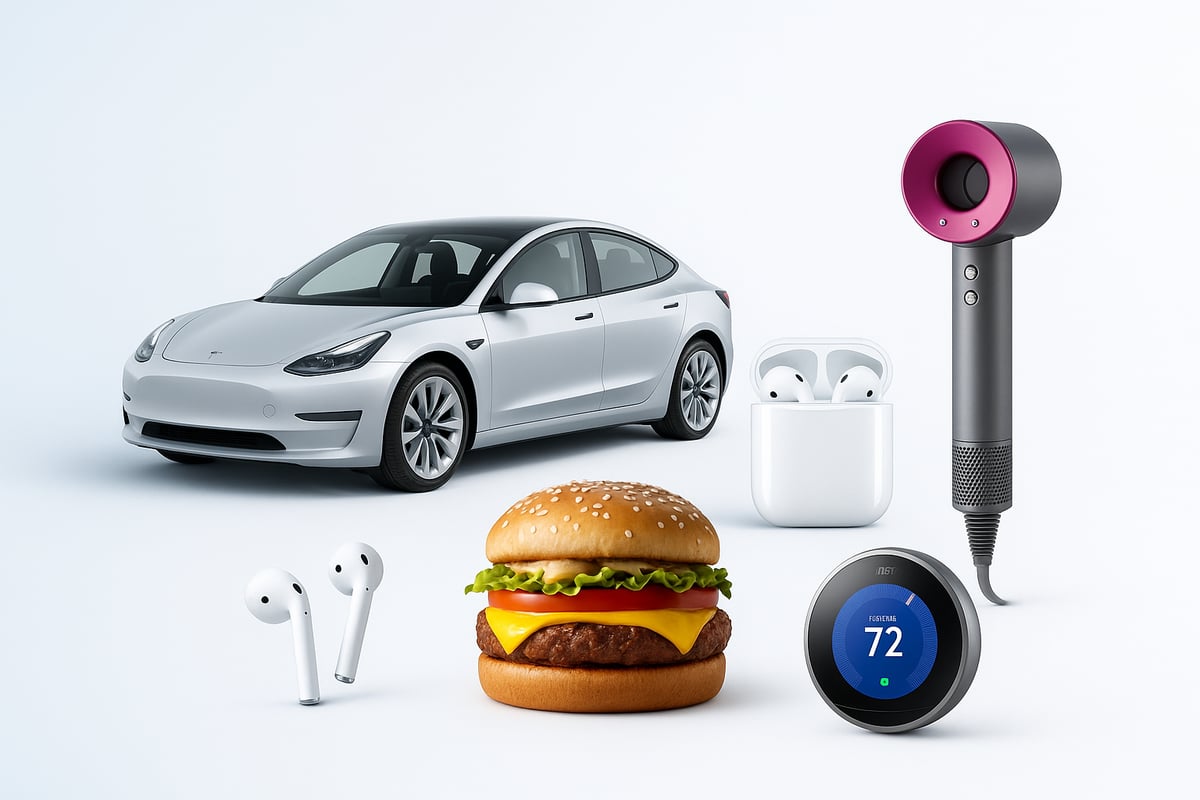
Tesla vehicles have become a symbol of design product innovation in the automotive industry. Their electric cars blend sustainability with advanced technology, featuring long-range batteries, autopilot capabilities, and sleek design. Over-the-air updates allow Tesla to enhance performance and add new features after purchase, creating a dynamic user experience. This approach has disrupted traditional automakers and set new expectations for what modern vehicles can achieve. Tesla’s focus on continuous improvement keeps it ahead in the innovation race.
Beyond Meat Plant-Based Alternatives
Beyond Meat has redefined what is possible in food through design product innovation. By leveraging advanced food science, Beyond Meat creates plant-based products that closely mimic the taste and texture of real meat. This satisfies both health-conscious consumers and those seeking sustainable alternatives. The company’s products have opened new markets, appealing to vegans, vegetarians, and flexitarians alike. Their success shows how thoughtful design can address environmental concerns while meeting evolving consumer preferences. For more inspiring examples, explore these Innovation Case Studies.
Apple AirPods
Apple AirPods represent a leap in design product innovation within the audio industry. Their wireless design, seamless integration with the Apple ecosystem, and intuitive controls deliver a user-friendly experience. The compact charging case, quick pairing, and voice assistant support set AirPods apart from traditional headphones. Apple’s commitment to refining user experience through minimalism and ecosystem connectivity has established AirPods as a standard for wireless audio innovation. These features have driven mass adoption and customer loyalty.
Dyson Supersonic Hair Dryer
The Dyson Supersonic hair dryer is a standout example of design product innovation in home appliances. Dyson applied advanced engineering to create a powerful, quiet, and lightweight device with intelligent heat control. The unique shape and balanced weight reduce strain during use, while controlled airflow protects hair from heat damage. Dyson’s iterative development process, focused on solving real customer pain points, resulted in a premium product that redefined the hair care market. The Supersonic’s success highlights the value of user-centric design.
Nest Learning Thermostat
The Nest Learning Thermostat pioneered smart home automation with a focus on intelligent, adaptive design. Its learning algorithms analyze user behavior to optimize energy usage, delivering personalized comfort and savings. The intuitive interface and integration with other smart devices made it accessible and appealing to a broad audience. Nest’s approach to design product innovation demonstrated how data-driven features can provide tangible benefits, setting a benchmark for the connected home industry.
Avoiding Common Pitfalls and Ensuring Commercial Success
Navigating the journey to design product innovation is challenging, especially when the majority of new products never reach commercial success. Understanding the common pitfalls and adopting robust strategies can mean the difference between a market leader and a missed opportunity.

The High Failure Rate of New Products
The sobering reality is that 95 percent of new products fail. Root causes typically include poor market fit, neglecting genuine user feedback, and weak execution. Design product innovation must start with rigorous problem validation and a willingness to adapt based on real-world insights.
Common pitfalls include:
- Relying on assumptions instead of actual data
- Overlooking competitor analysis and market trends
- Ignoring early warning signs from pilot launches
A cautionary example is Google Glass, which failed due to a mismatch between product capabilities and user expectations. Industry analyses, such as the recent report on product innovation growth decline in 2024, underscore why a strategic approach is essential for success.
Aligning Innovation with Core Values and Strategy
To truly excel at design product innovation, organizations must ensure that every new initiative aligns with the company’s mission and long-term vision. Innovation that veers away from core values risks diluting brand equity and confusing customers.
Key strategies include:
- Regularly reviewing strategic priorities
- Filtering ideas through the lens of company values
- Maintaining a consistent brand voice across product lines
Staying focused helps teams avoid distractions from competitors or fleeting market fads. Companies that align innovation with their identity maintain relevance and trust, even as they push boundaries.
Ensuring Cross-Functional Collaboration
Cross-functional collaboration is a cornerstone of high-impact design product innovation. Breaking down silos between R&D, marketing, operations, and customer support accelerates the innovation cycle and leads to more robust solutions.
Best practices involve:
- Forming integrated project teams from diverse departments
- Setting shared goals and KPIs
- Facilitating open communication with regular check-ins
Leading tech firms demonstrate that collaborative cultures not only speed up problem-solving but also foster creativity and holistic thinking, which are vital for sustainable innovation.
Leveraging Project Management and Digital Tools
Efficient process management is critical for teams aiming to design product innovation at scale. Project management software enables real-time communication, task tracking, and transparent progress updates, especially for distributed teams.
Popular tools and approaches:
- Digital Kanban boards and agile sprint planning
- Cloud-based document sharing and version control
- Analytics dashboards for monitoring milestones
The 2024 Innovation in Product Development Report highlights how digital collaboration platforms are transforming product teams, making it easier to iterate quickly and manage complex projects.
Measuring Success and Scaling Up
Finally, to ensure commercial success, organizations must define clear KPIs for every phase of design product innovation. This includes tracking user adoption rates, customer satisfaction, and revenue growth from new launches.
Essential metrics to monitor:
- Time-to-market and development costs
- Market share gained post-launch
- User feedback and retention rates
Companies that use real-time analytics and structured feedback loops can quickly identify when to scale a product or pivot, ensuring resources are invested in the most promising innovations.
As you look ahead to 2026, you know that staying ahead in product innovation isn’t just about having great ideas—it’s about turning those ideas into real, market-ready successes. If you’re serious about applying the proven frameworks, customer insights, and future-focused strategies discussed here, why not take the next step? Let’s uncover hidden opportunities for your business together. You can Book a Free Opportunity Assessment to identify where your greatest growth potential lies and get tailored advice on building breakthrough products. Your path to innovation success starts with a single conversation.