
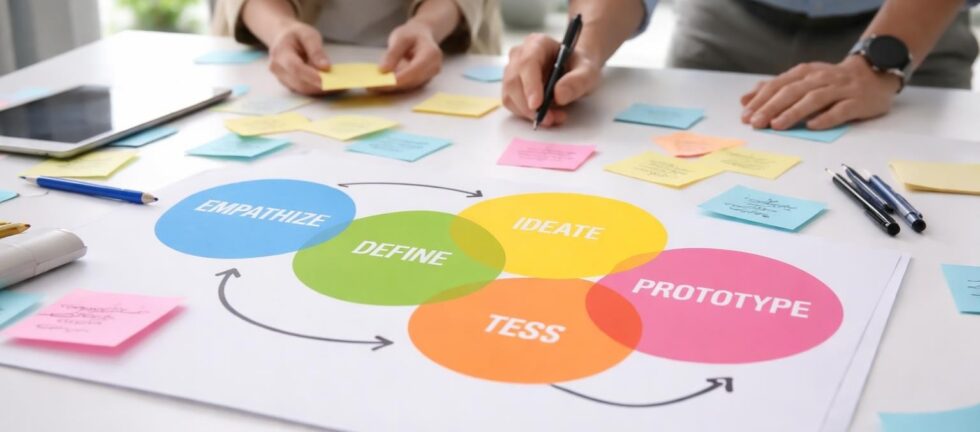
Business leaders face unprecedented pressure to innovate while managing risk, meeting customer expectations, and staying ahead of competitors. Traditional planning approaches often fall short when addressing complex, ambiguous challenges that demand creative solutions. This is where design thinking emerges as a transformative methodology that places human needs at the center of innovation, enabling organizations to develop products, services, and experiences that genuinely resonate with their target audiences. By combining empathy, experimentation, and iterative learning, this approach has become essential for companies seeking sustainable growth in rapidly evolving markets.
Understanding the Core Philosophy Behind Human-Centered Innovation
Design thinking represents a non-linear, iterative process that teams use to understand users, challenge assumptions, redefine problems, and create innovative solutions for testing and refinement. Unlike traditional analytical thinking that breaks down ideas, this methodology builds them up through exploration and experimentation.
The fundamental premise rests on a simple yet powerful belief: the people experiencing a problem are best positioned to inform its solution. This human-centered approach shifts focus from what organizations want to build toward what customers actually need. Organizations implementing this philosophy consistently outperform competitors in customer satisfaction and market adaptation.
The Five Essential Stages That Drive Innovation Success
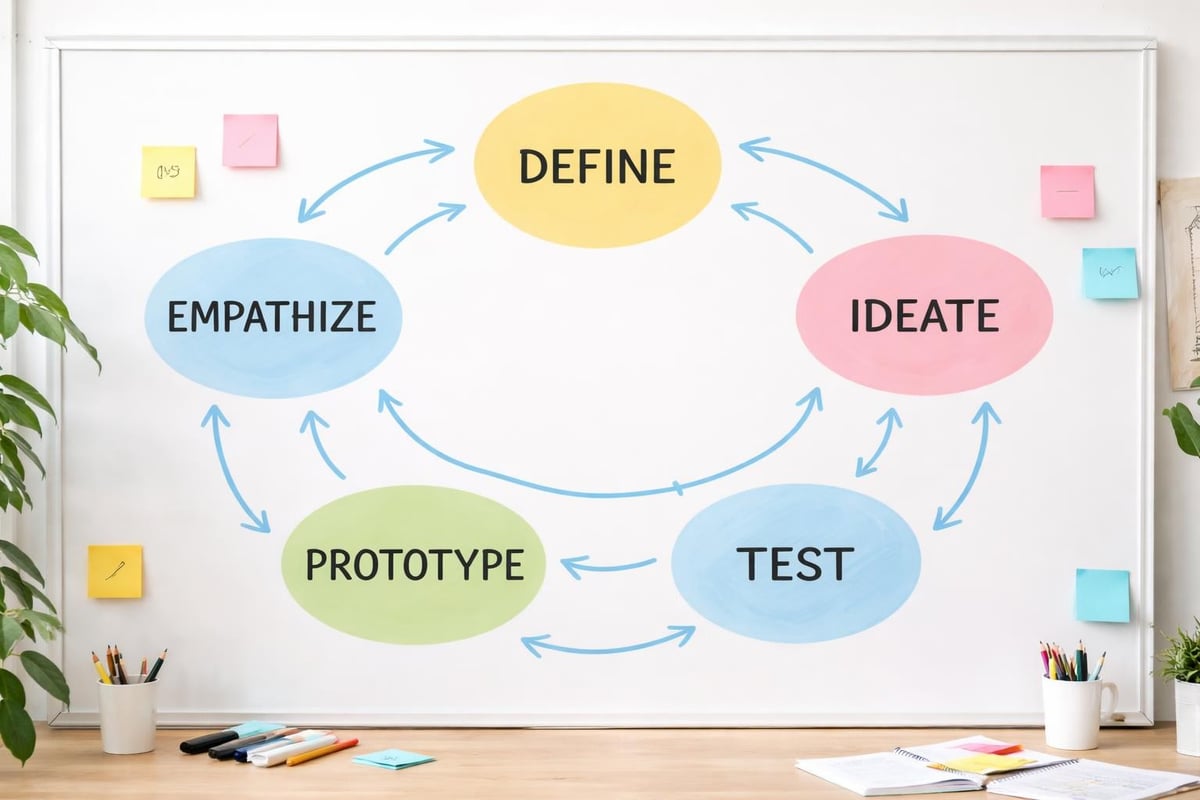
The design thinking process typically follows five distinct phases that create a structured framework for innovation:
- Empathize – Research and understand your users' needs through observation and engagement
- Define – Synthesize findings to articulate core problems worth solving
- Ideate – Generate a wide range of creative solutions without judgment
- Prototype – Build quick, inexpensive representations of ideas
- Test – Gather feedback and refine solutions based on real user interactions
These stages are not strictly sequential. Teams frequently cycle back to earlier phases as they uncover new insights, making the process inherently flexible and responsive to discovery.
Why Leading Organizations Embrace This Methodology
Companies ranging from startups to Fortune 500 enterprises have adopted this approach because it delivers measurable results. Design thinking reduces the risk of market failure by validating assumptions early and often, preventing costly investments in solutions that miss the mark.
The methodology excels at solving wicked problems – those complex, ambiguous challenges without clear solutions or defined parameters. Traditional strategic planning struggles with such problems because they require exploration rather than optimization.
Tangible Business Benefits That Impact the Bottom Line
Organizations implementing this framework report significant advantages across multiple dimensions:
- Accelerated time-to-market through rapid prototyping and testing cycles
- Reduced development costs by identifying flaws before full-scale production
- Enhanced customer loyalty from products that address genuine needs
- Increased team engagement through collaborative, creative problem-solving
- Greater competitive differentiation via unique, user-validated solutions
Furthermore, businesses applying design thinking frameworks consistently demonstrate improved innovation metrics and higher returns on R&D investments. The approach transforms innovation from a gamble into a systematic, repeatable capability.
Building Empathy as Your Strategic Foundation
The empathy phase distinguishes design thinking from conventional business methodologies. Rather than relying solely on market research data, teams immerse themselves in the user's world to understand context, motivations, and unmet needs.
Effective empathy research combines multiple methods to build comprehensive understanding. Direct observation reveals behaviors users may not articulate in interviews. Contextual inquiry explores how people interact with existing solutions in their natural environments. Journey mapping identifies pain points across entire experiences.
| Research Method | Primary Purpose | Key Output |
|---|---|---|
| User Interviews | Understand motivations and attitudes | Qualitative insights about needs and frustrations |
| Observational Studies | Identify actual behaviors and contexts | Real-world usage patterns and workarounds |
| Journey Mapping | Visualize end-to-end experiences | Pain points and opportunity areas across touchpoints |
| Empathy Mapping | Synthesize what users say, think, do, and feel | Holistic user perspective and emotional landscape |
Organizations often discover that what customers say they want differs dramatically from what they actually need. This gap represents prime territory for breakthrough innovation.
Translating Observations Into Actionable Problem Statements
The define phase converts empathy research into focused problem statements that guide ideation. Well-crafted problem statements are human-centered, broad enough to allow creative freedom, yet narrow enough to provide clear direction.
A technology company might shift from "We need to increase app downloads" to "Young professionals need efficient ways to manage work-life balance without adding complexity to their daily routines." This reframing opens new solution possibilities beyond conventional marketing tactics.
Generating and Evaluating Breakthrough Ideas
Ideation separates solution generation from solution evaluation, creating psychological safety for creative risk-taking. The most effective sessions employ structured brainstorming techniques that encourage quantity over quality initially, building on others' ideas, and deferring judgment.
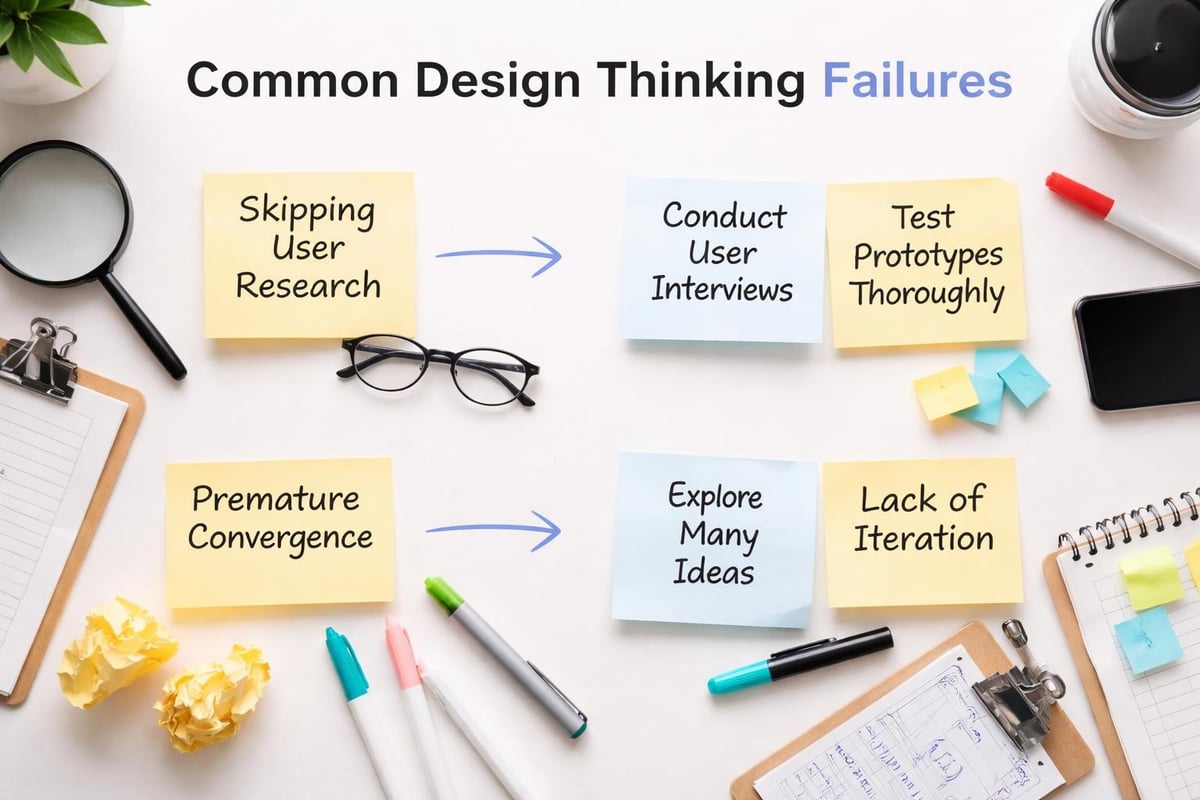
Divergent thinking expands the solution space while convergent thinking narrows options to the most promising candidates. Teams should allocate significant time to divergence before switching modes, as premature convergence limits innovation potential.
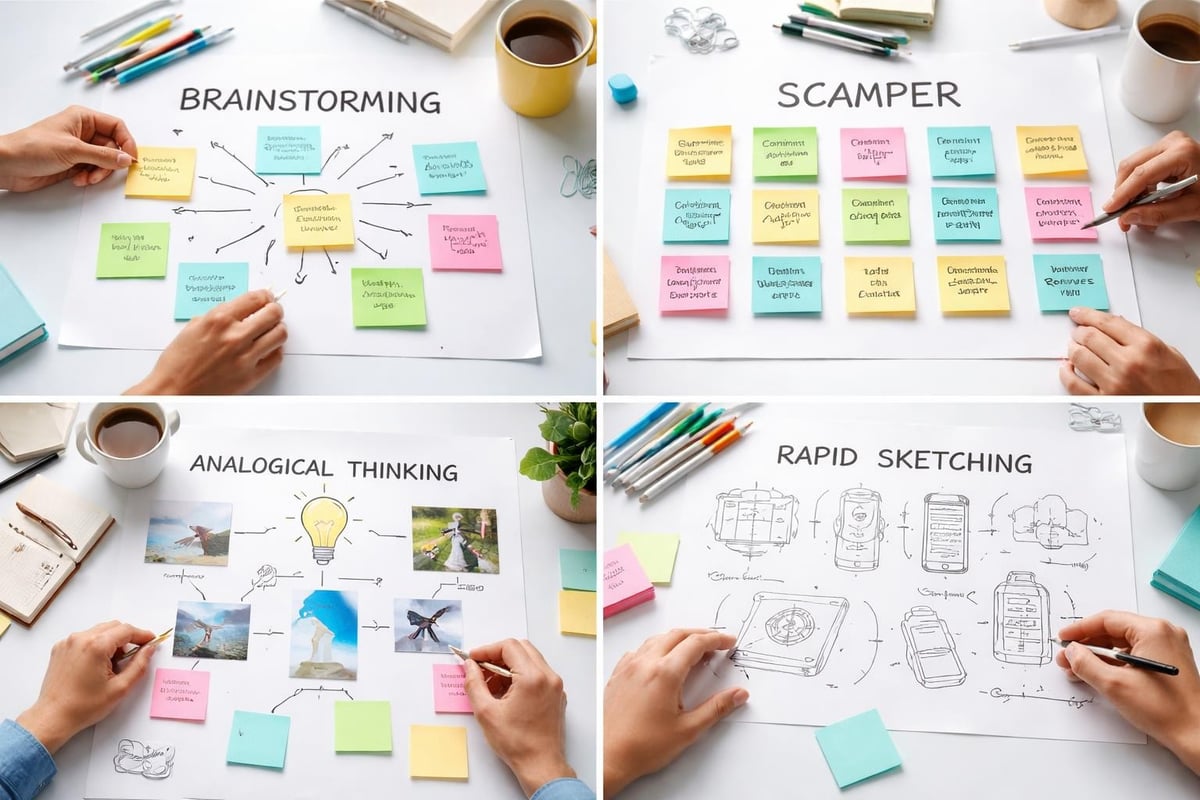
Popular ideation techniques include:
- Brainstorming and brainwriting sessions
- SCAMPER (Substitute, Combine, Adapt, Modify, Put to other uses, Eliminate, Reverse)
- Worst possible idea exercises
- Analogical thinking from other industries
- Rapid sketching and visual ideation
Organizations working with innovation consulting specialists often discover that facilitated ideation sessions produce more diverse, higher-quality concepts than internal teams working alone. External perspectives challenge entrenched assumptions and introduce cross-industry insights.
From Abstract Concepts to Tangible Prototypes
Prototyping makes ideas tangible, enabling teams to learn through making rather than endless discussion. The goal is not perfection but learning – testing specific assumptions with minimal investment.
Low-fidelity prototypes like paper sketches, cardboard models, or simple wireframes work perfectly for early-stage concepts. As ideas mature, fidelity increases to match the questions being tested. A service design might progress from storyboards to role-playing scenarios to limited pilot programs.
The key principle: build only what you need to learn what you need to know. Every prototype should test specific hypotheses about user needs, solution feasibility, or business viability.
Testing Assumptions With Real Users
Testing brings solutions into contact with reality, revealing gaps between designer intent and user experience. Effective testing creates structured opportunities for users to interact with prototypes while researchers observe, question, and document responses.
The most valuable insights often emerge from what users do rather than what they say. A user claiming "this is great" while struggling to complete basic tasks signals a disconnect requiring attention.
Structuring Tests for Maximum Learning
Well-designed tests balance structure with flexibility, having clear objectives while remaining open to unexpected discoveries:
- Define specific questions each test should answer
- Select representative users matching target segments
- Create realistic scenarios that mirror actual use cases
- Observe without leading or defending design choices
- Probe deeper into surprising reactions or behaviors
- Document both successful interactions and failures
- Synthesize patterns across multiple test sessions
| Testing Stage | Prototype Fidelity | Primary Focus | Typical Sample Size |
|---|---|---|---|
| Concept Validation | Low (sketches, storyboards) | Desirability and relevance | 5-8 users |
| Usability Testing | Medium (wireframes, mockups) | Ease of use and comprehension | 8-12 users |
| Market Testing | High (functional prototypes) | Value proposition and pricing | 20+ users |
| Pilot Programs | Full (minimum viable products) | Real-world performance | 50+ users |
Research guides on design thinking applications demonstrate that organizations conducting regular user testing reduce product failure rates by over 60 percent compared to those relying solely on internal validation.
Integrating Design Thinking With Strategic Innovation
While design thinking originated in product design, forward-thinking organizations now apply it to strategy development, business model innovation, and organizational transformation. The methodology's emphasis on experimentation and learning aligns perfectly with navigating uncertainty.
Strategic design thinking asks fundamental questions about value creation, competitive positioning, and market opportunities. Rather than accepting industry boundaries as fixed, teams explore how reimagining customer experiences might unlock new value pools.
Companies applying this approach to business model innovation across industries discover opportunities competitors overlook because conventional analysis focuses on existing market structures rather than latent customer needs.
Building Internal Innovation Capabilities
Sustainable innovation requires more than isolated projects. Organizations must develop internal capabilities that make human-centered innovation a repeatable competency rather than a special initiative.
This transformation demands several interconnected elements:
- Leadership commitment to experimentation and learning from failure
- Cross-functional collaboration breaking down departmental silos
- Dedicated time and space for innovation activities
- Training programs building creativity and innovation skills
- Metrics systems measuring learning and customer outcomes, not just financial returns
Organizations serious about building innovation muscles often establish dedicated teams or innovation labs where design thinking becomes the default operating model. These groups serve as both delivery engines and internal capability builders.
Common Pitfalls and How to Avoid Them
Despite widespread adoption, many organizations struggle to realize design thinking's full potential. Understanding common failure modes helps teams navigate implementation challenges more effectively.
Surface-level adoption represents the most frequent mistake. Companies conduct empathy interviews but ignore findings that challenge existing plans. They prototype but skip rigorous testing. They embrace the vocabulary while maintaining traditional decision-making processes.
Critical Success Factors for Implementation
Successful design thinking implementation requires attention to both process and culture:
- Start with problems that matter to real users, not internal preferences
- Allocate sufficient time for proper research and testing
- Include diverse perspectives in team composition
- Embrace iteration rather than seeking perfect first solutions
- Make space for unexpected discoveries that redirect effort
- Connect innovation initiatives to strategic business objectives
Another common pitfall involves treating design thinking as exclusively a front-end innovation tool. Why design thinking matters for business value creation demonstrates that the methodology applies equally to implementation challenges, operational improvements, and organizational change initiatives.
Organizations also err by isolating design thinking within specific functions. When only designers or innovation teams practice the methodology, opportunities for cross-functional application remain untapped. The most successful implementations democratize the approach, making it accessible across the organization.
Measuring Impact and Return on Innovation Investment
Quantifying design thinking's value challenges organizations accustomed to traditional ROI calculations. The methodology's emphasis on learning and exploration doesn't always align with conventional financial metrics designed for predictable, repeatable processes.
Leading indicators of innovation health often prove more valuable than lagging financial metrics. These include customer satisfaction scores, speed of learning cycles, quality of insights generated, and percentage of revenue from new offerings.
Organizations should track metrics across three dimensions:
- Process efficiency – Time from problem identification to validated solution, cost per experiment, number of iterations completed
- Outcome quality – Customer adoption rates, satisfaction improvements, problem resolution effectiveness
- Capability development – Employee skill growth, cross-functional collaboration, innovation culture indicators
Smart companies balance short-term project metrics with long-term capability building. A single design thinking initiative might generate modest immediate returns while establishing competencies that drive sustained competitive advantage.
Combining Human Insight With Technological Capability
The rise of artificial intelligence and advanced analytics creates new possibilities for design thinking practice. Rather than replacing human creativity, these technologies augment it by processing vast amounts of user data, identifying patterns, and enabling rapid testing at scale.
AI-powered tools enhance every phase of the design thinking process. Natural language processing analyzes customer feedback at volumes impossible for human researchers. Machine learning identifies behavioral patterns suggesting unmet needs. Generative AI accelerates prototyping by creating multiple design variations instantly.
However, technology cannot replace genuine human empathy and creative judgment. Understanding how design thinking principles apply remains essential even as AI tools become more sophisticated. The human ability to understand context, emotion, and meaning continues to differentiate breakthrough innovations from incremental improvements.
Organizations achieving the greatest innovation success combine technological capabilities with deep human insight. They use AI to process and analyze while reserving judgment, creativity, and strategic decisions for human experts.
Future Directions for Innovation Methodology
As business environments grow more complex and change accelerates, design thinking continues evolving to address emerging challenges. Several trends are shaping the methodology's future direction.
Systems thinking integration helps teams address interconnected challenges that single-product solutions cannot solve. Rather than optimizing isolated touchpoints, innovators now map entire ecosystems, understanding how multiple stakeholders interact across extended value chains.
Sustainability and social impact considerations are becoming central to problem definition rather than afterthought constraints. Organizations increasingly recognize that solutions creating environmental or social harm ultimately fail regardless of short-term financial performance.
The methodology is also expanding beyond customer-facing innovation to address internal organizational challenges. Companies apply design thinking principles to workplace experience, talent development, and operational excellence initiatives with impressive results.
Remote and distributed collaboration tools enable global teams to conduct empathy research, ideation sessions, and testing across geographical boundaries. This democratization allows organizations to access diverse perspectives and serve global markets more effectively.
Design thinking provides a proven framework for navigating uncertainty and creating solutions that genuinely serve customer needs while driving business growth. By combining structured processes with creative exploration, organizations transform innovation from unpredictable lightning strikes into systematic capabilities that generate sustained competitive advantage. Whether you're developing new products, reimagining customer experiences, or exploring new business models, Six Paths Consulting can help you build the innovation capabilities and strategic insights needed to accelerate growth and discover untapped market opportunities in 2026 and beyond.