

In an era defined by rapid technological advancement and shifting market dynamics, identifying and capitalizing on opportunities for innovation has become essential for sustainable business growth. Forward-thinking leaders recognize that innovation extends beyond product development to encompass business models, customer experiences, and organizational capabilities. The ability to systematically uncover and exploit these opportunities separates market leaders from those struggling to maintain relevance. This comprehensive guide examines the strategic frameworks, methodologies, and practical approaches that enable organizations to discover untapped potential and transform insights into competitive advantages.
Understanding the Innovation Opportunity Landscape
The contemporary business environment presents unprecedented opportunities for innovation across multiple dimensions. Organizations must develop a holistic perspective that encompasses technological disruption, evolving customer expectations, regulatory changes, and emerging market needs. Research from the World Intellectual Property Organization identifies strategic diversification as a critical approach to uncovering innovation potential across global markets.
The Five Dimensions of Innovation Opportunity
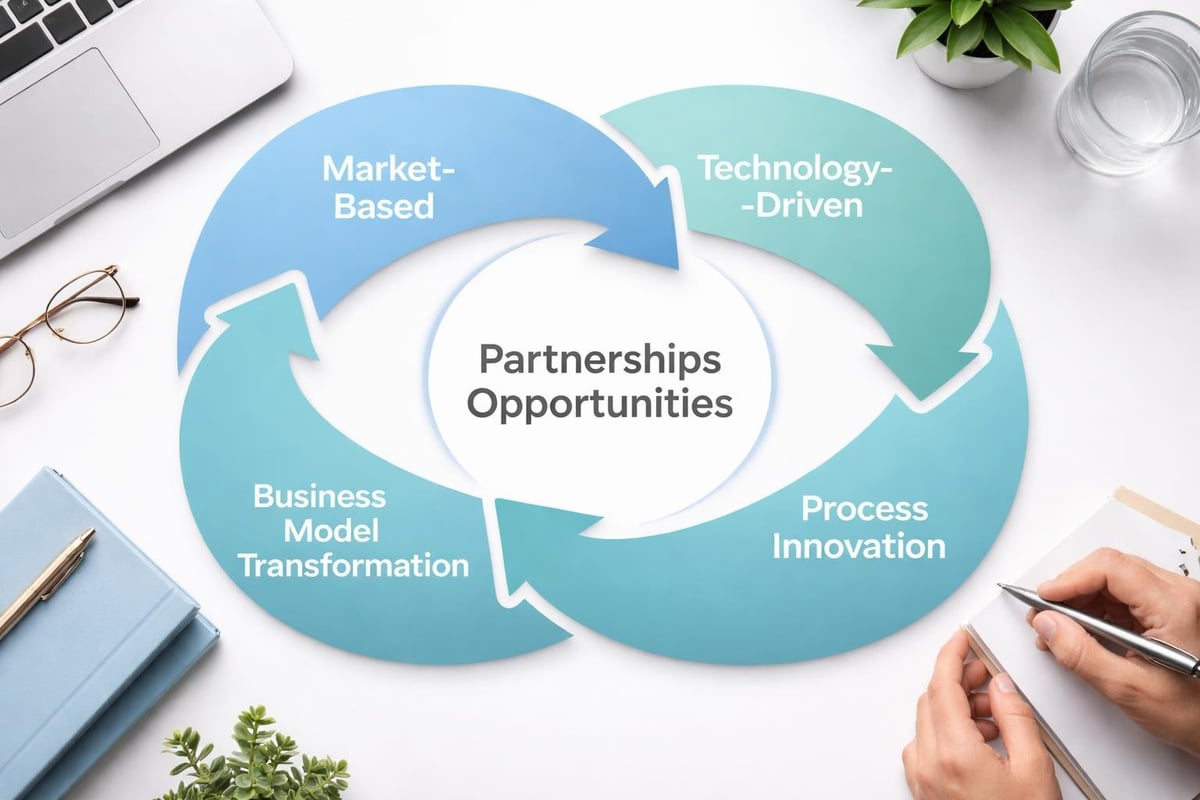
Market-Based Opportunities emerge when organizations identify underserved customer segments, unmet needs, or inefficiencies in existing solutions. These opportunities often hide in plain sight, requiring deep customer understanding and market analysis to surface.
Technology-Driven Opportunities arise from advancements in artificial intelligence, machine learning, blockchain, and other transformative technologies. Companies that effectively leverage these capabilities can create entirely new value propositions and business models.
Process Innovation Opportunities focus on operational excellence, cost reduction, and efficiency gains. While less glamorous than product innovation, process improvements can generate substantial competitive advantages and profitability improvements.
Organizations pursuing business model innovation discover opportunities to reconfigure how value is created, delivered, and captured. This strategic approach often yields higher returns than incremental product improvements.
Partnership and Ecosystem Opportunities leverage external innovation through collaborations, open innovation platforms, and strategic alliances. Academic research has identified five thematic clusters of entrepreneurship and open innovation opportunities, including strategic partnerships and digital transformation initiatives.
Strategic Frameworks for Opportunity Identification
Systematic approaches to discovering opportunities for innovation provide structure and repeatability to what might otherwise seem like random creativity. Leading organizations employ proven methodologies that combine analytical rigor with creative exploration.
Market Opportunity Navigator Methodology
The Market Opportunity Navigator offers a three-step process for identifying and evaluating innovation opportunities. This strategic management methodology helps organizations systematically assess market potential, competitive positioning, and resource requirements.
| Framework Component | Primary Focus | Key Output |
|---|---|---|
| Market Opportunity Set | Identifying potential markets | Comprehensive opportunity list |
| Attractiveness Map | Evaluating opportunity potential | Prioritized opportunities |
| Agility Assessment | Strategic flexibility planning | Implementation roadmap |
Organizations implementing this framework gain clarity on which opportunities align with their capabilities and strategic objectives. The methodology complements other tools like the Business Model Canvas, creating a comprehensive approach to strategic innovation planning.
Outcome-Driven Innovation Approach
Outcome-Driven Innovation shifts focus from product features to customer-defined success metrics. This methodology, developed by Anthony W. Ulwick, helps organizations understand what customers are trying to accomplish and the metrics they use to measure success.
Key steps in the ODI process include:
- Defining the job-to-be-done from the customer perspective
- Identifying outcome statements that customers use to measure success
- Quantifying the importance and satisfaction levels for each outcome
- Prioritizing underserved outcomes as innovation opportunities
- Developing solutions specifically designed to address outcome gaps
This customer-centric approach reveals opportunities for innovation that competitors often overlook because they focus on feature parity rather than outcome excellence.
Building Innovation Capabilities Within Organizations
Sustainable innovation requires more than occasional breakthrough ideas. Organizations must develop systematic capabilities that continuously identify and exploit opportunities for innovation. Building innovation capabilities transforms innovation from sporadic occurrence to organizational competency.
Establishing Innovation Infrastructure
Dedicated Resources: Successful innovation programs allocate specific budget, personnel, and time to opportunity exploration. This commitment signals organizational priority and enables sustained effort.
Structured Processes: Organizations need defined workflows for collecting insights, evaluating opportunities, prototyping solutions, and scaling successful innovations. The Advanced Innovation Design Approach provides a holistic methodology for enhancing innovative capabilities through comprehensive front-end innovation processes.
Decision-Making Frameworks: Clear criteria and governance structures enable rapid evaluation and resource allocation. The IpOp model guides pre-project analysis and opportunity case development for strategic decision-makers.
Cultivating an Innovation Mindset
Cultural transformation represents the most challenging yet impactful aspect of building innovation capabilities. Organizations must shift from risk-averse, execution-focused cultures to environments that encourage experimentation, learning, and calculated risk-taking.
Training and development programs equip teams with innovation methodologies and tools. Creativity and innovation training develops the skills necessary to identify opportunities, generate solutions, and implement changes effectively.
Leadership commitment manifests through visible support, resource allocation, and tolerance for intelligent failures. When leaders demonstrate innovation behaviors, teams feel empowered to explore opportunities for innovation without fear of negative consequences.

Leveraging Technology and AI for Innovation Discovery
Artificial intelligence and advanced analytics have revolutionized how organizations identify opportunities for innovation. These technologies process vast datasets, recognize patterns invisible to human analysis, and generate insights that inform strategic decisions.
AI-Powered Opportunity Analysis
Machine learning algorithms analyze customer behavior, market trends, competitive movements, and technological developments to surface emerging opportunities. Organizations working with top AI consulting companies gain access to sophisticated analytical capabilities that accelerate opportunity identification.
Predictive Analytics forecast market evolution, enabling organizations to position themselves ahead of trends rather than reacting to changes. These capabilities identify opportunities for innovation before they become obvious to competitors.
Natural Language Processing extracts insights from customer feedback, social media conversations, patent filings, and research publications. This technology reveals unmet needs and emerging concerns that represent innovation opportunities.
Pattern Recognition identifies non-obvious connections between disparate data points, uncovering opportunities that traditional analysis might miss. These insights often lead to breakthrough innovations that create new market categories.
Digital Platforms for Open Innovation
InnoCentive and similar platforms enable organizations to tap global problem-solving networks. This open innovation approach expands the opportunity discovery process beyond internal resources, accessing diverse perspectives and specialized expertise.
Organizations posting challenges on these platforms often receive solutions from unexpected sources, demonstrating how external collaboration reveals opportunities for innovation that internal teams might not consider.
Sector-Specific Innovation Opportunities in 2026
Different industries face unique challenges and opportunities shaped by sector dynamics, regulatory environments, and technological maturity. Understanding these nuances helps organizations identify the most relevant opportunities for innovation within their markets.
Financial Services Transformation
Digital transformation, regulatory technology, embedded finance, and personalized wealth management represent major opportunity areas. Organizations exploring industries for consulting expertise find that financial services presents particularly fertile ground for innovation.
Healthcare and Life Sciences Innovation
Telemedicine expansion, personalized medicine, AI-driven diagnostics, and patient experience optimization continue driving transformation. The intersection of data analytics and clinical care creates numerous opportunities for innovation that improve outcomes while reducing costs.
Manufacturing and Industry 4.0
Smart factories integrate IoT sensors, AI-powered quality control, predictive maintenance, and automated production systems. These technologies create opportunities for innovation in efficiency, customization, and sustainability.
Supply chain resilience has emerged as a critical focus area, with opportunities in localization, digital twins, blockchain traceability, and demand forecasting. Organizations that innovate in supply chain management gain significant competitive advantages.
| Industry Sector | Primary Opportunity Areas | Innovation Drivers |
|---|---|---|
| Financial Services | Embedded finance, RegTech, personalized banking | Digital transformation, regulation |
| Healthcare | Telemedicine, AI diagnostics, patient experience | Technology advancement, demographic shifts |
| Manufacturing | Smart factories, supply chain resilience | Industry 4.0, sustainability requirements |
| Retail | Omnichannel experience, personalization | E-commerce growth, changing preferences |
Implementing Design Thinking for Opportunity Discovery
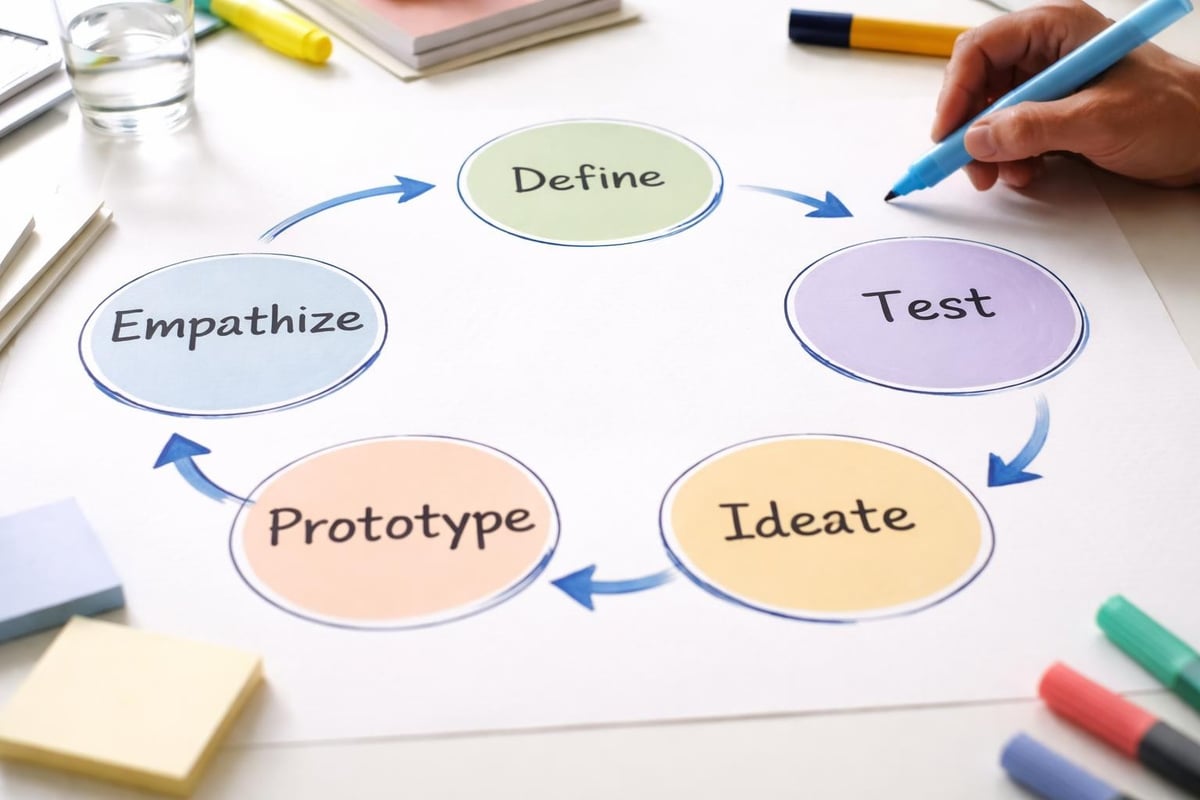
Design thinking provides a human-centered methodology for uncovering and developing opportunities for innovation. This approach emphasizes empathy, experimentation, and iterative refinement to create solutions that genuinely address user needs.
The Design Thinking Process
Organizations implementing design thinking for innovation follow a structured yet flexible process that balances creativity with strategic focus.
Empathize: Deep understanding of customer experiences, pain points, and aspirations reveals opportunities that surveys and focus groups often miss. Ethnographic research and immersive observation generate insights that drive meaningful innovation.
Define: Synthesizing research findings into clear problem statements focuses innovation efforts on high-value opportunities. Well-defined problems guide solution generation and prevent teams from pursuing interesting but strategically irrelevant ideas.
Ideate: Structured brainstorming techniques generate diverse solution concepts. Quantity over quality during ideation expands the solution space and increases the likelihood of breakthrough ideas.
Prototype: Rapid prototyping enables quick testing of concepts with minimal investment. This experimentation reveals which opportunities for innovation warrant further development and which should be abandoned or modified.
Test: User feedback on prototypes validates assumptions, reveals improvements, and sometimes uncovers entirely new opportunities. Iterative testing creates a learning loop that continuously refines innovation direction.
Strategic Approaches to Prioritizing Innovation Opportunities
Organizations typically identify more opportunities for innovation than they can pursue simultaneously. Effective prioritization ensures resources flow toward initiatives with the highest strategic value and success probability.
Multi-Criteria Evaluation Framework
Market attractiveness assessment considers size, growth rate, competitive intensity, and profit potential. Opportunities in large, growing markets with manageable competition generally warrant higher priority.
Strategic alignment evaluates how well opportunities support broader organizational objectives, leverage existing capabilities, and strengthen competitive positioning. The Market Opportunity Navigator framework provides systematic approaches to this assessment.
Implementation feasibility examines technical requirements, resource availability, timeline considerations, and organizational readiness. Even highly attractive opportunities may receive lower priority if implementation barriers prove insurmountable.
Risk assessment identifies potential obstacles, competitive responses, regulatory challenges, and market uncertainties. Balanced portfolios include both lower-risk incremental innovations and higher-risk breakthrough opportunities.
Portfolio Management Approach
| Opportunity Type | Resource Allocation | Expected Returns | Time Horizon |
|---|---|---|---|
| Core Enhancement | 60-70% | Moderate, predictable | 6-18 months |
| Adjacent Expansion | 20-30% | Higher, less certain | 1-2 years |
| Transformational | 10-15% | Potentially dramatic | 2-5+ years |
This portfolio approach balances near-term performance with long-term transformation, ensuring organizations maintain current competitiveness while building future capabilities.
Developing Business Models Around Innovation Opportunities
Identifying opportunities for innovation represents only the first step. Organizations must translate insights into viable business models that create, deliver, and capture value effectively. Business frameworks provide structure for this translation process.
Business Model Canvas Application
The Business Model Canvas maps nine essential components: customer segments, value propositions, channels, customer relationships, revenue streams, key resources, key activities, key partnerships, and cost structure. This visual tool reveals how different elements interconnect and where innovation can generate maximum impact.
Value proposition innovation focuses on creating distinctive offerings that address customer needs better than alternatives. Organizations might innovate through superior performance, customization, design, brand, price, or convenience.
Revenue model innovation explores alternative approaches to monetization, including subscription models, freemium structures, platform fees, or outcome-based pricing. These innovations sometimes generate more value than product improvements.
Channel innovation develops new ways to reach customers, deliver products, or provide services. Digital transformation has created numerous opportunities for innovation in how organizations connect with markets.
Blue Ocean Strategy for Opportunity Exploration
Blue Ocean Strategy provides a systematic approach to discovering uncontested market spaces. Rather than competing within existing industry boundaries, organizations create new demand through value innovation.
The Four Actions Framework guides this exploration:
- Eliminate: Which factors the industry takes for granted should be eliminated?
- Reduce: Which factors should be reduced well below industry standards?
- Raise: Which factors should be raised well above industry standards?
- Create: Which factors should be created that the industry has never offered?
This methodology reveals opportunities for innovation by challenging industry assumptions and reconfiguring value elements in novel combinations.
Measuring Innovation Success and ROI
Organizations need clear metrics to assess whether innovation investments generate expected returns. Measurement systems track both leading indicators (innovation pipeline health) and lagging indicators (commercial outcomes).
Innovation Pipeline Metrics
Opportunity identification rate measures how many potential innovations the organization surfaces within specific timeframes. Declining rates may indicate weakening discovery capabilities or insufficient exploration resources.
Conversion rates track what percentage of identified opportunities progress through development stages to commercial launch. Low conversion rates might suggest poor opportunity selection, inadequate development resources, or excessive risk aversion.
Time-to-market metrics evaluate how quickly organizations transform opportunities into market-ready solutions. Competitive advantage often accrues to rapid innovators who establish market positions before competitors respond.
Commercial Performance Indicators
- Revenue from new products or services launched within the past 3 years
- Market share gains in targeted segments
- Customer acquisition costs for innovative offerings versus traditional products
- Customer lifetime value improvements from innovation initiatives
- Return on innovation investment compared to other capital allocation options
These metrics demonstrate whether opportunities for innovation translate into tangible business value and competitive advantage.
Creating Systems for Continuous Innovation
Sustainable competitive advantage requires ongoing innovation rather than periodic breakthroughs. Organizations must establish systems that continuously identify and exploit opportunities for innovation as part of normal operations.
Innovation Governance Structure
Innovation councils comprising cross-functional leaders review opportunity pipelines, allocate resources, and remove implementation obstacles. Regular cadence ensures innovation receives consistent executive attention rather than episodic focus.
Stage-gate processes provide checkpoints where opportunities are evaluated against success criteria before receiving additional investment. This structured approach balances support for promising innovations with disciplined resource allocation.
Innovation champions embedded within business units identify local opportunities, advocate for innovation initiatives, and facilitate implementation. These distributed roles ensure innovation thinking permeates the organization rather than remaining isolated in dedicated teams.
Knowledge Management and Learning
Organizations capture insights from both successful innovations and failed experiments, creating institutional knowledge that improves future opportunity identification and development. Proven business innovation strategies emphasize systematic learning from all innovation activities.
Post-implementation reviews document what worked, what didn't, and why. These retrospectives generate insights that enhance innovation capabilities and increase success rates over time.
Best practice sharing distributes successful approaches across the organization, accelerating innovation adoption and avoiding redundant learning cycles. Internal communities of practice facilitate this knowledge transfer.
Accelerating Innovation Through Strategic Partnerships
External collaboration expands the opportunity landscape beyond internal capabilities and perspectives. Strategic partnerships, academic relationships, startup engagement, and customer co-creation all represent valuable approaches to discovering and developing opportunities for innovation.
Ecosystem Innovation Models
Platform strategies create environments where multiple parties contribute value and share in the benefits. Organizations building innovation ecosystems often discover opportunities they couldn't identify or exploit independently.
Open innovation programs solicit external ideas, technologies, and solutions. Research centers like Washington University’s guide to identifying opportunities emphasize the importance of diverse input sources for comprehensive opportunity discovery.
Startup collaboration provides access to entrepreneurial energy, emerging technologies, and novel business models. Corporate venture capital, accelerator programs, and strategic partnerships enable established organizations to participate in startup innovation without building everything internally.
Customer co-creation involves customers directly in innovation processes, ensuring solutions address real needs and gain market acceptance more readily. This collaborative approach often reveals opportunities for innovation that internal teams wouldn't consider.
The ability to systematically identify and capitalize on opportunities for innovation determines which organizations thrive in increasingly competitive markets and which struggle to maintain relevance. By implementing structured frameworks, building innovation capabilities, leveraging technology, and fostering collaborative ecosystems, leaders position their organizations for sustainable growth and market leadership. Six Paths Consulting partners with ambitious leaders to discover high-value market opportunities, develop innovative business models, and build the internal capabilities necessary for independent innovation success. Our AI-powered strategic innovation approach transforms opportunity identification from sporadic creativity into systematic competitive advantage, driving measurable revenue growth and profitability improvements.