

In today's rapidly evolving business landscape, the role of a product development expert has become indispensable for organizations seeking sustainable competitive advantage. These specialized professionals combine technical knowledge, strategic thinking, and market insights to guide products from initial concept through successful market launch. As companies face increasing pressure to innovate while managing risk, understanding what makes an effective product development expert and how to leverage their expertise has never been more critical for business leaders aiming to capture new revenue streams and build lasting market positions.
Understanding the Core Role of a Product Development Expert
A product development expert serves as the strategic architect who transforms market opportunities into tangible products that customers value. This role extends far beyond simple project management or technical execution. These professionals operate at the intersection of customer needs, technological capabilities, and business objectives, orchestrating cross-functional teams to deliver innovations that generate measurable returns.
The expertise required encompasses multiple dimensions. A skilled product development expert must understand market dynamics, competitive positioning, customer psychology, and technological trends while maintaining a firm grasp on financial viability and operational constraints. This multifaceted knowledge allows them to make informed decisions at every stage of the development process, from initial concept validation through post-launch optimization.
Critical Competencies That Define Excellence
Strategic market analysis forms the foundation of effective product development. Experts in this field conduct rigorous research to identify unmet needs, emerging trends, and competitive gaps that represent genuine opportunities. They don't simply respond to customer requests; they anticipate future demands and position products to capture value in evolving markets.
The ability to balance innovation with pragmatism distinguishes exceptional practitioners. While creativity fuels breakthrough thinking, a product development expert must also assess technical feasibility, resource requirements, and timeline constraints. This dual perspective ensures that ambitious visions translate into executable plans that organizations can realistically deliver.

Strategic Frameworks for Product Innovation Success
Leading product development experts employ structured methodologies to reduce risk and increase success rates. These frameworks provide repeatable processes that can be adapted to different industries, markets, and organizational contexts while maintaining rigor and discipline throughout the development journey.
Stage-Gate and Agile Hybrid Approaches
Modern product development increasingly combines traditional stage-gate methodologies with agile principles to capture the benefits of both approaches. The stage-gate model provides critical decision points where teams evaluate progress, validate assumptions, and secure resources for subsequent phases. This structured approach helps organizations allocate capital efficiently and terminate underperforming initiatives before they consume excessive resources.
Simultaneously, agile methodologies enable rapid iteration, continuous learning, and faster time-to-market. A product development expert skilled in hybrid approaches knows when to apply structured governance and when to embrace flexibility. This adaptive capability proves particularly valuable in markets characterized by uncertainty and rapid technological change.
| Framework Element | Traditional Stage-Gate | Agile Development | Hybrid Approach |
|---|---|---|---|
| Planning Horizon | Complete upfront | Short sprints | Phased with iterations |
| Change Management | Controlled, formal | Continuous, adaptive | Strategic flexibility |
| Resource Allocation | Phase-based commitment | Team-based allocation | Dynamic optimization |
| Customer Involvement | Research phases | Ongoing collaboration | Structured touchpoints |
Design Thinking and Customer-Centric Development
Integrating design thinking methodologies has become essential for product development experts seeking to create offerings that genuinely resonate with target customers. This human-centered approach emphasizes empathy, experimentation, and iteration as core principles guiding development decisions.
Through deep customer immersion, experts uncover latent needs that traditional market research often misses. This insight-driven approach enables organizations to develop products that solve real problems in ways customers find compelling and valuable. The emphasis on rapid prototyping and testing reduces the risk of large-scale investments in unvalidated concepts.
Building Cross-Functional Excellence in Product Teams
A product development expert must orchestrate diverse specialists across engineering, design, marketing, operations, and finance. This coordination challenge requires exceptional communication skills, influence without authority, and the ability to align stakeholders around shared objectives despite competing priorities and perspectives.
Establishing Clear Governance and Decision Rights
Successful product development demands clarity about who makes what decisions and when. Experts establish governance structures that balance speed with appropriate oversight, ensuring that critical choices receive adequate scrutiny while avoiding bureaucratic delays that stifle momentum.
Decision-making frameworks should address:
- Technical architecture and platform choices
- Feature prioritization and scope management
- Budget allocation and resource deployment
- Launch timing and market entry strategy
- Post-launch pivots and course corrections
By establishing these frameworks early, a product development expert prevents confusion, reduces conflict, and accelerates progress through clear accountability and transparent processes.
Fostering Innovation Culture Within Development Teams
Technical skills alone don't guarantee innovation success. A product development expert cultivates team environments where creativity flourishes, calculated risks are encouraged, and learning from failure is normalized. This cultural dimension often determines whether organizations can sustain innovation over time or merely achieve occasional breakthrough successes.
Creating psychological safety allows team members to propose unconventional ideas without fear of ridicule or punishment. When combined with structured evaluation processes, this openness generates diverse options that increase the probability of discovering truly differentiated solutions.
Leveraging Market Intelligence for Competitive Advantage
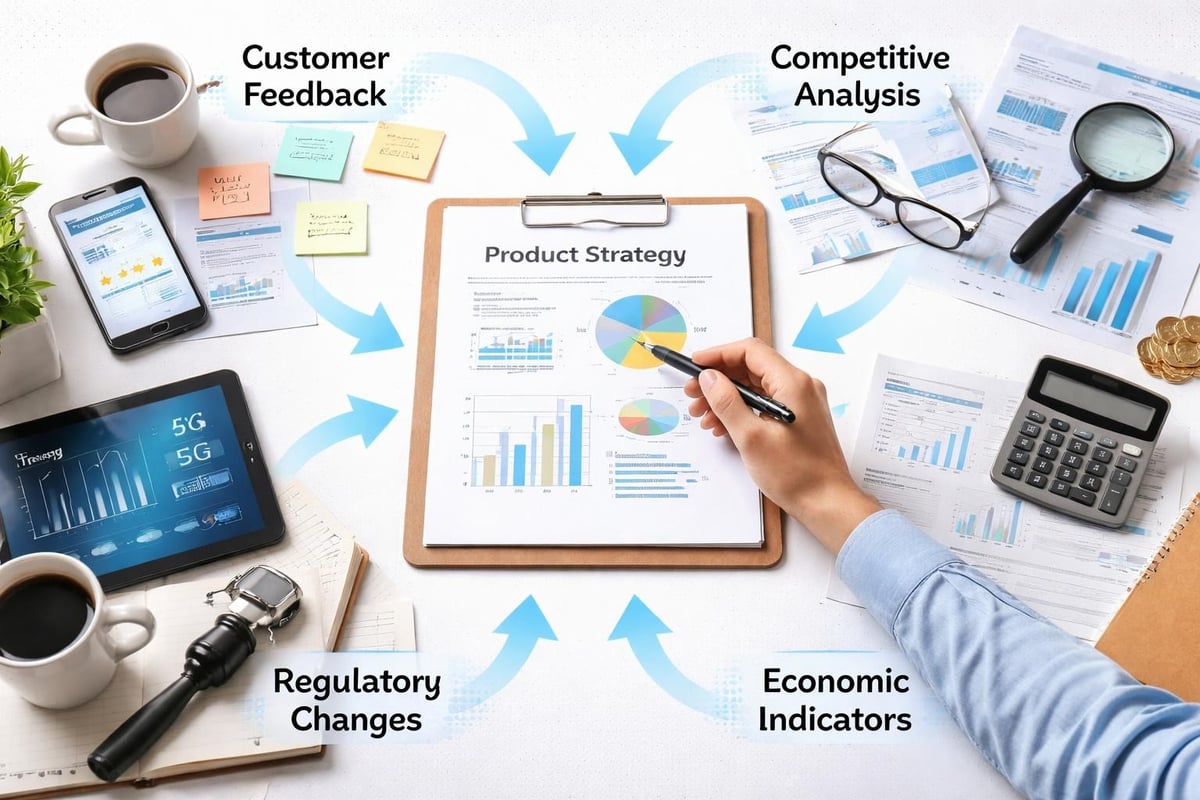
Expert product developers maintain continuous awareness of market dynamics, competitive movements, and technological shifts that could impact their product strategies. This environmental scanning goes beyond periodic research reports to encompass ongoing monitoring and synthesis of multiple information streams.
Advanced Research Methodologies
Modern product development experts employ sophisticated research techniques that combine quantitative data with qualitative insights. Conjoint analysis, ethnographic studies, behavioral analytics, and predictive modeling all contribute to a comprehensive understanding of market opportunities and customer preferences.
Network resources for product development expertise provide access to specialists who can design and execute research programs tailored to specific innovation challenges. These collaborations often yield insights that internal teams might miss due to proximity bias or resource constraints.
The integration of AI-powered analytics has transformed how product development experts process market information. Machine learning algorithms can identify patterns in customer behavior, predict adoption rates, and optimize feature configurations with unprecedented precision. Organizations working with innovation strategy consultants gain access to these advanced capabilities without building extensive internal infrastructure.
Translating Insights into Actionable Product Strategies
Data without interpretation provides limited value. A skilled product development expert synthesizes disparate information sources into coherent strategic narratives that guide development priorities and resource allocation. This translation process requires both analytical rigor and strategic intuition developed through experience across multiple product cycles.
The ability to distinguish signal from noise becomes particularly valuable as data volumes increase. Experts develop frameworks for evaluating which insights merit action and which represent temporary fluctuations or statistical artifacts that shouldn't influence core strategy.
Risk Management Throughout the Development Lifecycle
Product development inherently involves uncertainty across technical, market, and operational dimensions. A product development expert doesn't eliminate risk but rather identifies, quantifies, and mitigates it through deliberate strategies that protect organizational resources while preserving upside potential.
Structured Risk Assessment Approaches
Comprehensive risk management begins with systematic identification of potential failure modes across the development process. Technical risks might include unproven technologies, integration challenges, or scalability concerns. Market risks encompass competitive responses, demand uncertainty, and pricing dynamics. Operational risks involve supply chain vulnerabilities, regulatory compliance, and capability gaps.
Once identified, risks require quantification to enable rational prioritization. Not all risks warrant equal attention or mitigation investment. A product development expert assesses probability and potential impact to focus resources on the most significant threats to success.
Mitigation strategies vary based on risk characteristics:
- Avoidance through alternative approaches that eliminate the risk entirely
- Reduction via prototyping, testing, or phased implementation that decreases likelihood or impact
- Transfer through partnerships, insurance, or contractual arrangements
- Acceptance when mitigation costs exceed potential losses or probability remains sufficiently low
Building Flexibility and Optionality
Rather than committing irreversibly to single pathways, expert developers build optionality into their plans. Modular architectures, platform approaches, and staged investments create flexibility to adjust course as new information emerges. This adaptive capacity proves particularly valuable in fast-moving markets where initial assumptions may quickly become obsolete.
The concept of real options from finance provides useful frameworks for valuing flexibility in product development decisions. A product development expert skilled in these techniques can quantify the value of delaying commitment, maintaining alternative pathways, or piloting before full-scale launch.
Measuring Success Beyond Launch Metrics
Traditional product development often focuses excessively on meeting schedule and budget targets while neglecting ultimate business outcomes. A sophisticated product development expert establishes comprehensive measurement frameworks that track progress toward strategic objectives throughout the development lifecycle and beyond initial launch.
Establishing Meaningful Success Criteria
Success metrics should connect directly to strategic intent. If the goal is revenue growth, measures should track customer acquisition, pricing realization, and lifetime value. If the objective is market share capture, competitive positioning and category growth become relevant indicators. When innovation aims to improve customer satisfaction, engagement metrics and retention rates provide critical feedback.
| Development Phase | Leading Indicators | Lagging Indicators | Decision Triggers |
|---|---|---|---|
| Concept | Research insights, stakeholder alignment | Funding approval, resource commitment | Gate advancement, termination |
| Development | Milestone achievement, prototype performance | Budget variance, schedule adherence | Scope adjustments, resource reallocation |
| Testing | User feedback scores, technical validation | Defect rates, compliance confirmation | Launch readiness, additional testing |
| Launch | Early adoption rates, channel uptake | Revenue achievement, market share | Scale decisions, pivot considerations |
Post-Launch Optimization and Iteration
Launch represents a beginning rather than an endpoint for expert product developers. The initial market response provides invaluable data for refining positioning, enhancing features, and optimizing operations. Organizations that treat launches as learning opportunities rather than final deliverables achieve superior long-term performance.
Continuous improvement processes should be embedded from the outset. A product development expert establishes feedback loops, monitoring systems, and decision protocols that enable rapid response to market signals without creating organizational chaos or constant direction changes.
The Future of Product Development Expertise
As we progress through 2026, several trends are reshaping what organizations need from product development experts. Artificial intelligence, sustainability imperatives, platform business models, and ecosystem thinking all require evolved capabilities beyond traditional product management skills.
AI-Augmented Development Processes
Experts in product development increasingly leverage artificial intelligence to accelerate research, optimize designs, and predict market responses. Generative AI assists with ideation, creating numerous variations for evaluation. Predictive analytics forecast adoption patterns with improving accuracy. Automated testing reduces cycle times and improves quality.
However, AI augments rather than replaces human judgment. A product development expert must understand these tools' capabilities and limitations, knowing when to trust algorithmic recommendations and when human insight remains essential. This hybrid intelligence approach combines computational power with strategic wisdom developed through experience.
Sustainability as a Core Product Dimension
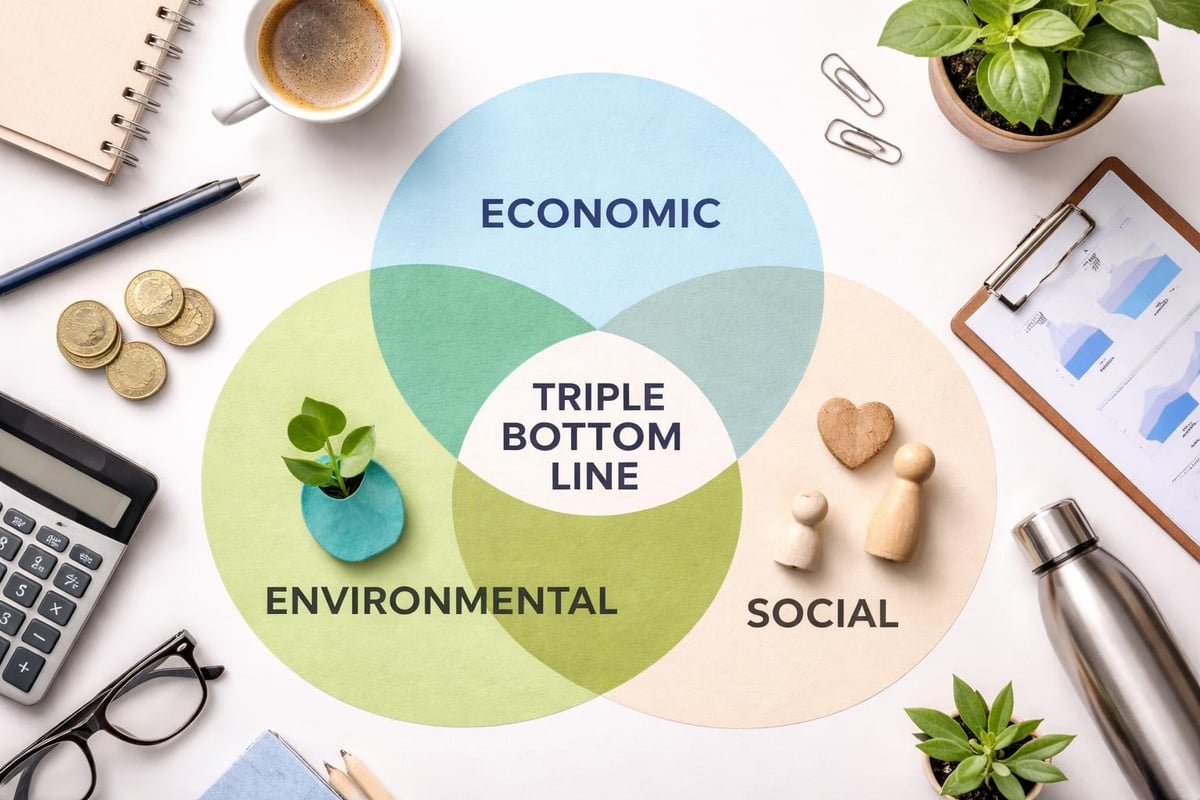
Environmental and social considerations have moved from peripheral concerns to central product requirements. Customers, regulators, and investors all demand that products demonstrate genuine sustainability credentials. A modern product development expert must integrate these considerations throughout the development process rather than treating them as compliance checkpoints.
This shift requires new competencies in lifecycle analysis, circular economy principles, and stakeholder engagement beyond traditional customer and shareholder groups. Products must now deliver value while minimizing environmental impact and contributing positively to social outcomes.
Building Organizational Product Development Capabilities
While individual expertise matters, sustainable innovation requires organizational capabilities that persist beyond any single expert. Forward-thinking companies invest in developing internal competencies through structured training programs for creativity and innovation that democratize product development skills across multiple functions and levels.
Knowledge Management and Institutional Learning
A product development expert contributes not only through direct project involvement but also by building systems that capture and transfer knowledge. Documentation of decisions, rationales, and outcomes creates institutional memory that prevents repeated mistakes and accelerates future initiatives.
Communities of practice bring together product developers across different projects to share insights, troubleshoot challenges, and develop common approaches. These networks multiply the impact of individual expertise by making it accessible to broader populations within the organization.
Developing Next-Generation Product Leaders
Succession planning ensures continuity of product development capabilities as markets evolve and personnel change. Experienced experts should mentor emerging talent, providing exposure to strategic decisions and coaching through complex challenges. This investment in human capital development pays dividends through improved innovation performance and reduced dependence on external resources.
Structured rotation programs expose high-potential employees to different aspects of product development, building versatile skills and comprehensive understanding. By experiencing various roles from market research through launch execution, future leaders develop the systems perspective essential for expert-level performance.
Strategic Partnership Models for Product Development
Organizations face make-versus-buy decisions regarding product development expertise. While building internal capabilities offers control and cultural alignment, accessing external specialists provides flexibility and specialized knowledge that may not justify permanent headcount.
When to Engage External Product Development Experts
External expertise makes particular sense in several scenarios. New product categories where the organization lacks experience benefit from specialists who've navigated similar challenges previously. Capacity constraints during peak innovation periods can be addressed through temporary augmentation rather than permanent expansion. Specialized technical domains may require niche expertise that appears infrequently enough that permanent employment doesn't make economic sense.
New product development specialists bring fresh perspectives unconstrained by internal assumptions or political considerations. This objectivity often proves valuable when challenging existing strategies or evaluating alternatives that threaten established products or business models.
The key to successful external partnerships lies in clear scope definition, explicit success criteria, and knowledge transfer provisions that build internal capabilities even while leveraging outside expertise. A product development expert operating as a consultant should leave the organization stronger and more capable, not dependent on continued external support.
Mastering product development requires strategic thinking, cross-functional leadership, and continuous adaptation to evolving market conditions and technological capabilities. Organizations that build these competencies position themselves to capitalize on innovation opportunities while managing inherent development risks. Whether developing internal expertise or engaging external specialists, the path to product success demands deliberate investment in capabilities, processes, and culture that support sustained innovation performance. Six Paths Consulting partners with ambitious leaders to accelerate this journey through AI-powered strategic innovation services, comprehensive training programs, and proven methodologies that transform how organizations discover opportunities and develop winning products that drive profitable growth.