

Government agencies and public institutions face unprecedented challenges in 2026, from rapid technological advancement to evolving citizen expectations and constrained budgets. Public sector strategy consulting has emerged as a critical resource for organizations seeking to transform their operations, enhance service delivery, and maximize their impact on communities. Unlike private sector consulting, this specialized field addresses unique considerations such as public accountability, diverse stakeholder interests, and the fundamental mission of serving citizens rather than maximizing profits. Strategic consultants working with public entities must balance innovation with regulatory compliance, efficiency with equity, and modernization with accessibility.
Understanding the Public Sector Strategy Landscape
Public sector strategy consulting encompasses a broad range of services designed to help government agencies, nonprofits, and public institutions develop and execute transformative strategies. These consulting engagements typically focus on improving operational efficiency, implementing digital transformation initiatives, developing long-term strategic plans, and creating innovative solutions to complex societal challenges.
The scope of work in this field differs significantly from traditional corporate consulting. Public sector consultants must navigate multiple layers of bureaucracy, political considerations, and public scrutiny while delivering measurable outcomes for taxpayers and citizens. They also contend with longer decision-making cycles, extensive stakeholder consultation requirements, and the imperative to demonstrate value in social impact rather than purely financial returns.
Key Drivers of Public Sector Transformation
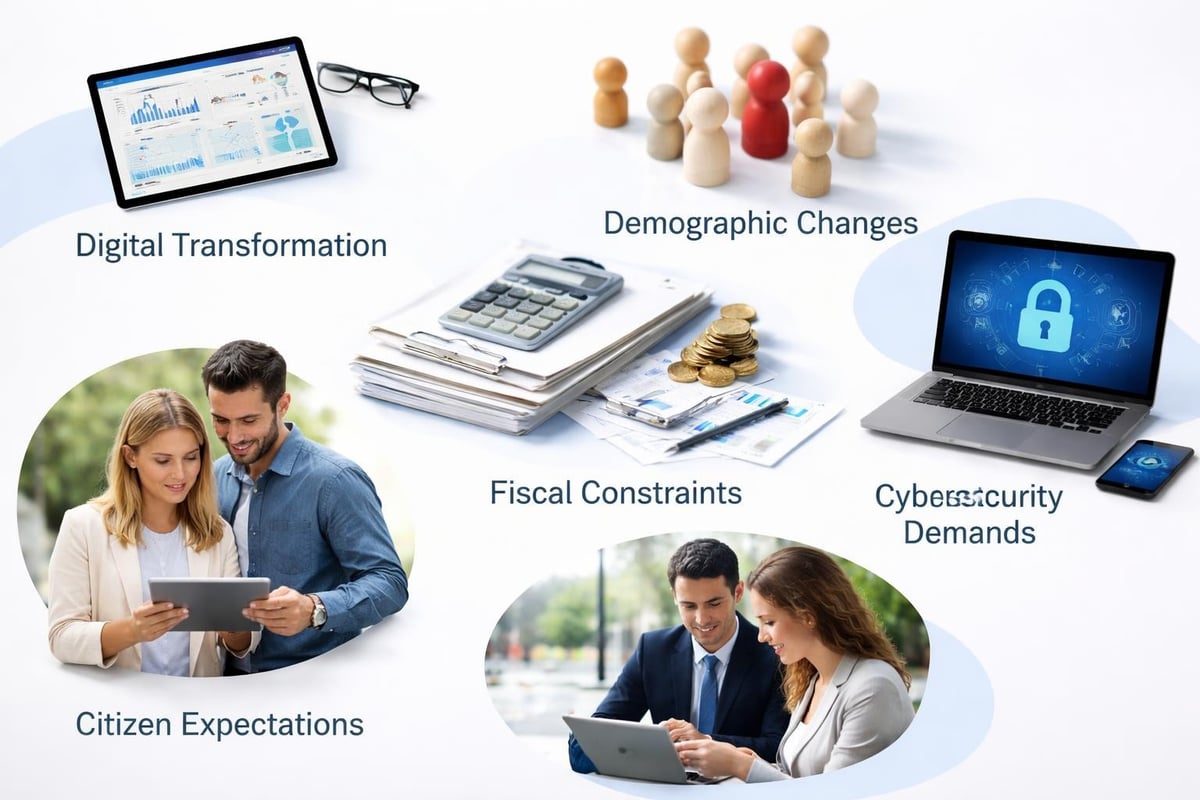
Several forces are reshaping how government organizations operate and deliver services:
- Digital transformation demands that agencies modernize legacy systems and adopt cloud-based platforms
- Demographic shifts require services tailored to aging populations and changing workforce compositions
- Fiscal constraints push organizations to achieve more with limited resources
- Rising citizen expectations for seamless, digital-first service experiences
- Regulatory complexity necessitates sophisticated compliance frameworks
- Cybersecurity threats require robust protection of sensitive citizen data
Organizations like Strategy&, part of the PwC network, emphasize how public sector entities must refocus their strategies to maximize impact while addressing automation, workforce challenges, and digitization pressures.
Strategic Planning Frameworks for Government Agencies
Effective public sector strategy consulting begins with robust planning frameworks that account for the unique characteristics of government operations. These frameworks must integrate multiple perspectives, from frontline service delivery to executive leadership and elected officials.
Strategic planning in the public sector typically follows a structured approach that includes environmental scanning, stakeholder engagement, priority setting, resource allocation, and performance measurement. However, the complexity increases exponentially when considering the political environment, public accountability requirements, and the need for transparent decision-making processes.
Essential Components of Public Strategy Development
A comprehensive strategic planning engagement addresses several critical dimensions:
- Mission alignment ensures all initiatives support the organization's core public service mandate
- Stakeholder mapping identifies all parties affected by or influencing strategic decisions
- Capability assessment evaluates current organizational strengths and gaps
- Resource optimization maximizes impact within budgetary constraints
- Risk management addresses political, operational, and reputational vulnerabilities
- Performance metrics establish clear, measurable outcomes tied to public value
Strategic alignment with long-term government goals has become increasingly important as public sector organizations incorporate frameworks like the United Nations Sustainable Development Goals into their planning processes. This integration ensures that local and regional initiatives contribute to broader societal objectives while maintaining focus on community-specific needs.
| Strategic Planning Element | Public Sector Consideration | Private Sector Comparison |
|---|---|---|
| Primary Objective | Public value and citizen welfare | Profit maximization |
| Stakeholder Complexity | High (citizens, elected officials, unions, media) | Moderate (shareholders, customers, employees) |
| Decision Timeline | Extended due to democratic processes | Faster, more centralized |
| Success Metrics | Social impact, service quality, efficiency | Revenue, market share, ROI |
| Budget Constraints | Fixed by appropriations and tax revenue | Flexible based on market performance |
Innovation and Technology Integration
Public sector strategy consulting increasingly centers on leveraging technology and innovation to transform service delivery and operational efficiency. In 2026, artificial intelligence, automation, and data analytics have moved from experimental initiatives to core components of government operations.
Consultants specializing in this space help agencies identify opportunities for technological advancement while managing the inherent risks of large-scale system implementations. They must balance the promise of innovation with the reality of legacy infrastructure, workforce capabilities, and public trust concerns.
AI-Powered Strategic Innovation
The integration of artificial intelligence into public sector operations represents one of the most significant opportunities for strategic advancement. Government and public sector strategy consulting now emphasizes how agencies can leverage AI to drive efficiency and innovation while maintaining ethical standards and public accountability.
AI applications in government span numerous functions:
- Predictive analytics for resource allocation and demand forecasting
- Automated processing of routine transactions and inquiries
- Natural language processing for citizen service interactions
- Pattern recognition for fraud detection and compliance monitoring
- Decision support systems for policy analysis and planning
- Personalized service delivery tailored to individual citizen needs
Similar to how AI-powered strategic innovation drives business model transformation in the private sector, public agencies can fundamentally reimagine how they create and deliver value to citizens. The challenge lies in implementing these technologies in ways that enhance rather than replace human judgment, particularly in areas requiring empathy, ethical reasoning, and political sensitivity.

Navigating Stakeholder Complexity and Change Management
One of the most distinctive aspects of public sector strategy consulting involves managing the intricate web of stakeholders who influence and are affected by strategic decisions. Unlike private sector engagements where executive leadership can drive change through hierarchical authority, government initiatives require consensus-building across multiple constituencies.
Effective consultants in this space excel at facilitating dialogue among groups with competing interests, building coalitions for change, and designing implementation approaches that maintain momentum despite political transitions and bureaucratic inertia.
Building Consensus for Strategic Initiatives
Public sector transformation requires carefully orchestrated change management that accounts for:
- Political realities including electoral cycles and shifting priorities
- Union relationships and collective bargaining implications
- Media scrutiny and public perception management
- Legislative oversight and reporting requirements
- Interagency dependencies and coordination challenges
- Citizen engagement and democratic participation
The complexity of public sector case interviews reflects these unique challenges, requiring consultants to demonstrate sophisticated understanding of broader objectives beyond financial performance, navigate stakeholder complexity, and work within budget constraints while delivering meaningful impact.
Successful change management in government settings relies heavily on transparent communication, inclusive decision-making processes, and phased implementation approaches that allow for course correction. Consultants must also prepare agencies for the reality that strategic initiatives often span multiple budget cycles and leadership tenures, requiring institutional commitment beyond individual champions.
Service Delivery Optimization and Operational Excellence
Public sector strategy consulting frequently focuses on improving how agencies deliver services to citizens and businesses. This work encompasses process redesign, channel optimization, and the development of citizen-centric service models that mirror the seamless experiences people expect from private sector interactions.
Modern service delivery optimization draws on methodologies from multiple disciplines, including lean management, design thinking, and customer experience design. The goal is to eliminate unnecessary complexity, reduce wait times, improve accessibility, and enhance overall satisfaction while maintaining necessary controls and compliance requirements.
Measuring and Improving Public Service Quality
Organizations providing strategy services for public sector entities emphasize the importance of aligning people, technology, and priorities with organizational missions. This alignment requires sophisticated measurement systems that capture both efficiency metrics and effectiveness indicators.
| Service Quality Dimension | Measurement Approach | Strategic Implication |
|---|---|---|
| Accessibility | Channel availability, wait times, language options | Multi-channel strategy investment |
| Accuracy | Error rates, correction frequency, compliance | Process standardization and automation |
| Responsiveness | Resolution time, callback speed, inquiry handling | Resource allocation and staffing models |
| Citizen Satisfaction | Survey scores, complaint rates, repeat usage | Service design and improvement priorities |
| Equity | Demographic service usage, outcome disparities | Targeted outreach and accessibility programs |
Consultants help agencies establish baseline performance, benchmark against peer organizations, and implement continuous improvement systems that drive incremental gains over time. This work often reveals opportunities to consolidate redundant functions, streamline approval processes, and redirect resources toward higher-value activities.
Fiscal Strategy and Resource Optimization
Financial sustainability represents a persistent challenge for public sector organizations operating with fixed budgets, unpredictable revenue streams, and increasing demand for services. Public sector strategy consulting addresses these pressures through comprehensive fiscal strategy development, revenue enhancement initiatives, and cost optimization programs.
Unlike private sector engagements where profitability drives decision-making, public sector fiscal strategy must balance financial sustainability with equitable service provision and social impact. Consultants work with agencies to identify sustainable funding models, optimize resource allocation, and implement cost-effective service delivery approaches.
Revenue Enhancement and Cost Management
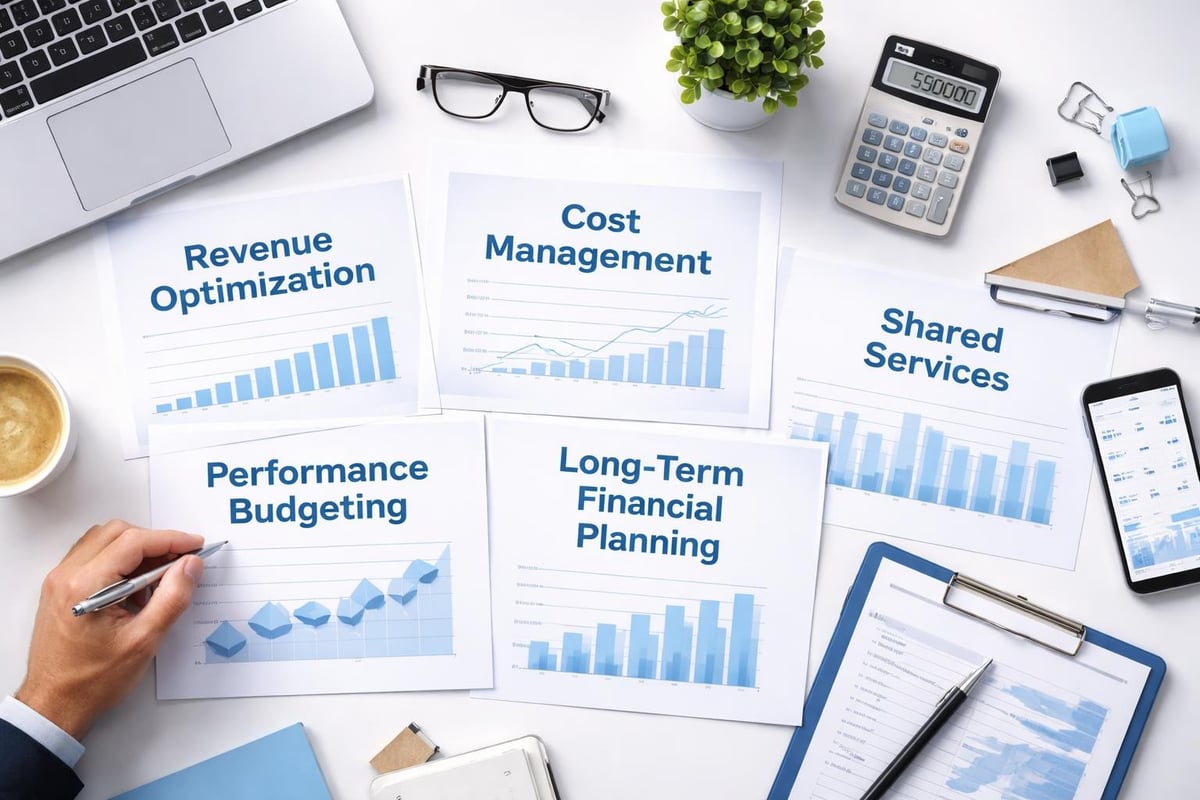
Strategic approaches to fiscal sustainability include:
- Fee structure optimization that ensures cost recovery without creating barriers to access
- Grant and funding diversification to reduce dependence on single revenue sources
- Shared services models that distribute fixed costs across multiple agencies
- Public-private partnerships that leverage private sector efficiency and capital
- Process automation that reduces labor costs while improving consistency
- Performance budgeting that links funding to measurable outcomes
Key trends in public sector strategy highlight the growing importance of government efficiency and fiscal reform as core strategic priorities. Agencies face increasing pressure to demonstrate value for taxpayer dollars while addressing complex social challenges that require sustained investment.
Consultants help organizations develop multi-year financial plans that project revenue, model various cost scenarios, and identify strategic investments that generate long-term returns through improved efficiency or enhanced service quality. These plans must account for economic uncertainty, political volatility, and the possibility of sudden funding changes.
Workforce Development and Organizational Capacity
The public sector workforce faces unique challenges in 2026, including high retirement rates among experienced staff, competition for specialized talent, and the need to develop new capabilities in areas like data science and digital service design. Public sector strategy consulting increasingly addresses these human capital challenges through comprehensive workforce planning and organizational development initiatives.
Strategic workforce planning extends beyond simple headcount projections to encompass skill gap analysis, succession planning, recruitment strategy, training and development programs, and organizational culture transformation. Consultants help agencies build the internal capabilities necessary to sustain strategic initiatives beyond the consulting engagement itself.
Building Internal Innovation Capabilities
Forward-thinking agencies recognize that sustainable transformation requires developing internal capacity for ongoing innovation and adaptation. Similar to how innovative ideas for business growth emerge from cultivating innovation capabilities within organizations, public sector entities benefit from structured approaches to capability building.
Effective capacity-building programs include:
- Skills assessment identifying current capabilities and future requirements
- Targeted recruitment attracting specialized talent in high-demand areas
- Leadership development preparing managers for strategic roles
- Training programs building technical and strategic competencies
- Knowledge management capturing and transferring institutional expertise
- Culture change initiatives fostering innovation, collaboration, and continuous improvement
The challenge lies in implementing these programs within civil service systems that may have rigid classification structures, limited compensation flexibility, and lengthy hiring processes. Consultants help agencies work within these constraints while advocating for necessary reforms that enable strategic talent management.
Cross-Sector Collaboration and Partnership Models
Modern public challenges rarely respect organizational boundaries, requiring collaboration across government agencies, between levels of government, and increasingly with private sector and nonprofit partners. Public sector strategy consulting helps design and implement partnership models that leverage complementary strengths while managing the complexities of multi-organization initiatives.
Effective collaboration requires clear governance structures, shared performance metrics, transparent communication protocols, and aligned incentives. Consultants facilitate the development of these frameworks while helping partners navigate cultural differences, legal constraints, and competing priorities.
Public-Private Partnership Strategies
Strategic partnerships with private sector organizations offer public agencies access to capital, innovation, specialized expertise, and operational efficiency. However, these relationships require careful structuring to protect public interests, ensure accountability, and deliver sustainable value.
Strategy and transformation consulting principles applied to partnership development emphasize aligning stakeholder interests, establishing clear success metrics, and building governance structures that enable collaborative decision-making while maintaining appropriate oversight.
Successful partnership models in 2026 incorporate:
- Risk-sharing mechanisms that align incentives between public and private partners
- Performance-based contracts tying compensation to measurable outcomes
- Technology transfer provisions ensuring public benefit from private innovation
- Transparency requirements maintaining public accountability
- Exit strategies protecting continuity of essential services
- Community benefit agreements ensuring local stakeholder value
Regulatory Compliance and Risk Management
Public sector organizations operate within complex regulatory frameworks that govern everything from procurement and contracting to data privacy and environmental protection. Public sector strategy consulting helps agencies navigate this landscape while pursuing strategic objectives, ensuring that innovation occurs within appropriate guardrails.
Strategic risk management extends beyond compliance to encompass political risks, reputational risks, operational risks, and emerging threats like cybersecurity vulnerabilities and climate impacts. Consultants help agencies develop enterprise risk management frameworks that identify, assess, and mitigate risks while enabling calculated risk-taking in pursuit of innovation.
The regulatory environment itself continues evolving, with new requirements emerging around artificial intelligence governance, data protection, accessibility, and sustainability. Strategic consultants help agencies anticipate regulatory trends, participate in policy development processes, and build adaptive compliance systems that accommodate changing requirements without requiring complete operational redesign.
Public sector strategy consulting has evolved into a sophisticated discipline that addresses the unique challenges government agencies and public institutions face in delivering value to citizens while navigating fiscal constraints, regulatory requirements, and complex stakeholder dynamics. Success in this field requires combining strategic thinking with deep understanding of public sector contexts, proven change management capabilities, and the ability to leverage emerging technologies for transformative impact. Six Paths Consulting brings AI-powered strategic innovation expertise to ambitious public sector leaders seeking to discover new approaches to service delivery, develop innovative operating models, and build internal capabilities that sustain transformation beyond initial consulting engagements.