

In 2026, turbulence and rapid change define the business landscape. Organizations must navigate complexity with agility, and only those equipped with strong strategic thinkers will stay ahead.
This guide delivers a practical pathway to mastering strategic thinking training. Leaders and professionals will find actionable methods to unlock sustainable growth, innovation, and adaptability.
Inside, you will discover what strategic thinking means today, why it is essential, and the most effective training approaches. Step-by-step strategies and real-world examples will empower you to foster these skills at every level.
Are you ready to future-proof your organization? Dive in and start building the foundation for lasting success.
The Fundamentals of Strategic Thinking in 2026
In 2026, organizations are navigating an environment defined by volatility, uncertainty, complexity, and ambiguity. To thrive, leaders must move beyond short-term fixes and embrace a strategic mindset that anticipates and adapts to change. Strategic thinking training is no longer optional; it is an essential investment for any forward-looking organization.

Defining Strategic Thinking for the Modern Era
Strategic thinking has evolved significantly from its traditional roots. While tactical or operational thinking focuses on immediate tasks, strategic thinking training equips leaders to see the bigger picture. This approach requires a systems perspective, enabling individuals to understand how various parts of the organization and external environment interact.
Modern strategic thinking emphasizes four core components:
- Systems perspective: Recognizing interdependencies across teams and functions.
- Long-term vision: Setting and articulating ambitious, future-focused objectives.
- Adaptability: Responding proactively to shifting market dynamics.
- Opportunity recognition: Identifying new avenues for growth and innovation.
In a VUCA world, these skills are indispensable. The Center for Creative Leadership (CCL) highlights the importance of future-focused, change-oriented, and cross-functional decision-making. For example, leaders at Credicorp and Kao Group have used strategic thinking training to align teams, foster a culture of innovation, and drive sustained growth.
Importantly, strategic thinking is not an innate trait. It is a skill that can be developed through deliberate practice and structured learning. According to research on strategic thinking training, organizations that invest in these capabilities see measurable improvements in both culture and financial outcomes.
The Business Case: Why Strategic Thinking Training Matters
The link between strategic thinking training and organizational success is well documented. Companies that prioritize strategic development consistently outperform their peers in execution, innovation, and resilience. Research from CCL shows that investing in leadership development leads to higher employee engagement, improved retention, and greater returns on investment.
Data from the Balanced Scorecard Institute further supports this case. Organizations with formal strategic planning and strategic thinking training achieve superior results in implementing their strategies. In 2026, as AI and digital transformation accelerate, the ability to adapt strategically has become a must-have competency.
Consider recent case studies where strategic thinking training bridged the gap between strategy and performance. Organizations that embedded these practices saw not only improved execution but also a culture of continuous improvement and proactive problem-solving.
Ultimately, strategic thinking training is a catalyst for growth, innovation, and long-term sustainability. By building these skills at all levels, organizations position themselves to seize opportunities and weather challenges in an increasingly complex landscape.
Core Competencies and Behaviors of Effective Strategic Thinkers
Developing a robust set of competencies is essential for leaders who want to excel in today's complex environment. Strategic thinking training equips professionals with the mindset and tools needed to navigate uncertainty and drive sustainable growth. By focusing on both core skills and observable behaviors, organizations can build a foundation for long-term success.

Key Competencies to Develop
Strategic thinking training begins by cultivating competencies that help leaders see the bigger picture and make informed decisions. These include:
- Systems Thinking: Recognizing patterns, interdependencies, and the broader ecosystem affecting the organization.
- Vision Setting: Articulating a compelling, long-term direction that inspires teams and stakeholders.
- Analytical Acumen: Using data, frameworks, and evidence-based reasoning for smarter decisions.
- Innovation Mindset: Challenging the status quo and seeking creative solutions. Programs like Creativity and Innovation Training are designed to strengthen this critical skill.
- Agility and Adaptability: Responding quickly and effectively to change or emerging risks.
- Strategic Influence: Building alignment and buy-in across silos and functions.
A useful way to compare these competencies is shown below:
| Competency | Description | Example Application |
|---|---|---|
| Systems Thinking | Understands ecosystem relationships | Maps supply chain risks |
| Vision Setting | Defines future goals | Launches new market strategy |
| Analytical Acumen | Interprets data for insights | Optimizes product mix |
| Innovation Mindset | Generates creative ideas | Designs breakthrough services |
| Agility | Shifts plans as needed | Adopts new technologies |
| Influence | Aligns teams with strategy | Leads change initiatives |
According to CCL, leaders who master these competencies through strategic thinking training are better prepared for VUCA environments and deliver measurable business impact.
Behaviors that Drive Strategic Success
Competencies alone are not enough—effective leaders must consistently demonstrate behaviors that translate strategic thinking training into real-world outcomes. Key behaviors include:
- Proactive Opportunity Identification: Seeking new growth areas before competitors do.
- Risk Assessment: Evaluating threats and trade-offs to prioritize resources.
- Scenario Planning: Developing multiple futures and preparing flexible responses.
- Integrating Short- and Long-term Goals: Ensuring daily decisions support big-picture objectives.
- Collaborative Problem-solving: Engaging cross-functional teams for diverse perspectives.
- Strategic Communication: Clearly reinforcing vision and strategy at all levels.
These behaviors build a culture where strategy is not a one-time event but an ongoing process. Balanced Scorecard Institute highlights that leaders who practice trade-off analysis and prioritization deliver stronger results. Organizations that embed these behaviors through strategic thinking training see higher engagement and better execution.
Common Pitfalls and How to Avoid Them
Even experienced leaders can fall into traps that undermine strategy. One common pitfall is confusing operational excellence with strategic leadership. While efficiency is important, it is not a substitute for visionary thinking.
Another risk is failing to monitor external trends or disruptive forces. Leaders must look beyond internal metrics and stay informed about market shifts. Poor alignment and unclear communication can also derail even the best strategies.
CCL’s research shows that gaps in leadership alignment often lead to missed targets and underperformance. To avoid these pitfalls, organizations should use strategic thinking training to foster open dialogue, encourage feedback, and reinforce the importance of adaptability.
By addressing these challenges proactively, leaders can ensure that their teams remain focused, agile, and ready to achieve strategic goals.
Step-by-Step Guide: Building Strategic Thinking Skills
Building strategic thinking skills is a journey that leaders and teams must approach deliberately. This step-by-step guide breaks down the process, offering practical actions and proven methods for mastering strategic thinking training. Each step is designed to be actionable, measurable, and adaptable to your organization’s unique context.

Step 1: Assess Current Capabilities and Mindset
Every effective strategic thinking training program begins with a clear understanding of current strengths and gaps. Use self-assessment tools and 360-degree feedback to evaluate how you and your team approach strategy.
Start by identifying your personal and organizational blind spots. Are you missing external trends, or relying too heavily on past successes? Benchmark your skills against industry best practices to set a baseline.
- Conduct regular reflection sessions.
- Gather feedback from peers and stakeholders.
- Use diagnostic surveys to map capability levels.
Recognizing your starting point ensures that your strategic thinking training is targeted and impactful. This foundation allows you to build a customized roadmap for development.
Step 2: Master Strategic Frameworks and Tools
To excel in strategic thinking training, it is essential to master proven frameworks and tools. Models like SWOT, PESTLE, Balanced Scorecard, and Blue Ocean Strategy help structure analysis and clarify decision-making.
Applying these frameworks to real business challenges turns theory into practice. For example, a Blue Ocean Strategy Workshop introduces tools to identify untapped markets and create new value propositions.
- Practice mapping industry forces with PESTLE.
- Develop strategic objectives using Balanced Scorecard.
- Explore innovative market spaces with Blue Ocean Strategy.
Integrating these tools into your daily routine will enhance your ability to diagnose problems, seize opportunities, and align teams. Continuous practice is vital for making strategic thinking training stick.
Step 3: Practice Scenario Planning and Systems Thinking
Scenario planning is a cornerstone of strategic thinking training. This technique involves mapping out multiple potential futures and exploring how different trends might impact your organization.
Systems thinking adds another layer, encouraging you to see the organization as a complex web of interdependencies. Use team-based exercises and simulations to stress-test strategies in a safe environment.
- Facilitate scenario workshops for key initiatives.
- Identify system bottlenecks and feedback loops.
- Encourage cross-functional collaboration in planning.
These practices develop resilience and adaptability, preparing your team to respond quickly to uncertainty. The more you practice, the more confident you become in navigating change.
Step 4: Cultivate Creative and Critical Thinking
Strategic thinking training flourishes in environments that value creativity and rigorous analysis. Encourage brainstorming, design thinking, and lateral thinking exercises to generate fresh solutions.
Integrate AI and analytics to enhance decision-making and uncover hidden patterns. Challenge assumptions and foster a culture where new ideas are welcomed and tested.
- Run regular innovation sprints.
- Use data to validate and refine hypotheses.
- Celebrate creative risk-taking and learning from failure.
By nurturing both divergent and convergent thinking, you empower teams to solve complex problems and drive innovation. This step transforms insights into real competitive advantage.
Step 5: Build Strategic Communication and Influence
Communicating strategy with clarity and influence is a crucial outcome of strategic thinking training. Leaders must align stakeholders, build buy-in, and inspire action through storytelling.
Develop strategies for audience-centric messaging. Leverage visuals, narratives, and regular updates to keep teams engaged with the bigger picture.
- Host town halls to share progress.
- Use storytelling to connect strategy to daily work.
- Provide platforms for two-way feedback.
Consistent communication ensures that strategy is not just a document, but a living part of your organizational culture. This builds commitment and accelerates execution.
Step 6: Embed Strategic Thinking in Daily Operations
The final step in strategic thinking training is embedding it into daily routines and decision processes. Create feedback loops between strategy and execution, ensuring lessons learned inform future plans.
Empower teams at all levels to make strategic choices. Measure progress with clear KPIs and adjust course as needed based on real-time data.
- Hold regular strategy reviews.
- Align rewards with strategic outcomes.
- Foster a culture of continuous improvement.
Embedding these habits transforms strategic thinking from a one-time event into a sustainable capability. Over time, this approach drives lasting growth, innovation, and adaptability.
Strategic Thinking Training Methods and Delivery Options
To maximize the impact of strategic thinking training, organizations must select the right learning methods and delivery options. The approach chosen can shape not only the effectiveness of the program but also its alignment with business goals. In 2026, a mix of traditional and digital formats allows leaders to build robust strategic thinking training programs tailored to diverse teams and evolving needs.
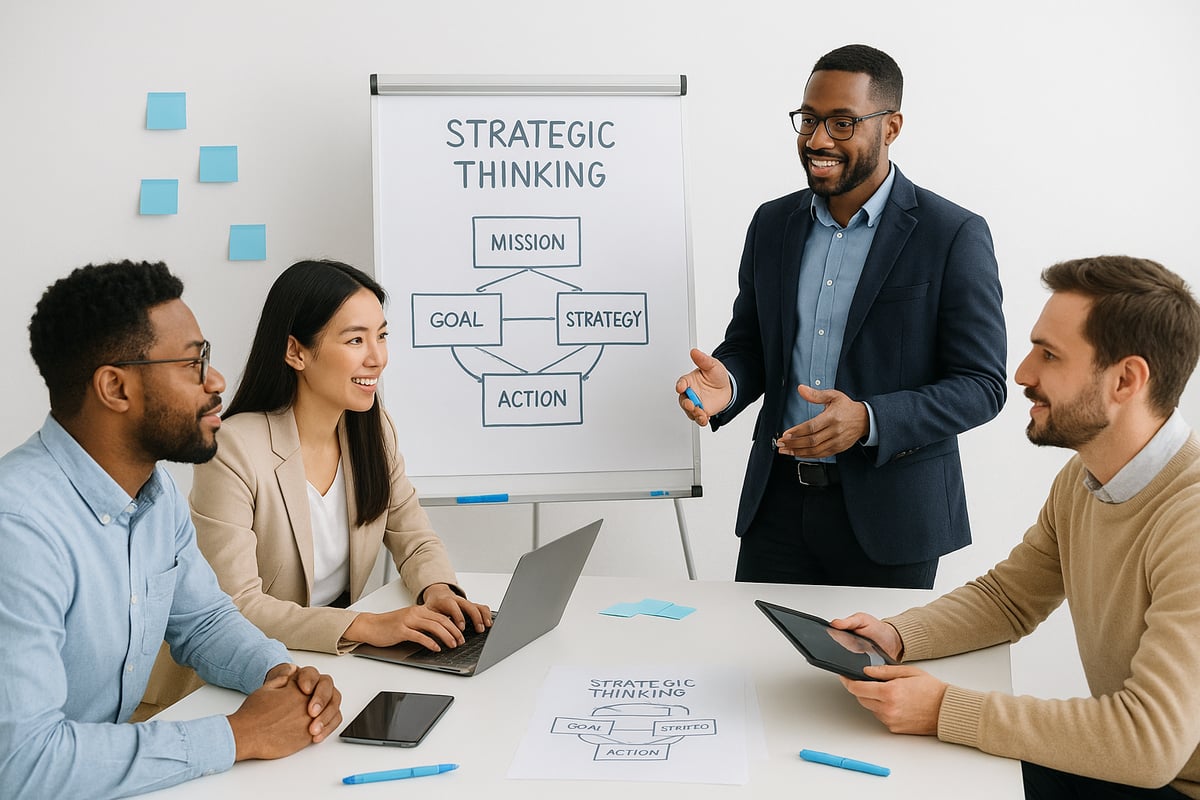
Instructor-Led Workshops and Seminars
Instructor-led workshops remain a cornerstone of strategic thinking training. These sessions immerse participants in interactive learning environments where they can practice real-world application. Skilled facilitators guide groups through exercises such as case studies, scenario planning, and group problem-solving.
- Customizable modules support different leadership levels, from rising managers to senior executives.
- Immediate feedback allows for rapid skill development and mindset shifts.
- Networking with peers enhances cross-functional collaboration and knowledge exchange.
For example, organizations like CCL offer specialized leadership modules that can be tailored to address unique business challenges. Instructor-led strategic thinking training is especially effective for reinforcing new behaviors and fostering a culture of strategic leadership.
Online and Blended Learning Programs
Digital transformation has made online and blended learning essential for strategic thinking training. Online programs provide flexibility for remote teams and global organizations, while blended models combine self-paced digital content with live sessions for a comprehensive experience.
- Learners can access resources anytime, supporting continuous development.
- Peer collaboration is fostered through virtual discussion boards and group projects.
- Scalable solutions accommodate large, distributed workforces.
A great example is the Strategic Thinking Course on Coursera, which offers essential frameworks and practical exercises for building strategic thinking skills. Online strategic thinking training empowers professionals to learn at their own pace and revisit key concepts as needed.
In-House vs. External Training Providers
Choosing between in-house and external providers is a critical decision when designing strategic thinking training. Each option offers unique advantages and considerations.
| Delivery Option | Pros | Cons |
|---|---|---|
| In-House | Aligns with culture, tailored to business needs | May lack external perspective, resource intensive |
| External | Access to expertise, proven methodologies | Less customization, potential misalignment with culture |
Organizations often license content from top providers to ensure consistency across teams. The strategic thinking training approach should reflect the organization’s culture, strategy, and growth objectives.
Certification and Credentialing
Formal certification adds credibility to strategic thinking training initiatives. Recognized credentials, such as those from Informa Learning or the Balanced Scorecard Institute, validate expertise and signal a commitment to professional growth.
- Certifications enhance career advancement opportunities.
- They set a clear benchmark for skill mastery.
- Credentialed programs often include rigorous assessments and practical projects.
Strategic thinking training with certification ensures that learning translates into measurable performance improvements, benefiting both individuals and organizations.
Measuring Training Effectiveness
The impact of strategic thinking training must be measured to ensure lasting value. Organizations should track key metrics, including engagement, knowledge retention, behavioral change, and business impact.
- Feedback mechanisms such as surveys and assessments reveal strengths and gaps.
- Continuous improvement is driven by data on learning outcomes.
- Strong evaluation frameworks yield higher ROI for leadership development.
By embedding robust measurement into strategic thinking training, organizations can align learning investments with strategic goals and drive sustainable success.
Embedding Strategic Thinking into Organizational Culture
Embedding strategic thinking training into organizational culture is essential for long-term success. When organizations prioritize this skill, they set the stage for continuous growth and adaptability. Making strategic thinking training a core part of daily routines, systems, and leadership practices ensures it becomes second nature across all levels.

Leadership Alignment and Role Modeling
Senior leaders play a pivotal role in embedding strategic thinking training into the fabric of an organization. Their commitment sets the tone for the entire workforce. By consistently communicating the importance of strategy and modeling future-focused behaviors, leaders inspire others to adopt a strategic mindset.
For example, organizations that invest in Strategic Leadership Excellence for CEOs see stronger alignment across management layers. These leaders cascade key messages, reinforce strategic priorities, and create clarity around long-term goals. When executives actively participate in strategic thinking training, it signals that strategy is not merely a task, but a shared cultural value.
Building Systems and Processes that Support Strategic Thinking
To ensure strategic thinking training takes root, organizations must integrate it into performance management and daily operations. This means aligning reward systems, evaluation processes, and decision-making frameworks with strategic objectives. Regular strategy reviews, cross-functional forums, and collaborative sessions help teams stay focused on the bigger picture.
By connecting operational activities to strategic goals, companies foster accountability and transparency. Using tools like the Balanced Scorecard can clarify how individual and team contributions drive overall results. Embedding strategic thinking training into these systems ensures that employees at all levels understand their role in executing the company’s vision.
Fostering a Culture of Continuous Learning and Agility
A learning-oriented environment is crucial for sustaining strategic thinking training. Organizations that encourage experimentation, ongoing feedback, and knowledge sharing are better equipped to adapt to change. Providing access to resources, coaching, and peer learning opportunities keeps skills sharp and mindsets open.
Leaders should celebrate lessons learned from both successes and failures. This approach builds psychological safety, allowing employees to take calculated risks and innovate. When strategic thinking training is paired with a culture of agility, organizations become more resilient and responsive to new challenges.
Overcoming Resistance and Driving Change
Resistance is a natural part of any cultural shift, especially when embedding strategic thinking training. Identifying barriers early and addressing concerns through transparent communication is key. Leaders must articulate the benefits and provide support throughout the transition.
Implementing structured Change Management Training can help teams navigate uncertainty and adopt new behaviors. By offering practical tools and frameworks, organizations empower employees to embrace strategic thinking as a daily habit. Continuous reinforcement, recognition, and leadership support are essential for lasting change.
Real-World Impact: Strategic Thinking Success Stories
Organizations worldwide have transformed their performance and culture by investing in strategic thinking training. Credicorp, a leading financial group, leveraged comprehensive training to bridge the gap between strategy and execution, resulting in improved alignment and accelerated growth. Kao Group shifted its culture by embedding strategic communication into daily routines, boosting engagement and innovation. The Balanced Scorecard Institute's clients consistently report better strategy alignment and execution, underscoring the tangible benefits of structured strategic thinking training for teams across industries.
Organizational Case Studies
Let us consider how strategic thinking training delivers measurable results. At Credicorp, leadership development programs helped elevate decision-making and foster cross-functional collaboration. Kao Group’s commitment to transparent strategic communication resulted in a more agile workforce, prepared to respond to market changes. The Balanced Scorecard Institute has enabled organizations to clarify objectives, prioritize resources, and achieve superior execution. These real-world cases demonstrate how strategic thinking training builds resilience and drives business success, especially in rapidly evolving environments. Research also shows that CEOs with broader career experience positively influence firm performance, reinforcing the value of diverse leadership backgrounds (CEO Career Breadth and Firm Performance).
Lessons Learned and Best Practices
What sets successful organizations apart in their strategic thinking training initiatives? Consistent leadership commitment, ongoing learning, and robust measurement frameworks are essential. Regular feedback and adaptive strategies ensure training remains relevant and impactful. According to recent studies, organizations with formalized strategic thinking training programs report higher engagement, innovation, and profitability. Notably, strategy-based cognitive development can lead to enhanced cognitive performance and real-life outcomes (Strategic Thinking Enhances Cognitive Performance). Below is a summary of best practices:
| Best Practice | Impact |
|---|---|
| Leadership Commitment | Sustained culture shift |
| Ongoing Training | Continuous improvement |
| Measurement & Feedback | Greater ROI and engagement |
The Future of Strategic Thinking Training
Looking ahead, the landscape for strategic thinking training is evolving rapidly. AI-powered tools, digital learning platforms, and global collaboration are reshaping how organizations develop these competencies. The need for leaders who can think cross-functionally and adapt quickly is only growing. Investing in strategic thinking training now prepares organizations to thrive amid technological disruption and competitive pressures. By prioritizing these skills, businesses position themselves for sustained innovation, growth, and resilience in 2026 and beyond.
If you’re ready to put strategic thinking into action and drive real growth in 2026, you don’t have to do it alone. We’ve explored how mastering these skills can help you navigate change, uncover new opportunities, and lead your organization with confidence. Why not take the next step? Let’s work together to identify your unique strengths and areas for growth. You can gain fresh insights and practical recommendations tailored to your business by starting with a no obligation review. Book a Free Opportunity Assessment and set the foundation for strategic success today.