

In today's rapidly evolving business landscape, organizations face unprecedented challenges in maintaining competitive advantage while pursuing sustainable growth. The complexity of modern markets, coupled with technological disruption and shifting customer expectations, demands more than conventional business planning. This is where strategy experts become invaluable partners, bringing specialized knowledge, proven methodologies, and fresh perspectives that transform how companies identify opportunities and execute innovation initiatives. As businesses navigate an increasingly uncertain environment in 2026, the role of these professionals has evolved from traditional advisory to dynamic partnership focused on measurable outcomes and long-term capability building.
The Evolving Role of Strategy Experts in Modern Business
Strategy experts have transformed dramatically from their origins as purely analytical advisors to becoming catalysts for organizational change and innovation. Their value proposition now extends far beyond creating presentation decks and strategic plans. These professionals integrate deep industry knowledge with cutting-edge methodologies to help organizations discover untapped market opportunities and develop competitive advantages that sustain growth.
The shift toward AI-powered strategic innovation has fundamentally changed how strategy experts approach their work. They now leverage advanced analytics, machine learning algorithms, and predictive modeling to uncover patterns and opportunities that traditional analysis might miss. This technological integration allows them to provide insights with unprecedented depth and accuracy.
Core Competencies That Define Excellence
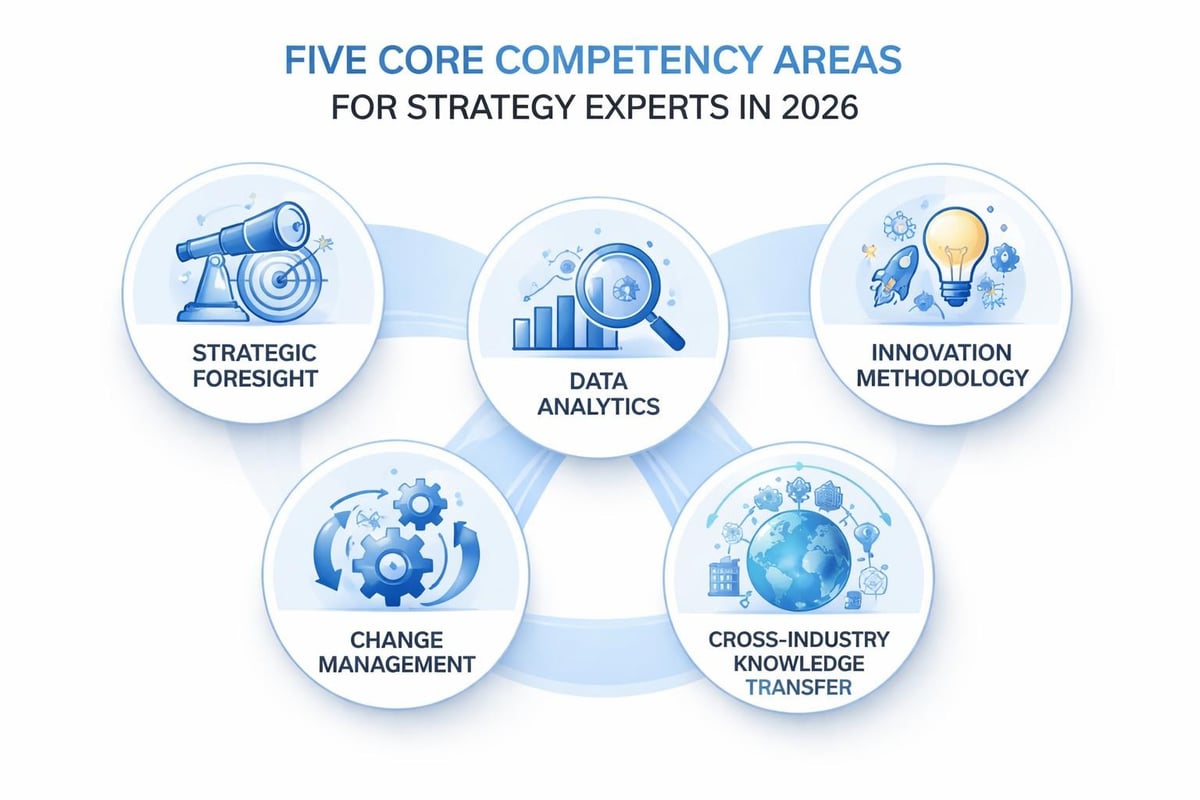
Modern strategy experts bring a unique combination of skills that set them apart from general business consultants:
- Strategic foresight that anticipates market shifts before they become obvious
- Innovation methodology expertise including design thinking, blue ocean strategy, and lean startup principles
- Data analytics proficiency to extract actionable insights from complex datasets
- Change management capabilities to ensure strategic initiatives translate into organizational transformation
- Cross-industry perspective that enables fresh thinking and knowledge transfer
These competencies enable strategy experts to move beyond theoretical recommendations toward practical implementation that drives measurable results. Understanding the origin of strategy provides context for how strategic thinking has evolved into the sophisticated discipline it represents today.
How Strategy Experts Identify Hidden Growth Opportunities
The ability to uncover non-obvious opportunities separates exceptional strategy experts from average consultants. This skill combines analytical rigor with creative thinking to reveal pathways for growth that competitors overlook. The process involves systematic examination of market dynamics, customer needs, and competitive landscapes through multiple lenses.
Strategy experts employ various frameworks and methodologies to structure their opportunity identification process. They analyze industry boundaries, customer pain points, and value chain inefficiencies to discover spaces where innovation can create significant value. This approach aligns closely with frameworks for innovation that provide structured pathways for exploring new possibilities.
Market Analysis Techniques
| Technique | Purpose | Key Outputs |
|---|---|---|
| Value Curve Analysis | Identify differentiation opportunities | Strategic positioning map |
| Jobs-to-be-Done Research | Understand customer motivations | Unmet needs inventory |
| Competitive Blind Spot Mapping | Find underserved segments | White space opportunities |
| Trend Convergence Analysis | Predict future market shifts | Strategic scenarios |
These analytical approaches generate insights that inform both incremental improvements and breakthrough innovations. Strategy experts understand that developing business strategies requires balancing short-term execution with long-term vision.
When examining two-sided markets and platform businesses, strategy experts apply specialized frameworks that account for network effects and cross-side dynamics. Strategies for two-sided markets offer valuable insights into how these business models create and capture value differently than traditional approaches.
Building Innovation Capabilities Within Organizations
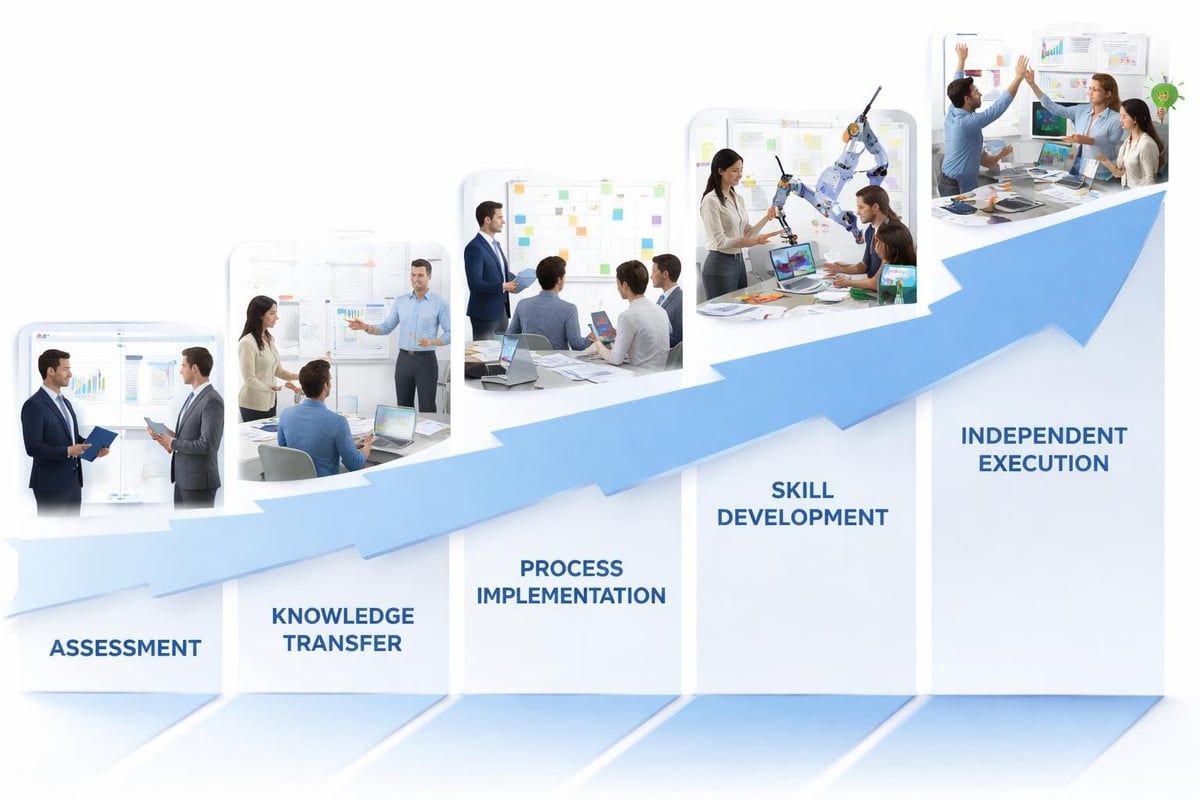
Beyond providing strategic recommendations, strategy experts increasingly focus on building internal capabilities that enable organizations to innovate independently. This shift reflects a deeper understanding that sustainable competitive advantage comes from organizational capacity rather than one-time strategic interventions.
The capability-building approach involves transferring knowledge, establishing processes, and developing skills across the organization. Strategy experts design customized training programs that equip teams with innovation methodologies they can apply repeatedly to new challenges. This investment in training programmes creates lasting value that extends far beyond individual projects.
Components of Innovation Capability
- Structured innovation processes that guide teams from ideation through implementation
- Cross-functional collaboration mechanisms that break down silos and encourage diverse perspectives
- Metrics and measurement systems that track innovation performance and ROI
- Leadership development that cultivates innovation champions throughout the organization
- Cultural transformation initiatives that embed experimentation and learning into organizational DNA
Strategy experts recognize that building these capabilities requires patience and sustained effort. They work alongside leadership teams to create environments where innovation thrives organically rather than depending on external facilitation for every new initiative.
AI-Powered Strategic Innovation Methods
The integration of artificial intelligence into strategic planning represents one of the most significant advances in how strategy experts deliver value. AI tools enable analysis at scales and speeds previously impossible, while uncovering relationships and patterns that human analysts might overlook. However, the technology serves as an enabler rather than a replacement for human expertise and judgment.
Strategy experts leverage AI across multiple dimensions of their work. Predictive analytics forecast market trends and customer behavior shifts. Natural language processing analyzes vast amounts of unstructured data from customer feedback, social media, and market research. Machine learning algorithms identify optimal pricing strategies, product configurations, and market entry timing.
The human element remains critical. Strategy experts interpret AI-generated insights within broader business contexts, considering factors like organizational culture, competitive dynamics, and stakeholder interests that algorithms cannot fully capture. They also ensure that AI strategy and implementation aligns with overall business objectives rather than pursuing technology for its own sake.
Practical AI Applications in Strategic Planning
Strategy experts apply AI technologies to solve specific business challenges:
- Customer segmentation refinement using clustering algorithms that identify micro-segments with distinct needs
- Scenario planning automation that models thousands of potential futures and their strategic implications
- Competitive intelligence gathering through automated monitoring of competitor activities and market signals
- Innovation portfolio optimization balancing risk, resource allocation, and expected returns across multiple initiatives
- Revenue growth modeling that identifies the most promising paths to profitability improvement
These applications demonstrate how technology amplifies strategic capabilities when guided by experienced professionals who understand both the possibilities and limitations of AI tools.
Selecting the Right Strategy Experts for Your Organization
Choosing strategy experts requires careful evaluation of both technical capabilities and organizational fit. The wrong choice can waste resources and create skepticism about strategic planning initiatives. The right partnership, however, accelerates growth and builds lasting competitive advantages.
Organizations should assess potential strategy experts across multiple dimensions. Technical expertise matters, but so does industry knowledge, cultural alignment, and track record of implementation success. The best strategy experts demonstrate curiosity about your specific business challenges rather than immediately proposing standardized solutions.
Evaluation Criteria
When considering strategy experts, examine these factors:
- Methodology alignment with your organization's needs and culture
- Implementation experience beyond strategy formulation
- Industry expertise relevant to your market dynamics
- Technology capabilities including AI and advanced analytics
- Collaborative approach that transfers knowledge rather than creating dependency
Request case studies and references that demonstrate tangible results in situations similar to yours. Strategy experts should articulate clear value propositions and explain how they measure success. Consulting across various industries requires adaptability while maintaining methodological rigor.
The interview process should reveal how strategy experts think about problems, not just what solutions they propose. Ask them to analyze a real challenge your organization faces and observe their questioning process, analytical approach, and ability to synthesize insights.
Measuring the Impact of Strategic Expertise
Quantifying the value delivered by strategy experts remains challenging but essential for justifying investments and refining approaches. The best professionals establish clear success metrics upfront and track progress throughout engagements. These measurements span both financial outcomes and capability development.
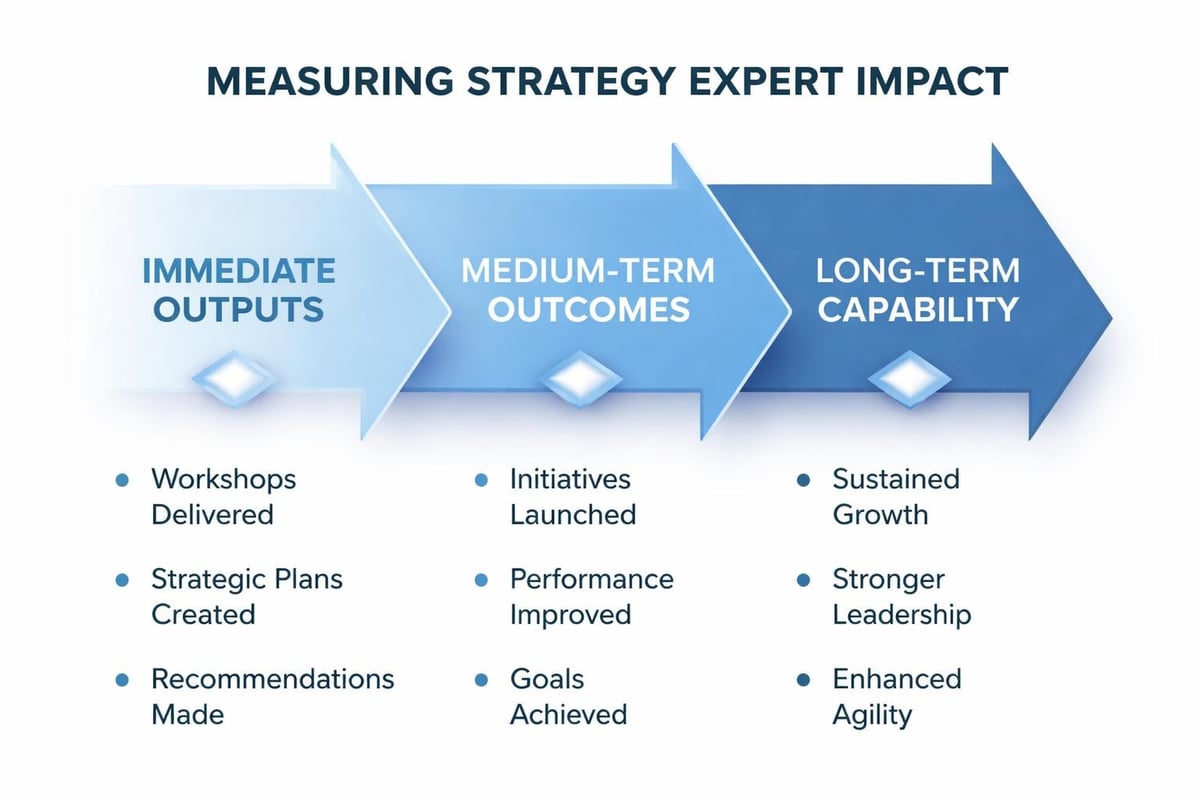
Revenue growth and profitability improvement represent obvious success indicators, but strategy experts also create value through risk mitigation, speed to market, and competitive positioning improvements. A comprehensive measurement framework captures multiple dimensions of impact rather than focusing exclusively on financial returns.
Key Performance Indicators
| Metric Category | Examples | Measurement Timeframe |
|---|---|---|
| Financial Performance | Revenue growth, margin expansion, ROI | 6-24 months |
| Market Position | Market share, brand perception, competitive advantage | 12-36 months |
| Innovation Output | New products launched, patents filed, market tests | 3-18 months |
| Capability Development | Innovation process adoption, employee skill levels | 12-36 months |
| Speed and Efficiency | Time to market, decision cycle time | 3-12 months |
Strategy experts should help organizations establish these measurement systems and provide regular progress updates. Transparency about what's working and what requires adjustment builds trust and enables course corrections before minor issues become major problems.
Consider also the forgotten dimensions of strategy that extend beyond immediate business metrics to include organizational resilience, adaptability, and long-term sustainability.
The Future of Strategic Consulting
The profession of strategy consulting continues evolving as technology, market dynamics, and client expectations shift. Strategy experts who thrive in coming years will combine traditional strategic thinking with technological fluency and implementation excellence. The trend toward outcome-based engagements rather than time-based consulting continues accelerating.
Emerging areas of focus for strategy experts include sustainability integration, digital transformation, ecosystem strategy, and resilience planning. These domains require interdisciplinary thinking that connects business strategy with technology, environmental considerations, and social impact. The most successful strategy experts develop T-shaped expertise: deep knowledge in specific domains complemented by broad understanding across multiple fields.
Client organizations increasingly expect strategy experts to work embedded within their teams rather than operating as external observers. This shift demands different skills, including change facilitation, coaching, and collaborative leadership. The ability to build relationships and influence without formal authority becomes as important as analytical capabilities.
The integration of AI and advanced analytics will continue reshaping how strategy experts work, but technology will augment rather than replace human judgment. The profession's future belongs to those who leverage tools effectively while maintaining the strategic insight, creativity, and business acumen that define exceptional consulting.
Navigating today's complex business environment requires more than internal resources and conventional thinking; it demands the specialized expertise that strategy experts bring to opportunity identification, innovation implementation, and capability building. Whether you're seeking to uncover new growth pathways, develop breakthrough products, or build lasting innovation capabilities within your organization, partnering with experienced professionals accelerates results while reducing risk. Six Paths Consulting combines AI-powered strategic innovation with proven methodologies to help ambitious leaders discover untapped opportunities and transform their businesses for sustainable growth and profitability.