
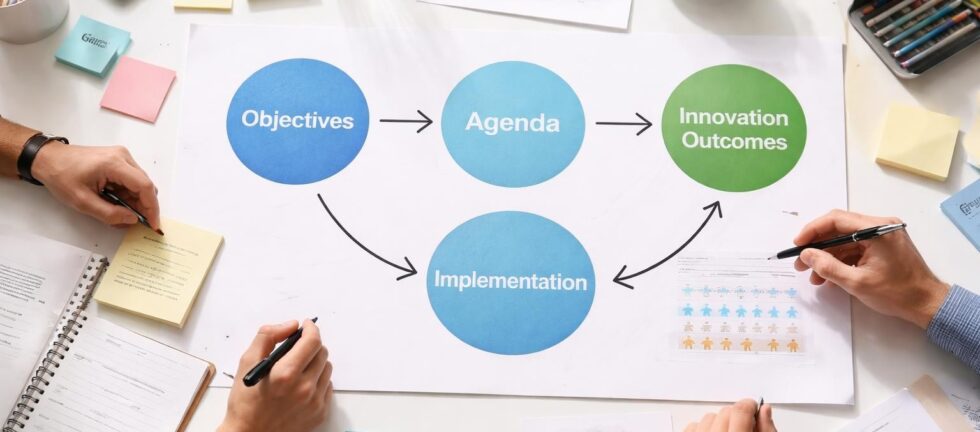
A well-executed workshop strategy can be the difference between a team that generates transformative ideas and one that leaves a session with nothing but vague action items. Whether you're facilitating innovation sessions, strategic planning meetings, or collaborative problem-solving exercises, the framework you choose shapes outcomes. For innovation consultants and business leaders, developing a robust workshop strategy means understanding not just what happens during the session, but how preparation, structure, and follow-through combine to create lasting value. In 2026, as organizations face increasingly complex challenges and unprecedented opportunities through AI and digital transformation, the ability to design and facilitate high-impact workshops has become a critical competitive advantage.
Defining Your Workshop Strategy Framework
A comprehensive workshop strategy begins with clarity about purpose and desired outcomes. Before selecting formats or activities, you must answer fundamental questions about what you're trying to achieve and why a workshop is the right vehicle for reaching those goals.
Establishing Clear Objectives
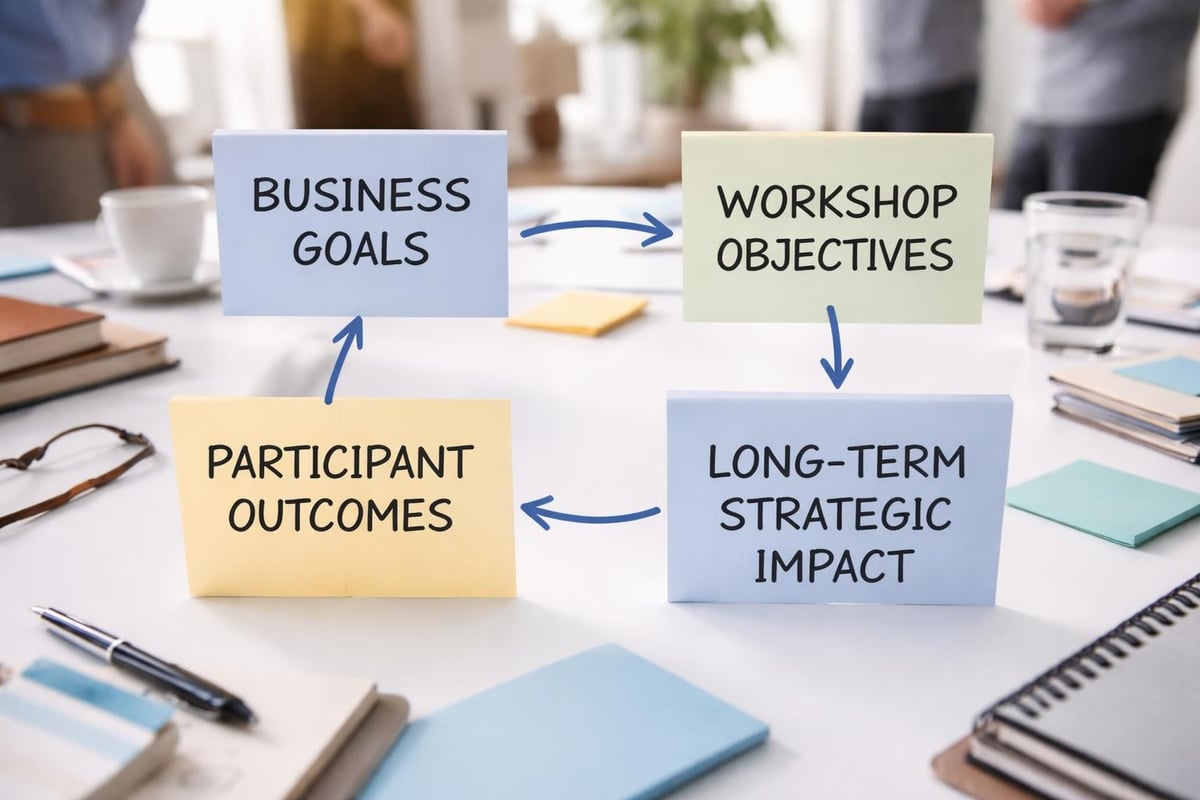
Every successful workshop starts with specific, measurable objectives that align with broader organizational goals. These objectives should be concrete enough to guide every design decision you make. For innovation consulting work, objectives might include generating ten viable product concepts, aligning leadership on strategic priorities for the next fiscal year, or building consensus around a new business model.
Strong workshop objectives share several characteristics:
- They specify what participants will produce or decide
- They define success in observable, measurable terms
- They connect directly to business outcomes
- They are achievable within the allocated timeframe
- They focus on participant value, not just content delivery
When establishing objectives, consider the broader strategy and transformation context. A workshop shouldn't exist in isolation but rather serve as a critical milestone in a larger strategic initiative.
Selecting the Right Workshop Format
Your workshop strategy must match format to purpose. Different objectives require different structures, and choosing the wrong format can undermine even the best intentions.
| Workshop Type | Best For | Typical Duration | Key Features |
|---|---|---|---|
| Discovery Workshop | Problem definition, opportunity identification | 3-4 hours | Open exploration, divergent thinking |
| Design Sprint | Rapid prototyping, solution development | 2-5 days | Structured process, convergent focus |
| Strategy Session | Alignment, decision-making, planning | 4-8 hours | Framework-driven, executive participation |
| Innovation Lab | Experimentation, capability building | 1-2 days | Hands-on learning, cross-functional teams |
The format you select influences everything from participant preparation to room setup to facilitation techniques. A discovery workshop focused on exploring market opportunities requires different energy and structure than a strategy session aimed at making critical go/no-go decisions on investment priorities.
Designing the Workshop Experience
Once you've established objectives and format, the next phase of your workshop strategy involves designing the participant experience. This goes far beyond creating an agenda; it requires thinking through how people will engage, what will energize them, and how to structure activities for maximum insight generation.
Crafting a Strategic Agenda
An effective agenda balances structure with flexibility. It provides enough guidance to keep the workshop on track while leaving room to explore unexpected insights. Start by working backward from your objectives, identifying what needs to happen for participants to achieve those goals.
A well-designed agenda includes:
- Warm-up activities that build psychological safety
- Clear time blocks with defined outcomes
- Strategic breaks that prevent fatigue
- Varied activity types that engage different thinking styles
- Built-in checkpoints to assess progress
- Buffer time for deeper exploration of valuable tangents
According to essential tips for hosting successful strategy workshops, allocating time wisely and building in flexibility are crucial for maintaining momentum while allowing breakthrough thinking to emerge.
Selecting Facilitation Techniques
Your workshop strategy should incorporate proven facilitation techniques that match your objectives and participant dynamics. Different techniques serve different purposes, and skilled facilitators draw from a diverse toolkit.
For innovation-focused workshops, techniques like silent brainstorming, affinity mapping, and rapid prototyping create conditions for creative thinking. For strategic decision-making, structured frameworks like SWOT analysis, scenario planning, and multi-voting help groups move from divergent exploration to convergent decision-making.
Consider the group size, organizational culture, and prior experience with collaborative work. Teams new to workshop-based collaboration may need more structured techniques, while experienced groups can handle more open-ended approaches. The goal is to create enough structure to be productive while avoiding rigidity that stifles creativity.
Preparation and Pre-Work Strategies
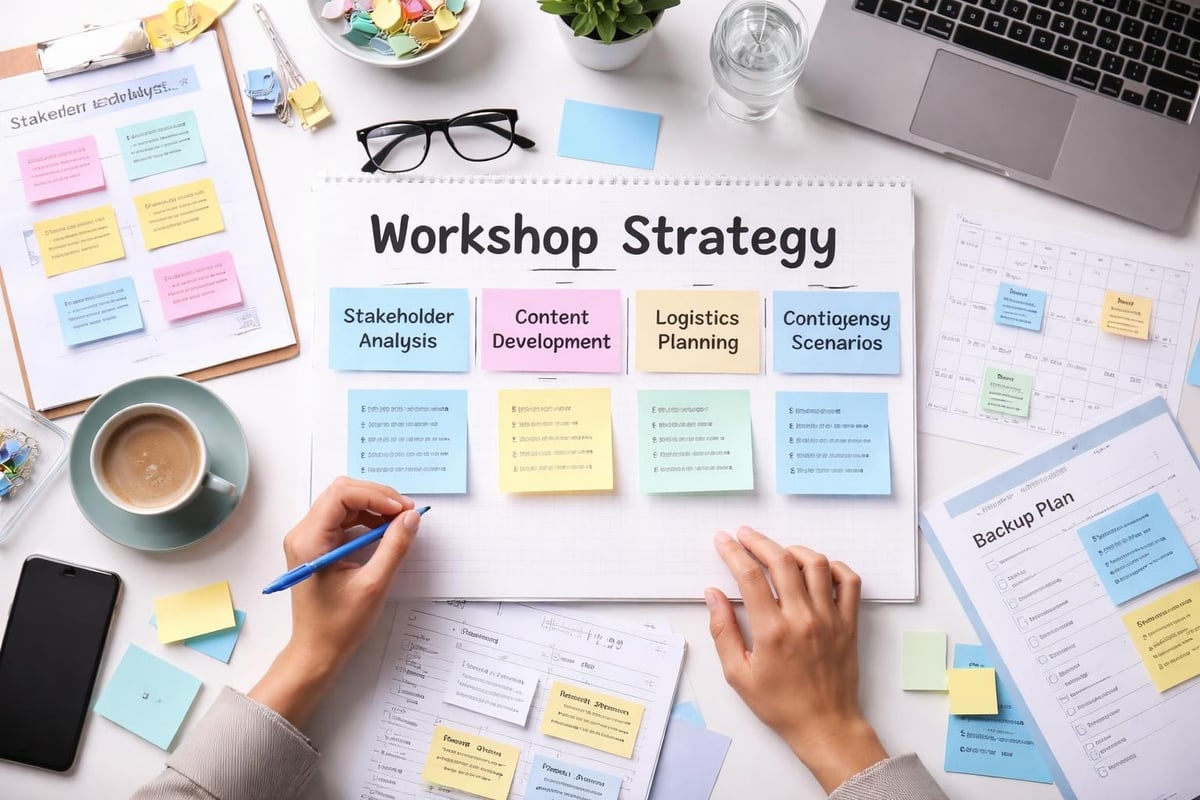
The most impactful workshops don't start when participants walk into the room. They begin weeks earlier with thoughtful preparation that sets everyone up for success. Your workshop strategy should include detailed pre-work plans that prepare both facilitators and participants.
Participant Preparation
Effective pre-work accomplishes several goals simultaneously. It levels knowledge across participants, gets people thinking about key topics before the session, and maximizes productive time during the workshop itself.
Pre-work elements might include:
- Background reading on relevant market trends or competitive dynamics
- Individual reflection exercises on strategic questions
- Data gathering assignments that bring real insights to discussions
- Preliminary stakeholder interviews to surface diverse perspectives
- Framework familiarization so participants understand tools you'll use
The key is making pre-work valuable enough that participants prioritize it, but not so burdensome that it becomes a barrier to engagement. As outlined in guidance on preparing for strategy planning workshops, bringing relevant data and documenting successes and challenges beforehand dramatically increases workshop productivity.
Facilitator Preparation
Your preparation as facilitator goes beyond logistics. It requires deep understanding of the organizational context, stakeholder dynamics, and potential friction points that might emerge during the session.
This includes researching the business challenges participants face, understanding the political landscape, identifying potential areas of disagreement, and developing contingency plans for various scenarios. For innovation consulting work, this might mean analyzing the competitive landscape, reviewing customer research, or understanding technical constraints that could impact idea generation.
Facilitation Excellence During the Workshop
Even the best workshop strategy requires skilled execution. The facilitator's role extends far beyond following an agenda; it involves reading the room, managing energy, navigating conflict, and knowing when to adapt the plan.
Managing Group Dynamics
Understanding and managing group dynamics is central to workshop success. Every group brings different personalities, power structures, and communication patterns that the facilitator must navigate skillfully.
Watch for dominant voices that prevent others from contributing, silent participants who may have valuable insights, sidebar conversations that indicate confusion or disagreement, and energy dips that signal the need for a break or activity change. The workshop facilitation techniques needed to handle these situations require both preparation and real-time adaptability.
Creating psychological safety is particularly important for innovation-focused workshops. Participants must feel comfortable suggesting unconventional ideas, challenging assumptions, and building on others' thinking without fear of judgment. This requires explicit norm-setting, modeling vulnerability, and actively managing power dynamics in the room.
Adaptive Facilitation Approaches
Rigid adherence to the agenda is a common facilitator mistake. While structure is important, the best workshop strategy includes flexibility to pursue unexpected insights or address emergent needs.
This might mean extending a productive discussion, skipping a planned activity that no longer feels relevant, breaking into smaller groups when debate becomes unproductive, or introducing an unplanned exercise to address confusion. The facilitator must balance competing demands: honoring the agenda while remaining responsive, ensuring all voices are heard while maintaining momentum, and pushing for concrete outcomes while allowing space for exploration.
According to the International Institute of Business Analysis, effective facilitators focus relentlessly on achieving desired outcomes while remaining flexible about the path to get there.
Capturing and Synthesizing Workshop Outputs
A critical but often overlooked component of workshop strategy is how you capture, synthesize, and share the insights generated during the session. Without effective documentation and synthesis, even the most productive workshop loses much of its value.
Real-Time Documentation Methods
Different documentation approaches serve different purposes. For some workshops, detailed notes capturing every comment are essential. For others, visual documentation using photographs of whiteboards and sticky notes is sufficient.
Effective documentation strategies include:
- Designated note-takers who aren't also participating in discussions
- Visual scribing that captures ideas graphically in real-time
- Digital collaboration tools that automatically save all contributions
- Audio or video recording for later review (with participant consent)
- Structured templates that organize insights as they emerge
The documentation method should align with how you plan to use the outputs. If you're generating ideas for further development, capturing exact language matters less than preserving the essence of concepts. If you're making strategic decisions, precise documentation of rationale and dissenting views becomes crucial.
Post-Workshop Synthesis
Raw workshop outputs rarely provide immediate value. They require synthesis, organization, and translation into actionable formats. Your workshop strategy should include dedicated time for this critical work.
Synthesis involves identifying themes across diverse inputs, organizing ideas into coherent frameworks, highlighting key decisions and rationale, and flagging areas requiring additional exploration. For business frameworks work, this might mean mapping workshop insights against established strategic tools or identifying patterns that suggest new frameworks.
The synthesis process often generates insights that weren't obvious during the workshop itself. Stepping back from the intensity of the session allows patterns to emerge and connections to become visible.
Measuring Workshop Impact and ROI
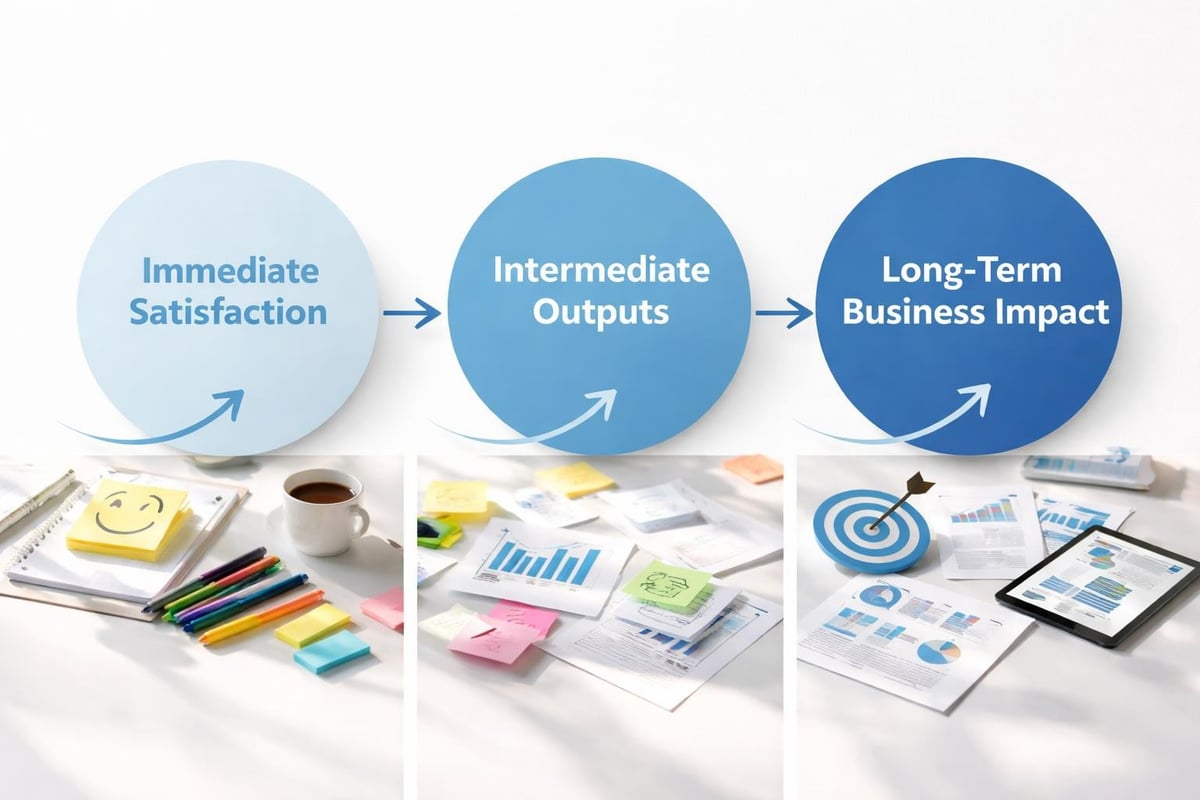
A complete workshop strategy includes mechanisms for measuring success. This goes beyond participant satisfaction scores to assess whether the workshop achieved its intended business impact.
Immediate Success Metrics
Some metrics can be assessed immediately after the workshop concludes. These provide initial signals about effectiveness and identify areas for improvement in future sessions.
| Metric Category | Example Measures | Assessment Method |
|---|---|---|
| Participant Engagement | Active participation rate, contribution diversity | Facilitator observation, participation data |
| Objective Achievement | Decisions made, ideas generated, alignment reached | Output review against stated objectives |
| Process Quality | Time management, activity effectiveness, flow | Participant feedback, facilitator reflection |
| Satisfaction | Overall rating, recommendation likelihood | Post-workshop survey |
While immediate metrics matter, they don't tell the complete story. A workshop with high satisfaction scores but no subsequent action represents failure, regardless of how participants felt in the moment.
Long-Term Impact Assessment
The true test of workshop strategy effectiveness comes weeks or months later. Did the ideas generated get implemented? Did the decisions made stick? Did the alignment achieved translate into coordinated action?
Tracking long-term impact requires building follow-up into your workshop strategy from the beginning. This might include scheduled check-ins to review progress on commitments, milestone tracking for initiatives launched during the workshop, business metric monitoring for outcomes like revenue growth or cost reduction, and participant interviews to assess sustained behavior change.
For driving innovation initiatives, long-term metrics might include the number of workshop-generated ideas that reached market, revenue from new products or services developed, time savings from process improvements identified, or strategic pivots enabled by workshop insights.
Integration with Broader Strategic Initiatives
Workshops don't exist in isolation. The most effective workshop strategy positions each session as part of a larger strategic journey, with clear connections to what came before and what comes next.
Sequential Workshop Design
Complex strategic initiatives often require multiple workshops rather than a single event. Sequential workshop design involves planning a series of connected sessions, each building on previous outputs.
A typical sequence might start with a discovery workshop to define the problem and explore the landscape, followed by an ideation workshop to generate potential solutions, then a strategy workshop to select approaches and build implementation plans, and finally review workshops to assess progress and adapt direction.
Each workshop in the sequence should have clear inputs from previous sessions and defined outputs that feed the next phase. This creates momentum and ensures that insights compound rather than dissipate.
Embedding Workshops in Change Management
Workshop strategy becomes particularly powerful when integrated with broader change management approaches. Workshops serve multiple change management functions simultaneously: they build shared understanding, create ownership through participation, develop capabilities for new ways of working, and generate momentum for transformation.
When designing workshop strategy within a change initiative, consider how each session advances the change journey. Early workshops might focus on creating urgency and vision, middle workshops on developing solutions and building capabilities, and later workshops on sustaining change and capturing lessons learned.
Building Internal Workshop Facilitation Capabilities
For organizations that regularly use workshops as strategic tools, developing internal facilitation capabilities becomes a strategic imperative. Your workshop strategy should include plans for capability building that reduce dependence on external facilitators over time.
Training Programs for Internal Facilitators
Effective facilitator training goes beyond teaching techniques. It develops the mindset, skills, and confidence needed to guide groups through complex conversations.
Comprehensive facilitator training includes:
- Understanding different workshop formats and when to use each
- Learning core facilitation techniques and how to adapt them
- Practicing skills in low-stakes environments before high-stakes sessions
- Receiving feedback from experienced facilitators on performance
- Developing personal facilitation style while honoring best practices
According to resources on facilitation tools and techniques, effective facilitators master both structured methods and the adaptive skills needed to navigate unexpected situations.
Creating a Facilitator Community of Practice
Individual facilitator development accelerates when supported by a community of practice. This creates space for facilitators to share experiences, troubleshoot challenges, refine techniques, and develop collective wisdom.
A facilitator community might meet monthly to review recent workshops, discuss challenging situations and how they were handled, practice new techniques in a safe environment, and build a shared repository of tools and templates. This community becomes a strategic asset, enabling the organization to tackle increasingly complex challenges through collaborative work.
Leveraging Technology in Workshop Strategy
Technology has fundamentally changed what's possible in workshop design and delivery. Your workshop strategy in 2026 must thoughtfully integrate digital tools while preserving the human connection that makes workshops valuable.
Digital Collaboration Platforms
Modern collaboration platforms enable new workshop formats and expand participation possibilities. They allow distributed teams to collaborate synchronously, capture ideas in real-time with automatic documentation, integrate data and analytics directly into workshop activities, and create persistent workspaces that extend beyond the session itself.
The key is selecting tools that enhance rather than distract from workshop objectives. Some sessions benefit from rich digital environments with multiple integrated tools, while others require simple, focused platforms that keep attention on the conversation.
Hybrid and Virtual Workshop Considerations
The shift toward hybrid and virtual work requires adapting workshop strategy for different participation modes. Virtual workshops present unique challenges around maintaining engagement, reading nonverbal cues, managing technology barriers, and creating connection among participants.
Successful virtual workshop strategy incorporates shorter session durations with more frequent breaks, highly interactive activities that prevent passive observation, breakout rooms for small group work, and visual engagement through digital whiteboards and collaborative documents. As detailed in workshop facilitation tips, creating inclusive spaces becomes even more critical when participants join from different locations and contexts.
Developing a robust workshop strategy transforms how organizations approach innovation, strategy, and problem-solving by creating structured environments where breakthrough thinking can flourish. Whether you're designing discovery sessions to identify new market opportunities or facilitating strategic planning workshops to align leadership teams, the frameworks and approaches outlined here provide a foundation for measurable impact. Six Paths Consulting specializes in helping ambitious leaders design and facilitate high-impact workshops that drive revenue growth through strategic innovation, combining proven methodologies with AI-powered insights to accelerate your path from insight to implementation.