

Business consulting work has evolved dramatically over the past decade, transforming from traditional advisory services into a sophisticated blend of strategic thinking, technological integration, and hands-on implementation support. Organizations across industries now face unprecedented challenges that require specialized expertise to navigate successfully. The complexity of modern markets, coupled with rapid technological advancement and shifting customer expectations, has elevated the importance of professional consulting services. Companies seeking sustainable growth and competitive advantage increasingly turn to consultants who bring deep industry knowledge, proven methodologies, and fresh perspectives to solve their most pressing business challenges.
The Changing Landscape of Business Consulting Work
The consulting industry has undergone a fundamental transformation in how professionals deliver value to clients. Traditional approaches centered on lengthy engagements and theoretical recommendations have given way to agile, results-driven methodologies that emphasize measurable outcomes and rapid implementation.
Integration of AI and Advanced Technologies
Modern business consulting work increasingly leverages artificial intelligence and machine learning to deliver insights that were impossible just a few years ago. Consultants now use AI-powered analytics to identify market opportunities, predict customer behavior, and optimize operational processes with unprecedented precision.
Key technological capabilities transforming consulting:
- Predictive analytics for market trend forecasting
- Natural language processing for customer sentiment analysis
- Machine learning algorithms for pattern recognition
- Automated data visualization for strategic decision-making
- AI-driven scenario modeling for risk assessment
The adoption of transformational technologies like AI has become essential for consultants aiming to provide cutting-edge solutions. This technological integration enables consultants to process vast amounts of data quickly, uncovering insights that inform strategic recommendations and drive measurable business results.

Specialization and Niche Expertise
Generic consulting approaches no longer meet the sophisticated needs of modern organizations. Business consulting work has become increasingly specialized, with consultants developing deep expertise in specific industries, functional areas, or transformation methodologies.
| Specialization Area | Focus | Value Delivered |
|---|---|---|
| Innovation Consulting | New product development, business model innovation | Revenue growth through new offerings |
| Digital Transformation | Technology adoption, process digitization | Operational efficiency, customer experience |
| Strategic Growth | Market expansion, competitive positioning | Market share increase, profitability |
| Change Management | Organizational restructuring, culture transformation | Improved performance, employee engagement |
This trend toward specialization reflects the growing complexity of business challenges. Organizations benefit from working with consultants who understand the nuances of their specific context and can apply proven frameworks tailored to their unique situations.
Delivering Value Through Business Consulting Work
The measure of successful business consulting work has shifted from deliverables to outcomes. Clients expect tangible results that impact their bottom line, not merely well-written reports or presentations.
Results-Oriented Engagement Models
Contemporary consulting engagements incorporate performance-based components that align consultant incentives with client success. This approach ensures accountability and demonstrates the consultant's confidence in their recommendations.
Common engagement structures include:
- Fixed-fee projects with defined deliverables
- Retainer arrangements for ongoing strategic support
- Success-based compensation tied to specific metrics
- Hybrid models combining base fees with performance bonuses
- Implementation support extending beyond strategy development
Firms providing innovation tools and methodologies recognize that sustainable impact requires more than strategic advice. Effective consultants partner with clients throughout the implementation phase, ensuring that recommendations translate into real-world results.
Building Internal Capabilities
Rather than creating dependency, forward-thinking business consulting work emphasizes knowledge transfer and capability building. This approach empowers organizations to sustain improvements long after the consulting engagement concludes.
The most valuable consulting relationships include training components that develop internal expertise. Organizations can strengthen their innovation capabilities through creativity workshops for teams that teach practical methodologies for generating breakthrough ideas and solving complex problems.
Strategic Innovation as a Growth Driver
Business consulting work focused on innovation has become critical for organizations seeking to maintain relevance in rapidly evolving markets. The ability to identify emerging opportunities and develop novel solutions differentiates market leaders from followers.
Opportunity Discovery Methodologies
Effective innovation consulting begins with systematic opportunity identification. Consultants employ structured frameworks to uncover unmet customer needs, emerging market trends, and white space opportunities that competitors have overlooked.
Proven discovery techniques:
- Customer journey mapping to identify pain points
- Jobs-to-be-done analysis for deeper needs understanding
- Market trend synthesis across multiple data sources
- Competitive gap analysis revealing positioning opportunities
- Technology scanning to identify enabling innovations
Organizations exploring innovative ideas for business growth benefit from consultants who bring systematic approaches to opportunity identification, ensuring that innovation efforts focus on the highest-potential areas.

Business Model Innovation
The growing demand for IT and software consulting reflects how technology enables new business models that create competitive advantage. Business consulting work increasingly addresses fundamental questions about how organizations create, deliver, and capture value.
Consultants help clients reimagine their business architecture by examining:
- Revenue stream diversification opportunities
- Cost structure optimization through new partnerships
- Customer relationship models enabled by digital channels
- Value proposition refinement based on changing customer needs
- Resource configuration for improved scalability
| Business Model Element | Traditional Approach | Innovative Approach |
|---|---|---|
| Revenue | One-time product sales | Recurring subscription revenue |
| Customer Acquisition | Direct sales force | Digital self-service platforms |
| Value Delivery | Physical distribution | Cloud-based access |
| Partnerships | Limited supplier relationships | Ecosystem collaboration |
| Scalability | Linear with headcount | Exponential through automation |
Leadership and Organizational Transformation
Successful business consulting work addresses not only strategy and operations but also the human dimensions of organizational change. Leaders must navigate complex transformations while maintaining team engagement and productivity.
Executive Advisory and Leadership Development
Senior leaders face unprecedented challenges requiring both strategic acumen and adaptive leadership capabilities. Business consulting work at the executive level focuses on building the competencies necessary to guide organizations through uncertainty and change.
Programs emphasizing strategic leadership excellence for newly appointed CEOs provide the frameworks and support new executives need to establish credibility, align stakeholders, and drive meaningful change during critical transition periods.
Key leadership development areas:
- Strategic thinking and long-term vision articulation
- Stakeholder management across diverse groups
- Change leadership and transformation management
- Decision-making under uncertainty
- Innovation culture cultivation
Change Management and Implementation
Even brilliant strategies fail without effective execution. Business consulting work must address the organizational, cultural, and behavioral changes required to implement new approaches successfully.
Consultants facilitate change by:
- Assessing change readiness across the organization
- Designing communication strategies that build understanding and buy-in
- Identifying change champions who influence their peers
- Creating feedback mechanisms to monitor progress and adjust approaches
- Celebrating early wins that build momentum for continued transformation
The emphasis on digital transformation in contemporary business consulting work reflects how technology serves as both a change driver and enabler, requiring careful attention to the people side of transformation initiatives.
Measuring Impact and Demonstrating ROI
Clients rightly demand evidence that business consulting work delivers returns exceeding the investment. Sophisticated measurement frameworks track both leading and lagging indicators of consulting impact.
Establishing Baseline Metrics
Effective measurement begins before consulting work commences. Consultants work with clients to establish clear baseline metrics across relevant dimensions, enabling accurate assessment of improvements achieved.
Common performance categories include:
- Financial metrics (revenue growth, profitability, cost reduction)
- Operational metrics (cycle time, quality, productivity)
- Customer metrics (satisfaction, retention, lifetime value)
- Innovation metrics (new product revenue, time-to-market)
- Employee metrics (engagement, retention, capability development)
Continuous Monitoring and Adjustment
Business consulting work increasingly incorporates ongoing performance monitoring rather than one-time assessments. This approach enables rapid course correction and ensures sustained progress toward objectives.
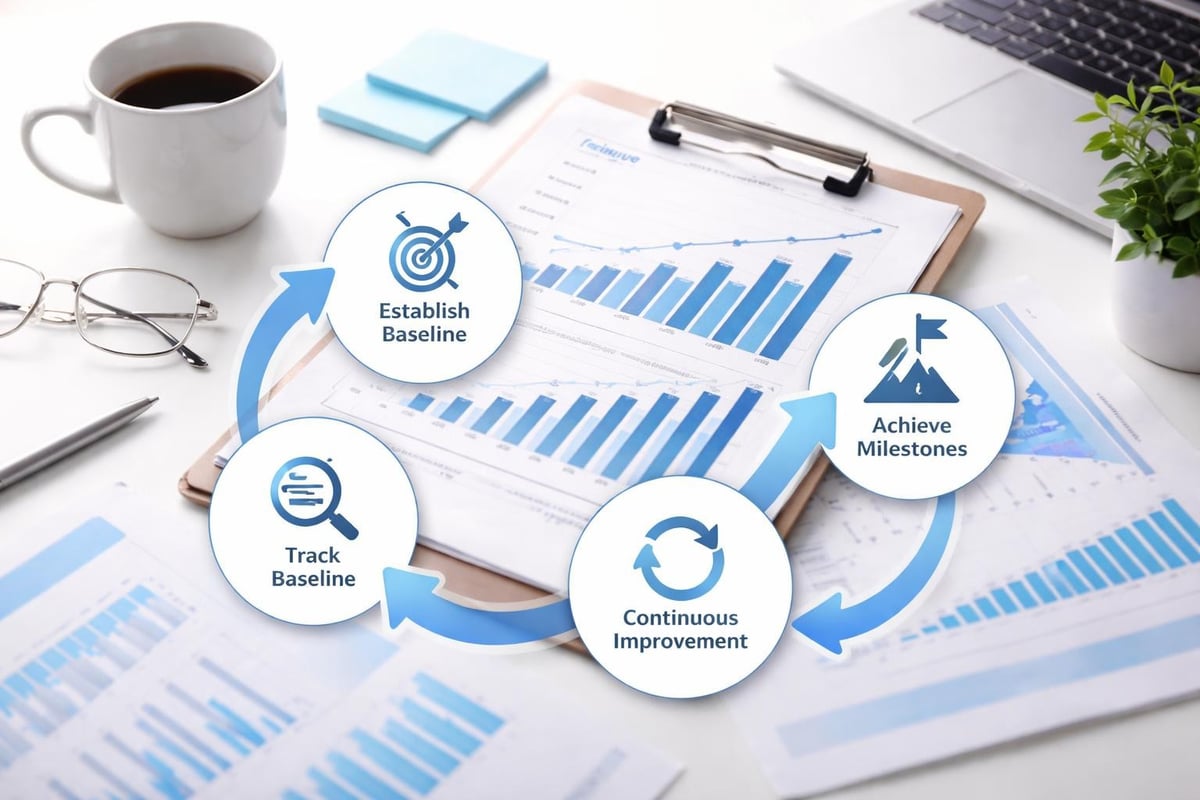
Consulting relationships that include regular performance reviews create accountability and maintain focus on what matters most. Organizations leveraging business frameworks for systematic strategy development benefit from structured approaches to tracking progress and identifying improvement opportunities.
Selecting the Right Consulting Partner
The abundance of consulting options makes partner selection a critical decision that significantly impacts project success. Organizations must evaluate potential consultants across multiple dimensions to ensure alignment with their needs and culture.
Key Selection Criteria
Experience and expertise in your specific industry and challenge type should be demonstrated through case studies and client references. Consultants who have successfully addressed similar situations bring valuable pattern recognition and proven methodologies.
Methodology and approach should be clearly articulated and align with your organizational style. Some companies prefer highly structured frameworks, while others value more adaptive, collaborative approaches.
Cultural fit often determines engagement success more than technical expertise. The best consulting relationships involve partners who understand your values, communication preferences, and decision-making processes.
| Evaluation Factor | What to Assess | Questions to Ask |
|---|---|---|
| Track Record | Relevant industry experience | What similar challenges have you solved? |
| Capabilities | Technical skills and tools | What methodologies do you employ? |
| Team Quality | Consultant qualifications | Who will actually do the work? |
| Engagement Model | Flexibility and collaboration | How do you structure client partnerships? |
| Value Proposition | ROI and pricing | How do you measure success? |
The Importance of Chemistry and Trust
Beyond credentials and experience, successful business consulting work requires genuine partnership built on mutual trust and respect. The best practices for growing a consulting business emphasize the importance of client relationships that transcend transactional interactions.
Initial conversations should reveal whether consultants listen deeply, ask insightful questions, and demonstrate genuine interest in understanding your unique context. Red flags include generic solutions, reluctance to share methodologies, or overemphasis on consultant credentials rather than client outcomes.
Emerging Trends Shaping Future Consulting Work
The consulting industry continues to evolve in response to technological advancement, economic shifts, and changing client expectations. Understanding these trends helps organizations make informed decisions about engaging consulting partners.
Sustainability and ESG Integration
The growing demand for ESG consulting services reflects how environmental, social, and governance considerations have become central to business strategy. Forward-thinking business consulting work integrates sustainability not as a separate initiative but as a core element of value creation.
Consultants help organizations:
- Identify sustainable business opportunities that align with values
- Develop metrics for measuring environmental and social impact
- Create stakeholder engagement strategies around sustainability goals
- Build business cases for ESG investments
- Navigate regulatory requirements and reporting frameworks
Hybrid Delivery Models
The shift toward remote and hybrid work has transformed how consultants collaborate with clients. Business consulting work now seamlessly blends virtual interactions with strategic in-person sessions, increasing efficiency while maintaining relationship quality.
Advantages of hybrid consulting delivery:
- Reduced travel costs and time investment
- Increased access to specialized expertise regardless of location
- More frequent check-ins and faster feedback cycles
- Better work-life balance for both consultants and clients
- Environmental benefits from reduced business travel
Building Long-Term Value Through Consulting Partnerships
The most impactful business consulting work creates value that extends well beyond the initial engagement period. Organizations should seek partners committed to sustained success rather than short-term projects.
Knowledge Transfer and Capability Development
Exceptional consultants view their role as developing client capabilities rather than maintaining dependency. This philosophy manifests through deliberate knowledge transfer, skill-building exercises, and collaborative problem-solving approaches that strengthen internal teams.
Firms specializing in design and product innovation recognize that innovation becomes sustainable only when organizations develop internal competencies to continue generating breakthrough ideas after consultants depart.
Ongoing Strategic Support
While intensive transformation projects have defined endpoints, many organizations benefit from continued access to strategic advisory support. Retainer-based relationships provide executives with a trusted sounding board for critical decisions, market insights, and periodic strategic reviews.
This ongoing partnership model allows consultants to develop deep organizational understanding while providing clients with flexible access to expertise precisely when needed. The relationship evolves from project-based to strategic partnership, creating compound value over time.
Business consulting work has matured into a sophisticated discipline that combines strategic thinking, technological capabilities, and implementation expertise to drive meaningful organizational transformation. Success requires selecting partners who bring relevant experience, proven methodologies, and genuine commitment to client outcomes.
Six Paths Consulting specializes in AI-powered strategic innovation that drives revenue growth and profitability for ambitious leaders seeking to discover new market opportunities and develop innovative business models. Our approach emphasizes building internal innovation capabilities while delivering measurable results, ensuring your organization thrives long after our engagement concludes.