

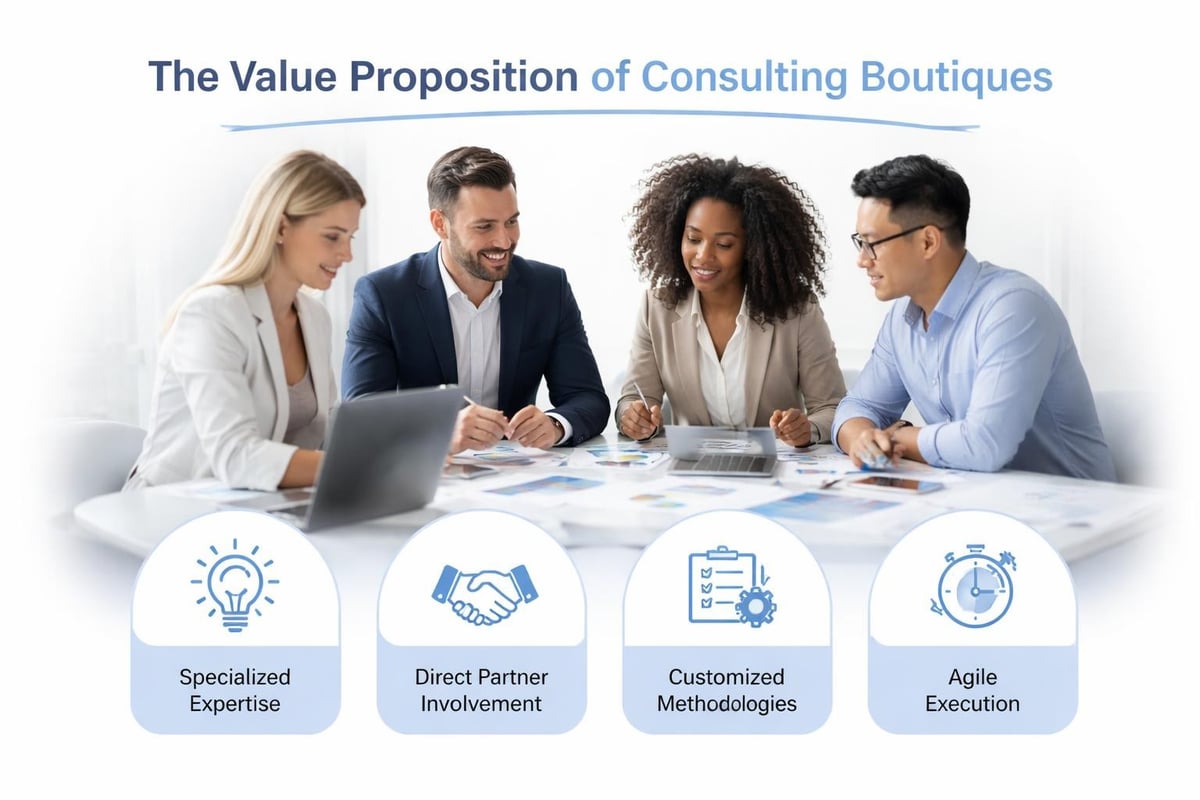
The consulting industry has experienced a significant shift over the past decade, with consulting boutiques emerging as powerful alternatives to traditional large firms. These specialized firms offer focused expertise, personalized attention, and agile methodologies that address the evolving needs of modern businesses. As organizations face unprecedented challenges in innovation, digital transformation, and market disruption, the value proposition of boutique consulting has never been more compelling. Understanding what makes these firms unique and how they deliver superior outcomes can help business leaders make informed decisions about their strategic partnerships.
The Rise of Specialized Consulting Firms
Consulting boutiques have gained substantial market share by focusing on specific industries, methodologies, or business challenges. Unlike their larger counterparts, these firms typically employ fewer than 100 consultants and concentrate their resources on developing deep expertise in narrow domains. This specialization allows them to build proprietary frameworks, cultivate industry relationships, and develop insights that generalist firms struggle to match.
The growth trajectory for boutique firms has been remarkable. According to recent consulting industry trends, boutique consulting models are increasingly leveraging AI and cloud technologies to deliver more sophisticated solutions while maintaining their characteristic agility. This combination of specialization and technological sophistication positions them uniquely in the market.
Why Businesses Choose Boutique Firms
Several factors drive the preference for consulting boutiques among ambitious business leaders:
- Direct access to senior expertise: Clients work directly with partners and senior consultants rather than junior staff
- Specialized knowledge: Deep domain expertise in specific industries or methodologies
- Customized solutions: Tailored approaches rather than standardized frameworks
- Faster decision-making: Streamlined organizational structures enable rapid pivots
- Cultural alignment: Smaller teams foster stronger client relationships and cultural fit
These advantages become particularly valuable when addressing complex challenges like strategy and transformation, where nuanced understanding and adaptive approaches determine success.
Operational Agility in Uncertain Markets
One of the most significant advantages consulting boutiques offer is their operational agility. In an era characterized by rapid technological change, market volatility, and shifting customer expectations, the ability to adapt quickly separates successful engagements from failed ones. Boutique consulting firms’ agility wins during uncertain times because their streamlined decision-making processes and client-centric relationships enable rapid course corrections.
Decision-Making Speed and Flexibility
Large consulting firms often struggle with bureaucratic processes that slow project execution. A proposal modification might require multiple approval layers, delaying implementation by weeks. Consulting boutiques eliminate this friction through flat organizational structures where partners maintain direct oversight of client work.
This responsiveness extends beyond project management to strategic pivots. When market conditions change or initial hypotheses prove incorrect, boutique firms can reassemble teams, adjust methodologies, and reallocate resources within days rather than months. For businesses pursuing AI-powered strategic innovation, this agility proves essential as the technology landscape evolves rapidly.
| Organizational Aspect | Boutique Consulting | Large Consulting Firms |
|---|---|---|
| Decision Layers | 1-2 levels | 4-6 levels |
| Proposal Approval Time | 1-3 days | 2-4 weeks |
| Team Reassignment | Immediate | 2-6 weeks |
| Methodology Customization | Fully flexible | Template-based with variations |
| Senior Partner Involvement | 40-60% of project time | 5-15% of project time |
Specialization Versus Generalization
The debate between specialization and generalization represents a fundamental consideration when selecting consulting partners. Consulting boutiques deliberately choose depth over breadth, investing resources in building unmatched expertise within specific domains. This strategic choice creates distinct advantages for clients with complex, industry-specific challenges.
Building Deep Domain Expertise
Boutique firms develop expertise through focused investment in research, methodology development, and talent acquisition. Rather than maintaining competency across dozens of industries, they concentrate on understanding the nuances of specific sectors or business functions. This depth manifests in several ways:
- Proprietary frameworks: Custom methodologies designed for specific challenges
- Industry networks: Established relationships with key players and thought leaders
- Benchmark databases: Accumulated performance data from similar engagements
- Specialized talent: Consultants with relevant industry backgrounds and certifications
- Thought leadership: Published research and speaking engagements establishing credibility
For organizations seeking innovation training or business model transformation, working with consultants who understand the specific dynamics of their industry proves invaluable. Generic frameworks require substantial adaptation, whereas specialized methodologies deliver immediate applicability.

The Economic Value Proposition
Understanding the financial implications of engaging consulting boutiques requires examining both direct costs and value creation. While hourly rates may approach those of larger firms, the overall economics often favor boutique engagements through several mechanisms that enhance return on investment.
Cost Structure and Efficiency
Consulting boutiques typically operate with lower overhead than large firms. They avoid expensive downtown offices, extensive marketing departments, and layers of administrative staff. These savings translate into competitive pricing or higher-quality deliverables for equivalent budgets. Moreover, the staffing model differs significantly. Large firms often staff projects with pyramidal teams featuring many junior consultants supervised by a few senior members. Boutique firms deploy smaller teams with higher average experience levels.
Key economic advantages include:
- Reduced travel costs through strategic location selection and remote work capabilities
- Higher utilization of senior consultants who drive actual value creation
- Elimination of redundant deliverables and process documentation
- Faster project completion through decisive action and experienced judgment
- Lower risk of scope creep due to close partner oversight
Client Relationships and Cultural Fit
The quality of client relationships fundamentally differentiates consulting boutiques from larger alternatives. These firms recognize that sustained success depends on deep partnerships rather than transactional engagements. This philosophy shapes every aspect of how they interact with clients, from initial business development through post-engagement support.
Building Long-Term Partnerships
Consulting boutiques invest in understanding client organizations at a deeper level than project requirements alone. They learn organizational culture, decision-making patterns, political dynamics, and individual stakeholder motivations. This knowledge enables them to design solutions that not only solve technical problems but also navigate implementation realities.
The relationship-building approach creates several tangible benefits. Consultants become trusted advisors who provide informal guidance beyond formal engagements. They develop institutional knowledge that accelerates future projects. Perhaps most importantly, they align their success metrics with client outcomes rather than billable hours. When a firm focuses on driving innovation and sustainable growth, this alignment proves essential.
Innovation Capabilities and Methodology
Innovation represents a critical differentiator among consulting boutiques, particularly those focused on strategic growth and business transformation. These firms develop sophisticated methodologies that combine established frameworks with emerging practices, creating hybrid approaches tailored to modern challenges.
Frameworks and Approaches
Leading boutique firms build proprietary innovation methodologies that synthesize insights from design thinking, lean startup principles, business model innovation, and strategic foresight. These frameworks provide structure while maintaining flexibility to adapt based on client context and emerging insights. The most effective approaches incorporate several elements:
Innovation methodology components:
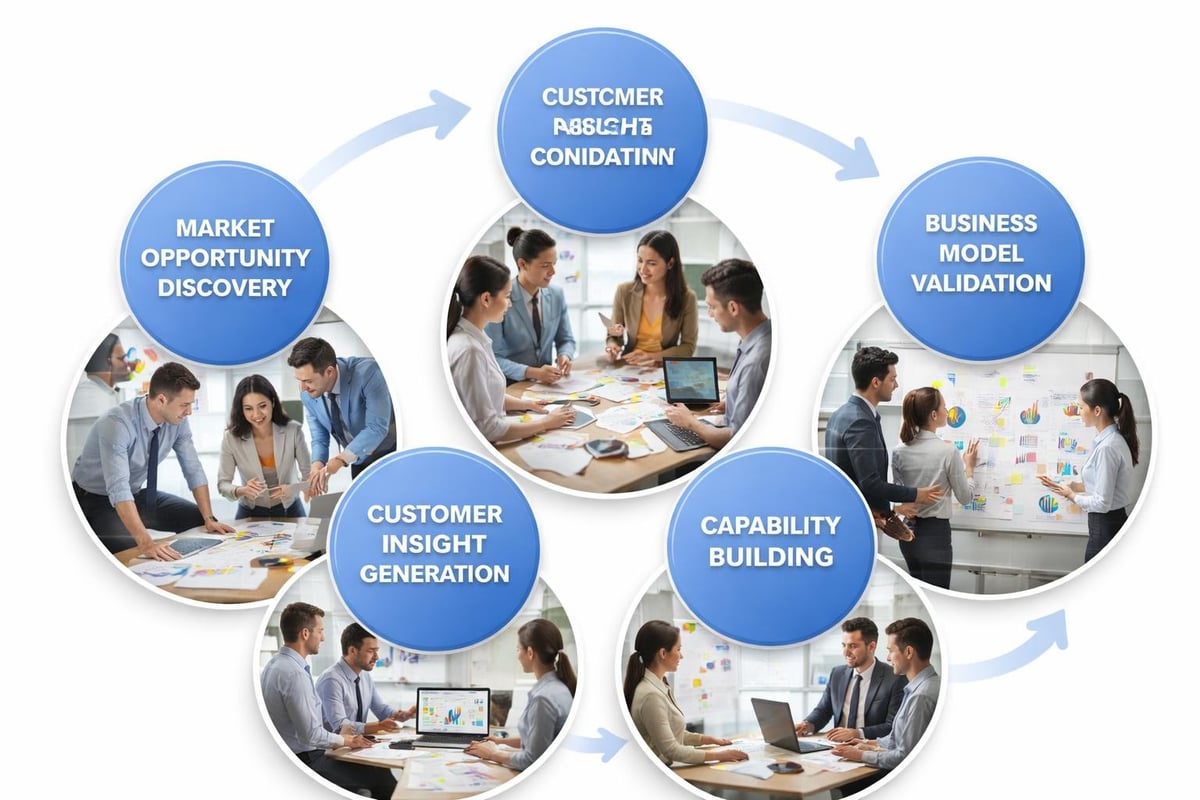
- Systematic opportunity identification through market analysis and customer research
- Rapid prototyping and testing to validate concepts before major investment
- Business model design ensuring innovations create sustainable competitive advantage
- Implementation planning that addresses organizational capabilities and change management
- Measurement systems tracking both innovation process and outcome metrics
For organizations seeking frameworks for innovation, boutique consultancies offer battle-tested methodologies refined through repeated application. These approaches balance rigor with practicality, ensuring insights translate into actionable strategies.
Technology Integration and Digital Capabilities
Modern consulting boutiques recognize that competitive advantage increasingly depends on technological sophistication. While maintaining their focus on strategy and innovation, leading firms integrate advanced technologies into their methodologies and deliverables. This integration enhances both the quality of insights and the speed of execution.
AI-Powered Strategic Insights
Artificial intelligence has transformed how consulting boutiques conduct research, analyze data, and generate recommendations. Machine learning algorithms identify patterns in market data that human analysts might miss. Natural language processing extracts insights from customer feedback, competitor communications, and industry publications at scale. Predictive analytics forecast market trends and scenario outcomes with increasing accuracy.
The application of AI extends beyond analysis to strategy development. Some boutique firms have developed AI-assisted tools that help identify blue ocean opportunities, optimize business model configurations, or simulate competitive responses to strategic moves. These capabilities democratize access to sophisticated analysis previously available only through extensive manual effort.
| Technology Application | Impact on Consulting Delivery | Client Benefits |
|---|---|---|
| Market Intelligence AI | 10x faster data collection and analysis | Broader insights, faster decisions |
| Predictive Analytics | More accurate trend forecasting | Reduced strategic risk |
| Customer Sentiment Analysis | Real-time feedback interpretation | Better-aligned solutions |
| Business Model Simulation | Rapid scenario testing | Optimized configurations |
| Knowledge Management Systems | Institutional learning capture | Consistent quality across engagements |
Talent Development and Expertise Cultivation
The quality of consulting boutiques ultimately depends on the talent they attract, develop, and retain. These firms approach human capital differently than large consulting organizations, emphasizing depth of expertise over breadth of coverage and long-term development over rapid advancement.
Recruitment and Professional Growth
Boutique firms typically hire consultants with significant prior experience, often recruiting from industry rather than business schools. This approach brings practical knowledge and credibility that clients value. The firms then invest heavily in developing specialized expertise through focused training, conference attendance, research projects, and client work.
Career progression in consulting boutiques follows a different trajectory than traditional firms. Rather than climbing a standardized ladder from analyst to partner, consultants develop recognized expertise in specific domains. They become known authorities through thought leadership, speaking engagements, and published research. This expertise-based model attracts professionals who value mastery over management, creating teams with exceptional depth.
Comparing Boutique and Large Consulting Firms
Making informed decisions about consulting partnerships requires understanding the fundamental differences between boutique and large firms. While both models offer value, they excel in different contexts and serve different client needs. Comparing boutique consulting with larger firms reveals distinct advantages for each model depending on project requirements and organizational context.
When Boutique Firms Excel
Consulting boutiques deliver superior outcomes in specific scenarios:
- Complex, specialized challenges: Problems requiring deep domain expertise rather than broad coverage
- Innovation and transformation: Projects demanding creativity and adaptive methodologies
- Senior leadership engagement: Situations where partner-level involvement drives success
- Agile execution: Fast-moving markets or projects requiring rapid iteration
- Cultural sensitivity: Organizations valuing relationship depth and cultural alignment
Conversely, large firms may be preferable for global rollouts requiring coordinated teams across multiple geographies, or regulatory compliance projects demanding extensive documentation and process standardization. Understanding these distinctions helps leaders select appropriate partners for specific initiatives.
Industry Trends Shaping Boutique Consulting
The consulting landscape continues evolving rapidly, with several trends particularly impacting how boutique firms operate and compete. How boutique consulting is winning in 2025 demonstrates how these firms adapt to changing market conditions while maintaining their core advantages.
Emerging Market Dynamics
Several forces are reshaping consulting boutiques in 2026. The continued democratization of business intelligence through AI reduces the value of information arbitrage while increasing the premium on interpretation and strategic judgment. Remote work capabilities expand talent pools beyond traditional consulting hubs, enabling boutiques to access specialized expertise regardless of location. Client sophistication grows as organizations develop stronger internal capabilities, raising expectations for consulting value creation.
Key trends influencing boutique consulting:
- Specialized AI applications: Purpose-built tools for specific industries or functions
- Outcome-based pricing: Shifting from time-based to results-based compensation
- Hybrid delivery models: Combining consulting engagements with training and capability building
- Platform business models: Connecting specialized consultants with clients through technology
- Sustainability integration: Embedding environmental and social considerations into strategy work
These trends favor consulting boutiques that embrace technology while maintaining their relationship-focused, expertise-driven approach. Firms that successfully balance these elements position themselves for sustained growth in an increasingly competitive market.
Building Internal Innovation Capabilities
Progressive consulting boutiques recognize that sustainable client success requires more than solving immediate problems. They invest in building organizational capabilities that enable clients to innovate independently over time. This approach reflects a fundamental shift from traditional consulting models focused on providing answers to modern approaches emphasizing capability transfer.
Training and Knowledge Transfer
Leading boutique firms structure engagements to systematically develop client capabilities alongside delivering project outcomes. They embed learning opportunities throughout the consulting process, ensuring client teams understand not just what to do but why and how. This approach manifests through several mechanisms:
- Collaborative workshops: Joint problem-solving sessions that model effective methodologies
- Structured training programs: Formal skill development in innovation frameworks and tools
- Coaching relationships: Ongoing guidance as client teams apply new capabilities
- Documentation and playbooks: Captured knowledge enabling future independent application
- Community building: Networks connecting client innovation champions across organizations
Organizations pursuing business model innovation or new product development particularly benefit from this capability-building approach, as these initiatives require sustained organizational competency rather than one-time interventions.
Measuring Consulting Impact and ROI
Demonstrating tangible value represents a critical challenge for all consulting firms, but consulting boutiques approach measurement differently than large organizations. Rather than emphasizing process metrics like consultant utilization or project completion, they focus on outcome measures tied directly to client success.
Value Creation Metrics
Sophisticated boutique firms work with clients to establish clear success metrics before engagements begin. These metrics connect consulting activities to business outcomes like revenue growth, profitability improvement, market share gains, or innovation pipeline value. By establishing this linkage upfront, both parties maintain focus on actual value creation rather than activity completion.
The measurement approach typically incorporates both leading and lagging indicators. Leading indicators track progress toward desired outcomes, such as concepts developed, prototypes tested, or capabilities acquired. Lagging indicators measure ultimate business impact, including revenue from new offerings, cost reductions from process improvements, or market position changes. This dual-metric approach enables course correction during engagements while maintaining accountability for final results.
Consulting boutiques deliver exceptional value through specialized expertise, agile methodologies, and deep client relationships that larger firms struggle to replicate. As businesses navigate increasing complexity in innovation, digital transformation, and market disruption, these focused partners provide the combination of strategic insight and tactical flexibility required for sustainable growth. Six Paths Consulting embodies this boutique approach, leveraging AI-powered strategic innovation and proprietary frameworks to help ambitious leaders discover new market opportunities, develop innovative business models, and build lasting internal capabilities that drive long-term competitive advantage.