

The modern business landscape demands more than incremental improvements. Organizations facing market disruption, technological transformation, and evolving customer expectations increasingly turn to specialized expertise to navigate complexity and unlock new opportunities. A consulting services company serves as a strategic partner that brings external perspective, proven methodologies, and specialized capabilities to solve critical business challenges. Whether driving innovation, accelerating growth, or transforming operations, the right consulting partnership can mean the difference between market leadership and irrelevance.
Understanding the Consulting Services Company Model
A consulting services company operates as an external advisory organization that provides specialized expertise to businesses seeking strategic guidance, operational improvements, or transformative change. These firms range from global powerhouses to boutique specialists, each offering distinct value propositions tailored to specific industries, challenges, or functional areas.
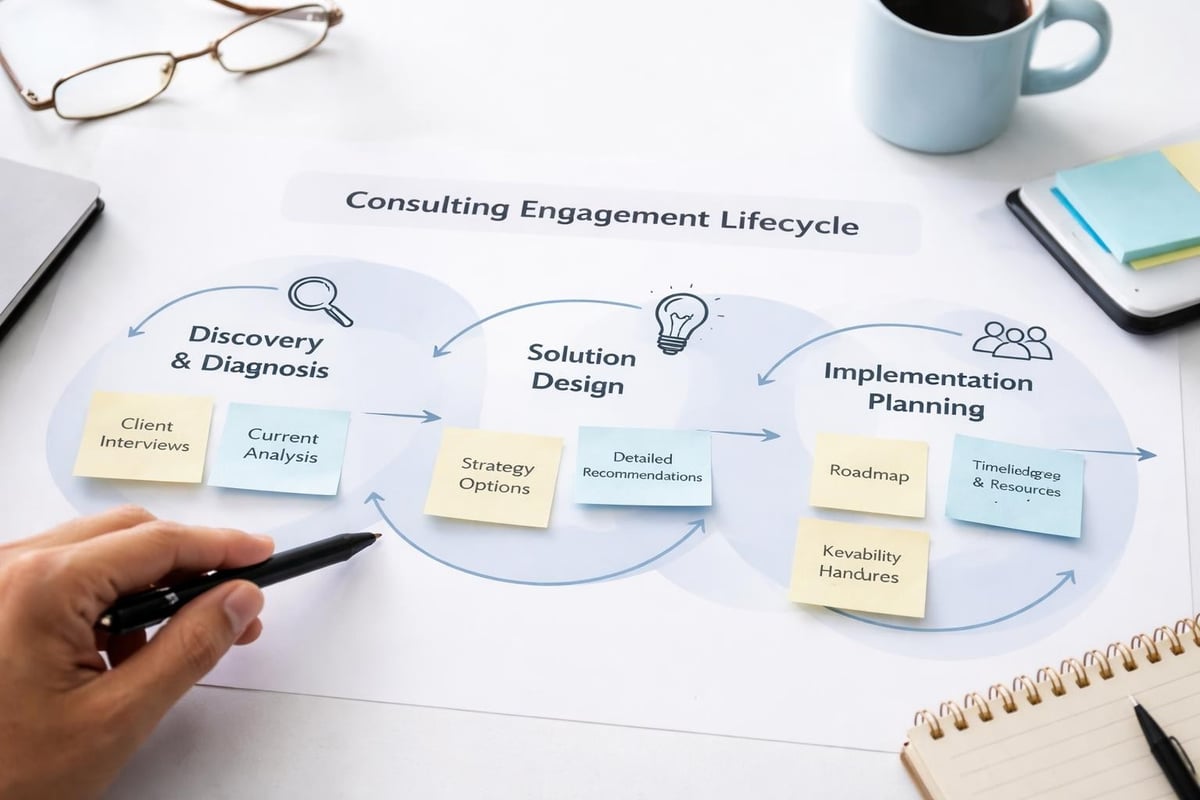
The fundamental value proposition centers on bringing objective analysis, specialized knowledge, and proven frameworks that internal teams may lack. Unlike traditional service providers who execute predefined tasks, a consulting services company collaborates with leadership to diagnose problems, design solutions, and build organizational capabilities that outlast the engagement.
Core Service Offerings
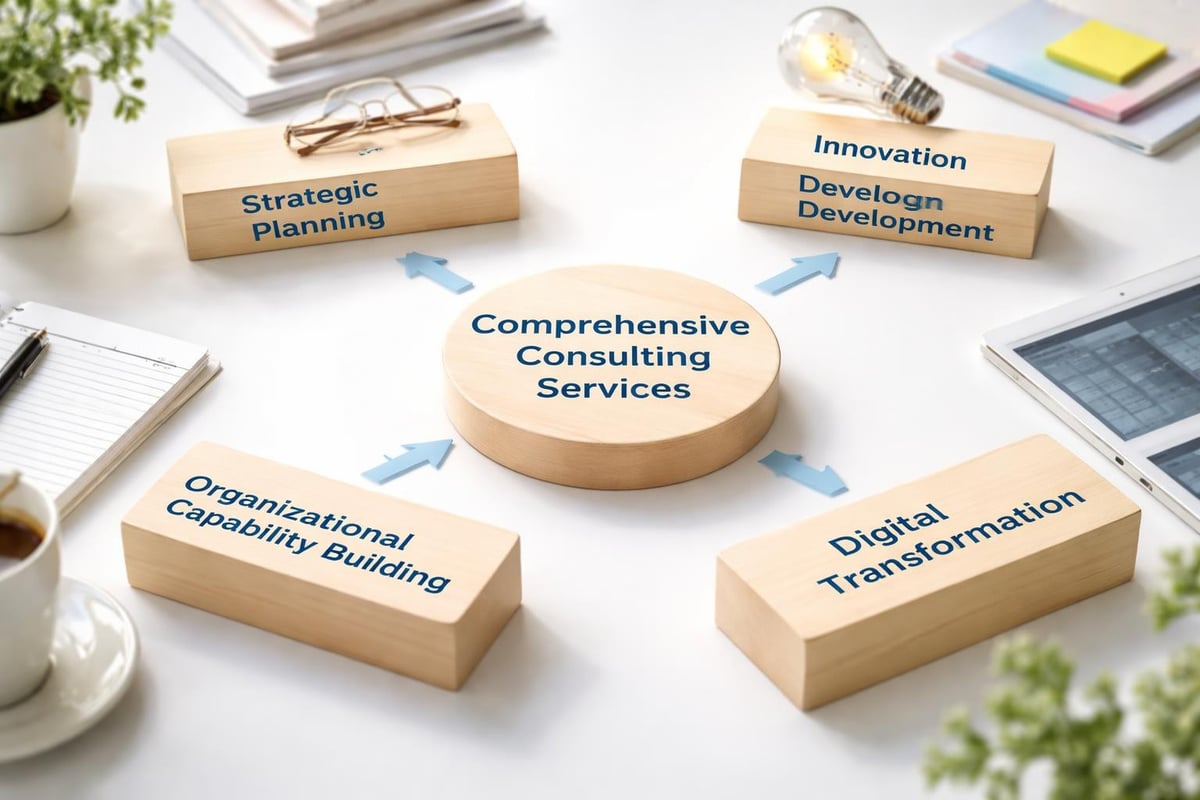
Modern consulting firms have evolved beyond traditional strategy work to address the full spectrum of business challenges:
- Strategic planning and market analysis that identifies growth opportunities and competitive positioning
- Innovation consulting focused on developing new business models and customer experiences
- Digital transformation integrating AI, automation, and emerging technologies
- Organizational development building capabilities, culture, and leadership
- Operational excellence improving efficiency, quality, and cost structures
- Change management ensuring successful adoption of new strategies and systems
The most effective firms combine deep industry knowledge with cross-sector insights, bringing fresh perspectives that challenge conventional thinking. This intersection of expertise and objectivity enables breakthrough solutions that internal teams often struggle to identify.
Selecting the Right Consulting Services Company
Choosing a consulting partner represents a significant investment decision that impacts organizational trajectory. The selection process demands careful evaluation across multiple dimensions to ensure alignment with business objectives and organizational culture.
| Evaluation Criteria | Key Questions | Impact on Results |
|---|---|---|
| Industry Expertise | Do they understand our market dynamics and competitive landscape? | High – determines relevance of insights |
| Methodology | Do they use proven frameworks or custom approaches? | Medium – affects project efficiency |
| Cultural Fit | Will they collaborate effectively with our team? | High – influences adoption and implementation |
| Track Record | Can they demonstrate measurable results in similar engagements? | High – predicts likelihood of success |
| Pricing Model | Does the fee structure align with our budget and risk tolerance? | Medium – affects ROI and sustainability |
Beyond credentials and case studies, consider how a potential consulting services company approaches discovery and diagnosis. The best firms invest substantial effort understanding your unique context before proposing solutions. They ask probing questions, challenge assumptions, and demonstrate genuine curiosity about your business challenges.
Engagement Models and Pricing Structures
Consulting engagements typically follow one of several commercial models, each with distinct advantages:
Project-based engagements define specific deliverables within fixed timeframes and budgets. This model works well for bounded initiatives like market analysis or strategy development where scope can be clearly defined upfront.
Retainer arrangements provide ongoing access to consulting expertise, ideal for organizations requiring continuous strategic support or navigating extended transformation programs. Monthly or quarterly retainers create predictable costs while ensuring consultant availability.
Value-based pricing ties fees to measurable outcomes, aligning consultant incentives with client success. While less common, this model demonstrates confidence and shared commitment to results.
Hybrid approaches combine elements of each model, such as project fees with performance bonuses or retainers with project add-ons. According to recent consulting industry analysis, flexible pricing models are gaining traction as clients demand greater accountability and consultants seek to differentiate on value rather than hours.
Maximizing Value from Consulting Partnerships
Success in consulting engagements rarely happens by accident. It requires active client participation, clear communication protocols, and disciplined execution. Organizations that treat consultants as true partners rather than external contractors consistently achieve superior results.
Establishing Clear Objectives and Success Metrics
Every engagement should begin with explicit definitions of success. What specific outcomes justify the investment? How will progress be measured? When do you expect to see results? Best practices for measuring consulting impact emphasize both quantitative metrics and qualitative indicators.
Strong project governance includes:
- Executive sponsorship ensuring leadership alignment and resource commitment
- Defined scope boundaries preventing scope creep while allowing necessary flexibility
- Regular checkpoint meetings maintaining momentum and addressing obstacles
- Data access protocols enabling consultants to conduct thorough analysis
- Decision-making authority clarifying who approves recommendations and changes
The most productive engagements establish joint accountability through collaborative working models. Rather than consultants working in isolation and presenting finished recommendations, integrated teams that blend internal and external expertise generate more practical, implementable solutions.
Innovation-Focused Consulting Services
In 2026, innovation has moved from competitive advantage to business necessity. A consulting services company specializing in innovation brings structured approaches to what many organizations treat as creative chaos. These firms combine strategic rigor with creative methodologies to systematically identify opportunities and develop breakthrough solutions.
Innovation consulting addresses three critical questions: Where should we innovate? What should we create? How do we bring innovations to market? Each question requires distinct capabilities and methodologies.
Opportunity Discovery and Market Insights
Effective innovation services begin with comprehensive market and customer analysis. Consultants employ ethnographic research, trend analysis, and competitive mapping to uncover unmet needs and emerging opportunities. This discovery phase challenges existing assumptions about customer preferences, market boundaries, and value creation.
Advanced firms integrate AI-powered analytics to process vast datasets, identifying patterns and opportunities that traditional research methods might miss. This technological augmentation doesn't replace human insight but amplifies it, enabling faster, more comprehensive opportunity assessment.
| Innovation Approach | Primary Focus | Best Applications |
|---|---|---|
| Blue Ocean Strategy | Creating uncontested market space | Mature markets with intense competition |
| Jobs-to-be-Done | Understanding customer motivations | Product development and positioning |
| Design Thinking | Human-centered solution development | Customer experience and service design |
| Business Model Innovation | Revenue and value delivery transformation | Digital disruption and market entry |
Building Innovation Capabilities
The most valuable consulting engagements don't just deliver recommendations but build internal capabilities that sustain innovation beyond the engagement. Training programs and workshops transfer methodologies, tools, and mindsets that enable organizations to continue innovating independently.
Capability building includes establishing innovation governance structures, creating experimentation processes, and developing metrics that balance exploration with exploitation. Organizations that invest in these foundational elements generate ongoing returns long after consultants depart.
AI-Powered Strategic Innovation
Artificial intelligence has fundamentally altered the consulting landscape. A forward-thinking consulting services company now leverages AI not just as a topic for client advice but as a core capability that enhances every aspect of service delivery. From data analysis to scenario modeling, AI tools enable deeper insights delivered faster and at lower cost.
Strategic innovation consulting increasingly focuses on helping clients understand and capitalize on AI opportunities within their specific contexts. This involves assessing AI readiness, identifying high-value use cases, and developing implementation roadmaps that balance ambition with practicality.
Practical AI Applications in Consulting
Leading consulting firms deploy AI across multiple engagement phases:
- Market and competitive intelligence processing thousands of data sources to identify trends and threats
- Customer segmentation and targeting revealing hidden patterns in behavior and preferences
- Scenario planning and forecasting modeling multiple futures with greater accuracy
- Recommendation validation testing strategic options against historical patterns and market dynamics
- Implementation monitoring tracking adoption metrics and predicting intervention needs
The integration of AI tools doesn't diminish the importance of human judgment but rather frees consultants to focus on interpretation, creativity, and relationship building. Technology handles data processing and pattern recognition while experienced consultants provide context, challenge assumptions, and facilitate difficult decisions.
For organizations seeking to leverage AI for competitive advantage, partnering with digital product studios like CollectDev can complement strategic consulting by translating innovation concepts into production-ready platforms. Similarly, working with specialized design partners such as Embark Studio™ ensures that digital experiences are optimized for conversion and scalability from initial launch.

Implementation and Change Management
Strategic recommendations only create value when successfully implemented. A complete consulting services company provides more than analysis and advice-they support execution through structured change management and transformation programs.
Implementation challenges typically fall into three categories: technical complexity, organizational resistance, and resource constraints. Effective consultants anticipate these obstacles and design solutions that address each dimension.
Overcoming Organizational Resistance
Change initiatives fail more often due to people issues than technical problems. Employees resist change for legitimate reasons including fear of obsolescence, loss of status, increased workload, and skepticism about leadership commitment. Following proven consulting communication practices helps navigate these human dynamics.
Successful change management requires:
- Creating urgency through compelling evidence of the need for change
- Building coalitions identifying and empowering change champions
- Developing clear vision articulating the desired future state
- Enabling action removing obstacles and providing resources
- Generating short-term wins demonstrating progress and building momentum
- Sustaining acceleration maintaining focus through inevitable setbacks
- Anchoring changes embedding new practices in culture and systems
The most effective consultants don't just design change programs but actively facilitate difficult conversations, mediate conflicts, and coach leaders through uncomfortable transitions. This hands-on support often makes the difference between transformations that stick and those that revert to old patterns within months.
Measuring Consulting ROI and Impact
Quantifying the return on consulting investments challenges many organizations. Unlike capital expenditures with clear cost-benefit calculations, consulting value often manifests through improved decisions, avoided mistakes, and enhanced capabilities that are difficult to isolate and measure.
Quantitative and Qualitative Metrics
Robust measurement frameworks combine hard metrics with softer indicators:
Financial metrics include revenue growth attributable to new strategies, cost savings from operational improvements, and margin expansion from pricing optimization or efficiency gains. These numbers should be tracked against baseline projections to isolate consulting impact.
Operational metrics measure improvements in cycle time, quality, customer satisfaction, or employee engagement. While these may not directly appear on financial statements, they lead to improved business performance over time.
Capability metrics assess whether the organization has acquired new skills, processes, or tools that enable ongoing improvement. This might include adoption rates for new methodologies, employee proficiency with new frameworks, or establishment of innovation pipelines.
| Metric Type | Example Measures | Measurement Timeline |
|---|---|---|
| Financial | Revenue growth, cost reduction, margin improvement | 6-18 months |
| Operational | Cycle time, quality scores, NPS | 3-12 months |
| Strategic | Market share, new product launches, partnership value | 12-36 months |
| Capability | Skill assessments, process adoption, innovation throughput | 6-24 months |
The most sophisticated clients establish baseline measurements before engagements begin and track progress through defined milestones. This discipline creates accountability while providing early warning signs if initiatives drift off course.
Industry-Specific Consulting Considerations
While core consulting competencies transfer across sectors, industry context significantly influences approach and value delivery. A consulting services company with relevant industry experience brings crucial advantages including established networks, regulatory knowledge, and awareness of sector-specific challenges and opportunities.
Technology companies face rapid innovation cycles and talent competition. Financial services navigate complex regulations and digital disruption. Healthcare organizations balance quality, access, and cost pressures. Manufacturing companies optimize global supply chains and automation. Each context demands tailored approaches informed by sector expertise.
Consulting firms serving multiple industries often develop specialized practice areas that combine industry knowledge with functional expertise. This matrix structure enables them to bring relevant best practices from other sectors while respecting industry-specific constraints and requirements.
Emerging Sector Opportunities
Several industries present particularly strong opportunities for consulting value creation in 2026:
Climate technology and sustainability as organizations navigate energy transition and environmental commitments
Healthcare innovation driven by aging populations, personalized medicine, and digital health platforms
Financial services transformation responding to embedded finance, blockchain applications, and changing customer expectations
Supply chain resilience addressing geopolitical risks, nearshoring trends, and sustainability requirements
Education technology meeting demand for skills development, remote learning, and credentialing alternatives
Consultants who develop deep expertise in these emerging areas position themselves as essential partners rather than discretionary advisors. Organizations facing these transformations often lack internal expertise and benefit enormously from external perspective and proven frameworks.
Building Long-Term Consulting Relationships
The most valuable consulting relationships evolve from transactional engagements into strategic partnerships that span years. These enduring relationships benefit both parties-clients gain trusted advisors who understand their context deeply, while consultants develop profound industry and organizational insights that enhance future recommendations.
Trust forms the foundation of lasting partnerships. Consultants earn trust through consistently delivering value, maintaining confidentiality, challenging ideas respectfully, and demonstrating genuine commitment to client success rather than engagement fees. Organizations reciprocate by providing access, embracing candid feedback, and investing in capability development.
Progressive clients view their consulting services company as an extension of their leadership team-a source of objective perspective during critical decisions, a catalyst for innovation when growth stalls, and a capability multiplier when internal resources are stretched. This partnership mindset transforms consulting from episodic project work into continuous strategic collaboration.
Evolving with Client Needs
Strong consulting relationships adapt as client circumstances change. A firm initially engaged for market analysis might later support implementation, then capability building, then new innovation initiatives. This evolution requires consultants to continuously demonstrate value while remaining sensitive to when clients should internalize capabilities versus continuing to rely on external support.
The best consulting firms actively work themselves out of discrete projects by building client self-sufficiency, confident that strong relationships and changing business needs will generate future opportunities. This abundance mindset-prioritizing long-term partnership over short-term billings-ultimately creates more valuable, sustainable consulting businesses.
Selecting and working effectively with a consulting services company represents a strategic capability that distinguishes high-performing organizations from those that struggle to adapt and grow. The framework, considerations, and best practices outlined above provide a foundation for building productive partnerships that drive measurable business impact. Whether you're seeking to unlock new growth opportunities, develop breakthrough innovations, or build organizational capabilities for sustained competitive advantage, Six Paths Consulting brings AI-powered strategic innovation expertise to help ambitious leaders discover and capture market opportunities through proven methodologies and collaborative engagement models.