

In 2026, the drive to help businesses grow is more urgent than ever, as rapid change redefines the rules of success. Navigating this shifting landscape requires more than ambition; it demands insight, innovation, and adaptability.
This essential guide offers proven strategies and the latest digital tactics, equipping leaders with the tools and frameworks to thrive. You will discover actionable steps, leadership essentials, and practical approaches for scaling your business in a competitive world.
Explore new opportunities, ignite sustainable growth, and take confident action with expert guidance designed for today’s fast-paced market.
Understanding the 2026 Business Growth Landscape
Adapting to the fast-changing business environment in 2026 is essential for any organization that wants to thrive. To help businesses grow, leaders must understand the driving forces shaping the market, the hurdles they may encounter, and the new opportunities emerging on the horizon.

Key Market Trends and Shifts
The global economic outlook for 2026 suggests both optimism and complexity. Businesses are navigating a world where digital transformation, artificial intelligence, and automation are not optional but required for progress. According to Gartner, 78% of executives expect digital transformation to become the main growth driver by 2026.
Customer expectations are also evolving rapidly. Today’s buyers demand personalized experiences and clear value from every interaction. Companies that help businesses grow are prioritizing advanced data analytics, omnichannel engagement, and customer-centric innovation.
Sustainability and ESG factors are no longer peripheral. Investors and consumers are holding companies accountable for environmental and social impact, making ESG a significant growth lever. Globalization continues to intensify competition, with new players entering markets at record speed.
For a deeper dive into the economic factors shaping these trends, see the Global economic outlook 2026 report. Staying informed about these shifts is crucial to help businesses grow in a competitive landscape.
Challenges Facing Businesses Today
Despite new opportunities, several obstacles persist for organizations wanting to help businesses grow. Talent shortages remain a primary concern, with a pressing need for upskilling and reskilling to keep up with technological advancements. Navigating regulatory requirements is increasingly complex, especially as governments update data privacy and sustainability rules.
Supply chain disruptions continue to create uncertainty. Many companies experienced delays and increased costs in recent years. For example, a mid-sized manufacturer overcame such hurdles by digitizing its supply chain, implementing real-time tracking and predictive analytics to minimize disruptions.
Cybersecurity threats are escalating. As digital adoption grows, so does the risk of data breaches, making robust security protocols vital. These challenges require proactive strategies and continuous adaptation to help businesses grow and remain resilient in 2026.
Opportunities for Growth
Despite the challenges, opportunities abound for those seeking to help businesses grow. Identifying untapped markets and new customer segments can unlock fresh revenue streams. Embracing emerging technologies like AI and automation can streamline operations, reduce costs, and drive innovation.
Building strategic partnerships and participating in business ecosystems accelerates access to new capabilities and markets. Agility is also essential. Companies that foster a culture of rapid experimentation and learning are best positioned to seize new opportunities and respond to change.
The importance of innovation, adaptability, and forward-thinking leadership cannot be overstated. By leveraging these opportunities, organizations can help businesses grow not only in 2026, but well into the future.
Building a Robust Growth Strategy
Achieving sustainable growth in 2026 requires more than ambition. It demands a structured approach rooted in clear objectives, deep market knowledge, and ongoing innovation. To help businesses grow in a competitive landscape, leaders must blend proven frameworks with adaptability and a focus on measurable outcomes.

Setting Clear Business Objectives
The foundation to help businesses grow starts with defining precise objectives. Businesses should establish SMART goals—Specific, Measurable, Achievable, Relevant, and Time-bound—that align with their long-term vision. Setting these targets ensures every team member understands what success looks like.
Balancing immediate wins with sustainable progress is essential. For example, a retail chain that implemented clear KPIs saw improved performance across sales and customer service. By tracking both short-term sales boosts and long-term brand loyalty, they maintained momentum while building resilience.
Leaders who help businesses grow do not simply set goals and walk away. They revisit objectives regularly, adjusting as market realities shift. This dynamic approach ensures strategies remain relevant and actionable.
Market Research and Customer Insights
To help businesses grow, in-depth market research is indispensable. Advanced analytics and AI tools enable organizations to uncover trends, map customer journeys, and identify pain points or emerging opportunities quickly.
Businesses that invest in customer insights are better positioned to anticipate market changes. According to Forrester (2025), 65% of companies leveraging customer data see higher ROI. Mapping customer journeys also highlights friction points, enabling tailored solutions that drive growth.
Effective research goes beyond data collection. It involves translating insights into action, ensuring strategies are rooted in real customer needs. This approach helps businesses grow by aligning offerings with evolving expectations.
Innovation and Differentiation
Innovation is a key driver to help businesses grow in 2026. Developing a unique value proposition sets a company apart from competitors. Fostering a culture of innovation within teams encourages experimentation and calculated risk-taking.
Launching new products or services that address changing market needs is vital. For instance, a SaaS company that pivoted to a subscription model unlocked recurring revenue streams and deeper customer relationships. Businesses seeking actionable inspiration can explore innovative ideas for business growth to fuel their strategy.
To help businesses grow, leaders must champion creativity and agility. Regular brainstorming sessions and cross-functional collaboration can spark breakthrough ideas that create lasting differentiation.
Financial Planning and Resource Allocation
Sound financial planning is critical to help businesses grow in a sustainable way. Budgeting for growth initiatives ensures resources are allocated efficiently. Scenario planning helps leaders anticipate risks and develop contingency plans.
Securing funding—whether through venture capital, private equity, or alternative finance—can provide the capital needed to scale. Organizations should evaluate multiple funding sources to match their growth ambitions.
A structured approach to resource allocation prevents waste and maximizes return on investment. By aligning budgets with strategic priorities, businesses can fuel initiatives that truly help businesses grow.
Monitoring and Measuring Progress
Tracking progress is essential to help businesses grow and stay on course. Setting up dashboards and real-time KPIs allows teams to monitor performance, spot issues early, and adjust quickly.
Iterative improvement is enabled by data-driven decision-making. For example, a logistics firm used performance metrics to double its market share by identifying bottlenecks and refining operations continuously.
Regular review cycles and open feedback loops encourage accountability. When businesses measure what matters, they can celebrate wins, learn from setbacks, and ensure every step supports their mission to help businesses grow.
Leveraging Technology for Business Growth
In today’s fast-paced landscape, leveraging technology is fundamental to help businesses grow. Whether automating workflows or transforming customer experiences, tech adoption is no longer optional. Companies that prioritize digital innovation are better equipped to adapt, compete, and scale.

Digital Transformation Essentials
Digital transformation is at the heart of strategies that help businesses grow. Integrating cloud computing, AI, and automation into core operations increases efficiency and scalability. For instance, AI-powered chatbots can reduce customer service costs by 30 percent, freeing up resources for higher-value activities.
To maximize impact, organizations should streamline workflows and break down departmental silos. This approach accelerates decision-making and supports rapid response to market changes. Investing in digital skills development ensures teams can adapt as technology evolves.
For those seeking a practical roadmap, exploring AI strategy and implementation can provide actionable insights into deploying advanced technologies for sustainable growth.
E-commerce and Omnichannel Expansion
E-commerce is a catalyst that continues to help businesses grow in 2026. With 60 percent of global retail sales projected to occur online, building seamless omnichannel experiences is critical. Companies must integrate online and offline channels, ensuring customers enjoy consistent interactions wherever they engage.
Social commerce and mobile-first platforms are reshaping buyer behavior. Brands that optimize for these trends capture new revenue streams and foster loyalty. Successful omnichannel strategies include unified inventory management, personalized marketing, and real-time customer support.
Adopting these models not only expands reach but also deepens customer relationships, fueling growth across regions and demographics.
Data-Driven Decision Making
Harnessing big data is a strategic lever to help businesses grow. Predictive analytics and trend forecasting empower leaders to anticipate market shifts, optimize operations, and personalize offerings. Building a data-literate workforce is essential for extracting insights and driving informed decisions.
Companies benefit from setting up dashboards that track KPIs in real time. For example, a fashion brand improved inventory management by leveraging analytics to predict demand and reduce overstock. This data-driven culture enables continuous improvement and competitive agility.
Embedding analytics into daily processes transforms raw data into actionable business intelligence, unlocking new growth opportunities.
Cybersecurity and Data Privacy
Robust cybersecurity is a non-negotiable requirement to help businesses grow and protect their reputation. Implementing advanced security protocols, such as multi-factor authentication and network monitoring, mitigates risks from cyber threats.
Adhering to evolving regulations like GDPR and CCPA ensures compliance and builds customer trust. For example, fintech startups have safeguarded client data by investing in encryption and regular security audits.
A proactive approach to data privacy not only meets legal obligations but also differentiates brands in a crowded market, positioning them for sustainable growth.
Leadership, Culture, and Talent Development
In 2026, strong leadership, vibrant culture, and focused talent development are non-negotiable if you want to help businesses grow. Organizations that prioritize these pillars outperform their competitors, foster innovation, and adapt quickly to market changes. Let’s explore the essential building blocks that empower teams and drive sustainable success.

Building High-Performance Teams
To help businesses grow in 2026, assembling high-performance teams is critical. Recruitment now centers on both technical skills and cultural fit, especially as hybrid work becomes the norm. Leaders seek talent who can adapt, collaborate, and contribute to shared goals across physical and digital spaces.
Upskilling and reskilling programs are essential. With rapid changes in technology, employees need continuous learning opportunities to stay ahead. According to LinkedIn, companies that invest in employee development achieve 24% higher profit margins. This underscores the importance of nurturing talent to help businesses grow.
Leaders must also cultivate trust and psychological safety. When team members feel valued and empowered, they bring their best ideas forward. This dynamic creates a cycle of engagement and achievement that fuels ongoing business growth.
Fostering a Growth Mindset
Organizations that help businesses grow consistently encourage a growth mindset among their teams. This means promoting innovation, experimentation, and calculated risk-taking as everyday practices. Leaders play a vital role by modeling adaptability and rewarding creative problem-solving.
Cross-functional innovation teams, like those seen in leading tech firms, drive breakthrough solutions by blending diverse perspectives. These teams thrive when provided with frameworks for innovation that guide ideation and execution. For practical approaches, consider exploring Frameworks for innovation, which offer actionable tools to embed innovation in your company’s DNA.
A growth mindset is not just about ideas, but about accountability. Leaders should set clear expectations, provide constructive feedback, and celebrate both learning and achievement. This approach helps businesses grow by turning challenges into opportunities for improvement.
Diversity, Equity, and Inclusion (DEI)
Diversity, equity, and inclusion are proven drivers of performance and creativity. Companies that prioritize DEI initiatives help businesses grow by unlocking the full potential of their workforce. Diverse teams bring broader perspectives, leading to better decision-making and higher innovation rates.
Implementing DEI programs goes beyond hiring practices. It involves creating equitable opportunities for advancement, fostering a sense of belonging, and addressing unconscious bias. A multinational company that invested in robust DEI programs saw a measurable increase in employee engagement, retention, and creativity.
| DEI Initiative | Result |
|---|---|
| Inclusive hiring | Broader talent pool |
| Bias training | Improved team cohesion |
| Employee resource groups | Higher retention |
By weaving DEI into the fabric of your organization, you help businesses grow while strengthening culture and resilience.
Employee Well-being and Retention
Sustaining growth means caring for employee well-being. Companies that help businesses grow recognize the risks of burnout and the need for work-life balance. Flexible workplace policies, such as remote and hybrid work options, are now standard expectations.
Supporting mental health, offering wellness programs, and encouraging time off contribute to a positive work environment. A recent example is a company that introduced flexible schedules and saw retention rates rise significantly.
Retention is not just about perks, but about creating a supportive culture where people feel connected and motivated. When employees are happy and healthy, they are more productive and invested in helping businesses grow.
Step-by-Step: Actionable Frameworks to Help Businesses Grow in 2026
Unlocking sustainable success in 2026 requires a clear, actionable roadmap. By following a proven step-by-step framework, organizations can help businesses grow, adapt, and thrive amid market shifts. Below is a practical guide to drive measurable progress.
Step 1: Assess Current State and Identify Gaps
Begin by gaining a comprehensive view of your organization’s position. Conduct a SWOT analysis to map strengths, weaknesses, opportunities, and threats. Benchmark your performance against competitors.
Engage internal and external stakeholders for honest feedback. Use surveys and interviews to uncover hidden challenges. This diagnostic phase is vital to help businesses grow by highlighting where to focus resources for the highest impact.
Create a simple gap analysis table:
| Area | Current State | Desired State | Gap |
|---|---|---|---|
| Revenue | $5M | $8M | $3M |
| Market Share | 10% | 18% | 8% |
Step 2: Define Growth Objectives and Metrics
With a clear understanding of your baseline, set measurable goals. Align objectives with your vision and the realities of your market. Use SMART (Specific, Measurable, Achievable, Relevant, Time-bound) criteria for clarity.
Prioritize initiatives based on data, market trends, and stakeholder input. According to the JPMorganChase Survey: U.S. Business Leaders Signal Optimism and Growth Plans for 2026, most leaders are focusing on digital expansion and operational efficiency.
Choosing the right metrics will help businesses grow by keeping teams focused and accountable.
Step 3: Develop and Test Growth Initiatives
Design growth initiatives using agile and design thinking principles. Rapidly prototype new products, services, or processes. Pilot programs in controlled settings, then collect real-time feedback for improvement.
Encourage cross-functional teams to share ideas, experiment, and learn from both successes and failures. This iterative approach helps businesses grow by minimizing risk and maximizing learning.
List actionable steps:
- Generate ideas collaboratively
- Build prototypes quickly
- Test concepts with real customers
Step 4: Scale Successful Strategies
Once pilots show positive results, allocate resources to scale high-performing initiatives. Standardize processes and integrate technology to drive efficiency.
Use automation and digital tools to support growth at scale. Review the SME growth case study to see how a real business overcame market challenges and expanded successfully.
Scaling proven solutions is key to help businesses grow efficiently and sustainably.
Step 5: Monitor, Optimize, and Iterate
Establish regular review cycles to track progress against your metrics. Use dashboards and analytics to identify what’s working and where adjustments are needed.
Encourage a culture of continuous improvement, where teams are empowered to iterate strategies quickly. Businesses that optimize quarterly are shown to grow 30% faster, reinforcing why this step is essential to help businesses grow in a dynamic landscape.
Create a feedback loop:
- Analyze results
- Adjust tactics
- Celebrate wins and learn from setbacks
How Six Paths Consulting Empowers Business Growth
Six Paths Consulting provides expert guidance to help businesses grow through AI-powered innovation and tailored growth strategies. The firm identifies new market opportunities, develops innovative business models, and offers training programs to build in-house capabilities.
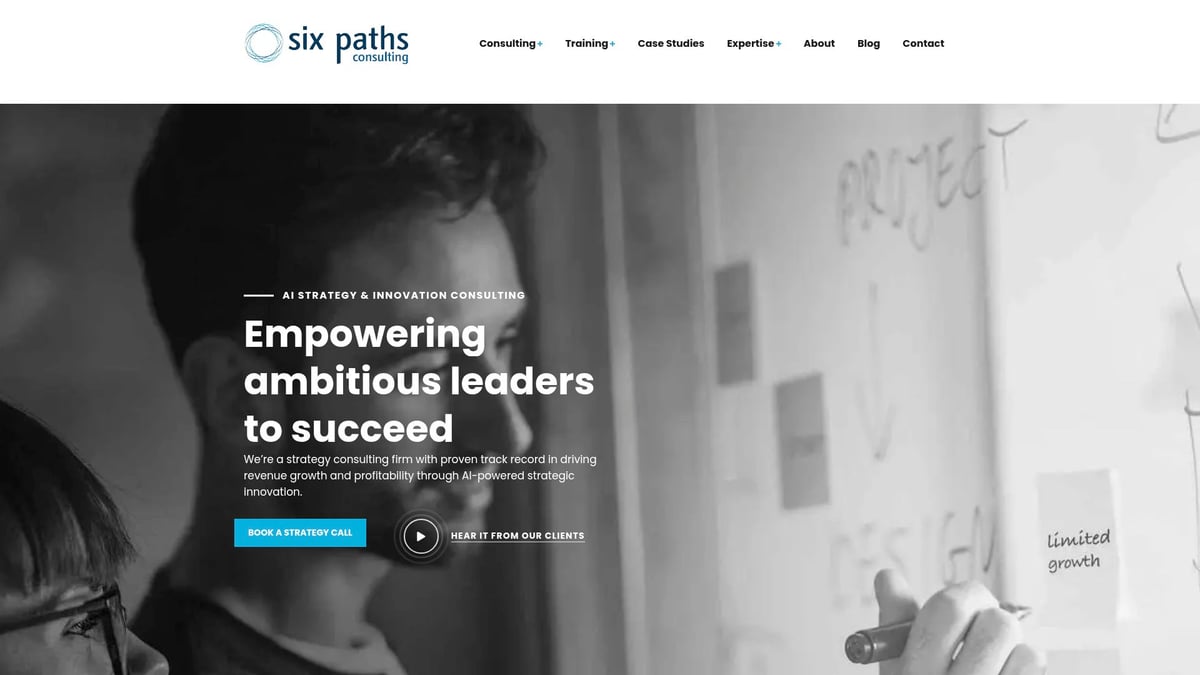
Clients benefit from end-to-end support, from strategy to execution, resulting in increased revenue, new product launches, and improved profitability. Their proven frameworks ensure leaders can help businesses grow in a rapidly changing environment.
Future-Proofing Your Business for Long-Term Success
In 2026, organizations that future-proof their operations stand the best chance to help businesses grow and thrive amid ongoing disruption. The key is to blend innovation, adaptability, and strategic foresight. By building resilience and embracing change, companies can secure long-term success.
Embracing Continuous Innovation
Continuous innovation is vital to help businesses grow in a fast-changing world. This means creating systems for idea generation, rapid testing, and learning. Companies are increasingly investing in research and development, as well as forming partnerships with startups to access fresh perspectives.
A prime example is the automotive industry, where open innovation has delivered breakthrough products by combining in-house expertise with external talent. As organizations look to the future, technology investment will be a driving force. According to Global IT spending projected to exceed $6 trillion in 2026, companies are ramping up tech budgets to support transformation.
To help businesses grow, leaders should foster a culture that rewards experimentation and provides resources for ongoing development. This approach ensures they remain competitive and adaptable.
Adapting to Regulatory and Environmental Changes
Navigating regulatory complexity is now a core competency for organizations that want to help businesses grow. Policies can shift quickly, affecting everything from data protection to environmental standards. Staying ahead means dedicating resources to compliance monitoring and proactive risk management.
Sustainability is also a major driver. Integrating environmental, social, and governance (ESG) principles into the business model not only builds trust but also attracts new customers. Recent data shows that 70% of consumers prefer brands with strong sustainability commitments, making ESG a strategic imperative.
By weaving adaptability and responsibility into their DNA, organizations can help businesses grow while meeting evolving legal and societal expectations.
Scaling Responsibly and Sustainably
Responsible scaling is about balancing growth with ethical and environmental considerations. To help businesses grow, leaders must implement ESG initiatives that go beyond compliance, focusing on transparency and stakeholder value.
A food and beverage company’s pursuit of carbon neutrality demonstrates how sustainability can drive growth and differentiate a brand. Responsible scaling also involves setting clear goals for impact, measuring progress, and reporting results.
The most successful organizations build sustainability into every level of their operations. This approach not only helps businesses grow but also ensures long-term viability and positive community impact.
Building Resilience Against Future Disruptions
Resilience is the backbone of any strategy to help businesses grow for the long term. Scenario planning prepares organizations for economic shocks, technological shifts, or environmental events. Businesses that develop crisis response plans and business continuity frameworks can adapt rapidly when disruptions occur.
Lessons from the 2023-2025 global supply chain disruptions have shown that agile organizations rebound faster. Building resilience involves regular risk assessments, cross-functional coordination, and investment in robust infrastructure.
Companies that prioritize these strategies are positioned to help businesses grow, regardless of what the future holds.
Leveraging Ecosystems and Strategic Alliances
Strategic alliances and ecosystems unlock new markets and capabilities. By collaborating with industry peers, tech providers, and academic institutions, companies can help businesses grow beyond their traditional boundaries.
Healthcare consortiums, for example, have accelerated digital health innovations by pooling expertise and resources. These partnerships foster knowledge exchange, speed up product development, and lower barriers to entry in emerging markets.
To help businesses grow, leaders should actively seek alliances that complement their strengths and extend their reach. Building and nurturing these relationships is essential for sustainable expansion.
Staying Ahead of the Curve
Staying ahead of the curve is essential to help businesses grow in 2026 and beyond. This requires a commitment to ongoing learning, active participation in industry networks, and continuous market intelligence gathering. Companies that prioritize trend spotting and adaptability consistently outperform their peers.
Emerging marketing and organizational trends are especially important for future readiness. According to 10 marketing trends to watch out for in 2026, successful organizations are those that anticipate change and pivot quickly.
By embedding these practices, leaders ensure their teams are equipped to help businesses grow, seize new opportunities, and respond to market shifts.
Summary Table: Key Strategies for Future-Proofing
| Pillar | Action Step | Impact on Growth |
|---|---|---|
| Continuous Innovation | Invest in R&D, foster idea generation | Fuels adaptability |
| Regulatory & Environmental | Monitor compliance, integrate ESG | Builds trust and resilience |
| Responsible Scaling | Implement transparent ESG initiatives | Ensures sustainable growth |
| Resilience | Develop crisis plans, scenario analysis | Minimizes disruption impact |
| Ecosystems & Alliances | Form strategic partnerships | Expands market reach |
| Staying Ahead | Invest in market intelligence, trendspotting | Maintains competitive edge |
Future-proofing is not a one-time effort. It is the ongoing process that will help businesses grow, adapt, and succeed in the evolving landscape of 2026.
As you look ahead to 2026, you know that growth requires more than ambition—it takes a thoughtful strategy, the right technology, and a willingness to innovate. If you’re ready to uncover new market opportunities and want practical steps tailored to your unique business challenges, let’s take the next step together. At Six Paths Consulting, we help leaders like you build innovation capabilities and design winning strategies for sustainable success. Start your journey by gaining fresh insights into your organization’s potential—simply Book a Free Opportunity Assessment and discover where your next breakthrough could begin.