

Organizations across industries face a fundamental paradox in 2026: innovation is simultaneously the most critical driver of competitive advantage and one of the most difficult capabilities to sustain. While executives universally recognize the imperative to innovate, the path from intention to execution remains fraught with obstacles that derail even well-funded initiatives. Understanding these innovation challenges and developing systematic approaches to address them separates market leaders from those struggling to maintain relevance in rapidly evolving markets.
Understanding the Modern Innovation Landscape
The innovation imperative has intensified significantly over the past decade, driven by technological acceleration, shifting customer expectations, and increasingly competitive global markets. Organizations now operate in environments where established business models can become obsolete within months rather than years, creating unprecedented pressure to continuously reinvent value propositions and delivery mechanisms.
However, awareness of the need to innovate does not automatically translate into innovation capability. The gap between strategic intent and operational reality represents one of the most significant innovation challenges facing organizations today. Research consistently demonstrates that while approximately 84% of executives believe innovation is critical to growth strategy, only 6% express satisfaction with their organization's innovation performance.
This disconnect stems from several systemic factors that compound one another. Fostering a culture of innovation requires organizations to fundamentally rethink how they allocate resources, measure success, and tolerate risk. Traditional management structures optimized for operational efficiency often create antibodies that reject innovation initiatives before they can demonstrate value.
The Resource Allocation Dilemma
One of the most persistent innovation challenges involves the competition for resources between existing operations and exploratory initiatives. Organizations typically allocate budgets based on proven return on investment metrics, creating an inherent bias toward sustaining innovations that improve existing products rather than disruptive initiatives that could create entirely new markets.
| Resource Type | Core Business Needs | Innovation Initiative Needs | Tension Point |
|---|---|---|---|
| Financial Capital | Predictable ROI, quarterly results | Long-term bets, uncertain returns | Budget prioritization |
| Human Capital | Operational expertise, efficiency | Creative thinking, experimentation | Talent allocation |
| Management Attention | Performance monitoring, optimization | Strategic exploration, learning | Time scarcity |
| Infrastructure | Stable, proven systems | Flexible, adaptive platforms | Technology investment |
Successful organizations address this tension by implementing structured portfolio approaches that deliberately allocate resources across different innovation horizons. This typically involves dedicating specific percentages to core business optimization, adjacent market opportunities, and transformational initiatives.

Overcoming Cultural and Organizational Barriers
Cultural resistance represents perhaps the most formidable of all innovation challenges because it operates at multiple levels simultaneously. Surface-level resistance manifests as skepticism toward new ideas or preference for proven approaches, while deeper structural resistance emerges from misaligned incentive systems, risk-averse decision-making processes, and organizational silos that prevent cross-functional collaboration.
Building Risk Tolerance
Organizations that excel at innovation develop sophisticated approaches to risk management that distinguish between productive experimentation and reckless gambling. This involves creating protected spaces where teams can test hypotheses without jeopardizing core operations, implementing stage-gate processes that manage investment incrementally, and celebrating intelligent failures that generate valuable learning.
The shift toward AI-powered innovation amplifies both opportunities and challenges in this domain. Eliminating digital friction becomes critical as organizations attempt to integrate advanced technologies while maintaining operational stability. Legacy infrastructure, data quality issues, and skill gaps create barriers that slow innovation velocity and increase implementation costs.
Practical strategies for building risk tolerance include:
- Implementing innovation accounting frameworks that measure learning rather than only financial returns
- Creating dedicated innovation teams with protection from quarterly performance pressures
- Establishing clear decision rights that empower teams to make autonomous choices within defined boundaries
- Developing rapid prototyping capabilities that reduce the cost and time required to test assumptions
- Building systematic processes for capturing and sharing lessons from both successes and failures
Democratizing Ideation
Traditional top-down innovation approaches systematically exclude valuable perspectives and insights that exist throughout organizations. Frontline employees often possess the deepest understanding of customer pain points, operational inefficiencies, and emerging market trends, yet many organizations lack mechanisms to capture and evaluate their ideas systematically.
Strategy and transformation consulting firms frequently help organizations design inclusive ideation processes that tap into collective intelligence while maintaining strategic focus. This involves implementing digital platforms that allow anyone to submit ideas, creating transparent evaluation criteria, and establishing feedback loops that demonstrate how contributions influence strategic decisions.
Operationalizing Innovation Systematically
The transition from occasional innovation wins to sustained innovation capability requires organizations to develop systematic processes, governance structures, and measurement frameworks. Many innovation challenges stem from treating innovation as a special activity separate from core business operations rather than integrating it into how the organization functions daily.
Process and Governance Frameworks
Effective innovation governance balances structure with flexibility, providing sufficient guidance to ensure strategic alignment while avoiding bureaucratic processes that slow decision-making and creativity. Organizations must design processes appropriate to different innovation types, recognizing that incremental improvements require different management approaches than breakthrough innovations.
According to insights from innovation challenge experts, three critical elements enable systematic innovation:
- Clear strategic direction that defines where the organization seeks to innovate and why
- Structured processes that guide initiatives from ideation through scaling without unnecessary complexity
- Appropriate metrics that track both innovation inputs (investment, projects, capabilities) and outputs (new revenue, market share, customer value)
Organizations increasingly leverage frameworks for innovation to provide structure while maintaining adaptability. These frameworks typically incorporate design thinking methodologies, lean startup principles, and agile development practices tailored to specific organizational contexts and innovation objectives.
Measurement and Learning Systems
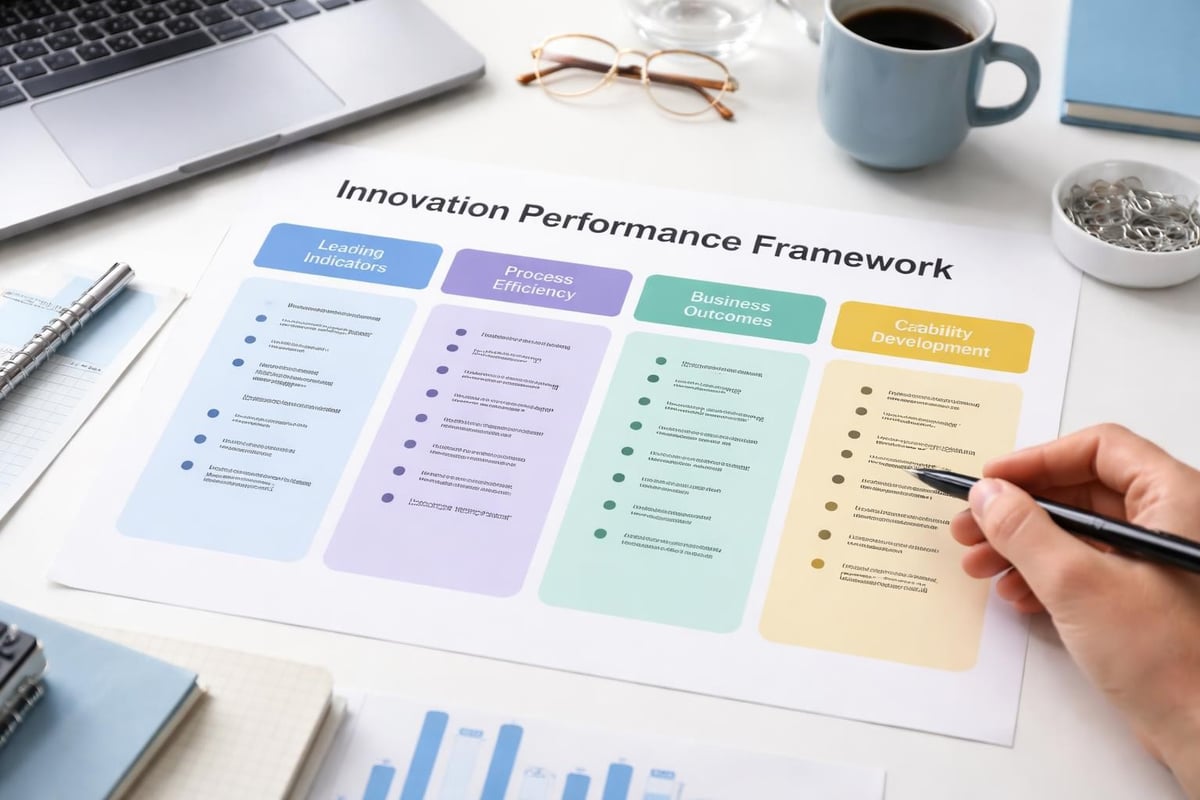
What gets measured gets managed, and innovation challenges often persist because organizations struggle to measure innovation effectively. Traditional financial metrics emphasize short-term returns and penalize the experimentation and learning required for breakthrough innovation. Organizations need balanced measurement systems that track:
- Leading indicators: Number of experiments conducted, diversity of ideas explored, speed of iteration cycles
- Process metrics: Time from concept to market, cost per experiment, resource utilization efficiency
- Outcome measures: Revenue from new products, customer satisfaction improvements, market position changes
- Capability development: Innovation skills acquired, cross-functional collaboration quality, organizational learning velocity
Leveraging Structured Innovation Challenges
Innovation challenges represent a specific methodology for addressing innovation obstacles by creating focused competitions that mobilize diverse participants around defined problem statements. Unlike hackathons that emphasize rapid prototyping over short timeframes, innovation challenges typically run for extended periods and emphasize solution viability and implementation potential alongside creativity.
Organizations like MIT Solve demonstrate how structured challenges can address complex global issues by clearly defining problems, establishing evaluation criteria, providing resources and mentorship to participants, and creating pathways to implementation for winning solutions. This approach proves particularly effective for organizations seeking to access external innovation ecosystems and perspectives beyond internal capabilities.
Key elements of successful innovation challenges include:
- Precisely defined problem statements that provide focus without constraining solution approaches
- Transparent evaluation criteria that balance novelty with feasibility and strategic fit
- Diverse participant recruitment that brings together complementary skills and perspectives
- Staged processes that allow iterative refinement and de-risking of promising concepts
- Commitment to implementation that ensures winning ideas receive resources needed to create impact
Internal Versus External Challenges
Organizations face strategic choices about whether to structure innovation challenges internally, externally, or through hybrid approaches. Internal challenges leverage existing organizational knowledge and ensure cultural fit but may lack the diversity of perspectives that external challenges provide. External challenges access broader innovation ecosystems but require more substantial coordination and may surface solutions difficult to integrate.
New product development and innovation initiatives increasingly combine both approaches, using internal challenges to engage employees in continuous improvement and adjacent innovation while deploying external challenges to identify breakthrough opportunities and emerging technologies that could reshape competitive landscapes.
Navigating Technology and Digital Transformation
Digital technologies simultaneously create new innovation possibilities and present formidable innovation challenges related to legacy systems, technical debt, and capability gaps. The acceleration of AI adoption in 2026 illustrates this duality perfectly: organizations recognize transformative potential but struggle with the hidden economics of AI including infrastructure requirements, talent scarcity, and integration complexity.
Infrastructure and Technical Debt
Many organizations operate on technology stacks assembled over decades, creating layers of systems that interact in complex and often poorly documented ways. This technical debt constrains innovation velocity by increasing the time and cost required to implement new capabilities, limiting data accessibility and quality, and creating dependencies that make experimentation risky.
Addressing infrastructure challenges requires strategic decisions about when to modernize existing systems versus building parallel capabilities. AI management consulting expertise helps organizations develop migration strategies that balance innovation urgency with operational stability, identifying opportunities to leverage cloud-native architectures, microservices patterns, and API-first designs that increase flexibility.
| Infrastructure Approach | Advantages | Challenges | Best For |
|---|---|---|---|
| Modernize Legacy | Addresses root causes, long-term efficiency | High cost, extended timelines, implementation risk | Stable organizations with capital |
| Build Parallel Systems | Enables experimentation, maintains stability | Potential redundancy, integration complexity | Organizations needing speed |
| Hybrid Strategy | Balances risk and reward, phased investment | Requires sophisticated management | Most mid-to-large organizations |
Capability Development and Skills
The pace of technological change creates persistent skills gaps as organizations need capabilities that didn't exist when current employees were educated. Innovation challenges related to talent manifest as difficulty hiring specialists, inability to evaluate emerging technologies, and resistance from employees concerned about obsolescence.
Progressive organizations address capability gaps through systematic leadership development consulting that builds innovation literacy across management layers, creating internal training programs that develop emerging skills, and establishing partnerships with educational institutions and technology providers that provide access to expertise and cutting-edge knowledge.

Strategic Innovation in Context
While innovation principles apply broadly, effective approaches must account for specific industry dynamics, organizational maturity, and competitive contexts. The International Telecommunication Union’s innovation challenges demonstrate how global development priorities shape innovation focus, particularly in addressing digital divides and leveraging technology for social impact.
Similarly, regional innovation ecosystems face distinct challenges requiring tailored strategies. Analysis of Europe’s innovation strategy reveals how established economies can become trapped in "mid-tech" positions, maintaining competitiveness in traditional industries while failing to lead in emerging technology categories. Breaking these patterns requires deliberate strategies to modernize legacy industries through digitalization while simultaneously building new capabilities in high-growth sectors.
Market-Specific Considerations
Innovation challenges vary significantly based on market characteristics, competitive intensity, and customer sophistication. Organizations serving rapidly evolving markets face constant pressure to innovate simply to maintain position, while those in stable markets may prioritize operational excellence with selective innovation in response to specific opportunities or threats.
Value proposition design becomes critical in this context, ensuring that innovation efforts focus on creating genuine customer value rather than pursuing novelty for its own sake. This requires deep customer insight, rigorous market validation, and willingness to abandon initiatives that fail to demonstrate product-market fit regardless of technical elegance or internal enthusiasm.
Building Sustainable Innovation Ecosystems
Long-term innovation success requires organizations to build ecosystems that extend beyond organizational boundaries to include customers, suppliers, research institutions, startups, and even competitors in selective contexts. These ecosystems provide access to diverse capabilities, distribute innovation risks and costs, and accelerate learning through exposure to varied perspectives and approaches.
Partnership and Collaboration Models
Organizations increasingly recognize they cannot innovate effectively in isolation. Strategic partnerships provide access to complementary capabilities, share development costs and risks, and accelerate time to market. However, partnerships introduce governance complexity, intellectual property considerations, and potential conflicts of interest that require careful management.
Effective partnership approaches include:
- Corporate venture capital investments that provide strategic insights and option value on emerging technologies
- Joint development agreements that combine complementary capabilities to address market opportunities beyond either partner's individual reach
- Innovation labs and accelerator programs that create structured engagement with startup ecosystems
- Open innovation platforms that crowdsource ideas and solutions from external communities
- Strategic alliances with research institutions that provide access to cutting-edge knowledge and talent pipelines
Creative innovation thrives in environments that facilitate unexpected combinations and cross-pollination of ideas. Organizations create these conditions by designing physical spaces that encourage interaction, implementing rotation programs that expose employees to different functions and perspectives, and hosting events that bring together diverse stakeholders around shared challenges.
Customer Co-Creation
Leading organizations increasingly involve customers directly in innovation processes through co-creation methodologies that transform users from passive recipients to active innovation partners. This approach addresses several innovation challenges simultaneously by ensuring customer relevance, validating assumptions early in development cycles, and building customer commitment that facilitates adoption.
Co-creation takes multiple forms depending on innovation type and customer sophistication. Consumer-focused organizations might implement online communities where users suggest and vote on features, while B2B organizations often establish advisory boards or sponsor customer pilot programs that provide early access to emerging capabilities in exchange for feedback and case study participation.
Implementation and Scaling Challenges
Even organizations that successfully generate promising innovations often struggle to scale them effectively. The transition from prototype to production, pilot to rollout, or small market to broad deployment introduces new innovation challenges related to manufacturing complexity, go-to-market execution, organizational change management, and resource competition with established businesses.
The Valley of Death
The "valley of death" describes the critical phase between proof of concept and commercial viability where many innovations fail due to insufficient investment, premature scaling, or inability to navigate organizational obstacles. Crossing this valley requires patient capital, executive sponsorship that protects initiatives from quarterly pressure, and systematic processes for validating market assumptions before committing to full-scale launches.
Organizations can structure innovation portfolios to manage this transition more effectively by establishing clear stage gates with defined criteria, creating dedicated scaling teams separate from core business operations, implementing agile funding mechanisms that provide capital incrementally based on demonstrated progress, and developing internal markets where business units can choose to adopt innovations that demonstrate value.
Successfully navigating innovation challenges requires systematic approaches that address cultural, operational, strategic, and technological dimensions simultaneously. Organizations that build sustainable innovation capabilities develop clear strategic direction, implement structured processes that balance creativity with discipline, create cultures that embrace intelligent experimentation, and establish ecosystems that extend innovation capacity beyond organizational boundaries. Six Paths Consulting partners with ambitious leaders to transform innovation challenges into systematic growth opportunities through AI-powered strategic innovation, helping organizations discover new markets, develop innovative business models, and build the internal capabilities needed to sustain competitive advantage in rapidly evolving markets.