
In 2026, the pace of market disruption continues to accelerate, making adaptability essential for any organization seeking long-term success. Leaders across industries are challenged to navigate uncertainty, anticipate change, and outpace competitors.
This essential guide delivers everything you need to know about market strategy consulting, equipping decision-makers with the insights necessary to thrive in a rapidly shifting landscape.
Inside, you'll discover the latest trends, proven methodologies, and transformative technologies redefining the consulting industry. We’ll break down step-by-step consulting processes, key partner selection criteria, and emerging trends you cannot afford to ignore.
Ready to gain a strategic edge? Start exploring and take the lead in shaping your organization’s future.
The Evolving Landscape of Market Strategy Consulting in 2026
Staying ahead in 2026 requires leaders to understand how market strategy consulting adapts to new challenges. The business environment is shifting rapidly, and consulting services are evolving to meet complex demands for growth, resilience, and innovation.

Key Market Forces Shaping Consulting Demand
Several powerful forces are reshaping the demand for market strategy consulting across industries. Global economic volatility means companies are under constant pressure to pivot and future-proof their business models. This uncertainty drives organizations to seek expert advice for navigating risks and seizing new opportunities.
Digital transformation is another key driver. Businesses must adopt omnichannel models to stay relevant, often requiring a full overhaul of customer engagement and operations. The focus on customer-centricity and personalization has never been greater, with clients seeking tailored solutions that address unique market segments.
Other forces include:
- Regulatory shifts, such as stricter ESG (Environmental, Social, Governance) requirements
- Growing competition from startups and disruptive entrants
- Accelerated M&A activity and industry consolidation
For example, retail and financial services are seeing consulting demand surge as they face digital disruption. In these sectors, market strategy consulting provides critical guidance to outpace competitors and adapt to shifting consumer behaviors.
New Expectations from Market Strategy Consultants
Clients in 2026 expect more from their market strategy consulting partners. They look for measurable return on investment, demanding data-driven recommendations rather than generic advice. The need for agile, adaptable, and scalable strategies is paramount as market conditions change at unprecedented speed.
Consulting firms are now valued for their deep industry expertise and ability to bring cross-functional skills to the table. Speed-to-market is a major priority, with clients seeking partners who can translate strategy into rapid execution.
Key client expectations include:
- End-to-end transformation support, not just planning
- Proven methodologies for quick wins and long-term growth
- Collaborative approaches that build internal capabilities
For instance, many consulting firms now embed their teams within client organizations, ensuring hands-on support from strategy through implementation. This shift reflects a broader trend in market strategy consulting toward delivering tangible, lasting results.
Industry Data and Trends
The market strategy consulting sector is experiencing robust growth. According to recent industry reports, the field is projected to expand at a CAGR of 8% through 2026. This surge is fueled by the rising need for business model reinvention, with 70% of CEOs naming it a top strategic priority.
The consulting delivery model is also evolving. Hybrid approaches, blending on-site and remote consulting, are becoming standard. This flexibility allows consulting firms to serve clients more efficiently, leveraging global talent and advanced digital tools.
Another major trend is the integration of technology and analytics into every stage of consulting. Firms are using AI-powered platforms for scenario planning, predictive modeling, and real-time monitoring. For a comprehensive overview of these shifts and more, see the Top Consulting Industry Trends 2026.
Ultimately, market strategy consulting in 2026 is defined by its agility, data-driven methodologies, and relentless focus on measurable business outcomes. Companies that embrace these new dynamics will be best positioned to thrive in a turbulent business landscape.
Core Methodologies and Frameworks in Modern Market Strategy Consulting
In 2026, market strategy consulting demands a blend of tried-and-true frameworks and innovative methodologies. Firms must adapt their approaches to address rapid market change, digital disruption, and evolving client expectations. Understanding the core methodologies is essential for leaders seeking sustainable growth.
Foundational Strategy Frameworks
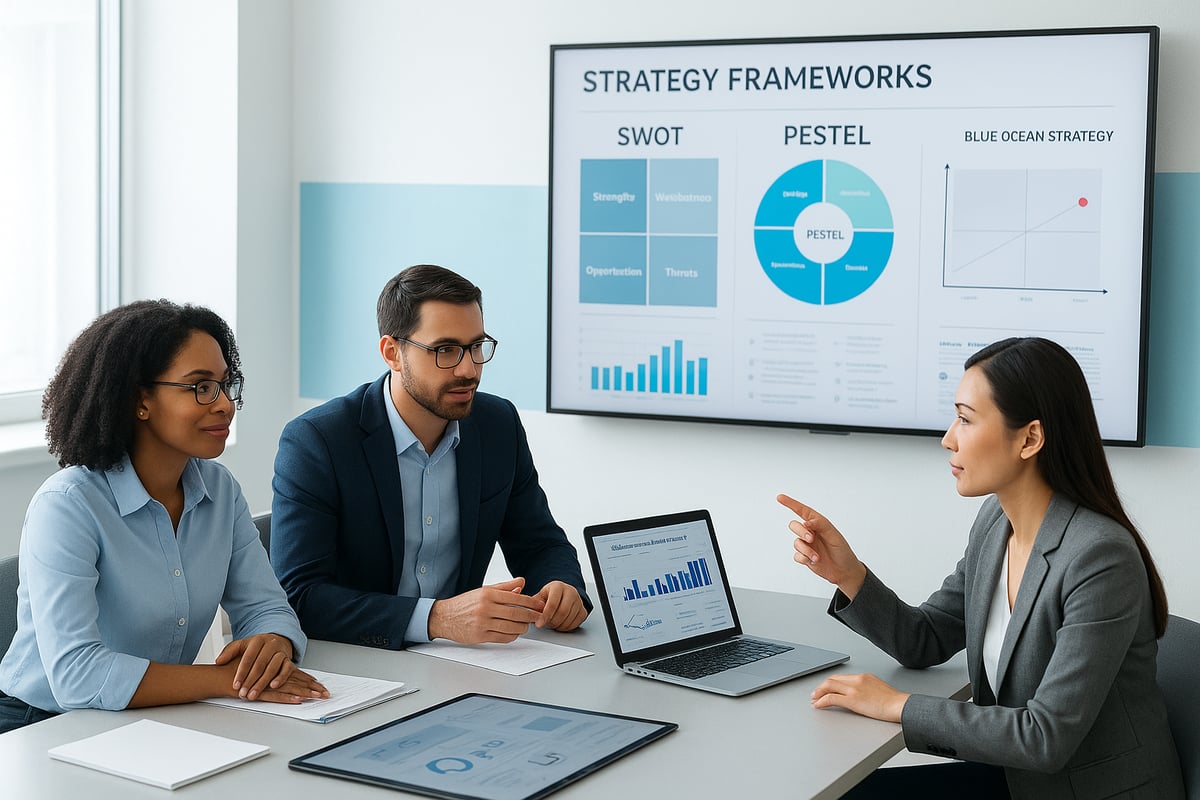
At the heart of market strategy consulting are foundational frameworks that provide structure for strategic analysis. Tools like SWOT, PESTEL, and Porter’s Five Forces remain indispensable for evaluating a company’s position and identifying external opportunities or threats.
Blue Ocean Strategy has gained renewed relevance, enabling organizations to uncover uncontested market spaces and avoid saturated competition. For leaders interested in leveraging this approach, Blue Ocean Strategy Consulting offers a proven pathway.
Customer journey mapping and experience design have also become standard, ensuring that strategies are grounded in real customer needs and behaviors.
| Framework | Purpose | Typical Use Case |
|---|---|---|
| SWOT | Internal & external analysis | Organizational assessment |
| PESTEL | Macro-environmental review | Market entry and risk analysis |
| Porter’s Five Forces | Industry competitiveness | Sector evaluation |
| Blue Ocean Strategy | Uncontested market creation | Innovation and growth planning |
| Customer Journey Mapping | End-to-end customer experience | Personalization and CX strategy |
Market strategy consulting firms tailor these frameworks to fit unique client contexts, ensuring actionable insights.
Data-Driven and AI-Enabled Approaches
Modern market strategy consulting increasingly depends on advanced analytics and AI. Consultants leverage big data for precise market sizing, segmentation, and trend identification. AI-powered scenario planning supports clients in navigating uncertainty by modeling potential market shifts.
Machine learning tools help forecast demand and reveal deep customer insights, allowing strategies to be both proactive and responsive. For example, AI can identify emerging consumer behaviors much faster than traditional research methods.
By integrating technology into every stage, market strategy consulting delivers recommendations that are both evidence-based and future-ready.
Agile and Lean Strategic Planning
Agility is a defining feature of market strategy consulting in 2026. Firms are adopting agile methodologies, enabling iterative strategy development and rapid response to change. This approach breaks large projects into manageable sprints, delivering incremental value.
Lean Startup principles promote quick market testing, validation, and learning. Design Thinking ensures that innovation remains customer-centric, fostering creative solutions to complex challenges.
Consulting teams often guide clients through rapid prototyping and MVP launches, helping organizations test new ideas while minimizing risk. This agile mindset keeps market strategy consulting relevant in fast-moving industries.
ESG and Sustainability Integration
Sustainability is now integral to market strategy consulting. Consultants embed ESG (Environmental, Social, Governance) factors into every phase of strategy development, aligning business goals with broader societal expectations.
Frameworks for measuring and reporting sustainability impacts are standard. Consulting projects frequently focus on green transformation, especially in sectors like manufacturing where environmental impact is significant.
By making ESG a core pillar, market strategy consulting equips organizations to meet regulatory demands and unlock new value streams. This future-focused approach ensures long-term success and resilience.
Step-by-Step Process: How Market Strategy Consulting Engagements Work in 2026
Navigating market strategy consulting in 2026 demands a structured, tech-enabled approach. Each engagement follows a clear series of steps, ensuring clients receive tailored guidance, actionable strategies, and measurable outcomes. Let’s break down the modern consulting process and see how industry leaders are driving real transformation through every phase.

1. Discovery and Market Assessment
Every market strategy consulting engagement starts with discovery. Consultants conduct stakeholder interviews and alignment sessions to clarify the client’s vision, challenges, and goals. This stage leverages big data and AI tools to analyze current market dynamics, customer segments, and competitor moves.
Modern consulting teams use real-time dashboards to track market shifts, regulatory changes, and industry disruptors. By benchmarking against top performers, consultants identify immediate risks and opportunities. For example, a retail client might use AI-driven competitor analysis to spot emerging digital trends and plan a proactive response.
This in-depth assessment ensures the market strategy consulting process is grounded in accurate, up-to-date intelligence. It sets the stage for targeted, high-impact recommendations.
2. Strategic Opportunity Identification
With insights from the assessment, consultants shift to identifying growth opportunities. This phase of market strategy consulting relies on white space analysis, scenario planning, and advanced forecasting to uncover untapped markets or new revenue streams.
Teams evaluate each opportunity for impact and feasibility, using data-driven scoring models. For instance, consultants may help a financial services firm prioritize digital channel expansion after modeling consumer adoption rates. Scenario planning enables clients to visualize potential futures and prepare for market shifts.
These steps transform strategic ideas into actionable opportunities, giving organizations a clear path forward in a competitive environment.
3. Solution Design and Roadmapping
Solution design is where market strategy consulting becomes tangible. Consultants facilitate co-creation workshops with client teams, drawing on industry best practices and proven frameworks. Together, they develop customized go-to-market strategies and transformation roadmaps, detailing milestones, resources, and success metrics.
Actionable playbooks are built for each key initiative, whether it’s omnichannel expansion or product innovation. For example, a manufacturing client might partner with consultants to design a phased ESG transformation plan, aligning sustainability goals with commercial objectives.
For a deeper look at how tailored strategies are developed and executed, explore Strategy and Transformation Consulting, which outlines effective approaches for bridging strategy and implementation.
This collaborative approach ensures that the market strategy consulting process delivers results that are both visionary and practical.
4. Implementation Support and Change Management
Execution is critical in market strategy consulting. Leading firms embed consultants within client teams, providing hands-on support throughout rollout. Digital platforms enable transparent project management and real-time performance tracking, keeping all stakeholders aligned.
Change management programs are introduced to build internal capabilities and foster adoption. Consultants often train client teams on new digital tools, processes, or organizational structures. For example, a retail company undergoing digital transformation might receive ongoing coaching to ensure seamless integration of new e-commerce platforms.
This support transforms strategic plans into operational reality, minimizing disruption and accelerating results.
5. Measurement, Optimization, and Continuous Improvement
The final step in market strategy consulting is about driving ongoing value. Consultants define key performance indicators and set up real-time monitoring systems to track outcomes. Regular strategy reviews, often quarterly, enable organizations to adapt quickly to evolving market conditions.
Continuous improvement is achieved through agile pivots based on feedback and performance data. For instance, a client in the financial sector might adjust its digital strategy after analyzing customer engagement metrics, ensuring sustained growth.
By embedding measurement and optimization into every engagement, market strategy consulting delivers not just plans, but long-term, measurable impact.
The Role of Technology and AI in Market Strategy Consulting
In 2026, technology is at the core of market strategy consulting, shaping how firms deliver value and drive transformation. The integration of AI, automation, and digital platforms is redefining what clients expect from consultants. To remain competitive, organizations must understand how these innovations impact every phase of market strategy consulting.

Digital Transformation as a Consulting Imperative
Digital transformation is a non-negotiable priority for organizations seeking to lead in their industries. In market strategy consulting, digital maturity is now a key determinant of competitive advantage. Consultants play a crucial role in assessing a client's digital readiness, identifying capability gaps, and mapping out the transformation journey.
Consulting teams often guide clients through cloud migrations, omnichannel integration, and the adoption of digital-first business models. The ability to accelerate digital adoption means faster innovation cycles and improved customer experiences. For many, digital transformation is not just about technology, but about reimagining the business model itself.
AI-Driven Insights and Automation
Artificial intelligence is revolutionizing market strategy consulting by enabling faster, deeper insights. Automated data collection and advanced analytics tools help consultants uncover opportunities and threats in real time. AI-powered competitor intelligence platforms scan global markets, track trends, and identify emerging risks.
Machine learning models are used to predict customer churn, forecast demand, and personalize recommendations. These capabilities allow consulting firms to deliver more precise, actionable strategies. For a closer look at how technology and consulting intersect, see Technology and Consulting Insights.
Technology Tools and Platforms
Modern market strategy consulting relies on a robust stack of technology tools. Cloud-based collaboration platforms support seamless teamwork across geographies. Analytics dashboards provide real-time visibility into performance metrics and competitor movements.
Consultants integrate CRM, ERP, and marketing automation systems to ensure strategy execution aligns with business objectives. Real-time dashboards help clients make data-driven decisions quickly. These tools not only boost efficiency but also enhance transparency and accountability throughout the engagement.
Cybersecurity and Data Ethics
With the rise of digital strategies, cybersecurity and data ethics are critical in market strategy consulting. Consultants must prioritize data privacy, regulatory compliance, and secure digital transformation. They advise clients on best practices for protecting sensitive information and meeting evolving regulations.
Effective consulting engagements include risk assessments, robust security frameworks, and ongoing monitoring. By embedding data ethics into every project, consultants help clients build trust with stakeholders and avoid costly breaches or compliance failures.
Case Examples and Industry Data
By 2026, 60% of market strategy consulting projects utilize AI tools to drive decision making. For example, a retail client using AI-driven segmentation achieved a 25% increase in campaign ROI. These results highlight the measurable impact of technology and AI on consulting outcomes.
Industry data shows that firms leveraging digital and AI-powered approaches deliver faster, more sustainable growth for clients. As the market evolves, organizations that embrace these innovations in market strategy consulting will be best positioned for long-term success.
Selecting the Right Market Strategy Consulting Partner
Choosing the right partner for market strategy consulting is a crucial decision for any organization aiming to stay competitive in 2026. The selection process requires a careful evaluation of expertise, methodology, and alignment with your business goals. As the market evolves, so do the qualities you should prioritize in a consulting partner.
Key Criteria for Consultant Selection
When evaluating market strategy consulting partners, several criteria should be at the forefront. Industry expertise is essential, as deep knowledge ensures tailored recommendations. Review each firm’s track record for delivering measurable results in your sector.
Methodological approach also matters. Some firms excel with traditional frameworks, while others leverage AI-powered innovation. Assess their ability to collaborate with your internal teams and adapt to your preferred working style.
Flexibility is another differentiator. Consider if the firm offers project-based, retainer, or hybrid engagement models that fit your needs. For example, a boutique firm may provide specialized attention, while a global consultancy offers a broader resource pool.
| Criteria | Boutique Firm | Global Consulting Firm |
|---|---|---|
| Industry Expertise | Deep, niche focus | Broad, multi-sector |
| Flexibility | Highly adaptable | Standardized processes |
| Resource Availability | Limited | Extensive |
Selecting a market strategy consulting partner with the right mix of skills and flexibility can set the stage for long-term success.
Evaluating Value and ROI
Assessing the value delivered by a market strategy consulting partner goes beyond the initial price tag. Look for transparent pricing structures and a clear explanation of how fees relate to outcomes. Many top firms now offer value-based or performance-linked fees to align incentives.
Review case studies and client testimonials to verify that the consultant has delivered measurable impact in similar projects. Reference checks can reveal insights into the firm’s client relationships and long-term support.
A focus on return on investment is becoming a non-negotiable standard. Firms that share data on project results, such as revenue growth or operational improvements, demonstrate accountability. As the Strategic Consulting Services Market Growth report highlights, digital transformation and agility are top drivers of ROI in modern consulting partnerships.
Ultimately, the right market strategy consulting partner should provide a clear path to measurable business value.
Red Flags and Common Pitfalls
While many firms offer compelling proposals, several warning signs can signal potential issues in market strategy consulting engagements. Overpromising on outcomes without a solid execution plan is a major red flag.
A lack of industry-specific knowledge often leads to generic strategies that fail to deliver results. Poor change management and inadequate training can undermine even the best-designed solutions, resulting in failed transformation efforts.
Common pitfalls include unclear communication, limited knowledge transfer, and insufficient post-implementation support. To avoid these, ensure the consulting team has a structured approach to change management and a commitment to building your internal capabilities.
Conduct thorough due diligence and clarify expectations up front. Recognizing these pitfalls early can help your organization maximize the value of market strategy consulting.
Six Paths Consulting: AI-Powered Strategic Innovation
Six Paths Consulting stands out in the market strategy consulting space for its focus on AI-powered strategic innovation. The firm combines advanced methodologies with deep industry expertise, supporting clients from strategy formulation through to implementation.
Their services include business model innovation, customer-centric product development, and internal capability building. Six Paths Consulting is trusted by leading brands for delivering measurable results and sustainable growth.
A key differentiator is the integration of AI and proven frameworks, such as Blue Ocean Strategy, Design Thinking, and Lean Startup. To learn more about their approach to fueling innovation and growth, visit their Innovation Strategy Consulting page.
For organizations seeking future-proof solutions, Six Paths Consulting offers tailored support designed to unlock new market opportunities and drive lasting transformation.
Future Trends and Opportunities in Market Strategy Consulting
The future of market strategy consulting is being shaped by rapid technological change, shifting client priorities, and emerging business models. Leaders who stay ahead of these trends will position their organizations for sustained growth and resilience.
The Rise of Hyper-Personalization and Customer Experience
Market strategy consulting is increasingly focused on hyper-personalization and elevating the customer experience. Today’s clients expect tailored solutions that go beyond generic strategies, placing the customer at the center of every decision.
Consultants use advanced analytics and AI-driven tools to create individualized product recommendations and design seamless customer journeys. Firms that excel in this area help clients differentiate themselves in crowded markets.
Personalization is now a core driver of value in market strategy consulting. The ability to deliver unique, data-driven experiences has become a critical competitive advantage.
Sustainability and ESG as Core Strategic Drivers
Sustainability and ESG considerations are moving from the periphery to the heart of market strategy consulting. Clients no longer view ESG as a compliance box to check, but as a source of long-term value and differentiation.
Consultants are guiding organizations to embed ESG into their market strategies. This includes developing circular economy models, measuring sustainability impacts, and aligning with evolving regulatory requirements.
The integration of ESG principles is not just about risk mitigation. It opens new market opportunities and strengthens brand reputation, making it a key pillar of modern market strategy consulting.
Expansion of AI and Automation in Consulting Delivery
AI and automation are reshaping how market strategy consulting services are delivered. Automated research, analysis, and reporting are becoming standard, enabling consultants to deliver faster and deeper insights.
Virtual consulting and remote engagements are now the norm. AI-driven virtual workshops and scenario planning tools streamline collaboration and accelerate decision-making. According to recent reports, the AI consulting services market is set to surge, driven by enterprise adoption and the need for custom strategies.
As these technologies mature, market strategy consulting will continue to evolve, offering clients even greater value and agility.
Industry Convergence and New Market Entrants
Industry boundaries are blurring, and this convergence is creating new opportunities for market strategy consulting. Technology companies are entering sectors like healthcare and finance, while traditional players are rethinking their roles in the value chain.
Consultants are helping clients identify and seize cross-industry opportunities. This requires a multidisciplinary approach, blending sector expertise with innovative thinking.
The influx of new market entrants intensifies competition and demands agile, forward-looking strategies. Market strategy consulting is essential for navigating this complex landscape.
Evolving Talent Models and Consulting Skills
The talent landscape in market strategy consulting is undergoing significant transformation. Firms now seek consultants with hybrid skill sets that combine analytics, technology, and business acumen.
Ongoing upskilling and reskilling are priorities, as the pace of change accelerates. Consulting teams must adapt quickly to new tools, methodologies, and client expectations.
This evolution ensures that market strategy consulting remains relevant and responsive. By cultivating diverse expertise, firms can deliver more impactful solutions and drive innovation.
Data Points and Predictions
Industry data points to robust growth for market strategy consulting. By 2026, 80 percent of projects will involve digital or AI components, reflecting the centrality of technology in consulting engagements.
| Metric | 2026 Projection |
|---|---|
| Consulting market size | $200 billion globally |
| Projects with digital/AI components | 80% |
| Clients expecting implementation support | 75% |
These trends underscore the critical role of market strategy consulting in driving transformation. Clients are increasingly co-creating new business models with consultants, leveraging these partnerships for ongoing innovation and growth.
If you're looking to turn insight into action and stay ahead in this rapidly evolving market, now is the perfect time to take the next step. We’ve explored how AI and strategic innovation are reshaping business growth, and you don’t have to tackle these challenges alone. At Six Paths Consulting, we help ambitious leaders like you uncover new opportunities and build the capabilities needed for lasting success. Ready to discover where your biggest opportunities lie and how to capitalize on them? Let’s start with a conversation—Book a Free Opportunity Assessment and see what’s possible for your business.