
In 2026, organizations face a rapidly shifting business landscape, where complexity and uncertainty are the new normal. The demand for process consulting is rising as leaders seek expert guidance to adapt, innovate, and stay ahead. This essential guide delivers a clear roadmap for process consulting success, tackling emerging challenges and highlighting proven best practices. Inside, you will discover core concepts, industry trends, a practical consulting framework, vital skills, and technology’s growing influence. Ready to transform your approach and achieve sustainable results? Master process consulting for a future-ready organization.
Understanding Process Consulting in 2026
Process consulting has become a critical driver for organizational success in 2026. As businesses face mounting complexity, the need for specialized expertise to optimize and innovate processes is at an all-time high. The discipline offers a pathway to sustainable change, digital readiness, and a strong competitive edge.

Defining Process Consulting: Scope and Value
Process consulting is a collaborative approach where consultants partner with organizations to analyze, redesign, and improve business processes. Unlike expert or solution consulting, which often prescribes specific answers, process consulting focuses on facilitating client-driven solutions and building internal capabilities. The core value proposition lies in enabling organizations to optimize workflows, foster innovation, and future-proof their operations.
Key roles in process consulting include:
- Facilitator: guiding teams through problem-solving.
- Advisor: providing insights based on best practices.
- Change agent: driving transformation and adoption.
- Capability builder: empowering internal teams.
For example, process consulting in manufacturing might target leaner production lines, while in healthcare, it could drive digital transformation for patient care. The market is robust, with process consulting projected to grow by 8% CAGR through 2026, according to industry reports. For more on evolving trends, see Process Excellence Trends for 2026.
The Evolving Role of Process Consultants
The role of process consulting professionals is transforming rapidly. Engagements are shifting from transactional, one-off projects to long-term, transformational partnerships. Consultants increasingly co-create solutions with client teams, ensuring knowledge transfer and sustainable results.
Cross-functional expertise has become essential. Modern process consulting often requires proficiency in IT, operations, HR, and compliance. For instance, Agile transformation projects demand consultants who can bridge technical and organizational gaps. According to consulting surveys, 67% of organizations now prefer consultants who train and empower internal teams, reflecting a shift toward collaborative, capability-focused engagements.
Process consulting success now hinges on adaptability, the ability to manage complex stakeholder dynamics, and the willingness to embrace continuous learning.
Key Benefits for Organizations
Organizations that invest in process consulting realize measurable improvements across multiple dimensions. These include:
- Enhanced efficiency and operational agility.
- Greater customer satisfaction through streamlined workflows.
- Cost reduction and effective risk mitigation.
- Increased capacity for innovation and digital transformation.
A notable case is the implementation of ServiceNow® to streamline service management, leading to faster response times and better customer experiences. Process consulting also delivers a competitive advantage by embedding process excellence at the heart of the organization. As companies face digital disruption, those leveraging process consulting are better positioned to adapt and thrive in 2026.
Emerging Trends and Challenges in Process Consulting
In 2026, process consulting faces a rapidly evolving landscape, driven by technological innovation, shifting methodologies, and new organizational demands. Staying ahead means understanding the most significant trends and preparing for the unique challenges they bring.

Digital Transformation and Automation
Digital transformation is reshaping process consulting at its core. The integration of AI, robotic process automation (RPA), and cloud platforms is now standard, with 74% of consulting projects in 2025 involving automation. Tools like ServiceNow® enable workflow automation and end-to-end process visibility. This shift requires consultants to adapt methodologies and deliverables, ensuring value at every stage. For a broader view of industry shifts, see the Top 10 Consulting Industry Trends in 2026. Embracing automation is no longer optional, but essential for process consulting success.
Agile, Lean, and Hybrid Methodologies
Process consulting is moving away from rigid frameworks to adopt Agile, Lean, and hybrid approaches. These methods offer faster time-to-value, adaptability, and ongoing improvement. A common practice is combining Lean Six Sigma with Agile project management to create flexible, results-oriented solutions. This blend enables organizations to respond quickly to market changes without losing sight of quality or efficiency. Consultants must master these methodologies to deliver competitive outcomes in process consulting.
Data-Driven Decision Making
Data analytics is central to modern process consulting. Consultants use real-time dashboards and key performance indicators (KPIs) to guide process improvements. Digital twins and advanced analytics provide deeper insights, such as optimizing manufacturing operations. By leveraging data, consultants can identify bottlenecks, track progress, and demonstrate tangible results. Data-driven process consulting ensures that recommendations are both actionable and measurable, leading to sustained business value.
Change Management and Cultural Barriers
One of the greatest challenges in process consulting is overcoming resistance to change. Even the best-designed solutions can fail without stakeholder buy-in and effective communication. Statistics reveal that 60% of unsuccessful process initiatives cite poor change management as the root cause. Engaging stakeholders early, maintaining transparency, and building trust are vital. Consultants must balance technical expertise with strong interpersonal skills to navigate organizational culture and drive lasting change in process consulting projects.
Regulatory and Security Considerations
As regulations and data privacy requirements tighten, process consulting must address compliance across industries. Healthcare, for example, demands strict adherence to standards like HIPAA. Consultants help organizations implement secure, compliant processes while maintaining efficiency. Security tools and audit trails play a crucial role in ensuring data integrity and regulatory alignment. Adapting process consulting strategies to meet these requirements is essential for minimizing risk and maintaining client trust.
Talent and Capability Gaps
The demand for skilled process consulting professionals continues to outpace supply. Organizations seek consultants with both technical and soft skills, including digital literacy and change leadership. In response, 55% of firms are investing in ongoing training and upskilling programs. The ability to blend industry expertise with adaptability is now a key differentiator. Addressing talent gaps is critical for delivering high-impact process consulting outcomes and building sustainable client relationships.
The Step-by-Step Process Consulting Framework for 2026
Navigating process consulting in 2026 requires a structured, adaptable approach. Organizations expect measurable results, seamless collaboration, and continuous improvement. By following a proven framework, consultants can deliver sustainable value and help clients thrive amid rapid change.

Step 1: Discovery and Assessment
The process consulting journey starts with a comprehensive discovery phase. Consultants engage stakeholders through interviews, workshops, and surveys to understand current workflows and pain points.
Key activities include:
- Mapping existing processes using value stream mapping or SIPOC diagrams.
- Leveraging digital process mining tools to uncover inefficiencies.
- Identifying high-level goals and constraints.
For example, a retail supply chain assessment might reveal bottlenecks in inventory management or fulfillment. Using management consulting tools and frameworks can streamline this phase, ensuring data-driven insights and structured analysis.
By investing time in thorough discovery, process consulting professionals set the stage for targeted improvements and stakeholder alignment.
Step 2: Diagnosis and Opportunity Identification
Once the current state is mapped, the next phase is diagnosing root causes and pinpointing opportunities. This step relies heavily on analytical techniques such as the 5 Whys or fishbone diagrams.
Consultants benchmark processes against industry standards and best practices. They assess where the greatest value lies by prioritizing issues based on impact and feasibility.
A critical insight: 80% of successful process consulting projects begin with robust diagnostics, according to recent industry surveys. This data-driven approach ensures that recommendations address real business needs, not just symptoms.
Ultimately, this phase positions process consulting teams to deliver high-impact solutions tailored to the client’s unique context.
Step 3: Solution Design and Co-Creation
With clear priorities established, the focus shifts to designing and co-creating solutions. Consultants facilitate ideation workshops with cross-functional client teams, encouraging creative problem-solving and buy-in.
Key aspects include:
- Co-developing process changes that integrate digital tools and automation.
- Ensuring solutions align with organization goals and culture.
- Using prototyping and scenario planning to test concepts.
For instance, a process consulting team might work with IT and marketing to redesign a customer onboarding journey, blending automation with human touchpoints.
Co-creation fosters ownership, making change adoption smoother and more sustainable.
Step 4: Implementation and Change Management
Implementing solutions is where process consulting delivers visible results. This phase involves detailed project planning, timeline development, and resource allocation.
Critical elements:
- Communicating changes effectively to all stakeholders.
- Providing targeted training and support for client teams.
- Applying structured change management techniques to drive adoption.
Projects that incorporate formal change management are six times more likely to succeed. Process consulting experts guide organizations through this transition, minimizing disruption and maximizing engagement.
By focusing on both technical execution and people factors, consultants enable lasting transformation.
Step 5: Measurement and Continuous Improvement
No process consulting engagement is complete without measuring outcomes and fostering continuous improvement. Consultants establish key performance indicators (KPIs) and set up real-time dashboards to track progress.
Best practices include:
- Conducting regular review cycles and feedback sessions.
- Scaling successful pilots across departments or business units.
- Performing ongoing process audits to sustain gains.
A financial services firm, for example, might institutionalize quarterly process audits to ensure compliance and efficiency. This ongoing focus helps organizations adapt and thrive in a rapidly evolving landscape.
Common Pitfalls and How to Avoid Them
Even with a robust framework, process consulting projects can face challenges. Common pitfalls include overengineering solutions, underestimating cultural resistance, and neglecting post-implementation support.
To avoid these traps:
- Keep solutions practical and aligned with business realities.
- Engage stakeholders early and often to address concerns.
- Provide sustained support and knowledge transfer after go-live.
Learning from both failed and successful projects is essential. By maintaining vigilance and flexibility, process consulting professionals can navigate obstacles and deliver consistent, measurable value.
Essential Skills and Competencies for Process Consultants
Success in process consulting requires a blend of technical expertise, interpersonal finesse, and adaptability. In 2026, organizations seek consultants who can navigate complexity and deliver measurable results. Mastering these essential skills positions professionals to drive transformation and create lasting value.
Technical and Analytical Skills
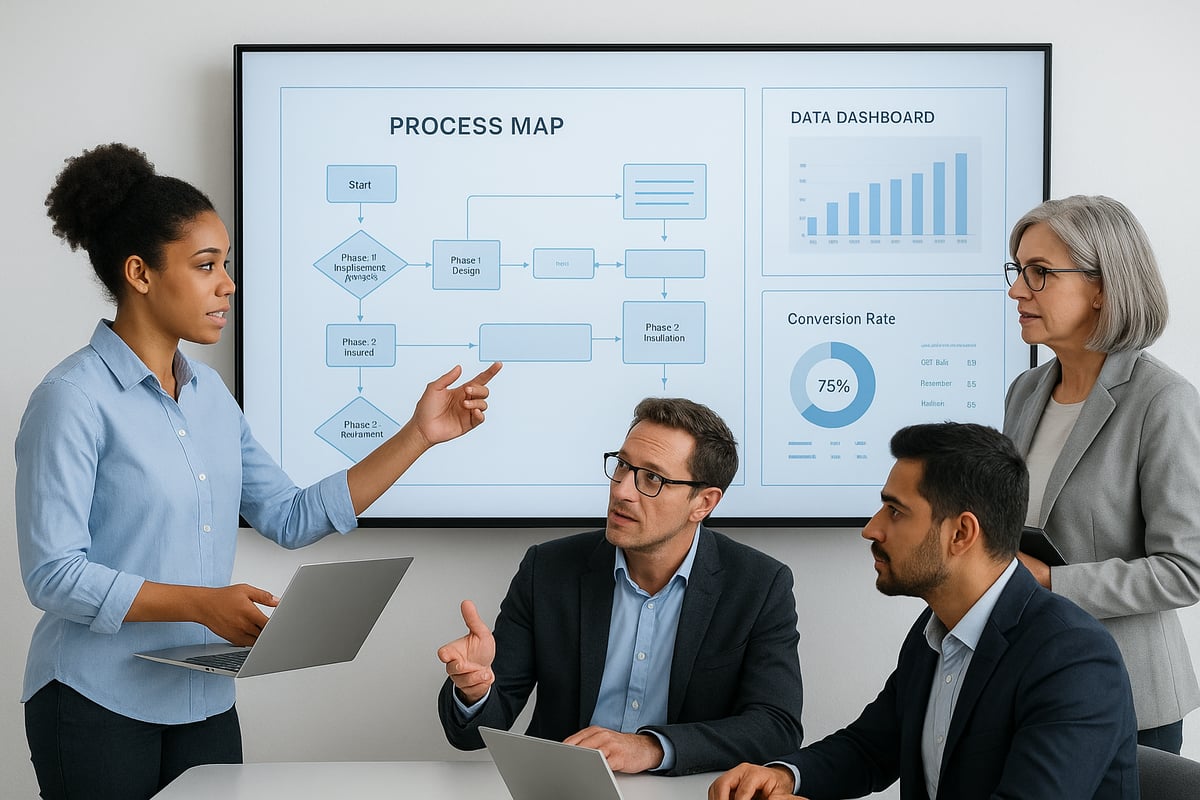
Process consulting begins with a solid foundation in technical and analytical abilities. Consultants must map processes, analyze data, and spot inefficiencies using tools like SIPOC diagrams and process mining software.
Familiarity with leading platforms is essential. ServiceNow, SAP, and RPA tools help uncover process gaps and automate repetitive tasks. For example, a consultant might use process mining software to visualize workflow bottlenecks in a financial services firm.
Key technical skills include:
- Process mapping and documentation
- Data analysis and dashboard creation
- Digital literacy for cloud-based platforms
A consultant’s capacity to leverage these skills is critical for process consulting engagements that require precision and innovation.
Facilitation and Communication
Effective facilitation and communication are at the heart of process consulting. Consultants must lead workshops, conduct interviews, and run focus groups to uncover root causes and align stakeholders.
Translating technical findings into actionable insights is vital. Strong communicators bridge gaps between IT, operations, and executive teams, ensuring everyone understands the process consulting objectives.
Facilitation techniques include:
- Designing interactive workshops
- Active listening and questioning
- Synthesizing complex information
Building consensus through clear communication accelerates project momentum and fosters a culture of collaboration.
Change Leadership and Influence
Driving transformation requires strong change leadership skills. Process consulting experts guide organizations through uncertainty, helping them adapt to new ways of working.
Consultants act as coaches and mentors, empowering client teams to own and sustain change. Facilitating Agile ceremonies or coaching leaders on stakeholder engagement are common responsibilities.
Change leadership is closely tied to successful outcomes. Partnering with change management companies provides valuable frameworks and best practices for overcoming resistance and embedding new behaviors.
Influence is built on trust, credibility, and the ability to articulate the value of process consulting initiatives.
Industry and Functional Expertise
Deep industry and functional knowledge sets top process consulting professionals apart. Understanding sector-specific processes, regulations, and best practices enables tailored solutions.
For instance, a consultant working in healthcare must grasp HIPAA compliance, while those in manufacturing need to know lean production methods. This expertise ensures recommendations are relevant and practical.
Key benefits of industry expertise:
- Faster diagnosis of process issues
- Customized improvement strategies
- Stronger credibility with client teams
Combining industry insight with process consulting methodology drives impactful results.
Continuous Learning and Adaptability
The pace of change in process consulting demands ongoing learning and adaptability. Consultants must stay current with emerging technologies, methodologies, and industry trends.
Professional development through certifications, training, and peer learning is a must. In 2026, 72 percent of process consultants pursue annual upskilling to maintain their competitive edge.
Adaptability also means embracing new tools, shifting client expectations, and evolving project scopes. The most successful process consulting professionals thrive in dynamic environments and are always ready to innovate.
Emotional Intelligence and Cultural Awareness
Emotional intelligence and cultural awareness are crucial for building lasting client relationships in process consulting. Navigating organizational politics and diverse cultures requires empathy, patience, and strong interpersonal skills.
Consultants who understand team dynamics and can read subtle cues foster trust and open dialogue. This awareness is especially important when implementing change or mediating conflicts.
Essential competencies include:
- Active empathy and listening
- Respect for diverse perspectives
- Conflict resolution skills
Cultivating these attributes enables process consulting professionals to create safe environments for transformation and ensure sustainable results.
Leveraging Technology and Tools for Process Consulting Success
Embracing technology is now central to process consulting success. As organizations digitalize, consultants must master a diverse toolkit to drive efficiency and innovation. The right technology not only enables seamless process analysis but also ensures continuous improvement and resilience.

Digital Platforms and Workflow Automation
Digital platforms are the backbone of process consulting in 2026. Tools like ServiceNow®, cloud-based BPM, and RPA software streamline tasks, automate workflows, and provide real-time visibility across operations.
Consultants leverage these platforms to map, analyze, and optimize business processes efficiently. For example, ServiceNow® enables end-to-end process transparency, helping organizations identify gaps faster.
Choosing the right automation and innovation toolkit is essential. Explore innovation tools for consultants to discover methodologies and platforms that fuel impactful process consulting projects.
Data Analytics and Visualization
Data analytics is transforming process consulting by making decision-making more objective. Dashboards and visualization platforms such as Power BI allow consultants to track KPIs, monitor performance, and quickly spot trends.
With real-time reporting, organizations can measure the impact of process changes instantly. Consultants use these insights to adjust strategies, ensuring every process consulting initiative is data-backed and results-oriented.
Collaborative and Remote Consulting Tools
The shift to hybrid and remote work has redefined collaboration in process consulting. Virtual whiteboards, secure project management platforms, and online training modules enable teams to work together seamlessly, regardless of location.
These tools support remote workshops, real-time feedback, and digital process mapping. By integrating collaborative technologies, consultants deliver consistent value and maintain engagement throughout the process consulting lifecycle.
AI and Machine Learning Applications
AI and machine learning are advancing process consulting by uncovering deeper insights and automating complex analyses. Predictive analytics tools anticipate bottlenecks, while AI-driven root cause analysis accelerates problem-solving, particularly in industries like manufacturing.
As the tech consulting market to surpass $400bn in 2026, demand for consultants skilled in AI-driven process optimization is growing rapidly. Integrating machine learning ensures process consulting solutions remain future-ready.
Security and Compliance Technologies
Security and compliance are non-negotiable in process consulting. Consultants rely on advanced tools to protect sensitive data, ensure privacy, and track compliance with regulations such as HIPAA or GDPR.
These technologies provide audit trails and secure collaboration spaces, reducing risk and supporting regulatory requirements. By embedding robust security measures, consultants safeguard both client data and the integrity of process consulting engagements.
Proven Strategies for Sustainable Process Consulting Results
Organizations looking to achieve sustainable gains from process consulting must go beyond quick wins. Success depends on embedding best practices, aligning with business goals, and adapting to change. The following strategies offer a practical roadmap for lasting impact in 2026.
Embedding Continuous Improvement Culture
A culture of continuous improvement is the cornerstone of process consulting success. Consultants help clients establish internal teams that champion process excellence, enabling organizations to adapt and thrive.
Key steps to build this culture include:
- Training staff in Lean and Agile methodologies
- Setting up regular improvement workshops
- Encouraging idea sharing at all levels
By making process consulting a routine part of business operations, companies empower employees to identify gaps and implement solutions proactively. This approach ensures that improvements endure beyond the initial engagement. A strong culture not only drives efficiency, it also fosters innovation and resilience in the face of change.
Measuring and Demonstrating ROI
Clients increasingly demand clear evidence that process consulting delivers tangible results. Measuring return on investment requires linking process changes to business outcomes such as cost savings, revenue growth, or improved customer satisfaction.
Consultants use a variety of tools to track impact:
- Pre- and post-implementation KPIs
- Dashboards that visualize progress in real time
- Periodic process audits to assess sustainability
Incorporating these metrics from the outset enables consultants to adjust their approach and maximize value. According to industry data, 80% of clients expect transparent ROI reporting from process consulting engagements. This focus on measurable outcomes builds trust and paves the way for future collaboration.
Partnering for Long-Term Success
Sustainable results in process consulting often stem from shifting away from one-off projects and toward strategic partnerships. Consultants who provide ongoing support, capability building, and advisory services help clients sustain momentum.
Examples of long-term partnership models include:
- Annual process health checks
- Continuous training and upskilling
- Co-creation of transformation roadmaps
Organizations benefit from consultants who evolve alongside their business, offering expertise as new challenges emerge. For a deeper look at how transformation partnerships drive ongoing results, see Business transformation consulting services.
Adapting to Changing Client Needs
In 2026, process consulting requires agility and the ability to tailor solutions for diverse industries and organization sizes. Consultants must stay abreast of technology trends, regulatory changes, and shifting client priorities.
Ways to remain adaptive include:
- Developing industry-specific playbooks
- Leveraging new digital platforms for remote collaboration
- Customizing methodologies for unique client contexts
Staying informed about future trends and the evolving role of AI is essential, as highlighted in Professional Services in 2026: Top Trends. Flexibility ensures consultants can deliver relevant, high-impact solutions as client needs evolve.
Case Studies and Success Stories
Real-world examples highlight the value of process consulting in practice. For instance, a financial services firm that implemented continuous process audits saw a 20% reduction in operational costs within a year.
Other success stories include:
- A manufacturer deploying digital twins to optimize production lines
- A healthcare provider streamlining compliance workflows with automation
- Retailers improving supply chain agility through Lean initiatives
These cases demonstrate that process consulting delivers measurable improvements in efficiency, compliance, and customer satisfaction. Learning from proven approaches accelerates future project success.
Key Takeaways and Actionable Next Steps
Sustained process consulting success depends on deliberate action and a commitment to ongoing improvement. To launch or refine your consulting approach, consider this checklist:
- Build a culture of continuous improvement
- Define and track ROI from the outset
- Foster long-term client partnerships
- Stay agile and responsive to emerging trends
- Study real-world case studies for inspiration
By following these steps, both consultants and organizations can maximize the impact of process consulting and drive lasting transformation.
As you consider the roadmap to process consulting success in 2026, it’s clear that thriving in today’s rapidly changing environment requires more than just best practices—you need actionable insights and a partner who understands how to harness innovation for real results. If you’re looking to identify new opportunities for growth, optimize your processes, or build sustainable in-house capabilities, why not take the next step with expert support? Let’s explore how your organization can unlock its full potential—start by Book a Free Opportunity Assessment and see what’s possible for your business.