
In 2026, organizations encounter a business environment shaped by constant technological change, unpredictable markets, and rising customer demands. Navigating this complexity requires more than just agility; it calls for a robust strategy and design approach that empowers teams and leaders to drive innovation and growth.
This comprehensive guide will reveal how strategy and design intersect to create lasting value. You will uncover essential components of a successful approach, a step-by-step framework for building and executing your plan, and proven methods to measure meaningful results.
Prepare to unlock new opportunities and lead your organization to success in a rapidly changing world.
The Evolving Role of Strategy and Design in 2026
In 2026, organizations encounter a business environment shaped by technological leaps, rapid market changes, and evolving customer demands. The role of strategy and design is more critical than ever, serving as the foundation for innovative solutions and sustainable growth.

Introduction: The Shifting Landscape
Today’s global trends are redefining how organizations approach strategy and design. Artificial intelligence, digital transformation, and customer-centricity are not optional initiatives but essential drivers of success. Companies must anticipate change and adapt their strategies quickly to stay ahead.
AI is accelerating decision-making and personalization, making user expectations more dynamic. Digital transformation is no longer limited to IT but touches every aspect of business, demanding new ways to marry strategy and design. As customers expect seamless, relevant experiences, organizations must prioritize user insights at every strategic stage.
Holistic Problem-Solving: Where Strategy Meets Design Thinking
The convergence of business strategy and design thinking is reshaping how problems are solved. By blending analytical rigor with creative exploration, teams can approach challenges from multiple angles. This holistic approach ensures that solutions address both organizational objectives and real user needs.
Companies are increasingly turning to Design Thinking and Innovation Consulting to foster this integration. The result is a culture where strategy and design work in tandem, driving innovation that is both feasible and desirable. Cross-functional collaboration becomes the norm, breaking down silos and enabling faster, more effective decision-making.
Business Alignment: Driving Innovation and Resilience
Aligning design with business objectives is no longer a nice-to-have, but a requirement for lasting success. Strategy and design must be connected from the outset, ensuring that every design initiative supports measurable business goals. This alignment drives innovation and builds resilience against market volatility.
For example, Netflix’s user-centric interface is a direct result of linking design strategy with retention goals. By leveraging user data and feedback, Netflix continuously refines its experience, keeping users engaged and loyal. Organizations that follow this model see greater agility and are better equipped to handle disruption.
Operational Excellence: DesignOps and Real-World Success
Embedding strategy and design throughout an organization requires operational excellence. DesignOps is emerging as a key discipline, streamlining processes, standardizing best practices, and embedding strategic intent into every design activity.
Firms with mature strategy and design practices consistently outperform industry benchmarks. According to recent studies, these organizations report higher revenue growth and increased customer loyalty. The integration of DesignOps ensures that strategy and design are not isolated efforts but part of the organization’s DNA.
Netflix is a prime example, using DesignOps to scale its user experience initiatives globally. This operational focus allows rapid iteration, efficient resource allocation, and consistent delivery of business value.
Looking Ahead: Data, Challenges, and Expert Insights
The future of strategy and design will be shaped by shorter innovation cycles, fiercer competition, and a heightened need for cross-functional collaboration. Companies must embrace new tools and frameworks to navigate these shifts successfully.
Industry leaders agree that organizations with strong strategy and design integration are better positioned for growth. Data shows that companies with mature design practices outperform their peers in both financial and customer metrics. As innovation cycles compress, the ability to align, measure, and adapt will separate market leaders from the rest.
In summary, the evolving role of strategy and design in 2026 is to enable organizations to innovate quickly, deliver exceptional user experiences, and achieve sustainable competitive advantage.
Core Elements of a Winning Strategy and Design Framework
Building a robust strategy and design framework is essential for organizations seeking to thrive in 2026’s competitive landscape. This framework brings clarity, alignment, and measurable outcomes to every initiative, ensuring teams move with purpose and agility. By focusing on core elements, organizations can translate vision into action and consistently deliver value.
Defining Strategic Objectives and Business Goals
The foundation of any successful strategy and design initiative is a clear set of objectives. Organizations must define measurable, actionable business goals that provide direction for every design decision. These objectives should be specific, attainable, and directly tied to outcomes such as revenue growth, market share, or user retention.
To ensure alignment, link design outcomes to key performance indicators (KPIs) from the start. For example, if increasing user retention is a top priority, design solutions should be crafted to simplify user journeys and foster long-term engagement. When strategic objectives are transparent, teams can prioritize work that drives measurable impact.
Consider a major tech firm that accelerated time-to-market by aligning its product design with a clear launch objective. Data shows that firms with closely aligned business and design goals achieve project success rates twice as high as those without such alignment.
Key questions to guide your objectives:
- What business outcomes must we achieve?
- How will design directly contribute?
- Which KPIs will measure progress?
Understanding User Needs and Market Trends
A winning strategy and design framework puts users at the center of every decision. Effective organizations invest in qualitative and quantitative research, including user interviews, surveys, and behavioral analytics. This research uncovers pain points, motivations, and unmet needs, forming the basis for truly user-centric solutions.
Incorporating market analysis and competitor benchmarking is equally critical. By understanding industry trends, shifting customer expectations, and competitor strengths, teams can identify opportunities for differentiation. For instance, Netflix leverages user behavior data to power personalized recommendations, leading to higher engagement and retention.
User-centric strategies consistently drive better business outcomes. Research shows that companies focusing on user needs experience higher conversion rates and increased customer satisfaction. In fast-moving markets, the ability to anticipate and respond to trends is vital for ongoing relevance and growth.
Best practices include:
- Mapping user journeys
- Conducting regular competitor reviews
- Analyzing market shifts for proactive adaptation
Integrating Design Principles and Brand Identity
Consistency is the heartbeat of effective strategy and design. Embedding clear design principles and a unified brand identity into every touchpoint builds trust and loyalty. From visual elements to tone of voice, every aspect should reflect the organization’s purpose and values.
Design principles serve as a bridge between business strategy and the end user experience. They ensure every decision, from layout to color palette, supports both brand goals and usability. Apple is a prime example, maintaining unwavering brand consistency that drives customer loyalty and premium positioning.
Studies reveal that consistent branding can increase revenue by up to 23 percent. Within a strategy and design framework, this means codifying brand guidelines and design systems that teams can easily follow. Organizations that prioritize both design principles and brand identity outperform peers on key metrics.
Core elements to consider:
- Documented brand guidelines
- Reusable design systems
- Regular brand audits for consistency
Creating an Implementation Roadmap and Success Metrics
Translating strategy and design into results requires a detailed implementation roadmap. Break down initiatives into actionable steps, assign clear responsibilities, and allocate resources effectively. Milestones and timelines keep teams focused and projects on track.
Defining success metrics at the outset is crucial. Track KPIs such as user engagement, retention, Net Promoter Score (NPS), and return on investment (ROI). For example, monitoring time-on-task and error rates allows teams to optimize product usability and deliver tangible improvements.
A structured roadmap streamlines cross-functional collaboration and accelerates innovation. Organizations that align execution with strategy and design are better positioned to adapt and scale. For actionable insights on aligning strategy with business transformation, explore Strategy and Business Transformation.
Typical roadmap components:
- Key milestones and deliverables
- Resource allocation plans
- Regular reviews and adjustments based on metrics
By focusing on these core elements, organizations create a resilient strategy and design foundation that drives measurable, sustained success.
Step-by-Step Guide to Building Your 2026 Strategy and Design Plan
Building a robust strategy and design roadmap for 2026 requires a clear process and the right frameworks. To help you navigate this evolving landscape, follow these six actionable steps. Each step is crafted to drive alignment, foster innovation, and ensure measurable impact for your organization.

Step 1: Stakeholder Alignment and Vision Setting
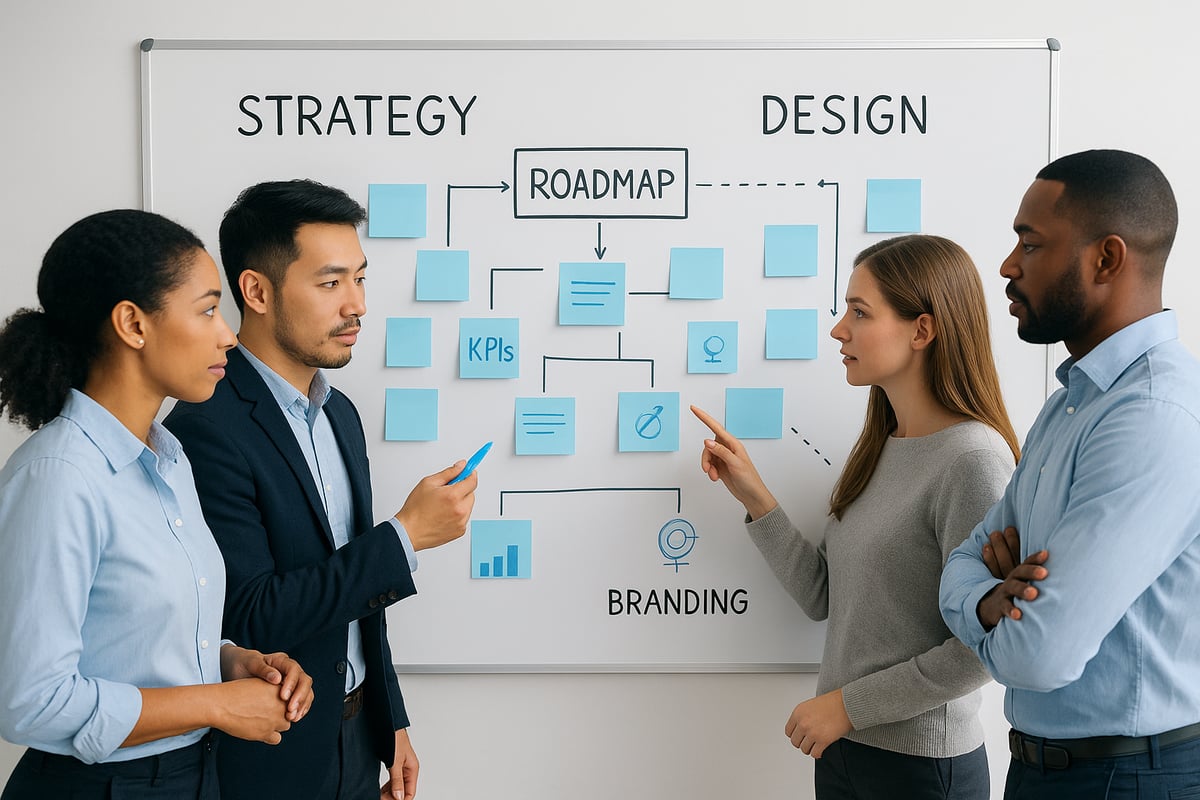
The foundation of any successful strategy and design initiative is strong stakeholder alignment. Begin by organizing workshops that bring together executives, managers, and cross-functional teams. These sessions are critical for surfacing strategic priorities, pain points, and long-term aspirations.
Engage participants in open discussions to reveal gaps in the current customer journey and clarify expectations. By facilitating collaborative workshops, such as those detailed in Design Thinking Workshop Insights, you create a space where every voice is heard and consensus is built.
Document the shared vision and define clear success criteria. This alignment ensures every strategy and design decision is anchored to organizational objectives, reducing friction during execution and setting the stage for measurable outcomes.
Step 2: Deep-Dive User and Market Research
Once alignment is established, focus on understanding your users and the broader market. Employ a mix of qualitative and quantitative research methods, including surveys, interviews, and analytics. These techniques uncover user motivations, pain points, and behaviors that inform your strategy and design process.
Map detailed user journeys to highlight unmet needs and identify moments of opportunity. Analyze competitor offerings and market trends to spot areas for differentiation and innovation. Research-driven strategy and design not only reduces product failure rates but also enables your organization to anticipate shifts in customer expectations.
By grounding your approach in real-world data, you ensure that every strategy and design initiative directly addresses user needs and drives business value.
Step 3: Ideation and Design Strategy Development
With insights in hand, move to ideation and the development of your design strategy. Facilitate structured brainstorming sessions, leveraging frameworks like Design Thinking to stimulate creativity and collaboration. Prioritize ideas that balance organizational goals with user needs for a holistic strategy and design roadmap.
Develop low-fidelity prototypes or concept sketches to visualize proposed solutions. Gather feedback from stakeholders and users early, iterating quickly to refine your concepts. This approach accelerates innovation and ensures your strategy and design initiatives are feasible, desirable, and viable.
Rapid prototyping not only brings clarity to abstract ideas but also helps teams build confidence in new directions before significant resources are committed.
Step 4: Roadmapping, Resource Planning, and Buy-In
Translate your strategy and design vision into an actionable roadmap. Break down each initiative into clear milestones, assign responsibilities, and set realistic timelines. Resource planning is essential—allocate budget, tools, and talent where they will drive the most value.
Communicate the roadmap transparently across teams to foster buy-in and accountability. Regular updates and check-ins keep everyone aligned and allow for quick adjustments if priorities shift. Well-structured strategy and design roadmaps streamline execution and minimize bottlenecks.
By clearly defining roles and expectations, you empower teams to move with agility and confidence, ensuring that strategy and design objectives remain front and center.
Step 5: Execution, Testing, and Iteration
Now, put your strategy and design plan into action. Start with pilot projects or minimum viable products to validate assumptions and reduce risk. Collect user feedback and performance data at every stage, using these insights to refine your solutions.
Encourage a culture of iteration, where learning from both successes and setbacks is celebrated. Agile adaptation keeps your strategy and design initiatives relevant as market conditions evolve. Iterative updates often lead to significant improvements in user engagement and satisfaction.
Continuous testing and adjustment ensure that your strategy and design efforts remain responsive and deliver sustainable results.
Step 6: Measuring Impact and Scaling Success
Finally, establish clear metrics to measure the impact of your strategy and design initiatives. Track key performance indicators such as conversion rates, user retention, and satisfaction scores. Analyze internal data to assess workflow efficiency, time-to-market, and resource utilization.
Leverage these insights to identify what works and scale successful approaches across the organization. Companies that consistently measure and optimize their strategy and design investments see higher returns and long-term growth.
A disciplined approach to measurement closes the loop, ensuring every strategy and design effort delivers tangible business value and supports ongoing innovation.
Measuring the Value of Strategy and Design Initiatives
In 2026, organizations must clearly demonstrate the value of their strategy and design investments. Measuring impact is no longer optional. Leaders need concrete evidence that design initiatives drive both user satisfaction and business success. A robust measurement approach ensures strategy and design remain central to decision-making.

Quantitative and Qualitative Metrics
Effective measurement starts with the right metrics. Quantitative data, such as engagement rates, Net Promoter Score (NPS), conversion, revenue, and time-on-task, provides clear indicators of progress. Qualitative feedback—like user interviews and satisfaction surveys—offers context that numbers alone cannot capture.
Combining these perspectives enables teams to fully understand the impact of strategy and design on user experience and business outcomes. For example, tracking error rates alongside user sentiment reveals product strengths and areas for improvement.
Operational and Financial Impact
Beyond user-facing metrics, operational measures are essential. Workflow efficiency, resource allocation, and team satisfaction all influence the success of strategy and design. Improved processes often translate into faster delivery, reduced costs, and higher morale.
Financially, tying design outcomes to KPIs—such as revenue growth, retention, and market share—makes the business case clear. A new design process that reduces project costs while boosting profitability illustrates the practical benefits of measuring strategy and design initiatives.
Linking Outcomes to Business Objectives
A structured framework connects design metrics directly to organizational goals. This alignment ensures that strategy and design are not siloed, but instead drive measurable business value. Teams can use scorecards or dashboards to visualize how design investments contribute to growth.
According to the Design Thinking Market Growth Report, companies with mature design practices consistently outperform industry benchmarks in revenue and customer loyalty. Design-led firms have outperformed the S&P 500 by 211% over the past decade, highlighting the strategic advantage of robust measurement.
| Metric Type | Measurement Example | Business Outcome |
|---|---|---|
| Engagement | Session duration | Higher retention |
| Efficiency | Time-to-market | Faster innovation |
| Financial | ROI on design projects | Increased profitability |
Overcoming Measurement Challenges and Communicating Value
Measuring the impact of strategy and design is not without obstacles. Data silos and inconsistent KPIs can hinder clear analysis. Overcoming these challenges requires integrated systems and shared definitions of success.
DesignOps plays a critical role by standardizing measurement practices and ensuring continuous optimization. Regular reporting, transparent dashboards, and cross-team alignment help communicate the value of design to stakeholders and leadership.
To secure ongoing investment, teams should present both data and stories—linking metrics to user journeys and business wins. This approach fosters understanding and support for strategy and design at every level.
Conclusion and Future Outlook
As organizations continue to prioritize strategy and design, the ability to measure value will define industry leaders. By leveraging a blend of quantitative and qualitative insights, aligning outcomes with business goals, and embracing best-in-class measurement frameworks, companies can maximize their returns.
Looking ahead, those who excel at measuring and communicating the impact of strategy and design will set the benchmark for innovation and growth in 2026.
Overcoming Common Challenges in Strategic Design Execution
Organizations pursuing strategy and design excellence in 2026 face a unique set of obstacles. Rapid change, complex teams, and evolving customer demands often expose cracks in even the most robust plans. Recognizing these common pitfalls is the first step toward sustainable, innovation-led growth.

Common Challenges in Strategic Design Execution
Teams often struggle with misalignment between departments, unclear objectives, and siloed communication. Resource constraints can hinder progress, especially when budgets or expertise are limited. Resistance to change remains a significant barrier, as stakeholders may be hesitant to embrace new strategy and design frameworks. Additionally, measuring success is challenging when KPIs are inconsistent or data is fragmented.
- Misalignment of goals across teams
- Limited resources or budget for design initiatives
- Resistance to new processes or tools
- Inconsistent measurement and unclear success metrics
Collaboration breakdowns can stall progress, leading to missed opportunities and slower innovation cycles.
Practical Solutions for Overcoming Barriers
To tackle these hurdles, organizations should prioritize regular alignment meetings, ensuring all team members understand the shared vision for strategy and design. Efficient resource allocation, such as cross-training staff or leveraging external partners, can mitigate talent gaps. Change management practices, including transparent communication and stakeholder involvement, help ease transitions.
Implementing collaborative tools, like digital whiteboards or integrated project management platforms, streamlines communication. For a deeper dive into actionable frameworks, the Design Thinking in Business Strategy Guide offers step-by-step methods for embedding design thinking into business strategy, fostering collaboration and minimizing risk.
Breaking Down Silos with DesignOps
Global enterprises have found that integrating DesignOps is a powerful way to bridge silos and embed strategy and design across functions. DesignOps introduces standardized processes, shared tools, and clear accountability, making cross-team execution more effective.
For example, a multinational tech company implemented DesignOps to unify product, marketing, and engineering teams. This led to faster decision-making, reduced duplication of effort, and more cohesive user experiences. Organizations with strong collaboration are five times more likely to be high-performing, underscoring the value of breaking down barriers.
Fostering Innovation and Leadership Support
Building a culture of innovation requires leaders to champion strategy and design at every level. Leadership should set the tone by encouraging experimentation, celebrating creative problem-solving, and supporting ongoing learning. Regular feedback loops and open forums for idea sharing cultivate engagement and trust.
To further enhance leadership’s role, consider resources like the Design Thinking for Strategy Book, which explores how integrating design thinking into business strategy drives competitive advantage and sustainable results.
Managing Risk and Driving Adaptation
Market shifts and emerging technologies demand agile responses. Teams must continuously monitor trends, collect user feedback, and iterate on their strategy and design initiatives. Proactive risk management includes scenario planning, rapid prototyping, and regular review cycles.
By embedding adaptability into the strategy and design process, organizations position themselves to seize new opportunities and mitigate threats. Strong collaboration, supported by clear measurement and leadership advocacy, is the cornerstone of enduring success.
Case Studies and Real-World Applications
Every successful organization in 2026 views strategy and design as core drivers of transformation. The following case studies illustrate how focused design leadership delivers measurable outcomes, setting benchmarks for innovation across industries.
Netflix: User-Centered Design Fuels Retention
Netflix exemplifies the power of strategy and design by relentlessly prioritizing user needs. Through deep analysis of viewing habits, A/B testing, and continuous interface refinement, Netflix delivers a seamless, personalized experience.
By embedding user research into every stage, Netflix’s team uncovers pain points and anticipates evolving preferences. Their strategy and design approach led to innovations like dynamic thumbnails and custom recommendations, which directly contributed to higher retention rates and longer viewing sessions.
The company’s rapid iteration cycles ensure their platform adapts quickly to market shifts. Data-driven design decisions have helped Netflix maintain industry leadership, reinforcing that user-centricity is essential for sustained growth.
Apple: Brand Consistency as a Competitive Edge
Apple’s unwavering commitment to brand identity demonstrates the value of integrated strategy and design. Every touchpoint, from product packaging to digital interfaces, reflects the same visual language and experiential promise.
This consistency is not accidental. Apple’s teams align business goals with design principles, ensuring that every product launch strengthens the brand’s reputation for quality and innovation. The strategy and design framework at Apple translates into loyal customers and premium market positioning.
Studies show that consistent branding can increase revenue by up to 23 percent. Apple’s example reveals how a cohesive approach to strategy and design secures customer trust and long-term loyalty.
Cross-Industry Applications: B2B, Healthcare, Retail
Beyond tech giants, organizations in B2B, healthcare, and retail sectors are leveraging strategy and design to drive meaningful change. In B2B, companies streamline complex processes with intuitive interfaces, boosting client satisfaction.
Healthcare providers use patient journey mapping and digital tools to improve outcomes and efficiency. Retailers harness omni-channel design to deliver unified shopping experiences, increasing conversion rates. According to the Design Thinking Market Analysis 2026, demand for design-led innovation is accelerating, with organizations in diverse sectors prioritizing human-centered design to stay ahead.
These examples confirm that strategy and design, when tailored to industry needs, unlock new opportunities for differentiation and growth.
Lessons from Strategy and Design Leaders
What unites these success stories is a commitment to alignment, research, iteration, and measurement. Leaders in strategy and design invest in understanding both user needs and business objectives, ensuring teams are unified around clear goals.
Regular testing and refinement, supported by robust measurement frameworks, allow these organizations to adapt quickly. Companies that embed strategy and design into daily processes see, on average, 32 percent higher revenue growth.
To apply these lessons, consider adopting proven frameworks and methodologies such as those outlined in Product Innovation and Design. This empowers teams to create, test, and scale innovative solutions effectively.
Embedding Strategy and Design for Lasting Impact
The path to breakthrough results is clear: treat strategy and design as central pillars, not afterthoughts. By learning from proven leaders and adapting best practices, any organization can drive sustained success in 2026.
Now that you have a clear roadmap for navigating the evolving intersection of strategy and design in 2026, why not take the next step toward unlocking your business’s full potential? At Six Paths Consulting, we specialize in helping leaders like you discover new opportunities, harness AI-powered innovation, and create sustainable growth. If you’re ready to see how a tailored approach can accelerate your success, I invite you to Book a Free Opportunity Assessment. Let’s work together to turn your vision into measurable results for the years ahead.