

Organizations navigating today's rapidly evolving business landscape increasingly turn to specialized expertise to drive transformational change. A strategy consulting team brings focused analytical rigor, industry insights, and proven frameworks to tackle complex challenges ranging from market entry to digital transformation. These teams serve as catalysts for innovation, combining diverse skill sets to uncover hidden opportunities and develop actionable roadmaps. Whether you're building an internal capability or partnering with external consultants, understanding how high-performing strategy teams operate is essential for achieving sustainable competitive advantage.
The Core Composition of a Strategy Consulting Team
A well-structured strategy consulting team typically includes professionals with complementary expertise spanning analytical, creative, and implementation disciplines. The team lead or engagement manager coordinates activities, manages client relationships, and ensures deliverables align with organizational objectives. Senior consultants bring industry knowledge and strategic frameworks, while analysts provide deep-dive research and data modeling capabilities.
Beyond these traditional roles, modern strategy consulting teams increasingly incorporate specialized talent in emerging domains. AI specialists help organizations identify automation opportunities and develop data-driven decision frameworks. Innovation experts focus on new product development and innovation, applying methodologies like design thinking to explore unmet customer needs. Change management professionals ensure strategies translate into sustainable organizational transformation.
Critical Skill Sets for Strategic Impact
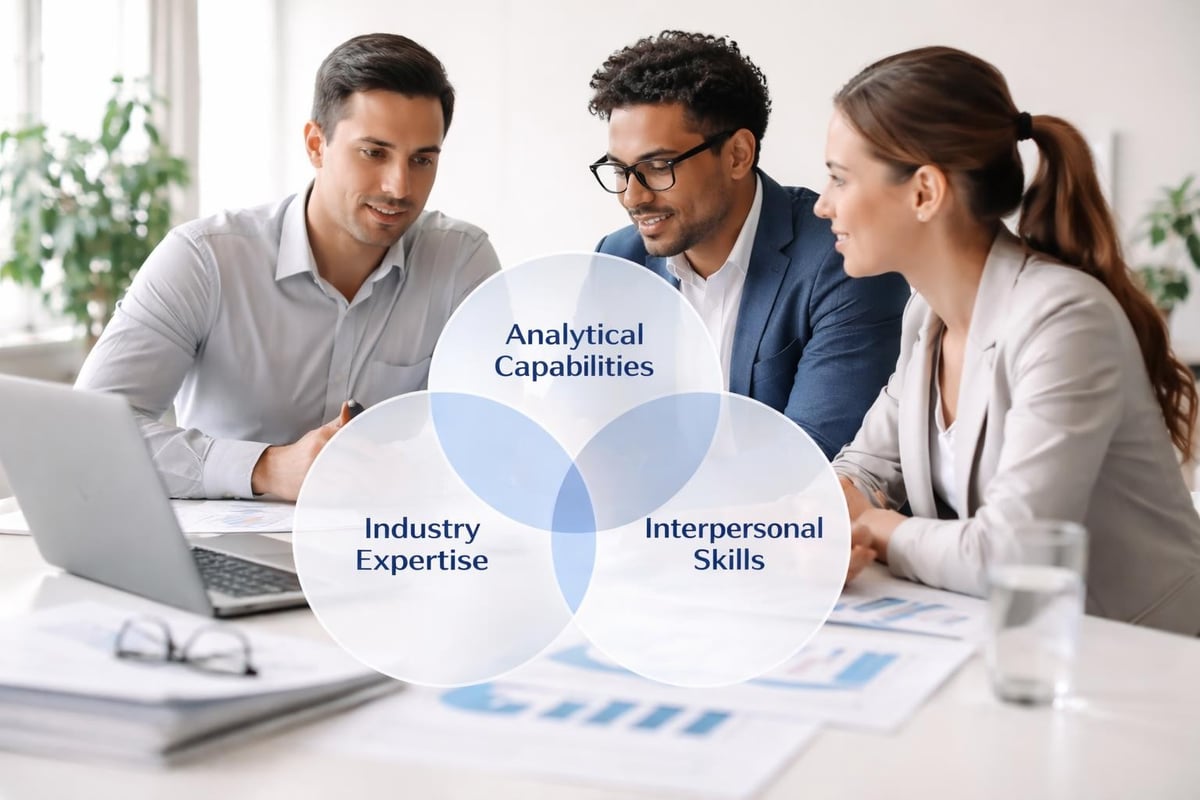
The most effective strategy consulting teams blend technical competencies with soft skills that facilitate collaboration and influence. According to insights on strategy consulting, consultants must excel at problem structuring, breaking down complex challenges into manageable components that can be systematically addressed.
Key technical capabilities include:
- Advanced data analysis and financial modeling
- Strategic framework application (Porter's Five Forces, Blue Ocean Strategy, Business Model Canvas)
- Market research and competitive intelligence
- Scenario planning and risk assessment
- Digital transformation and technology strategy
Essential interpersonal skills encompass:
- Executive communication and stakeholder management
- Collaborative problem-solving and workshop facilitation
- Adaptability across industries and organizational contexts
- Influence without authority in client environments
How Strategy Consulting Teams Drive Value
A strategy consulting team delivers measurable impact through structured methodologies that transform abstract challenges into concrete action plans. The process typically begins with comprehensive diagnostic work, examining internal capabilities, competitive positioning, and market dynamics. Teams conduct stakeholder interviews, analyze financial performance, and benchmark against industry leaders to establish a baseline understanding.
Following this assessment phase, consultants develop strategic options tailored to the organization's unique context and constraints. This involves creative ideation sessions, rigorous evaluation of alternatives, and financial modeling to quantify potential outcomes. The strategy implementation process requires careful attention to organizational readiness, resource allocation, and change management considerations.
| Engagement Phase | Key Activities | Typical Duration | Primary Deliverables |
|---|---|---|---|
| Discovery & Diagnosis | Stakeholder interviews, data analysis, competitive assessment | 2-4 weeks | Current state analysis, opportunity mapping |
| Strategic Development | Framework application, scenario planning, option generation | 4-6 weeks | Strategic recommendations, business cases |
| Roadmap Creation | Initiative prioritization, resource planning, risk mitigation | 2-3 weeks | Implementation roadmap, governance model |
| Execution Support | Pilot programs, capability building, performance tracking | Ongoing | Metrics dashboards, training programs |
Teams working on innovation strategy consulting initiatives focus particularly on identifying white space opportunities and developing differentiated value propositions. This requires balancing creative exploration with commercial viability, ensuring new concepts align with organizational strengths and market demands.
Building Internal Strategy Capabilities
Organizations increasingly recognize the value of developing in-house strategy consulting teams rather than relying exclusively on external advisors. Internal teams offer deeper institutional knowledge, sustained engagement beyond project timelines, and cost efficiencies for ongoing strategic work. However, building these capabilities requires intentional investment in talent development and knowledge management systems.
Successful internal strategy teams often adopt hybrid models that combine permanent staff with rotational assignments from business units. This approach infuses fresh perspectives while maintaining continuity in strategic thinking. Companies should establish clear career pathways for strategy professionals, ensuring top talent views these roles as accelerators for broader leadership opportunities.
Training and Development Approaches
Developing a high-performing strategy consulting team demands systematic capability building across technical and advisory dimensions. Organizations should invest in formal training covering analytical methodologies, industry trends, and consulting frameworks. Sales training workshops can enhance consultants' ability to articulate value propositions and influence decision-makers at all organizational levels.
Experiential learning through real project work accelerates development more effectively than classroom instruction alone. Junior consultants gain proficiency by shadowing experienced team members, gradually assuming greater responsibility under mentorship. Regular case study reviews allow teams to extract lessons from both successes and setbacks, continuously refining their approach.
Effective development programs incorporate:
- Structured onboarding covering consulting methodologies and internal knowledge resources
- Mentorship pairing junior consultants with senior advisors for guided skill development
- Cross-functional rotations exposing team members to different business contexts
- External certifications in specialized domains like AI, design thinking, or change management
- Community of practice forums enabling knowledge sharing across projects
Selecting the Right External Strategy Consulting Team
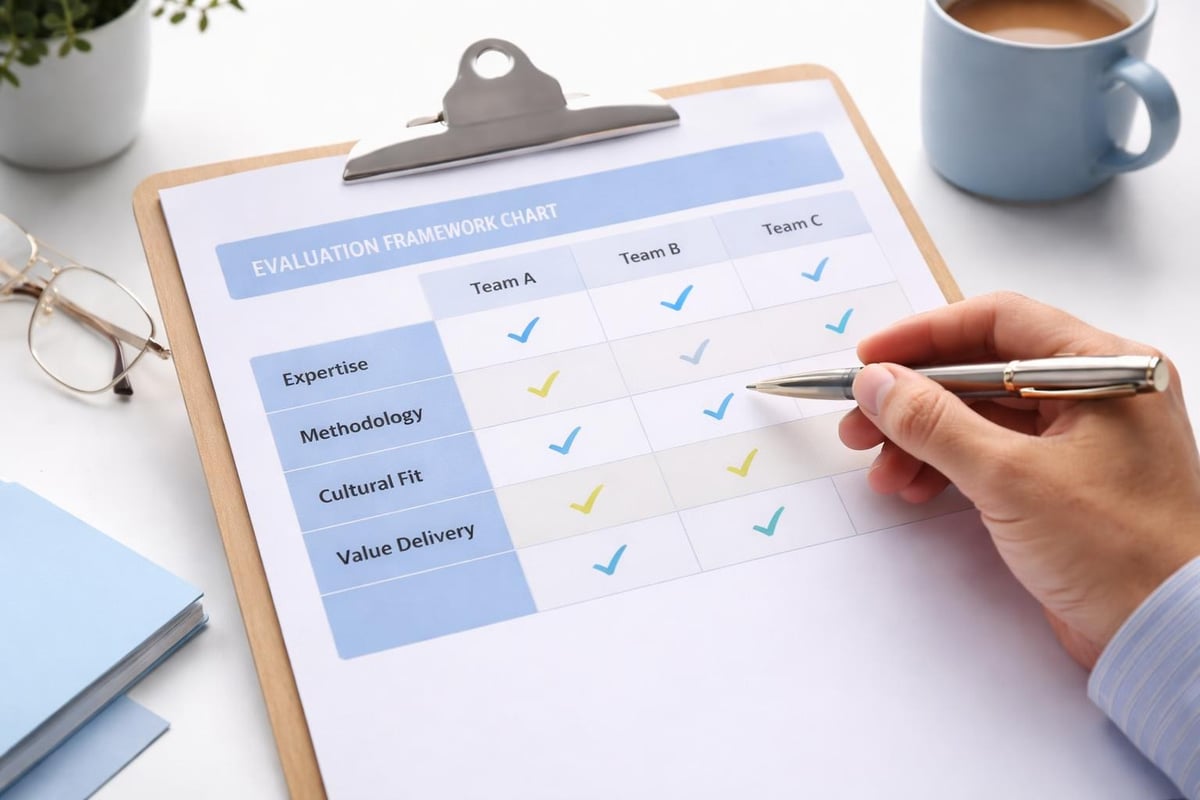
When partnering with external consultants, organizations must evaluate potential teams against criteria extending beyond credentials and case studies. The best partnerships emerge when there's alignment on working philosophy, communication preferences, and desired outcomes. Understanding the various types of strategy consulting helps companies identify specialists whose expertise matches their specific needs.
Firms should request detailed team compositions during the proposal process, ensuring the consultants presenting will actually execute the work. Chemistry between client and consulting teams significantly influences engagement success, making chemistry check meetings valuable for assessing cultural fit and communication styles.
Evaluating Consulting Approaches and Methodologies
Different strategy consulting teams employ varying methodologies reflecting their philosophical orientations and industry specializations. Some firms emphasize highly analytical, data-driven approaches grounded in economic modeling and quantitative research. Others prioritize human-centered design methodologies that place customer insights at the strategy development core.
| Consulting Approach | Primary Focus | Best Suited For | Typical Tools |
|---|---|---|---|
| Traditional Strategic Planning | Market positioning, competitive advantage | Established companies in stable industries | SWOT, Porter's Five Forces, BCG Matrix |
| Innovation-Focused | New market creation, business model disruption | Organizations seeking growth through differentiation | Blue Ocean Strategy, Business Model Canvas, Jobs-to-be-Done |
| Digital Transformation | Technology enablement, operational excellence | Companies modernizing legacy systems and processes | Digital maturity assessments, technology roadmaps |
| Turnaround Strategy | Performance improvement, cost optimization | Organizations facing financial or competitive pressures | Benchmarking, process reengineering, portfolio rationalization |
Organizations pursuing strategy and transformation consulting should seek teams comfortable navigating ambiguity while maintaining analytical discipline. The ability to combine creative ideation with rigorous evaluation separates exceptional consultants from merely competent ones.
The Evolution of Strategy Consulting Teams
The consulting landscape has evolved dramatically over the past decade, driven by technological advancement, changing client expectations, and new competitive dynamics. Traditional strategy consulting teams focused primarily on analytical problem-solving and strategic frameworks. Today's teams must integrate capabilities spanning digital technologies, behavioral science, and agile implementation methodologies.
Artificial intelligence and machine learning have transformed how strategy consulting teams approach problem-solving. AI management consulting enables consultants to process vast datasets, identify patterns invisible to human analysis, and generate predictive insights that inform strategic decisions. Teams leveraging these tools can deliver deeper insights in compressed timeframes, creating competitive advantages for both consultants and clients.
Adapting to Remote and Hybrid Work Models
The shift toward distributed work has fundamentally altered how strategy consulting teams collaborate and engage with clients. Virtual workshops, digital collaboration platforms, and asynchronous communication tools now constitute the standard operating environment. While these changes introduce coordination challenges, they also expand access to specialized expertise regardless of geographic location.
High-performing remote strategy consulting teams establish clear communication protocols, leverage visual collaboration tools effectively, and maintain strong project management discipline. Regular synchronous touchpoints balance asynchronous work, ensuring alignment while respecting individual productivity preferences. The most successful teams create psychological safety in virtual environments, encouraging candid dialogue and creative thinking despite physical distance.
Measuring Strategy Consulting Team Performance
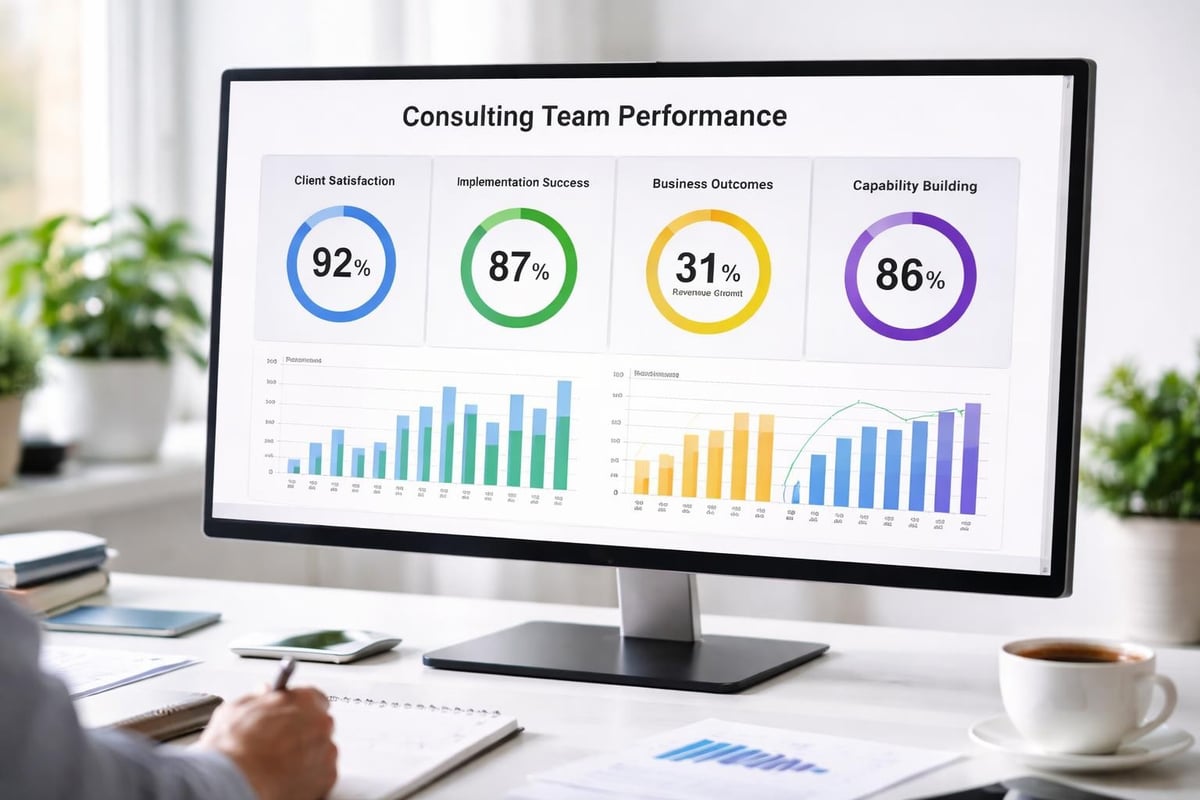
Assessing strategy consulting team effectiveness requires metrics extending beyond traditional project management indicators like timeline adherence and budget compliance. While these operational metrics matter, they fail to capture the ultimate value consultants deliver through strategic guidance and organizational capability building.
Leading performance indicators include:
- Client satisfaction scores reflecting advisory quality and relationship strength
- Strategic recommendations adopted and implemented by client organizations
- Measurable business impact from implemented strategies (revenue growth, market share gains, cost reductions)
- Knowledge transfer effectiveness and client capability development
- Engagement extensions and referrals indicating client confidence
Organizations should establish clear success criteria before strategy consulting team engagements begin, ensuring shared understanding of desired outcomes. These criteria should balance short-term deliverables with longer-term strategic impact, recognizing that transformational strategies often require sustained effort before yielding measurable results.
Continuous Improvement and Knowledge Management
Exceptional strategy consulting teams institutionalize learning through systematic knowledge capture and sharing mechanisms. After-action reviews following each engagement extract insights about what worked well and what could improve. These learnings inform methodology refinement, training program updates, and proposal development for future opportunities.
Knowledge management systems organized by industry, functional area, and strategic challenge type enable consultants to access relevant precedents quickly. Business frameworks libraries, case study repositories, and expert directories help teams leverage collective intelligence rather than reinventing solutions. Regular community of practice sessions facilitate cross-team learning, exposing consultants to diverse perspectives and innovative approaches.
Industry-Specific Strategy Consulting Considerations
While core consulting skills transfer across sectors, effective strategy consulting teams develop specialized expertise in target industries. Healthcare strategy requires understanding regulatory environments, reimbursement models, and clinical workflows. Technology consulting demands awareness of platform economics, network effects, and rapid innovation cycles. Financial services teams must navigate complex compliance requirements and evolving customer expectations around digital experiences.
Deep industry knowledge enables consultants to move beyond generic frameworks toward contextually relevant recommendations. Teams serving specific industries for consulting invest in ongoing learning about sector trends, regulatory changes, and emerging technologies reshaping competitive landscapes. This specialization creates credibility with clients, accelerates problem diagnosis, and improves recommendation quality.
Leading strategy consulting teams balance industry depth with cross-sector pollination, applying insights from one domain to challenges in another. Retail customer experience innovations might inform healthcare patient journey redesigns. Manufacturing operational excellence principles could enhance professional services delivery models. The most valuable consultants recognize patterns and principles transcending industry boundaries while respecting sector-specific constraints.
Building Client Partnerships Through Strategic Collaboration
The most impactful strategy consulting team engagements transcend traditional vendor-client relationships, evolving into genuine partnerships characterized by mutual trust and shared commitment to outcomes. Consultants who invest in understanding client organizational culture, political dynamics, and decision-making processes deliver more relevant recommendations and achieve higher implementation success rates.
Effective partnership building requires transparency about what consultants can and cannot deliver, avoiding overpromising while maintaining confidence in proposed approaches. Teams should involve client personnel throughout the engagement, fostering ownership and building internal capabilities. This collaborative approach, detailed in comprehensive guides about strategy consulting, ensures strategies reflect on-the-ground realities and organizational appetite for change.
Strategic consultants serve as thought partners who challenge assumptions constructively while respecting client expertise and institutional knowledge. The balance between external perspective and internal insight generates breakthrough thinking that neither party could achieve independently. Successful teams create environments where clients feel comfortable sharing concerns, testing ideas, and exploring unconventional options without judgment.
Building and leveraging a strategy consulting team represents a strategic investment that pays dividends through enhanced decision quality, accelerated growth, and strengthened competitive positioning. Whether developing internal capabilities or partnering with external specialists, organizations must prioritize team composition, methodology alignment, and collaborative engagement models. Six Paths Consulting partners with ambitious leaders to build innovation capabilities, discover new market opportunities, and develop AI-powered strategies that drive measurable revenue growth and profitability through customized consulting engagements and capability-building training programs.