
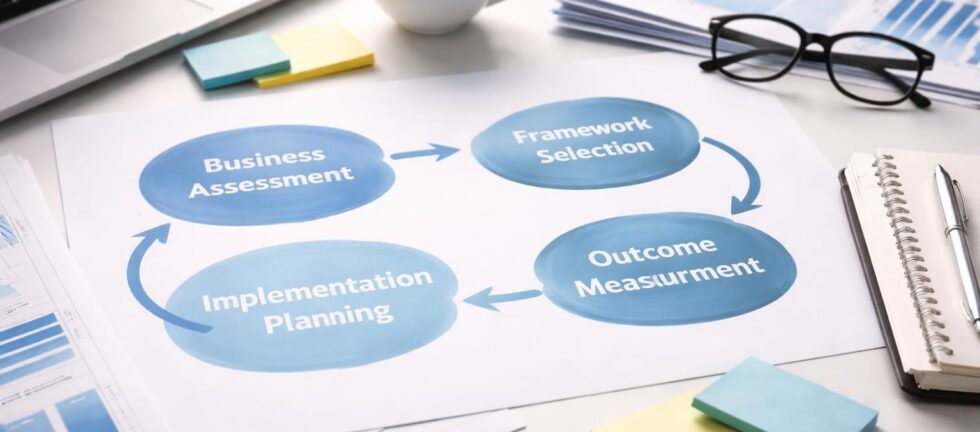
Modern businesses face unprecedented complexity in selecting and implementing the right strategic frameworks, analytical methodologies, and innovation tools to drive growth. Tools consulting has emerged as a critical discipline that helps organizations navigate this complexity by identifying, customizing, and deploying the most effective consulting instruments for their specific challenges. Rather than simply recommending generic solutions, tools consulting focuses on matching business objectives with proven methodologies while building internal capabilities that sustain long-term competitive advantage. This specialized approach combines strategic assessment with practical implementation, ensuring that every framework, template, and analytical tool delivers measurable business impact.
Understanding the Tools Consulting Landscape
Tools consulting represents a sophisticated approach to business improvement that goes beyond traditional advisory services. This discipline centers on the strategic selection, customization, and deployment of consulting frameworks, analytical instruments, and innovation methodologies tailored to specific organizational contexts.
The fundamental distinction of tools consulting lies in its emphasis on capability transfer. While conventional consulting often delivers recommendations and departs, tools consulting embeds sustainable practices within organizations. Consultants work alongside leadership teams to ensure that frameworks become part of the operational fabric rather than temporary interventions.
Core Components of Effective Tools Consulting
Successful tools consulting integrates multiple dimensions that work synergistically to create lasting transformation:
- Strategic assessment frameworks that diagnose organizational readiness and capability gaps
- Customized implementation roadmaps aligned with business objectives and resource constraints
- Training programs designed to build internal expertise and reduce dependency on external advisors
- Performance measurement systems that track adoption rates and business impact
- Continuous improvement mechanisms ensuring tools evolve with changing market conditions
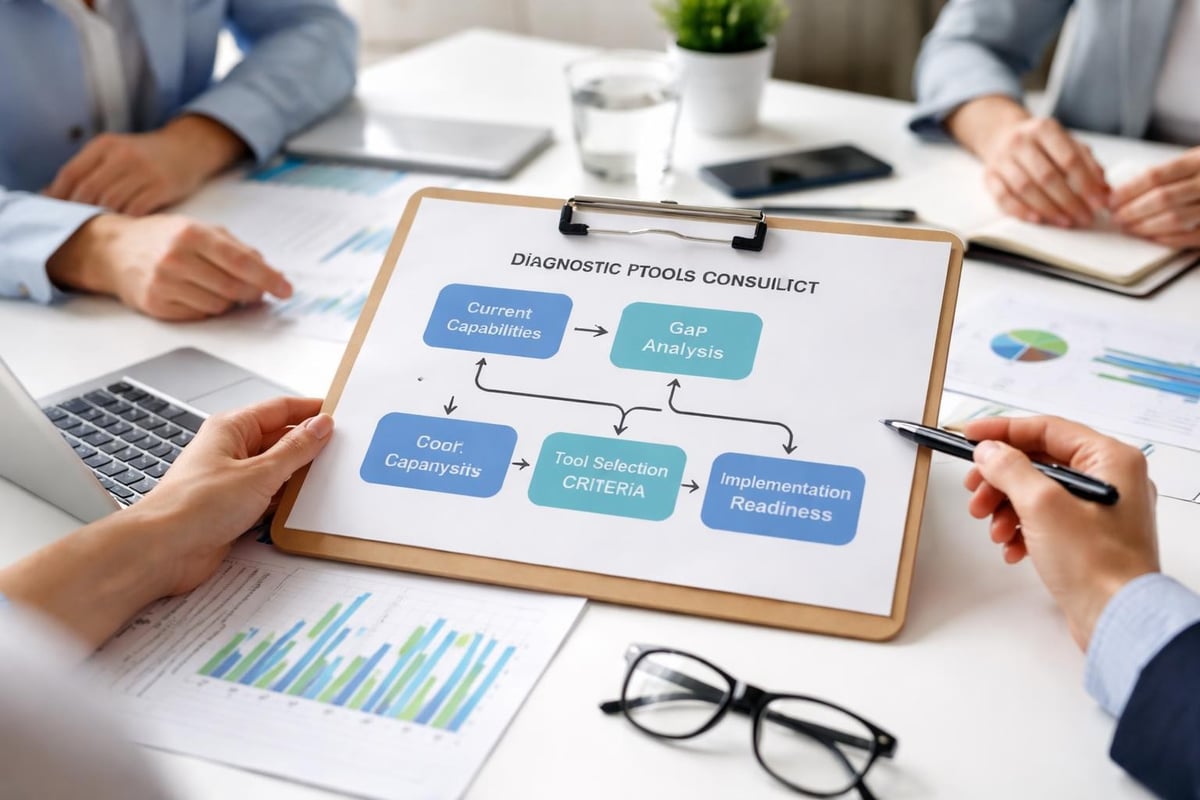
Organizations pursuing innovation strategy consulting benefit from understanding how various consulting instruments complement each other. A comprehensive tools consulting engagement typically evaluates existing capabilities before introducing new frameworks.
Strategic Frameworks in Tools Consulting Practice
The toolkit available to modern consultants has expanded dramatically, encompassing everything from classic strategy frameworks to AI-powered analytical platforms. Selecting the right combination requires deep understanding of both the tools themselves and the organizational context in which they'll operate.
| Framework Category | Primary Application | Implementation Timeframe | Skill Level Required |
|---|---|---|---|
| Strategic Analysis | Market positioning, competitive assessment | 4-8 weeks | Intermediate |
| Innovation Methods | New product development, business model design | 8-16 weeks | Advanced |
| Performance Management | KPI tracking, operational excellence | 6-12 weeks | Intermediate |
| Change Management | Transformation initiatives, cultural shifts | 12-24 weeks | Advanced |
According to Harvard's Division of Continuing Education, six fundamental tools form the foundation of effective business consulting practice. These include benchmarking, balanced scorecards, and process mapping methodologies that have proven their value across diverse industries.
Matching Tools to Business Challenges
The art of tools consulting lies in precise matching between business challenges and appropriate methodologies. A company struggling with market differentiation requires different instruments than one focused on operational efficiency. This diagnostic capability separates effective tools consulting from generic advisory services.
Strategic positioning challenges typically benefit from frameworks like Blue Ocean Strategy, value innovation analysis, and competitive landscape mapping. These tools help organizations identify uncontested market spaces and develop unique value propositions.
Innovation acceleration demands different approaches. Organizations seeking to enhance their innovation capabilities often leverage design thinking, jobs-to-be-done frameworks, and rapid prototyping methodologies. These instruments enable systematic exploration of customer needs and iterative solution development.
The management consulting tools landscape continues evolving with technological advancement. AI-powered analytics, predictive modeling, and real-time performance dashboards now complement traditional frameworks, creating unprecedented opportunities for data-driven decision-making.
Implementation Excellence in Tools Consulting
Selecting appropriate tools represents only half the equation. Implementation excellence determines whether frameworks deliver their promised value or become shelf-ware gathering dust in corporate archives. Tools consulting emphasizes practical deployment strategies that ensure adoption and sustained usage.
The Implementation Roadmap
Successful implementation follows a structured progression that builds momentum while managing organizational change resistance:
- Stakeholder alignment phase establishing executive sponsorship and cross-functional buy-in
- Pilot program design testing frameworks with limited scope before full deployment
- Capability building through targeted training and hands-on coaching sessions
- Scaled rollout expanding successful pilots across departments or business units
- Performance monitoring tracking adoption metrics and business impact indicators
- Refinement cycles incorporating feedback and adjusting approaches based on results
Each phase requires specific tools consulting expertise. The alignment phase might utilize stakeholder mapping and communication planning frameworks. Capability building leverages adult learning principles and knowledge transfer methodologies designed for busy professionals.
Organizations working with firms specializing in strategy and transformation consulting often discover that implementation success depends more on change management capabilities than framework sophistication. The most elegant analytical tool fails without organizational readiness to embrace new working methods.
Building Internal Consulting Capabilities
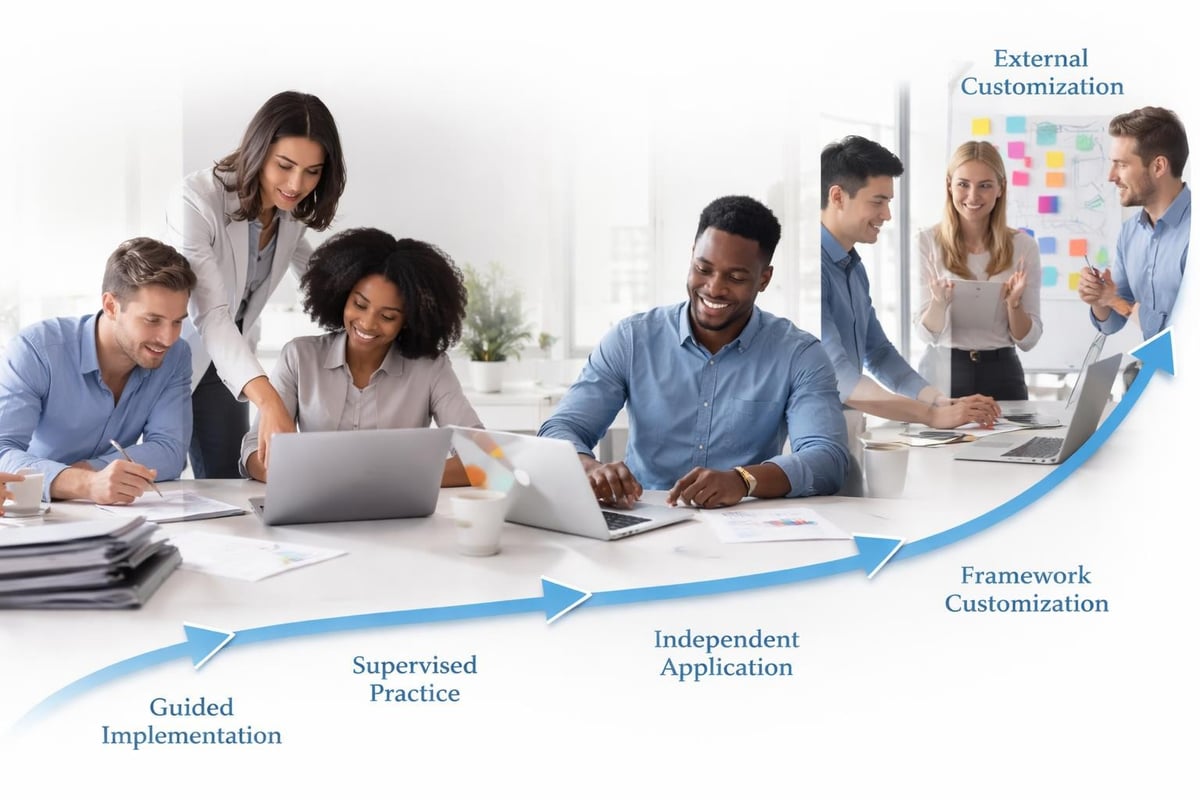
A distinguishing characteristic of modern tools consulting is its emphasis on capability transfer rather than dependency creation. Forward-thinking organizations recognize that sustained competitive advantage requires internal expertise in strategic frameworks and innovation methodologies.
Training program design represents a critical component of tools consulting engagements. Effective programs go beyond theoretical instruction to include:
- Hands-on workshops applying frameworks to real business challenges
- Coaching sessions supporting teams through initial implementation attempts
- Knowledge repositories documenting best practices and lessons learned
- Community of practice forums enabling peer learning and problem-solving
- Certification programs validating competency and encouraging mastery
The objective extends beyond teaching people how to use specific tools. Exceptional tools consulting develops strategic thinking capabilities that enable teams to select and adapt frameworks independently as business contexts evolve.
Measuring Capability Development
Tracking the effectiveness of capability-building initiatives requires sophisticated measurement approaches. Leading organizations monitor multiple indicators:
| Metric Category | Example Indicators | Target Achievement Timeline |
|---|---|---|
| Knowledge Acquisition | Framework comprehension scores, certification completion rates | 3-6 months |
| Behavioral Change | Tool usage frequency, framework application consistency | 6-12 months |
| Business Impact | Decision quality improvements, strategy execution velocity | 12-24 months |
| Self-Sufficiency | Reduced external consultant dependency, internal innovation rates | 18-36 months |
These metrics provide early warning signals when capability transfer isn't progressing as planned, enabling mid-course corrections before significant resources are wasted.
Technology Integration in Tools Consulting
The intersection of traditional consulting frameworks and modern technology platforms has created new possibilities for tools consulting. Digital transformation doesn't replace human judgment but amplifies analytical capabilities and accelerates insight generation.
AI-powered tools now support various consulting activities. Predictive analytics enhance market forecasting accuracy. Natural language processing extracts insights from customer feedback at previously impossible scales. Machine learning algorithms identify patterns in competitive data that human analysts might miss.
However, technology integration requires careful consideration. The consulting tools that elevate work quality combine digital capabilities with sound strategic thinking. Tools consulting practitioners help organizations avoid the trap of implementing technology for its own sake rather than solving specific business problems.
Platform Selection Criteria
Choosing the right technology platforms involves evaluating multiple dimensions:
- Integration capabilities ensuring new tools connect seamlessly with existing systems
- User experience design minimizing adoption friction and learning curves
- Scalability characteristics supporting growth without requiring platform replacement
- Customization flexibility enabling adaptation to unique business requirements
- Vendor stability reducing risk of platform abandonment or discontinuation
Organizations exploring business frameworks increasingly seek integrated platforms that support multiple methodologies rather than point solutions requiring complex orchestration.
Industry-Specific Tools Consulting Approaches
While many consulting frameworks claim universal applicability, effective tools consulting recognizes that industry context significantly influences implementation success. Regulatory environments, competitive dynamics, and customer expectations vary dramatically across sectors.
Financial services organizations prioritize risk management frameworks and compliance-oriented tools. Their tools consulting engagements often emphasize governance structures and audit trail capabilities that satisfy regulatory requirements while enabling strategic innovation.
Healthcare providers require tools that navigate complex stakeholder ecosystems including patients, payers, providers, and regulators. Value-based care frameworks and patient journey mapping methodologies feature prominently in healthcare-focused tools consulting.
Technology companies operating in rapidly evolving markets need frameworks supporting speed and experimentation. Agile strategy development, continuous innovation systems, and rapid market testing methodologies align with their operational realities.
The exploration of industries suitable for consulting reveals that each sector presents unique challenges requiring customized tool selection and implementation approaches.
Avoiding Common Tools Consulting Pitfalls
Even well-intentioned tools consulting engagements encounter predictable challenges that undermine their effectiveness. Recognizing these pitfalls enables proactive mitigation strategies.
Framework overload represents a frequent mistake. Organizations sometimes adopt multiple overlapping frameworks creating confusion rather than clarity. Effective tools consulting emphasizes focused implementation of complementary methodologies rather than comprehensive coverage of every possible approach.
Insufficient customization occurs when consultants apply generic templates without adapting them to specific organizational contexts. While standardized frameworks provide valuable starting points, they require thoughtful modification to address unique business challenges and cultural characteristics.
The examination of best practices in consulting highlights both advantages and potential drawbacks of standardized approaches, emphasizing the importance of contextual adaptation.
Sustainability Challenges
Maintaining momentum after initial implementation represents another common struggle. Organizations often experience early enthusiasm that fades as competing priorities emerge and champions move to new roles.
Addressing sustainability requires:
- Embedding frameworks into routine business processes rather than treating them as special projects
- Establishing clear accountability for tool maintenance and updates
- Creating reinforcement mechanisms including periodic refresher training
- Celebrating successes that demonstrate framework value
- Evolving tools based on user feedback and changing business needs
Advanced Applications of Tools Consulting
Sophisticated organizations push beyond basic framework implementation to develop advanced capabilities that create distinctive competitive advantages. This represents the evolution from tools consulting as process improvement to tools consulting as strategic innovation enabler.
Framework hybridization combines elements from multiple methodologies to create customized approaches addressing complex, multifaceted challenges. For example, organizations might integrate design thinking's customer empathy with Blue Ocean Strategy's value innovation to develop breakthrough customer experiences.
Dynamic tool ecosystems recognize that different business challenges require different frameworks. Rather than adopting a single methodology for all situations, mature organizations develop portfolios of complementary tools and the judgment to select appropriate approaches for specific contexts.
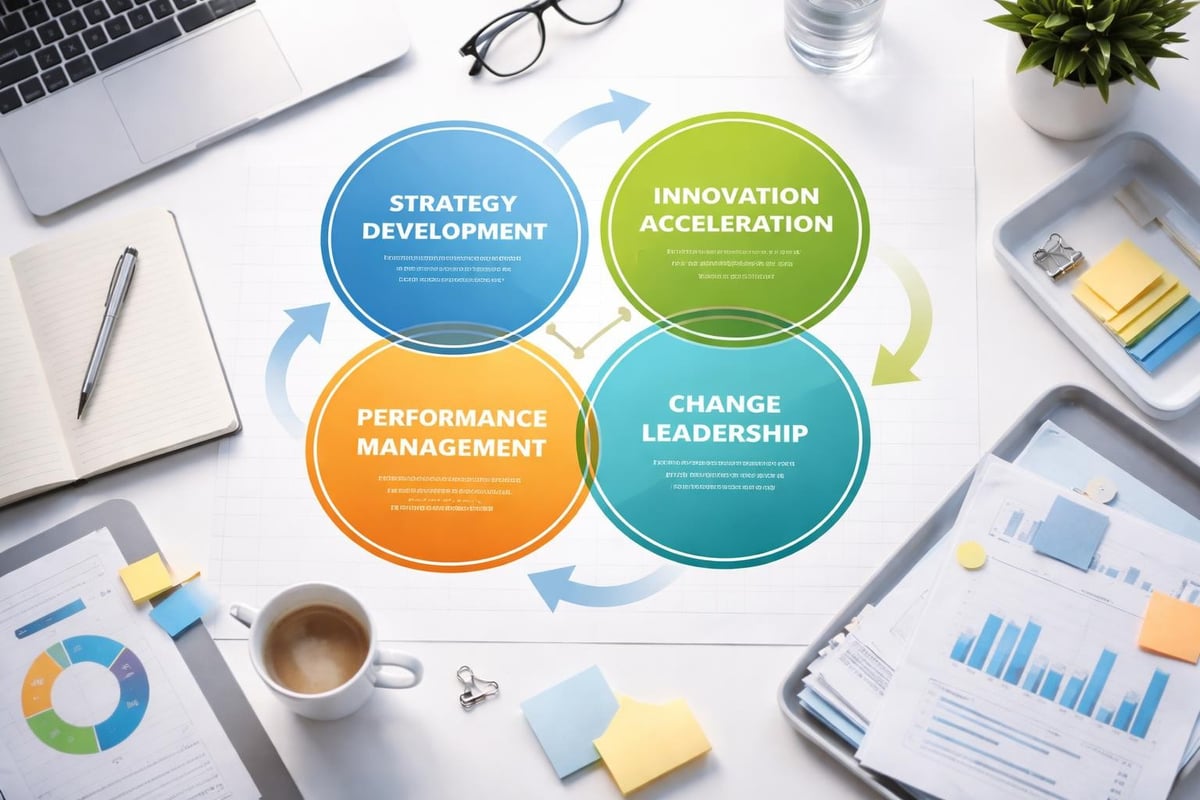
Organizations leveraging design thinking and innovation consulting often discover that combining multiple methodologies yields superior results compared to applying single frameworks in isolation.
Future Directions in Tools Consulting
The tools consulting landscape continues evolving as business complexity increases and new methodologies emerge. Several trends are reshaping the discipline's future trajectory.
Real-time strategy adaptation powered by continuous data streams enables organizations to adjust frameworks dynamically rather than following rigid annual planning cycles. This shift requires tools supporting rapid scenario analysis and agile decision-making.
Collaborative intelligence platforms combine human expertise with AI capabilities, augmenting rather than replacing strategic judgment. These systems help consultants process larger datasets, identify subtle patterns, and generate more comprehensive option sets for client consideration.
Sustainability-focused frameworks are gaining prominence as environmental, social, and governance considerations become central to business strategy. Tools consulting increasingly incorporates methodologies for measuring social impact, optimizing resource efficiency, and aligning profit motives with planetary health.
The collection of case studies demonstrating consulting tool applications illustrates how leading organizations are pushing boundaries in framework implementation and creating measurable business value.
Selecting the Right Tools Consulting Partner
Organizations seeking external support for tools consulting initiatives should evaluate potential partners across multiple dimensions beyond traditional criteria like brand recognition or hourly rates.
Methodology expertise matters significantly. Partners should demonstrate deep understanding of relevant frameworks rather than superficial familiarity. This includes knowledge of when specific tools work best and when alternative approaches might prove more effective.
Implementation track record provides evidence of ability to translate theoretical frameworks into practical business results. Request specific examples showing how the consultant helped similar organizations achieve measurable outcomes through tool implementation.
| Evaluation Criteria | Key Questions | Red Flags |
|---|---|---|
| Framework Expertise | What methodologies do you specialize in? How do you stay current? | Claiming expertise in every framework |
| Customization Approach | How do you adapt standard tools to unique contexts? | One-size-fits-all mentality |
| Capability Transfer | What's your approach to building internal client capabilities? | Focus solely on deliverables |
| Measurement Philosophy | How do you define and track engagement success? | Vague promises without metrics |
Cultural fit influences implementation success perhaps more than technical expertise. The consultant's working style, communication approach, and values should align with organizational culture to facilitate smooth collaboration and knowledge transfer.
Resources like consulting methodologies and best practices from leading firms provide benchmarks for evaluating potential partners and understanding current industry standards.
Tools consulting transforms strategic frameworks from abstract concepts into practical instruments that drive measurable business results. By focusing on careful tool selection, thoughtful implementation, and sustained capability building, organizations create competitive advantages that persist long after external consultants depart. Six Paths Consulting specializes in equipping ambitious leaders with proven innovation frameworks and strategic tools customized to their unique market challenges, combining AI-powered insights with hands-on training to accelerate growth and build lasting internal capabilities. Discover how the right tools consulting partner can transform your organization's strategic capacity and unlock new pathways to profitable growth.