
The business consulting landscape has evolved dramatically, with organizations increasingly seeking partners who can navigate complexity while delivering measurable results. Top business consulting firms no longer simply provide recommendations; they transform how companies operate, compete, and grow in rapidly changing markets. For ambitious leaders facing unprecedented technological disruption and market shifts, selecting the right consulting partner becomes a critical strategic decision that can determine long-term success or stagnation.
What Distinguishes Top Business Consulting Firms
The consulting industry has grown exponentially, with technology consulting revenues projected to surpass $400 billion globally in 2026. Yet not all consulting firms deliver equal value. The best firms distinguish themselves through several key characteristics that separate exceptional partners from mediocre advisors.
Strategic depth forms the foundation of top business consulting. Leading firms bring proven methodologies combined with industry-specific expertise that addresses unique challenges. They understand that generic solutions rarely work in specialized contexts, requiring customized approaches tailored to each client's situation, competitive landscape, and organizational culture.
Measurable Impact and Results Orientation
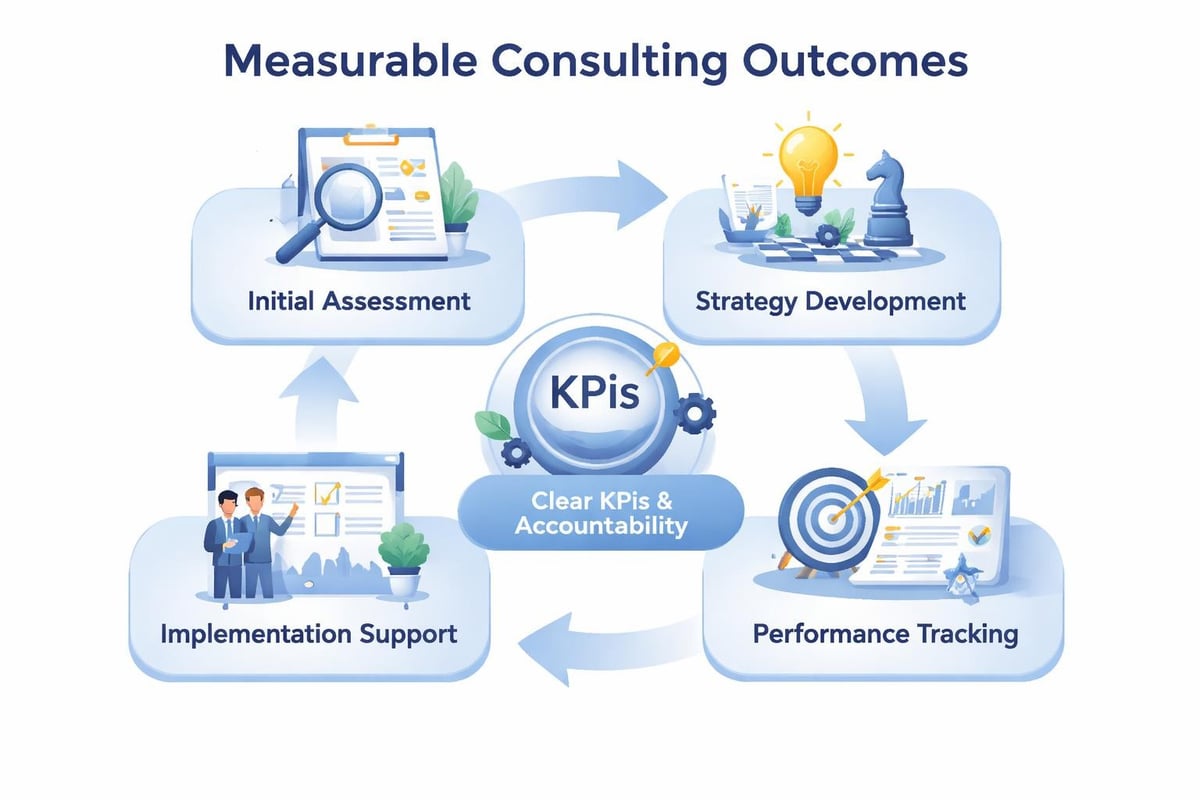
Top consulting firms focus relentlessly on outcomes rather than activities. They establish clear success metrics before engagements begin, tracking progress against defined objectives throughout the partnership. This results-driven approach ensures accountability and demonstrates tangible value.
Key performance indicators might include:
- Revenue growth percentages within defined timeframes
- Market share expansion in target segments
- Operational efficiency improvements measured through cost reductions
- Customer acquisition costs and lifetime value improvements
- Innovation pipeline development and commercialization success rates
The shift toward measurable impact reflects broader industry trends, with consulting firms increasingly emphasizing specialized expertise and data-driven decision-making. Clients demand proof of value, not just strategic recommendations that sit on shelves.
Innovation as a Core Consulting Competency
Innovation consulting has emerged as a critical service line for top business consulting firms. Organizations recognize that incremental improvements no longer suffice in markets where disruptive competitors can reshape entire industries overnight. Developing innovative business models and products requires systematic approaches that balance creativity with commercial viability.
Leading consultants employ structured innovation frameworks that guide clients through opportunity discovery, concept development, and market validation. These methodologies transform innovation from random experimentation into a repeatable, scalable capability.
Strategic Innovation Methodologies
Top business consulting firms utilize proven frameworks that reduce innovation risk while accelerating time to market. Approaches like Blue Ocean Strategy help companies identify uncontested market spaces where competition becomes irrelevant. Design thinking workshops foster customer-centric innovation by deeply understanding user needs before developing solutions.
| Innovation Framework | Primary Focus | Best Application |
|---|---|---|
| Blue Ocean Strategy | Market creation | Finding uncontested markets |
| Design Thinking | Customer empathy | Product/service design |
| Jobs-to-be-Done | Customer motivations | Product positioning |
| Lean Startup | Rapid validation | New venture testing |
| Open Innovation | External collaboration | Technology partnerships |
These frameworks provide structure while maintaining flexibility, allowing customization based on industry dynamics, organizational capabilities, and market conditions. The most effective consultants don't rigidly apply single methodologies but instead blend approaches to match specific client contexts.
AI-Powered Strategic Transformation
Artificial intelligence has fundamentally changed what top business consulting delivers. Beyond recommending AI adoption, leading firms integrate AI throughout their consulting methodologies, from market analysis to strategy formulation to implementation support. AI strategy and implementation capabilities separate forward-thinking consultants from those stuck in traditional approaches.
AI enables consultants to process vast data sets, identify patterns invisible to human analysis, and simulate strategic scenarios with unprecedented accuracy. This technological leverage allows faster, more informed decision-making while reducing implementation risks.
Predictive analytics help forecast market trends, customer behaviors, and competitive moves before they materialize. Machine learning algorithms optimize pricing strategies, supply chain configurations, and resource allocations continuously. Natural language processing extracts insights from customer feedback, market research, and competitive intelligence at scale.
Building AI-Enabled Innovation Capabilities
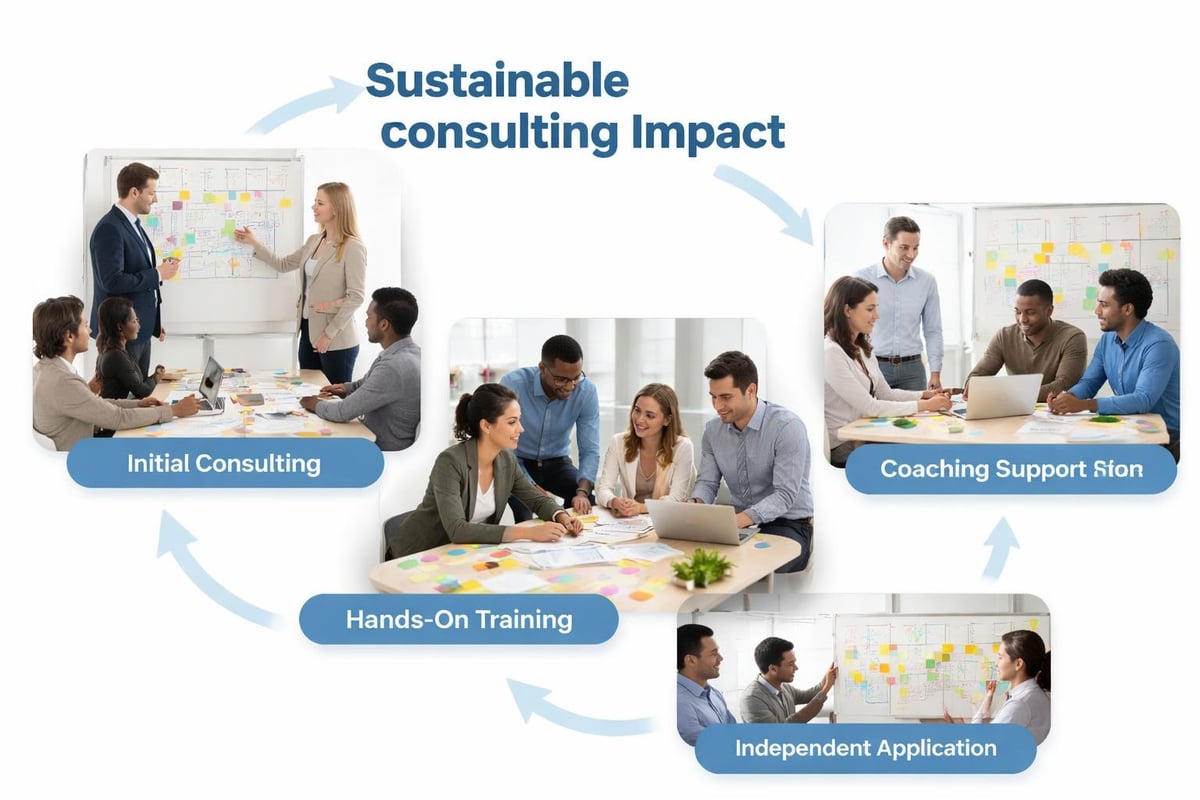
Top business consulting goes beyond delivering AI solutions; the best firms transfer capabilities to client teams. Training programs develop in-house expertise that sustains innovation momentum long after consulting engagements conclude. This knowledge transfer approach creates lasting competitive advantages rather than temporary performance bumps.
Organizations that build internal innovation capabilities can:
- Respond more rapidly to emerging market opportunities
- Continuously improve products and services based on customer feedback
- Reduce dependence on external consultants for routine innovation activities
- Foster cultures where experimentation and calculated risk-taking flourish
- Attract and retain top talent motivated by innovation-focused environments
Specialized Industry Expertise
Generic consulting advice rarely addresses the nuanced challenges specific industries face. Top business consulting firms develop deep sector knowledge that informs more relevant, actionable recommendations. Whether serving various industries requiring consulting expertise, leading firms understand regulatory environments, competitive dynamics, customer expectations, and operational realities unique to each sector.

Healthcare consulting demands understanding of complex reimbursement models, regulatory compliance, and patient outcomes measurement. Financial services consulting requires expertise in risk management, regulatory frameworks, and digital transformation. Manufacturing consulting focuses on operational excellence, supply chain optimization, and Industry 4.0 technologies.
Cross-Industry Innovation Transfer
While specialization matters, top consulting firms also facilitate cross-industry innovation transfer. Techniques successful in one sector often apply elsewhere when adapted thoughtfully. Subscription business models pioneered in software transformed industries from automotive to healthcare. Customer experience approaches from hospitality elevated retail and banking.
The most valuable consultants recognize patterns across industries while respecting sector-specific constraints. This balanced perspective prevents both generic recommendations and overly narrow thinking that misses opportunities from adjacent markets.
Revenue Growth and Profitability Focus
Ultimately, top business consulting must drive financial performance. Strategic insights and innovative concepts only matter when they translate into revenue growth and improved profitability. Revenue consulting focuses specifically on identifying and capturing growth opportunities through new markets, products, customer segments, and business models.
Leading consultants help clients answer fundamental growth questions:
- Which market segments offer the highest growth potential with manageable risk?
- What pricing strategies optimize both volume and margin?
- How can customer acquisition costs decrease while lifetime value increases?
- Which products or services deserve continued investment versus elimination?
- What partnerships or acquisitions could accelerate market expansion?
Data-driven growth strategies replace intuition with evidence, testing assumptions before major resource commitments. This disciplined approach reduces expensive failures while identifying high-potential opportunities others overlook.
The Evolution of Consulting Business Models
The consulting industry itself continues innovating its service delivery models. Traditional project-based engagements increasingly supplement with ongoing advisory relationships, performance-based pricing, and embedded consulting teams that work alongside client staff. These emerging consulting industry trends reflect changing client preferences and market dynamics.
| Traditional Model | Emerging Model | Key Difference |
|---|---|---|
| Project-based | Retainer advisory | Ongoing vs. episodic |
| Time and materials | Performance-based | Effort vs. outcomes |
| Remote delivery | Embedded teams | External vs. integrated |
| Generalist expertise | Niche specialization | Broad vs. deep |
| Manual analysis | AI-augmented | Traditional vs. technology-enabled |
Subscription consulting models provide continuous strategic support at predictable costs. Performance-based pricing aligns consultant and client incentives around measurable results. Hybrid delivery models combine remote efficiency with on-site collaboration when face-to-face interaction adds value.
Technology-Enabled Service Delivery
Digital platforms enable consultants to serve clients more efficiently and effectively. Virtual collaboration tools facilitate global teams working seamlessly across time zones. Cloud-based analytics platforms provide real-time dashboards tracking initiative progress. Knowledge management systems capture institutional learning that improves with each engagement.
Top business consulting firms invest heavily in proprietary technology platforms that enhance their methodologies. These tools don't replace human expertise but rather amplify consultant effectiveness, allowing professionals to focus on high-value strategic thinking rather than routine analysis.
Building Internal Innovation Capabilities
The most impactful top business consulting engagements leave clients stronger and more self-sufficient. Rather than creating dependency, exceptional consultants build organizational capabilities that persist and strengthen over time. Training programs focused on innovation frameworks equip teams with tools and mindsets needed for continuous improvement.
Capability building encompasses multiple dimensions:
- Strategic thinking frameworks that structure complex problem-solving
- Innovation methodologies applicable across various business challenges
- Change management skills that overcome organizational resistance
- Data analytics competencies for evidence-based decision-making
- Collaborative leadership approaches that align diverse stakeholders
Organizations with strong internal capabilities can tackle routine innovation challenges independently while engaging consultants for specialized expertise or particularly complex initiatives. This balanced approach optimizes consulting investments while maintaining strategic momentum.
Selecting the Right Consulting Partner
Choosing among top business consulting options requires careful evaluation beyond brand reputation or fee structures. The ideal partner alignment depends on specific organizational needs, cultural fit, and strategic priorities. Several factors deserve consideration during consultant selection.
Relevant experience in addressing similar challenges provides valuable perspective, though avoid consultants who simply recycle previous solutions without customization. Cultural compatibility ensures smooth collaboration, with consultant work styles matching organizational preferences. Knowledge transfer commitment indicates whether consultants aim to build client capabilities versus maintaining long-term dependencies.
Evaluation Criteria and Selection Process
Rigorous consultant evaluation protects against expensive mismatches. Request case studies demonstrating measurable results in comparable situations. Interview multiple team members who would work on the engagement, not just senior partners who close deals. Check references thoroughly, asking specifically about results achieved and how challenges were handled.
Industry leaders like McKinsey & Company and the Boston Consulting Group bring extensive resources and proven methodologies, while specialized firms often provide deeper expertise in particular domains. The optimal choice depends on engagement scope, required capabilities, and organizational context.
Strategic Planning and Business Model Innovation
Top business consulting excels at helping organizations rethink fundamental business models rather than simply optimizing existing approaches. Business model innovation creates sustainable competitive advantages by changing how companies create, deliver, and capture value. This strategic transformation often proves more impactful than incremental product improvements or operational efficiencies.
Consultants facilitate business model innovation by:
- Mapping current business model components and interdependencies
- Identifying assumptions vulnerable to market disruption
- Generating alternative business model configurations
- Testing new models through rapid prototyping and market validation
- Planning phased transitions that manage risk and maintain operations
Platform business models connect producers and consumers in multi-sided markets. Subscription models emphasize customer retention over acquisition. Freemium approaches build user bases before monetization. Ecosystem models orchestrate partner networks creating compound value.
The most successful business model innovations align with evolving customer preferences, leverage distinctive organizational capabilities, and create barriers difficult for competitors to replicate.
Future-Focused Strategic Positioning
Top business consulting helps organizations position for future success rather than optimizing for current conditions. This forward-looking orientation requires understanding emerging technologies, shifting customer expectations, regulatory changes, and competitive dynamics. Strategy and transformation consulting balances near-term performance with long-term positioning.
Scenario planning explores multiple possible futures, developing flexible strategies that remain viable across various conditions. Strategic options thinking identifies moves that preserve future flexibility while making necessary current commitments. Portfolio approaches balance investments across different time horizons and risk profiles.
Leading consultants monitor consulting industry trends that signal broader business environment shifts. The rise of sustainable business practices, increasing regulatory complexity around data privacy, geopolitical fragmentation affecting global supply chains, and accelerating technological change all reshape strategic planning requirements.
Adaptive Strategy in Uncertain Environments
Traditional five-year strategic plans become obsolete in fast-changing markets. Top business consulting emphasizes adaptive strategies that evolve as new information emerges. This approach combines directional clarity with tactical flexibility, establishing firm strategic intent while remaining open to adjusting implementation paths.
Adaptive organizations build sensing mechanisms that detect weak signals of market shifts early. They develop response playbooks prepared for various scenarios. They cultivate organizational agility allowing rapid resource reallocation when conditions change. They maintain strategic discipline preventing reactive pivots while enabling thoughtful course corrections.
Integration of Strategic Frameworks and Tools
The best consultants don't rely on single frameworks but integrate multiple tools suited to specific situations. Business frameworks for strategic analysis provide structure without constraining thinking. Porter's Five Forces analyzes competitive intensity. SWOT assessment identifies internal strengths and weaknesses relative to external opportunities and threats. Value chain analysis reveals where companies create differentiation or cost advantages.
Growth-share matrices optimize business portfolio allocations. Scenario planning frameworks prepare for uncertain futures. Innovation matrices balance incremental improvements with breakthrough initiatives. Customer journey mapping identifies experience enhancement opportunities.
Effective consultants select frameworks matching the strategic question at hand, often combining multiple approaches for comprehensive analysis. They explain frameworks clearly so client teams understand both the analysis and underlying logic, building capability while delivering insights.
Navigating today's complex business environment requires partners who combine strategic depth with practical implementation expertise. The most effective consulting relationships transform organizational capabilities while delivering measurable results that compound over time. Six Paths Consulting specializes in AI-powered strategic innovation that drives revenue growth and profitability, helping ambitious leaders discover new market opportunities and develop breakthrough business models. Whether you need to build internal innovation capabilities or accelerate strategic transformation, our proven methodologies and hands-on approach deliver sustainable competitive advantages.