

Design thinking has become an essential methodology for organizations seeking to solve complex challenges and drive innovation. A workshop on design thinking offers a structured approach to bring teams together, harness collective creativity, and develop human-centered solutions that create meaningful impact. These collaborative sessions transform abstract concepts into actionable strategies, enabling businesses to navigate uncertainty while staying focused on customer needs and market realities.
Understanding the Design Thinking Workshop Framework
A workshop on design thinking typically follows a structured framework that guides participants through distinct phases of problem-solving. The most widely recognized approach includes five core stages: empathize, define, ideate, prototype, and test. Each stage builds upon the previous one, creating a comprehensive journey from understanding user needs to developing tangible solutions.
The empathy phase forms the foundation of any successful design thinking initiative. Participants immerse themselves in understanding the perspectives, pain points, and motivations of end users through research, interviews, and observation. This human-centered approach ensures that solutions address real needs rather than assumed problems.
During the define phase, teams synthesize their research findings to articulate a clear problem statement. This step requires distilling complex information into a focused challenge that provides direction without constraining creative thinking. A well-crafted problem statement serves as the north star throughout the remaining workshop stages.
The Power of Collaborative Ideation
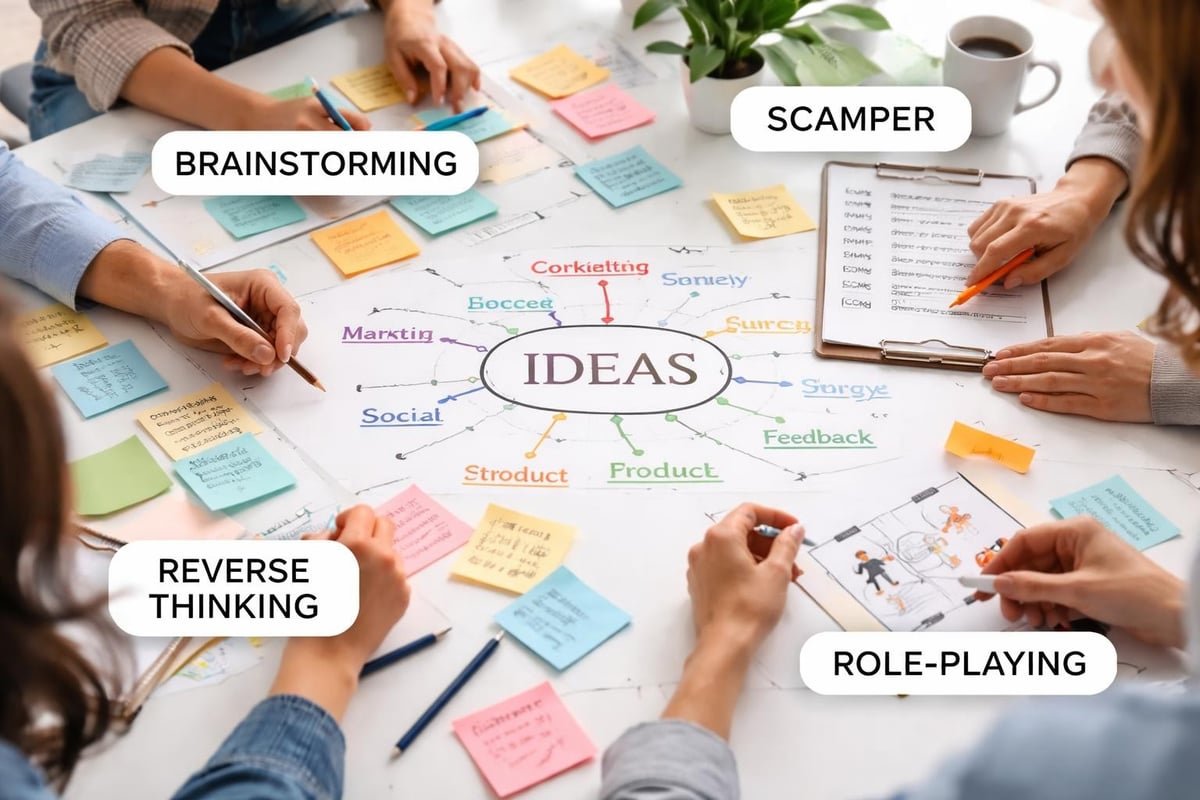
Ideation represents the most visibly creative phase of a workshop on design thinking. Teams generate numerous potential solutions without judgment or limitation. The quantity of ideas matters more than quality at this stage, as unconventional thinking often leads to breakthrough innovations.
Effective ideation techniques include:
- Brainstorming sessions with time-boxed intervals
- Mind mapping to explore connections between concepts
- SCAMPER method for systematically transforming existing ideas
- Reverse thinking to challenge assumptions
- Role-playing exercises to gain new perspectives
Innovation strategy consulting professionals often facilitate these sessions to ensure productive collaboration while preventing groupthink or premature evaluation of ideas.
Planning and Preparation for Maximum Impact
Success in a workshop on design thinking depends heavily on thorough preparation before participants enter the room. According to key design considerations for effective workshops, aligning workshop scope with business objectives ensures that creative efforts translate into meaningful outcomes.
Pre-workshop activities should include identifying the right participants, gathering preliminary user research, and establishing clear objectives. The participant mix matters significantly. Include individuals with diverse perspectives, various functional expertise, and different levels of organizational hierarchy to enrich discussion and challenge conventional thinking.
Setting the Stage for Collaboration
Physical or virtual environment design influences workshop effectiveness. Create spaces that encourage interaction while providing flexibility for different activities. Consider breakout areas for small group work, large surfaces for visual collaboration, and comfortable seating arrangements that promote extended engagement.
| Preparation Element | Purpose | Best Practice |
|---|---|---|
| Participant Selection | Ensure diverse perspectives | Include 6-12 people from different functions |
| User Research | Ground discussions in reality | Conduct interviews before the workshop |
| Materials Preparation | Enable hands-on prototyping | Provide sticky notes, markers, craft supplies |
| Agenda Design | Maintain productive flow | Balance structure with flexibility |
| Technology Setup | Support virtual collaboration | Test tools 24 hours in advance |
Time allocation requires careful consideration. Most comprehensive workshops span one to three days, though focused sessions addressing specific challenges may require only half a day. Building in breaks prevents mental fatigue and allows ideas to percolate between intensive work sessions.
Facilitation Techniques That Drive Results
The facilitator's role in a workshop on design thinking extends beyond keeping time and managing logistics. Skilled facilitators create psychological safety, encourage participation from quieter voices, and redirect conversations when discussions become unproductive or drift from core objectives.
One powerful technique involves the "Together, Alone" principle highlighted in comprehensive design thinking workshop guides. This approach alternates between individual reflection and group discussion, preventing dominant personalities from overshadowing others while ensuring every participant contributes meaningful ideas.
Essential facilitation skills include:
- Active listening to understand underlying concerns
- Asking open-ended questions that spark deeper thinking
- Managing conflict constructively when opinions diverge
- Recognizing when to push forward versus when to pause
- Synthesizing disparate ideas into coherent themes
The concept of a "Decider" proves valuable when workshops risk stalling due to excessive deliberation. This designated individual holds authority to make final decisions on direction, enabling the team to maintain momentum without endless debate.
Managing Energy and Engagement
Attention spans fluctuate during intensive creative work. Structure your workshop on design thinking with varied activities that engage different thinking modes. Alternate between analytical tasks and creative exercises, individual work and group collaboration, standing activities and seated discussions.
Ice-breaker exercises at the beginning establish rapport and signal that creative risk-taking is encouraged. These activities need not relate directly to the challenge at hand. Their primary purpose involves building trust and comfort among participants who may not regularly work together.
Prototyping and Testing for Validation
The prototype phase transforms abstract concepts into tangible representations that stakeholders can experience and evaluate. Prototypes in design thinking differ from traditional product development. They're intentionally rough, quick to produce, and designed primarily to facilitate learning rather than showcase polish.
Low-fidelity prototypes might include paper sketches, role-playing scenarios, storyboards, or cardboard models. The goal involves making ideas concrete enough to test assumptions and gather feedback. Business frameworks used in innovation consulting often emphasize rapid prototyping as a risk-reduction strategy.
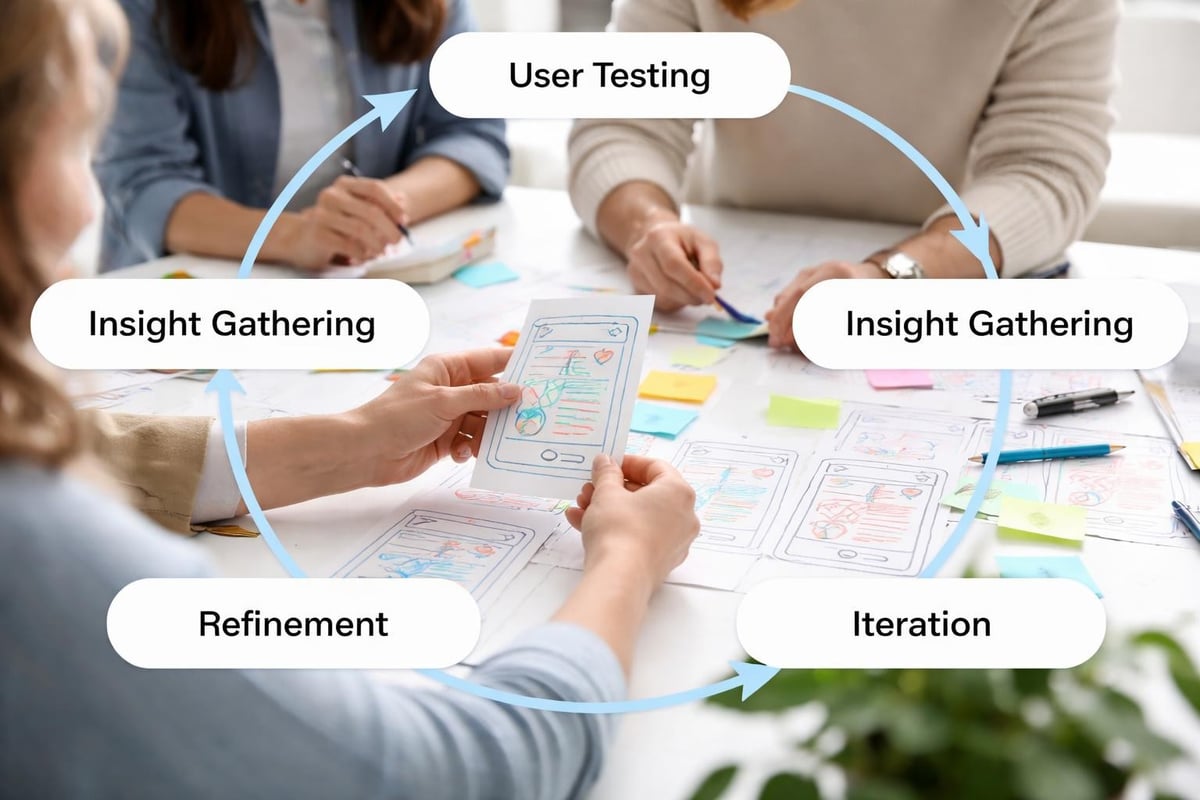
Testing prototypes with real users provides the critical validation needed before committing significant resources. Even within a workshop setting, teams can conduct quick tests with colleagues outside the session or create simulation exercises that reveal potential flaws in proposed solutions.
Iterative Refinement Process
Design thinking embraces iteration as a core principle. Initial prototypes almost never represent final solutions. Instead, they serve as learning tools that reveal what works, what doesn't, and what questions remain unanswered.
After testing, teams return to earlier phases with new insights. They might redefine the problem based on user feedback, generate additional ideas to address newly discovered needs, or modify prototypes to better align with real-world constraints. This cyclical process continues until solutions adequately address the identified challenge.
Common Challenges and How to Overcome Them
Even well-planned workshops encounter obstacles. Recognizing potential pitfalls and preparing mitigation strategies increases the likelihood of productive outcomes. One frequent challenge involves participants fixating on implementation constraints too early in the process, which stifles creative thinking.
Best practices for running effective sessions emphasize establishing ground rules that explicitly defer judgment and practical concerns until later stages. Remind participants that ideation focuses on possibilities rather than immediate feasibility.
Common workshop challenges include:
- Unbalanced participation with dominant voices overshadowing others
- Difficulty moving from abstract concepts to concrete solutions
- Time management failures that rush critical phases
- Insufficient user research leading to assumption-based solutions
- Lack of follow-through after the workshop concludes
The lack of follow-through presents perhaps the most significant risk. Without post-workshop action plans, insights and ideas fade quickly. Designate owners for next steps before concluding the session, establish specific timelines for advancement, and schedule follow-up meetings to maintain momentum.
Addressing Virtual Workshop Dynamics
Remote and hybrid workshops introduce unique considerations. Online design thinking workshop tips recommend minimizing distractions through clear communication protocols, muting notifications, and utilizing digital collaboration tools designed for creative work.
Virtual environments require more structured turn-taking and explicit facilitation of informal interactions that occur naturally in physical spaces. Build in virtual coffee breaks, use breakout rooms strategically, and leverage digital whiteboards that allow simultaneous contribution from all participants.
Measuring Success and Impact
Defining success metrics for a workshop on design thinking depends on the specific objectives established during planning. Immediate outcomes might include the number of ideas generated, quality of problem definition, or participant satisfaction scores. However, longer-term measures prove more meaningful for assessing true impact.
| Success Metric | Measurement Method | Timeline |
|---|---|---|
| Idea Quality | Expert evaluation against criteria | Immediate |
| Participant Learning | Pre/post knowledge assessment | Immediate |
| Solution Viability | Prototype test results | 2-4 weeks |
| Implementation Rate | Percentage of ideas advanced | 3-6 months |
| Business Impact | Revenue, cost savings, customer satisfaction | 6-12 months |
Real-world application separates valuable workshops from mere creative exercises. Organizations that implement frameworks for innovation systematically track which workshop outputs advance to pilot programs, full implementation, or market launch.
Some organizations conduct retrospectives several months after workshops to evaluate what worked, what didn't, and how future sessions might improve. This meta-learning compounds over time, building organizational capability in design thinking methodology.
Industry Applications and Case Studies
Design thinking workshops prove valuable across diverse industries and challenge types. Design sprint case studies demonstrate how organizations from education technology companies like Quizlet to cultural institutions like the British Museum have leveraged these methods to address specific challenges.
Financial services firms use workshops on design thinking to reimagine customer experiences, streamline complex processes, and develop new digital products. Healthcare organizations apply the methodology to improve patient outcomes, enhance care coordination, and design more intuitive medical devices.
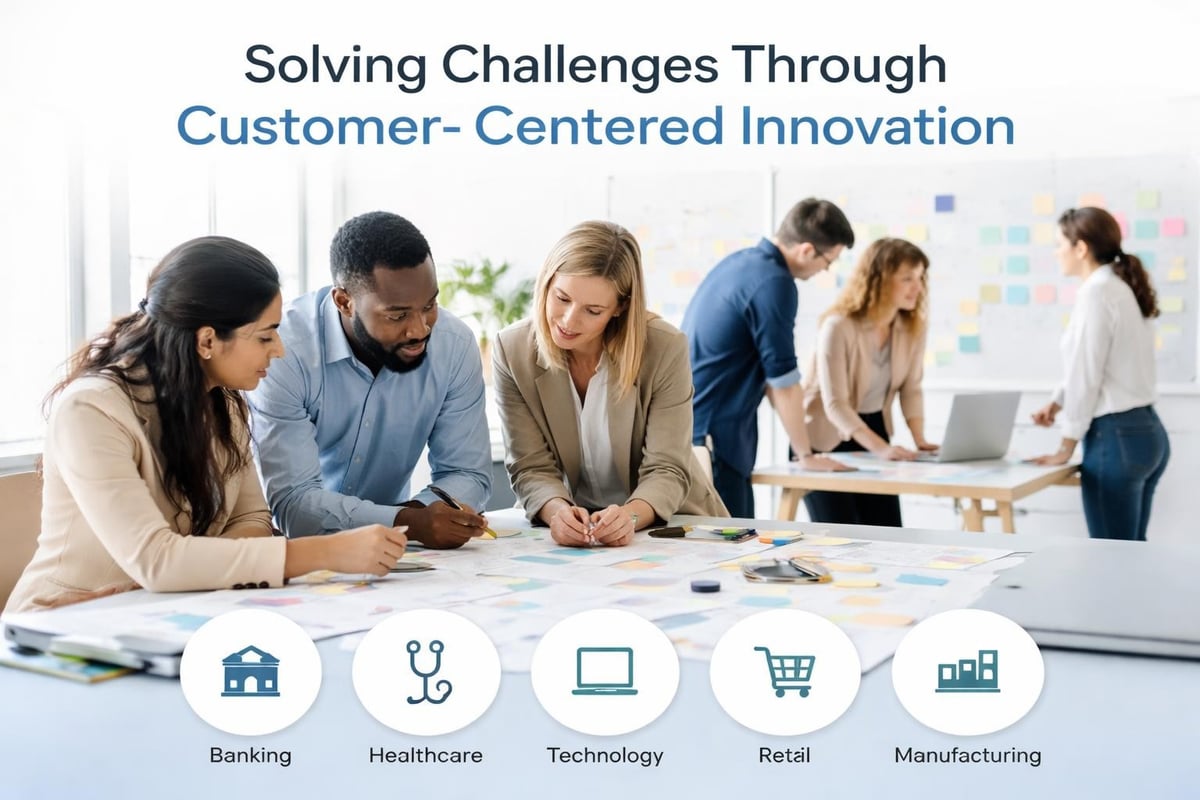
Technology companies frequently run design thinking sessions when exploring new product features or entering unfamiliar market segments. The methodology helps teams balance technical possibilities with human needs, preventing the common pitfall of building sophisticated solutions that users find confusing or unnecessary.
Scaling Design Thinking Capabilities
Organizations committed to innovation often move beyond occasional workshops to embed design thinking into their culture. This transformation requires training internal facilitators, establishing shared vocabulary and frameworks, and creating systems that support ongoing experimentation.
Business transformation strategy initiatives increasingly incorporate design thinking as a core capability. Rather than relying exclusively on external consultants, companies develop internal expertise that enables continuous innovation aligned with strategic objectives.
Building this capability requires investment in training programs that go beyond surface-level familiarity. Effective programs include hands-on practice with real business challenges, coaching from experienced facilitators, and opportunities to lead progressively complex workshops.
Essential Tools and Resources
Successful workshops on design thinking leverage both physical and digital tools that support collaboration and creativity. Traditional supplies include large-format sticky notes in multiple colors, thick markers visible from a distance, dot stickers for voting, and diverse materials for prototyping.
Digital tools have expanded possibilities, particularly for distributed teams. Virtual whiteboard platforms like Miro and Mural offer templates specifically designed for design thinking activities. These tools enable real-time collaboration, preserve workshop outputs digitally, and allow asynchronous contribution when needed.
Documentation tools prove equally important. Designate someone to capture key insights, decisions, and action items throughout the workshop. Photograph physical artifacts, record video snippets of prototype demonstrations, and compile comprehensive summaries that participants can reference later.
Recommended workshop toolkit includes:
- Visual templates for each design thinking phase
- Timer for maintaining discipline around time-boxes
- User research artifacts to ground discussions
- Facilitation guides with backup activities
- Feedback forms for continuous improvement
Practical advice on leading effective sessions emphasizes the importance of setting clear objectives while fostering an open environment where participants feel comfortable sharing unconventional ideas.
Customizing Workshops for Specific Contexts
While the core design thinking framework remains consistent, effective facilitators adapt workshops to match organizational context, participant experience levels, and challenge complexity. First-time participants benefit from explicit explanation of each phase and additional structure, while experienced teams may need less guidance and more flexibility.
Workshop duration should align with challenge scope. Attempting to solve highly complex, multi-faceted problems in a half-day session leads to superficial solutions and participant frustration. Conversely, dedicating three days to a narrowly defined challenge wastes resources and tests attention spans unnecessarily.
Industry context matters when selecting examples, metaphors, and reference points. A workshop on design thinking for healthcare professionals should incorporate medical scenarios and patient-centered language, while sessions for technology companies might reference software development analogies and digital product examples.
The innovation maturity of the organization influences facilitation approach. Companies new to structured innovation may require more foundational education about design thinking principles, while organizations with established innovation practices can move quickly through basics and focus on advanced techniques.
Integrating with Existing Processes
Design thinking workshops generate maximum value when integrated with existing business processes rather than treated as isolated events. Connect workshop outputs to product development roadmaps, strategic planning cycles, or continuous improvement initiatives to ensure ideas receive proper consideration and resources.
Some organizations schedule regular design thinking sessions addressing different aspects of their business, creating a rhythm of innovation that becomes part of normal operations. This cadence prevents innovation from feeling like a special event and embeds creative problem-solving into organizational DNA.
Mastering the art of facilitating effective workshops on design thinking enables organizations to tackle complex challenges with confidence while maintaining focus on customer needs and market realities. The structured yet flexible methodology provides teams with proven frameworks for innovation that balance creative exploration with practical implementation. Six Paths Consulting specializes in building these innovation capabilities within organizations, offering both strategic guidance for immediate challenges and comprehensive training programs that develop internal expertise for sustained competitive advantage.