

The shift from traditional product-centric approaches to service-based business models represents one of the most significant transformations in modern enterprise strategy. A business model service framework fundamentally reimagines how organizations create, deliver, and capture value by emphasizing ongoing relationships, performance outcomes, and customer success over one-time transactions. This transition requires companies to rethink their entire value proposition, from revenue generation to customer engagement, and has become essential for maintaining competitive advantage in 2026's rapidly evolving marketplace.
Understanding the Business Model Service Framework
A business model service approach transforms how companies monetize their offerings by shifting from selling products to delivering continuous value through services. This fundamental change affects every aspect of an organization, from operations and pricing to customer relationships and resource allocation.
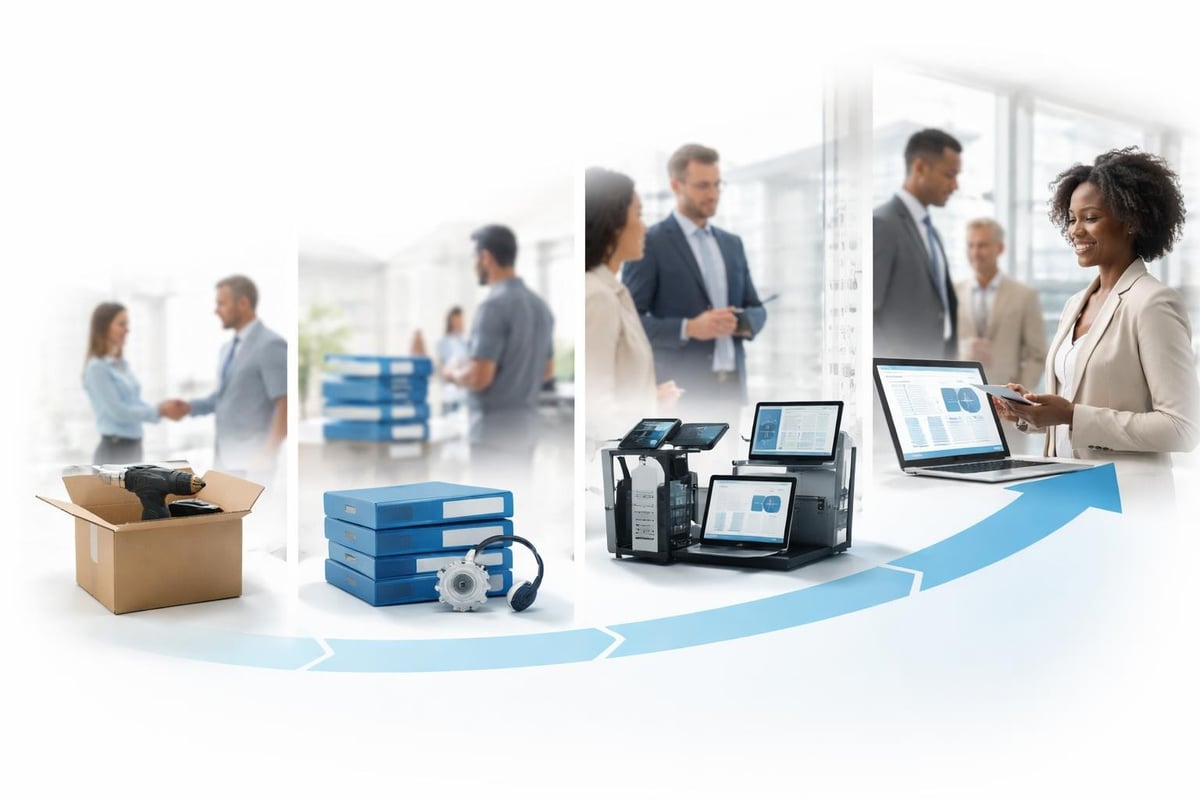
The core distinction lies in the value exchange mechanism. Traditional product sales transfer ownership and responsibility to the customer at the point of purchase. In contrast, a business model service maintains ongoing provider involvement, ensuring performance, updates, and optimization throughout the customer lifecycle.
Key characteristics of service-based business models include:
- Recurring revenue streams rather than one-time sales
- Performance-based pricing aligned with customer outcomes
- Continuous customer engagement and relationship management
- Provider responsibility for maintenance, updates, and improvements
- Shared risk between provider and customer
This transformation has accelerated dramatically across industries. The subscription business model has evolved from magazines and newspapers to software, automobiles, and industrial equipment, demonstrating the universal applicability of service-based approaches.
Strategic Advantages of Service-Based Business Models
Organizations implementing a business model service approach gain multiple strategic advantages that compound over time. These benefits extend beyond financial metrics to encompass market position, customer relationships, and organizational resilience.
Revenue Predictability and Growth
Service-based models create predictable revenue streams that enable better financial planning and valuation. Monthly or annual recurring revenue provides stability that one-time product sales cannot match. This predictability allows companies to invest confidently in innovation, infrastructure, and talent acquisition.
The lifetime value of customers increases substantially under service models. Instead of a single transaction, customers generate revenue continuously, often with expanding scope as needs evolve. This economics shift fundamentally changes how companies evaluate acquisition costs and growth investments.
Deeper Customer Relationships
Ongoing service delivery creates natural touchpoints for understanding customer needs, challenges, and opportunities. Providers gain continuous feedback that informs product development, service improvements, and strategic direction. This intelligence loop enables rapid iteration and market responsiveness.
Customer success becomes directly aligned with provider success under a business model service framework. When providers earn revenue based on usage, performance, or outcomes, they're incentivized to ensure customers achieve maximum value. This alignment builds trust and reduces churn significantly.
| Traditional Product Model | Business Model Service |
|---|---|
| One-time transaction focus | Ongoing relationship focus |
| Customer assumes all risk | Shared risk model |
| Revenue at point of sale | Recurring revenue over time |
| Limited post-sale engagement | Continuous engagement |
| Feature-based competition | Outcome-based differentiation |
Industry Applications and Examples
The business model service approach has transformed diverse industries, each adapting the framework to their specific context and customer needs. Understanding these applications provides valuable insights for organizations considering similar transitions.
Manufacturing and Industrial Equipment
The manufacturing sector has embraced service models through concepts like Machines-as-a-Service, where equipment providers maintain ownership while customers pay for usage or performance. This approach eliminates large capital expenditures for customers while ensuring optimal equipment performance through proactive maintenance.
Original equipment manufacturers benefit from predictable revenue, deeper customer relationships, and valuable usage data that informs product development. The model proves particularly effective for complex, high-value equipment where downtime carries significant costs.
Financial Services
Banks and financial institutions have adopted service models exemplified by ATM-as-a-Service, which transfers responsibility for hardware, software, and maintenance to specialized providers. This allows institutions to focus on core banking services while ensuring optimal ATM network performance and customer satisfaction.
The service approach reduces capital requirements, improves operational efficiency, and enables rapid technology updates without major replacement cycles. Performance guarantees ensure consistent service quality across distributed networks.
Data and Analytics
Data-as-a-Service represents a pure business model service implementation where organizations access, purchase, or trade machine-readable data on demand. This eliminates the need for extensive internal data infrastructure while providing flexibility to scale usage based on needs.
Providers maintain data quality, freshness, and accessibility while customers benefit from reduced overhead and access to specialized datasets they couldn't economically produce themselves. The model has become essential for AI and machine learning applications requiring diverse, high-quality training data.
Designing Effective Service-Based Business Models
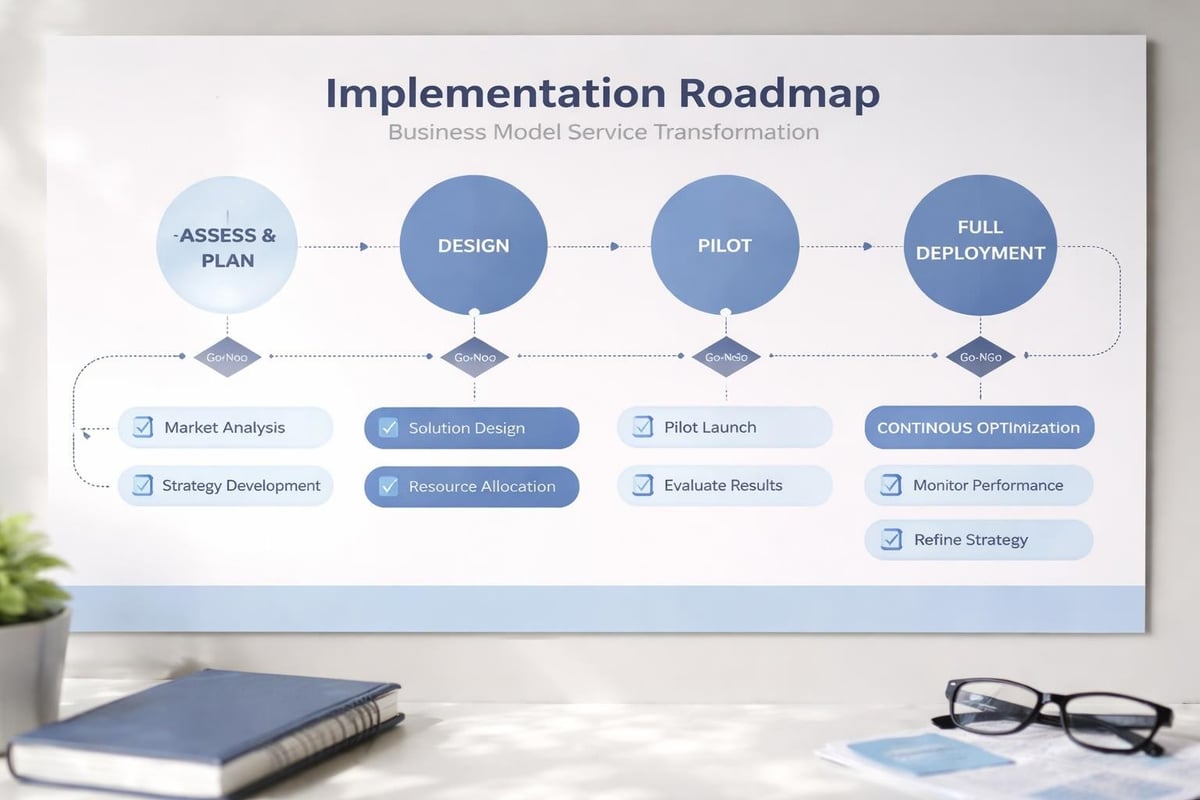
Creating a successful business model service requires careful design across multiple dimensions. The transition from product to service demands more than simply changing pricing structures; it requires fundamental rethinking of value creation and delivery.
Value Proposition Development
The value proposition must shift from product features to customer outcomes. What results do customers actually seek? How does your service deliver those results more effectively than alternatives? These questions drive service design.
Effective service value propositions address:
- Specific customer pain points or opportunities
- Measurable outcomes tied to customer success
- Clear performance metrics and guarantees
- Flexibility to adapt as customer needs evolve
- Total cost of ownership advantages over alternatives
Organizations exploring opportunities for innovation often discover that service models unlock entirely new value propositions previously impossible under product-centric approaches.
Pricing and Revenue Models
A business model service requires pricing structures aligned with value delivery rather than cost-plus product pricing. Multiple approaches exist, each with distinct advantages depending on context.
Common service pricing models include:
- Subscription-based: Fixed periodic fees for defined service levels
- Usage-based: Variable pricing tied to consumption metrics
- Performance-based: Compensation linked to achieved outcomes
- Tiered: Multiple service levels at different price points
- Hybrid: Combinations of the above approaches
The optimal pricing model balances revenue predictability with customer flexibility. It should be simple enough for customers to understand yet sophisticated enough to capture value across different usage patterns. Successful business model transformation often requires testing multiple pricing approaches before identifying the optimal structure.
Operational Infrastructure Requirements
Service delivery demands different operational capabilities than product manufacturing or sales. Organizations must build infrastructure supporting continuous service delivery, monitoring, and improvement.
Critical operational components include customer success teams managing relationships and ensuring value realization, service delivery systems providing reliable, scalable access to services, performance monitoring tracking service levels and customer outcomes, and rapid response mechanisms addressing issues before they impact customers.
The transition requires significant investment in technology, processes, and talent. However, these investments create competitive moats that become increasingly valuable over time as operational excellence compounds.
Overcoming Implementation Challenges
Transitioning to a business model service presents substantial challenges that require thoughtful navigation. Understanding common obstacles and proven approaches for addressing them increases the likelihood of successful transformation.
Financial Transition Management
The shift from upfront product revenue to recurring service revenue creates a financial valley period where investments precede revenue realization. This timing mismatch challenges traditional financial planning and may concern stakeholders accustomed to product economics.
Strategies for managing the financial transition:
- Phase the transition gradually rather than abruptly cutting off product sales
- Maintain hybrid models during transition periods
- Communicate clearly with stakeholders about long-term value creation
- Secure patient capital understanding the transition timeline
- Focus metrics on lifetime value and recurring revenue growth
Organizations pursuing growth business consulting often need external expertise navigating these financial dynamics while maintaining stakeholder confidence.
Cultural and Organizational Change
A business model service requires different mindsets, skills, and behaviors than product-centric organizations typically cultivate. Sales teams accustomed to transaction-based compensation must adapt to relationship-focused approaches. Product teams must prioritize customer outcomes over feature development. Operations teams must embrace continuous delivery over discrete production runs.
This cultural transformation often represents the most difficult aspect of business model service implementation. It requires sustained leadership commitment, clear communication of why the change matters, comprehensive training and skill development, revised incentive structures aligned with service success, and patience as new behaviors become embedded.
| Challenge | Impact | Mitigation Approach |
|---|---|---|
| Revenue timing gap | Cash flow pressure | Phased transition, hybrid models |
| Cultural resistance | Slow adoption | Leadership commitment, incentive alignment |
| Operational complexity | Service delivery issues | Incremental capability building |
| Customer education | Adoption hesitancy | Clear value communication, proof cases |
| Competitive response | Market pressure | Differentiation through outcomes |
Measuring Success in Service Business Models
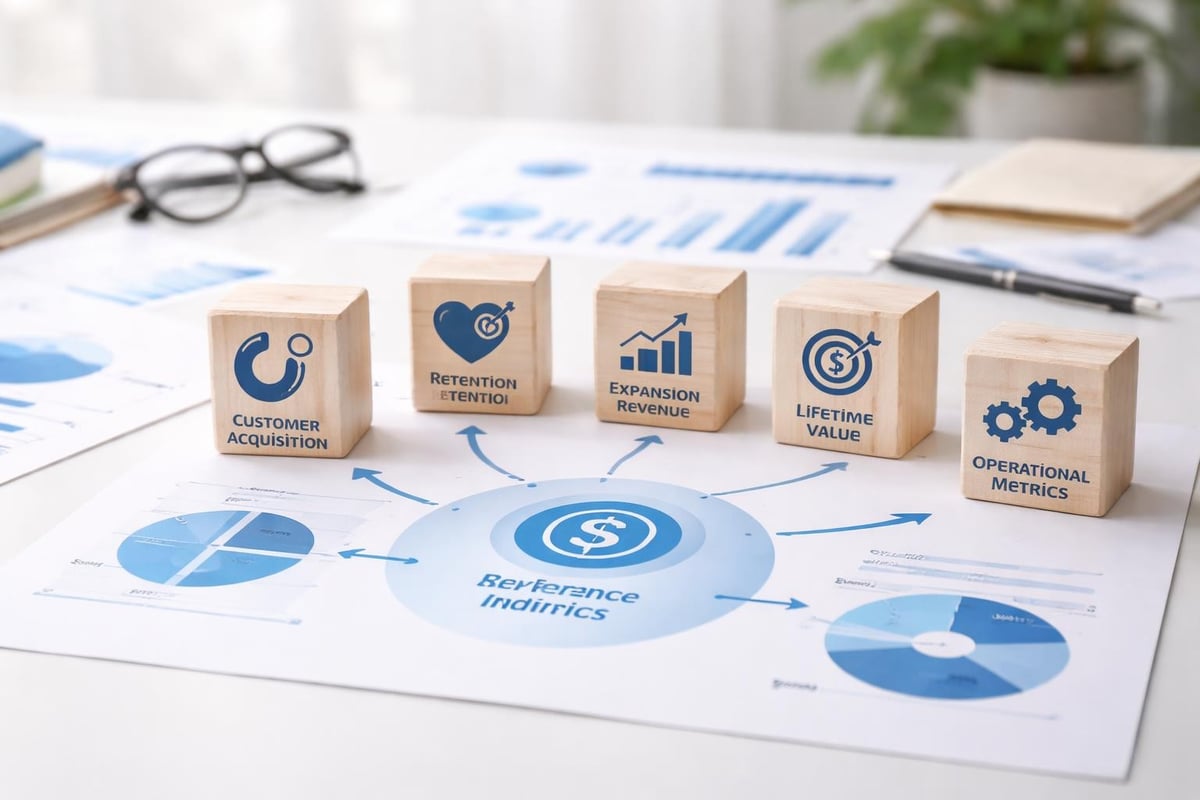
Traditional product metrics poorly capture the dynamics of service-based businesses. A business model service requires different measurement frameworks that emphasize relationship health, recurring revenue quality, and long-term value creation.
Core Service Business Metrics
Monthly Recurring Revenue (MRR) and Annual Recurring Revenue (ARR) form the foundation of service business measurement. These metrics track predictable revenue streams and enable trend analysis independent of seasonal variations or one-time events.
Customer Lifetime Value (CLV) becomes increasingly important as the economics shift from transaction to relationship. CLV calculations must account for retention rates, expansion revenue, and the time value of money across extended customer relationships.
Customer Acquisition Cost (CAC) must be evaluated against lifetime value rather than initial transaction value. Service businesses can sustain higher acquisition costs than product businesses given longer revenue streams, but the CAC to CLV ratio remains critical for sustainable growth.
Operational Health Indicators
Beyond financial metrics, a business model service requires monitoring operational indicators that predict future performance. Net Revenue Retention measures whether existing customers expand, contract, or churn, providing early warning of value delivery issues. Rates above 100% indicate customers find increasing value over time.
Customer Health Scores aggregate multiple signals including usage patterns, support interactions, payment history, and engagement levels. These composite scores enable proactive intervention before customers churn and help prioritize customer success resources.
Service Level Achievement tracks delivery against commitments, maintaining accountability and identifying operational improvement opportunities. Consistent achievement builds trust while failures signal process weaknesses requiring attention.
Strategic Innovation Through Service Models
The business model service framework enables forms of business model innovation impossible under product-centric approaches. Understanding these innovation opportunities helps organizations imagine transformative possibilities rather than merely replicating existing models.
Ecosystem and Platform Approaches
Service models naturally lend themselves to ecosystem development where multiple providers integrate their offerings to deliver comprehensive customer solutions. Platform business models leverage this dynamic, creating marketplaces where service providers and consumers interact, with the platform capturing value through facilitation.
These ecosystem approaches compound network effects as each additional participant increases value for all others. The business model service framework provides the recurring revenue and relationship depth necessary to sustain complex multi-party arrangements.
Outcome-Based Innovation
Perhaps the most transformative aspect of service business models is enabling outcome-based innovation where providers guarantee specific results rather than simply delivering products or services. This approach requires deep understanding of customer success factors and sophisticated capabilities for delivering consistent outcomes.
Outcome-based models align incentives perfectly between provider and customer, eliminating the principal-agent problems inherent in traditional sales. They also create high barriers to competition as delivering guaranteed outcomes requires extensive expertise, systems, and operational excellence.
Organizations implementing design thinking principles often discover that outcome-based service models emerge naturally from deep customer empathy and iterative solution development focused on actual needs rather than assumed requirements.
Future Trends in Service Business Models
The business model service landscape continues evolving rapidly as technology enables new possibilities and customer expectations shift. Understanding emerging trends helps organizations position for future success rather than merely catching up to current practices.
AI-Powered Service Optimization
Artificial intelligence is transforming service delivery through predictive maintenance, personalized customer experiences, and automated optimization. AI systems analyze usage patterns, predict issues before they occur, and continuously tune service parameters for optimal performance.
This intelligence layer makes service models more effective while reducing delivery costs, creating economic advantages that compound over time. Early adopters of AI-powered service optimization establish significant competitive leads as their systems learn from more data and deliver superior outcomes.
Micro-Services and Modularity
Service offerings are becoming increasingly modular, allowing customers to compose custom solutions from specialized components. This modularity provides flexibility while maintaining the efficiency of standardized delivery.
The micro-services approach enables rapid innovation as new capabilities can be developed independently and integrated seamlessly. It also reduces switching costs for customers by allowing partial replacements rather than all-or-nothing decisions.
Sustainability and Circular Economy Integration
Service models align naturally with sustainability objectives by incentivizing resource efficiency, product longevity, and responsible end-of-life management. Providers maintaining ownership ensure proper recycling, refurbishment, and responsible disposal.
This alignment positions a business model service as the preferred approach for organizations pursuing environmental, social, and governance objectives. The circular economy depends fundamentally on service-based models that close resource loops rather than linear product flows.
The integration of best strategy consulting companies helps organizations navigate these complex trends and identify which innovations align with their specific strategic context and capabilities.
The business model service framework represents more than a pricing change; it fundamentally reimagines how organizations create and deliver value in ways that align provider success with customer outcomes. As markets continue evolving toward relationship-based approaches and customers increasingly demand results over products, service models will become essential for competitive survival. Six Paths Consulting specializes in helping ambitious leaders navigate this transformation, developing innovative business models that unlock new market opportunities and drive sustainable revenue growth. Our AI-powered strategic innovation approach and comprehensive training programs empower your organization to build the capabilities necessary for service model excellence and long-term market leadership.