
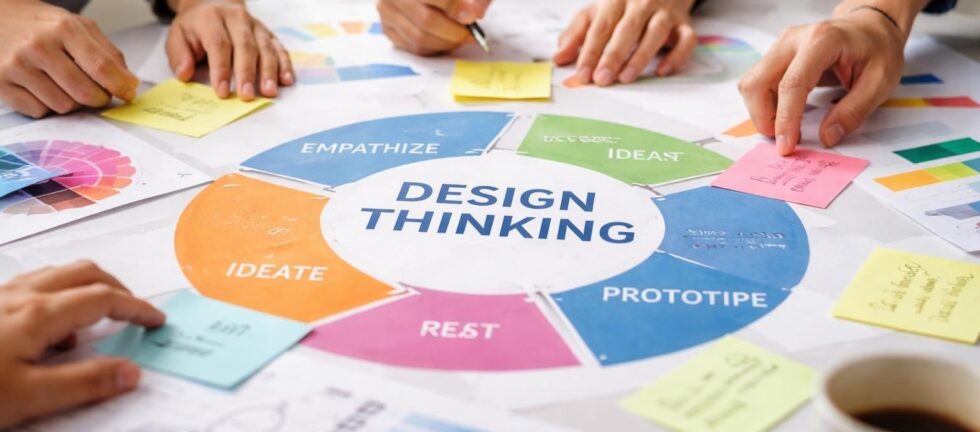
Strategic planning has traditionally relied on analytical frameworks, market analysis, and competitive positioning. However, in today's rapidly evolving business landscape, organizations face unprecedented complexity and uncertainty that demand fresh approaches. Design thinking for strategy has emerged as a powerful methodology that combines human-centered problem-solving with rigorous business planning, enabling companies to create innovative strategies that resonate with customers while driving sustainable competitive advantage. This approach shifts strategic development from purely analytical exercises to empathetic, experimental processes that uncover hidden opportunities and generate breakthrough solutions.
Understanding Design Thinking as a Strategic Framework
Design thinking for strategy represents a fundamental shift in how organizations approach strategic planning. Rather than starting with internal capabilities or competitive analysis, this methodology begins with deep empathy for customers and stakeholders, exploring their unmet needs and unexpressed desires.
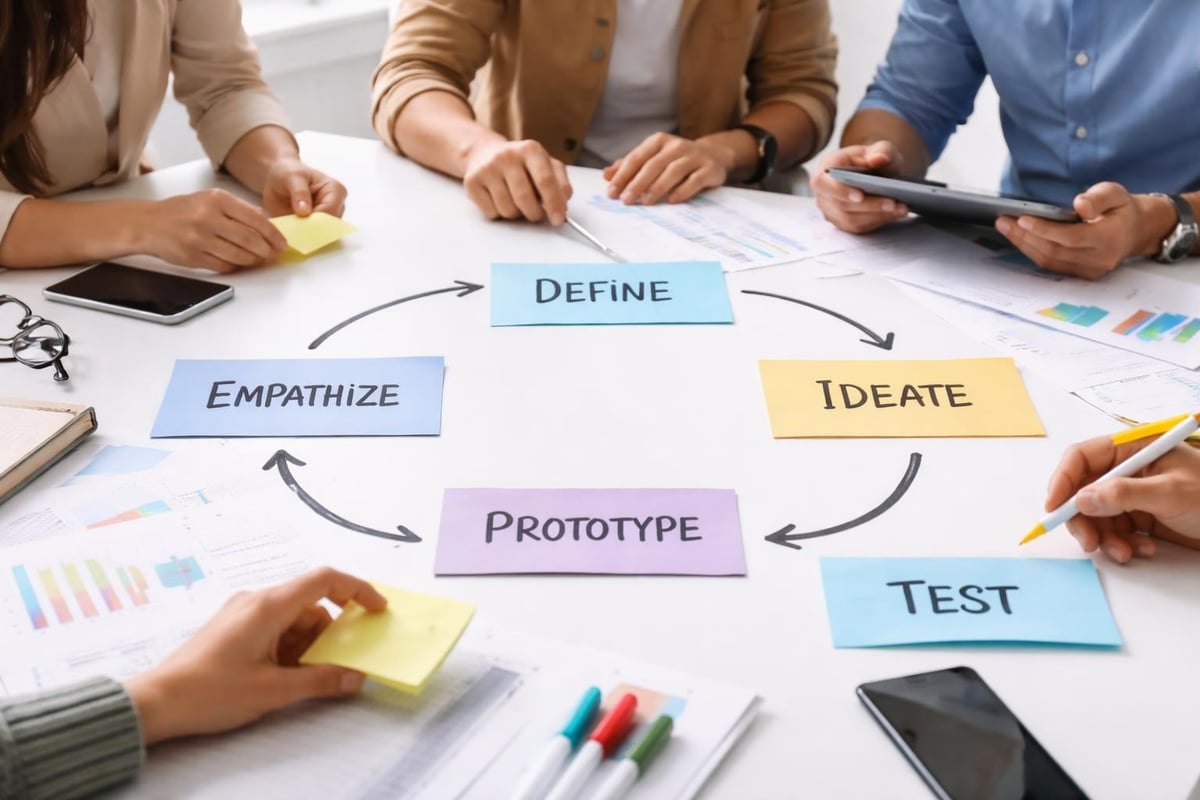
The design thinking process typically encompasses five distinct phases: empathize, define, ideate, prototype, and test. When applied to strategy development, these phases transform how leaders identify opportunities, frame challenges, and develop innovative solutions. The empathize phase involves extensive research to understand customer contexts, behaviors, and pain points. The define phase synthesizes insights into clear problem statements. Ideation generates diverse strategic options without premature judgment. Prototyping creates low-fidelity versions of strategic initiatives for testing. Finally, the test phase validates assumptions before full-scale implementation.
Key Principles Distinguishing Strategic Design Thinking
Several core principles differentiate design thinking for strategy from conventional strategic planning approaches:
- Human-centricity: Strategies are built around genuine customer needs rather than product features or internal capabilities
- Iterative experimentation: Strategic hypotheses are tested rapidly through prototypes rather than perfected in isolation
- Collaborative diversity: Cross-functional teams bring varied perspectives to strategy development
- Bias toward action: Quick experimentation trumps exhaustive analysis
- Tolerance for ambiguity: Comfort with uncertainty enables exploration of unconventional opportunities
These principles create a fundamentally different strategic development environment. Traditional planning often seeks to eliminate uncertainty through comprehensive analysis. Design thinking for strategy embraces uncertainty as a source of opportunity, using rapid experimentation to navigate complexity.
Applying Design Thinking to Strategy Development
Organizations implementing design thinking for strategy must adapt their strategic planning processes significantly. The transformation begins with reframing how strategic questions are posed and explored.
Traditional strategic planning might ask: "How do we increase market share by 15% next year?" Design thinking reframes this to: "What unmet customer needs can we address that competitors are overlooking?" This subtle shift opens vastly different solution spaces. The first question constrains thinking to existing markets and approaches. The second invites exploration of new value propositions and business models.
Research and Empathy in Strategic Context
The empathy phase in strategic design thinking involves immersive research methodologies. Leadership teams conduct ethnographic studies, shadowing customers through their journeys. They interview non-customers to understand why current solutions fail to attract them. They map emotional experiences alongside functional processes.
This research generates rich qualitative insights that quantitative market analysis often misses. A financial services firm might discover that customers don't want "better investment products" but rather "confidence about their financial future." This insight reframes the entire strategic opportunity space, potentially leading to innovative business models focused on education, planning tools, and community rather than just product features.
Organizations should dedicate 30-40% of their strategic development timeline to empathy research. This investment pays dividends by ensuring strategies address genuine market needs rather than assumed ones.
Integrating Design Thinking with Traditional Strategy Tools
Design thinking for strategy doesn't replace analytical rigor but rather complements it. Successful organizations blend human-centered design methods with proven business frameworks to create robust strategies.
The integration typically follows a structured sequence. Design thinking methods identify opportunities and generate innovative concepts. Traditional strategy tools then evaluate feasibility, assess competitive dynamics, and build implementation roadmaps. This combination leverages the creativity of design thinking with the analytical strength of strategic planning.
| Strategic Phase | Design Thinking Methods | Traditional Strategy Tools | Integration Outcome |
|---|---|---|---|
| Opportunity Identification | Customer empathy interviews, journey mapping | Market size analysis, trend forecasting | Customer-validated market opportunities |
| Solution Development | Rapid ideation, concept prototyping | Competitive analysis, capability assessment | Feasible, differentiated value propositions |
| Business Model Design | Service blueprinting, experience prototyping | Financial modeling, risk analysis | Validated, profitable business models |
| Implementation Planning | User testing, pilot programs | Project management, resource allocation | Evidence-based execution plans |
This integrated approach addresses a common criticism of design thinking: that it generates creative ideas without sufficient business rigor. By combining methods, organizations ensure strategies are both innovative and commercially viable.
The Role of Prototyping in Strategic Validation
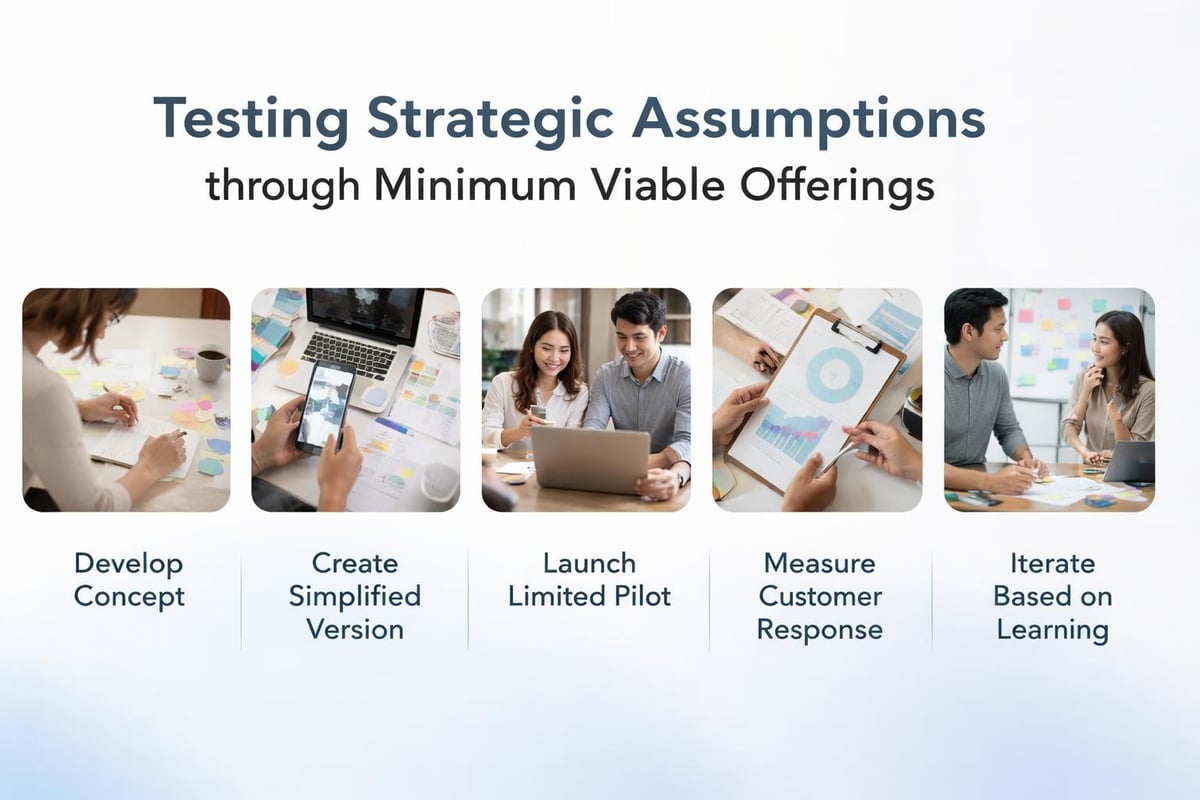
Prototyping represents one of design thinking's most powerful contributions to strategy. Rather than developing comprehensive business plans before market testing, organizations create minimum viable strategies that can be tested quickly and inexpensively.
A strategic prototype might be a simplified service offering launched in a limited market. It could be a landing page describing a potential new business model to gauge customer interest. For innovation strategy consulting initiatives, prototypes often take the form of pilot programs that test key strategic assumptions.
The design sprint methodology provides a structured five-day process for rapidly prototyping and testing strategic concepts. This time-boxed approach forces teams to prioritize critical questions, make quick decisions, and gather real market feedback before committing significant resources.
Building Organizational Capacity for Strategic Design Thinking
Implementing design thinking for strategy requires more than adopting new tools. It demands cultural transformation and capability development across the organization.
Leadership teams must model the behaviors design thinking requires. This means demonstrating comfort with ambiguity, willingness to challenge assumptions, and openness to unexpected insights. When executives personally participate in customer research and prototyping sessions, they signal the methodology's importance while building their own empathetic understanding.
Developing Cross-Functional Strategic Teams
Design thinking for strategy works best with diverse, cross-functional teams. Product managers, operations leaders, customer service representatives, and finance professionals each bring unique perspectives to strategic challenges.
However, functional diversity alone doesn't guarantee effective collaboration. Teams need structured facilitation methods that ensure all voices are heard and cognitive biases are minimized. Techniques include:
- Silent brainstorming: Participants generate ideas individually before group discussion, preventing dominant voices from constraining thinking
- Role rotation: Team members temporarily adopt stakeholder perspectives during strategy development
- Forced constraints: Artificial limitations (like "design a strategy with zero marketing budget") spark creative thinking
- Assumption testing: Explicitly identifying and challenging strategic assumptions through structured debate
Organizations should invest in training programs that build these facilitation capabilities. When teams master collaborative design thinking methods, strategic planning becomes more inclusive, innovative, and aligned across functions.
Measuring Impact and Iterating Strategic Approaches
Design thinking for strategy embraces iteration and continuous learning. Unlike traditional strategic plans that might remain fixed for annual cycles, design-driven strategies evolve based on market feedback and learning.
This requires different measurement approaches. Traditional strategy metrics focus on financial outcomes and competitive position. Design thinking adds learning metrics: What hypotheses were tested? What customer insights were validated or invalidated? How quickly did we iterate based on feedback?
Establishing Learning-Oriented Strategic Metrics
Effective measurement systems balance outcome metrics with process metrics:
Outcome Metrics:
- Revenue growth from new value propositions
- Customer acquisition in previously unserved segments
- Net Promoter Score improvements
- Market share gains in targeted categories
Learning Metrics:
- Number of customer interviews conducted per strategic initiative
- Cycle time from concept to prototype to market test
- Percentage of strategic assumptions validated before full investment
- Ideas generated and tested per strategic planning cycle
These learning metrics ensure organizations maintain the experimental mindset that makes design thinking for strategy effective. Research on design thinking’s influence demonstrates that experience with iterative methods improves both creative output and innovation outcomes over time.
Advanced Applications in Complex Strategic Contexts
As organizations mature in applying design thinking for strategy, they tackle increasingly complex challenges. These advanced applications demonstrate the methodology's versatility and power.
Ecosystem Strategy Development
Traditional strategy often focuses on individual company positioning. Design thinking enables ecosystem-level strategy that considers how multiple stakeholders create value together. This proves particularly valuable for innovation on business models that require partner networks.
The process begins by mapping the complete ecosystem around a customer need, identifying all parties that influence outcomes. Teams then explore how value flows through the ecosystem, where friction exists, and what new configurations might better serve everyone. Prototypes might test new partnership models or platform approaches that restructure ecosystem relationships.
Strategic Innovation in Regulated Industries
Highly regulated industries face unique strategic constraints. Design thinking for strategy helps organizations innovate within regulatory boundaries by reframing constraints as creative challenges.
A healthcare organization might use empathy research to understand patient experiences deeply, then ideate solutions that address needs while complying with privacy regulations. Management consulting tools can help structure this constrained ideation, ensuring creative exploration remains grounded in regulatory reality.
The key is involving regulatory experts throughout the design process rather than treating compliance as a final gate. This integration often reveals innovative solutions that both serve customers and satisfy regulators.

Overcoming Common Implementation Challenges
Organizations frequently encounter obstacles when implementing design thinking for strategy. Recognizing and addressing these challenges increases adoption success.
Resistance from analytical cultures: Finance and operations teams sometimes view design thinking as insufficiently rigorous. Address this by demonstrating how the methodology complements rather than replaces analytical tools. Show how empathy research provides richer data than surveys alone. Emphasize that prototyping reduces risk by testing before full investment.
Short-term pressure conflicts: Quarterly targets can discourage the experimentation design thinking requires. Create protected space for strategic innovation initiatives that operate on different timelines. Establish dual-track approaches where core business optimization continues alongside design-driven strategic exploration.
Superficial application: Some organizations adopt design thinking language without changing behavior. They conduct one empathy interview then claim customer-centricity. Guard against this by establishing minimum standards: strategies must be validated through customer feedback, multiple prototypes tested, and cross-functional collaboration documented.
Scaling Design Thinking Beyond Initial Projects
Pilot projects often succeed, but scaling design thinking for strategy across an organization presents different challenges. Success requires systematic capability building and cultural reinforcement.
According to comprehensive guides on design thinking for strategy, organizations should establish centers of excellence that provide training, coaching, and resources. These centers don't control all strategic design thinking but rather enable distributed teams to apply methods effectively.
Leaders should also embed design thinking principles in formal strategic planning processes. Annual planning cycles can incorporate empathy research phases. Budget approval processes can require prototype validation before major investments. Performance reviews can assess learning metrics alongside outcome metrics.
Emerging Trends and Future Directions
The application of design thinking for strategy continues evolving as organizations gain experience and as business contexts change.
Artificial intelligence is transforming how organizations conduct empathy research at scale. Natural language processing analyzes thousands of customer conversations to identify unmet needs. Machine learning detects patterns in behavioral data that humans might miss. However, human interpretation and synthesis remain critical. AI augments rather than replaces the empathetic understanding central to innovation and business strategy.
Sustainability and social impact are increasingly integrated into design thinking for strategy. Organizations explore how strategies can simultaneously drive business success and positive environmental or social outcomes. This triple-bottom-line approach requires expanded stakeholder empathy that includes communities, ecosystems, and future generations.
Remote and hybrid work environments are changing how teams collaborate on strategic design thinking. Digital whiteboards, virtual prototyping tools, and asynchronous collaboration platforms enable distributed teams to apply design thinking methods effectively. Organizations are discovering that some aspects (like silent brainstorming) actually work better in digital environments, while others (like empathy building) benefit from occasional in-person sessions.
The methodology itself continues developing. Researchers are exploring how critical design strategies can enhance the reflection and evaluation phases of design thinking, ensuring solutions address root causes rather than symptoms. These advanced approaches push design thinking for strategy toward greater rigor and impact.
Design thinking for strategy transforms how organizations discover opportunities, develop innovative approaches, and create sustainable competitive advantage by centering human needs throughout strategic planning. The methodology's emphasis on empathy, experimentation, and iteration enables businesses to navigate complexity and uncertainty more effectively than traditional analytical planning alone. Six Paths Consulting specializes in helping ambitious leaders integrate design thinking principles with proven strategic frameworks, building the capabilities your organization needs to unlock new markets and accelerate profitable growth through AI-powered strategic innovation.