
Design thinking has revolutionized how organizations approach problem-solving and innovation in 2026. As businesses face increasingly complex challenges and rapidly evolving customer expectations, the demand for structured creative methodologies has never been higher. Design thinking training online provides professionals and teams with the frameworks, tools, and mindsets needed to tackle ambiguity, generate breakthrough solutions, and deliver customer-centric value. Whether you're looking to build internal innovation capabilities or transform your organization's approach to strategic challenges, online training programs offer flexible, accessible pathways to mastering this essential methodology.
Understanding Design Thinking Fundamentals
Design thinking represents a human-centered approach to innovation that integrates the needs of people, the possibilities of technology, and the requirements for business success. The methodology emerged from design practice but has expanded far beyond product development to encompass service design, organizational transformation, and strategic innovation. At its core, design thinking balances analytical thinking with creative exploration, encouraging teams to embrace ambiguity and iterate rapidly.
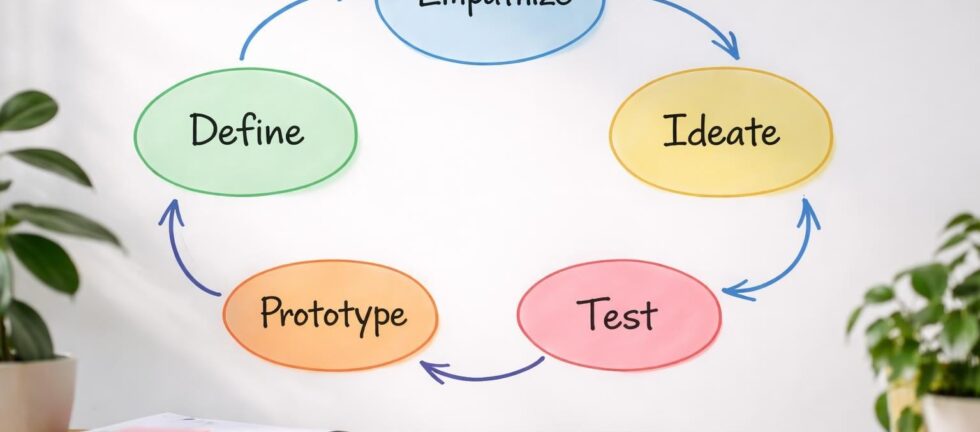
The five-phase framework provides structure to the creative process:
- Empathize: Deeply understand user needs through observation and engagement
- Define: Synthesize insights to articulate the core problem
- Ideate: Generate a wide range of potential solutions
- Prototype: Create tangible representations of ideas
- Test: Gather feedback and refine solutions iteratively
This framework is not strictly linear. Teams frequently loop back to earlier phases as new insights emerge, creating a dynamic process that responds to learning and discovery. Organizations implementing design thinking in consulting contexts find this flexibility essential for addressing complex strategic challenges.
Benefits of Online Training Formats
Design thinking training online offers distinct advantages over traditional classroom settings, particularly for distributed teams and busy professionals. The digital format provides flexibility that aligns with modern work patterns while maintaining the collaborative essence of the methodology.
Accessibility and Flexibility
Online programs eliminate geographical barriers, allowing participants from different locations to learn together without travel costs or time commitments. Asynchronous components let learners progress at their own pace, reviewing complex concepts multiple times or accelerating through familiar material. This flexibility proves particularly valuable for leaders balancing training with operational responsibilities.
Cost-Effective Skill Development
Virtual training reduces overhead expenses associated with venue rentals, travel, and printed materials. Organizations can train larger cohorts simultaneously, spreading costs across more participants and accelerating capability building. Many platforms offer tiered pricing models, making high-quality training accessible to businesses of various sizes.
| Training Format | Average Cost | Time Commitment | Team Scalability | Interaction Level |
|---|---|---|---|---|
| In-Person Workshop | $2,500-$5,000 | 2-3 days | 15-25 people | Very High |
| Online Live | $800-$2,000 | 1-2 days | 50-100 people | High |
| Self-Paced Online | $200-$800 | 4-8 weeks | Unlimited | Medium |
| Hybrid Model | $1,500-$3,500 | 3-4 weeks | 25-50 people | High |
Research demonstrates that design thinking skills influence creativity and innovation across different experience levels, suggesting that accessible online training can democratize innovation capabilities throughout an organization.
Selecting the Right Online Program
Choosing effective design thinking training online requires evaluating several critical dimensions. Not all programs deliver equal value, and alignment with organizational objectives determines long-term impact.
Curriculum Depth and Structure
High-quality programs balance theoretical foundations with practical application. Look for curricula that cover the complete design thinking process, provide real-world case studies, and include hands-on exercises. The best training integrates industry-specific examples relevant to your business context, whether you're focused on innovation and business transformation or product development.
Comprehensive programs should address:
- Foundational mindsets and principles
- Research and empathy-building techniques
- Problem framing and synthesis methods
- Ideation facilitation and creative techniques
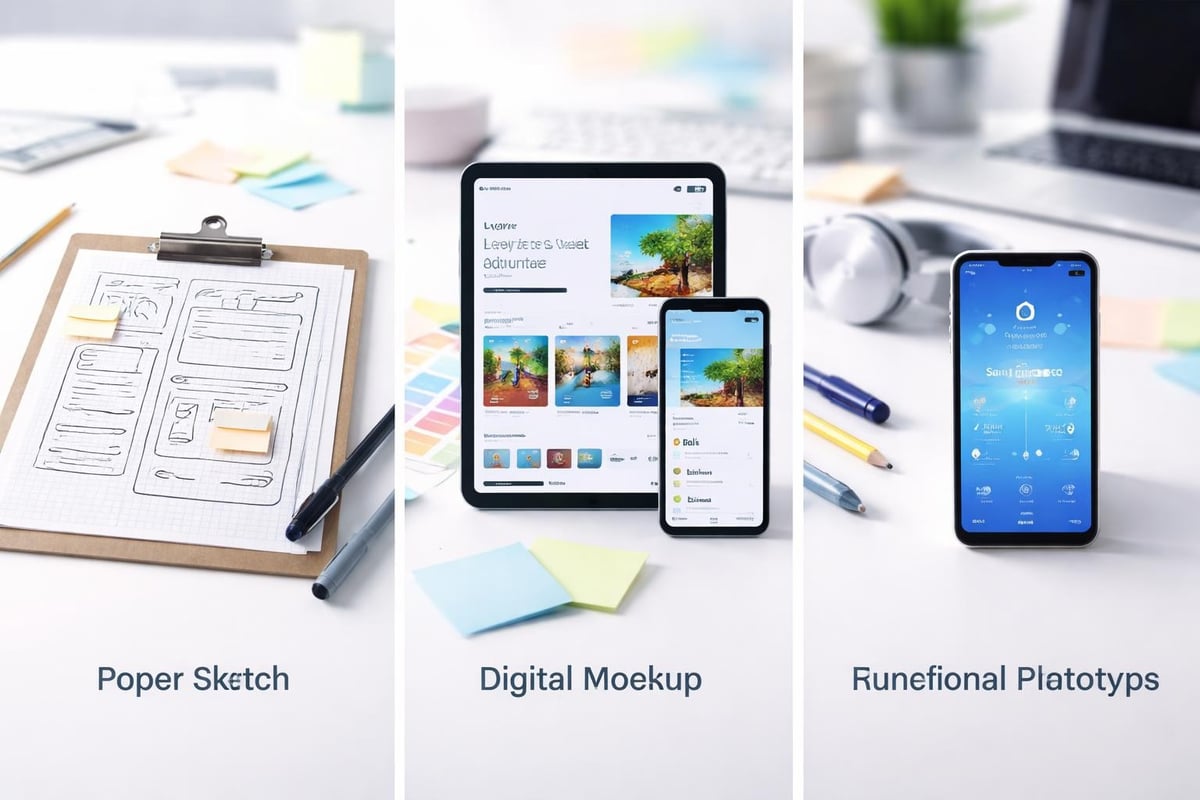
- Prototyping approaches for different contexts
- Testing methodologies and feedback integration
- Implementation and scaling strategies
Instructor Expertise and Support
The instructors' backgrounds significantly impact learning outcomes. Seek programs led by practitioners who have applied design thinking in professional contexts, not just academic settings. Instructors should provide personalized feedback, facilitate meaningful discussions, and connect concepts to contemporary business challenges.
Platforms like LinkedIn Learning offer courses taught by industry experts across various specializations, allowing learners to choose instructors whose experience aligns with their specific interests. Meanwhile, organizations like DesignThinkers Academy emphasize practical facilitation skills through structured bootcamp formats.

Key Features of Effective Online Training
The most impactful design thinking training online incorporates specific pedagogical elements that translate the hands-on, collaborative nature of the methodology into digital environments.
Interactive Learning Tools
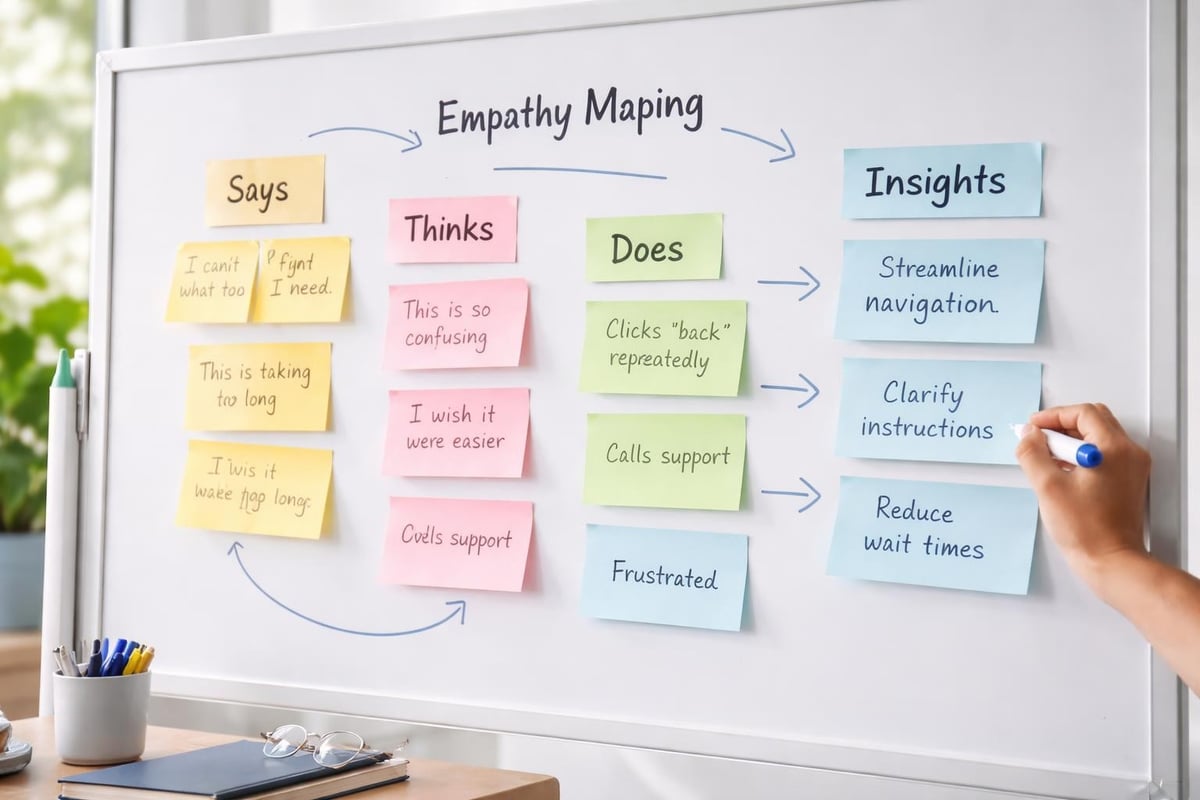
Virtual whiteboards, digital sticky notes, and collaborative mapping tools replicate the tactile experience of in-person workshops. Platforms like Miro and MURAL enable teams to conduct empathy mapping, journey mapping, and affinity diagramming in real-time, regardless of physical location. These tools preserve the visual, spatial thinking that makes design thinking effective.
Breakout room functionality facilitates small group work, essential for ideation sessions and prototype development. Recording capabilities allow participants to revisit complex discussions and reflect on their learning journey.
Applied Projects and Case Studies
Theory alone does not build innovation capability. Effective programs require participants to apply frameworks to real challenges, either through provided case studies or their own organizational problems. This application-based learning accelerates skill development and generates immediate value for employers.
Some advanced programs include:
- Capstone projects addressing actual business challenges
- Peer review sessions for constructive feedback
- Expert critiques from seasoned practitioners
- Portfolio development documenting the innovation process
The Interaction Design Foundation’s comprehensive guide structures learning through progressive projects that build competency systematically.
Community and Networking Opportunities
Learning design thinking benefits from exposure to diverse perspectives and approaches. Strong online programs cultivate communities where participants share insights, discuss challenges, and collaborate across organizational boundaries. Discussion forums, virtual office hours, and alumni networks extend learning beyond formal course completion.
Implementing Learning in Organizational Context
Completing design thinking training online represents the beginning rather than the end of capability development. Translating new skills into organizational practice requires intentional implementation strategies.
Creating Space for Application
Organizations must provide opportunities for trained individuals to practice their new skills on meaningful projects. Designating innovation sprints, hackathons, or pilot initiatives gives teams permission to experiment with design thinking methods in low-risk environments. Leadership support proves critical during this application phase, as early attempts may progress slowly or encounter resistance.
Establishing cross-functional innovation teams allows diverse perspectives to enrich the design thinking process. Innovation training works best when participants from different departments collaborate, bringing varied expertise to challenge framing and solution development.
Building Internal Facilitation Capability
Sustainable innovation capability requires internal champions who can facilitate design thinking processes without external consultants. Training a core group as certified facilitators creates the infrastructure for ongoing innovation initiatives. These facilitators can lead workshops, coach teams through the methodology, and adapt frameworks to organizational contexts.
Certification programs offered through directories like FindCourses provide pathways to advanced facilitation credentials, equipping internal practitioners with both theoretical knowledge and practical skills.
Advanced Applications and Specializations
As design thinking maturity increases, organizations can explore specialized applications that extend the methodology's impact beyond traditional product innovation.
Strategic Innovation and Business Model Design
Design thinking principles apply powerfully to business model transformation and strategic innovation. The empathy phase translates to deep market research and customer insight development. Problem definition becomes opportunity framing. Ideation generates new value propositions and revenue models. Prototyping tests business model assumptions through minimal viable products or service pilots.
This strategic application requires understanding how design thinking integrates with other business frameworks and analytical tools. Advanced practitioners combine design thinking with lean startup methodologies, blue ocean strategy, and jobs-to-be-done frameworks.
Data-Driven Design Thinking
The intersection of design thinking and data analytics creates powerful opportunities for evidence-based innovation. Research on design principles for data analysis demonstrates how design thinking enhances analytical processes, helping teams frame better questions, identify meaningful patterns, and communicate insights effectively.
Integrating quantitative data with qualitative empathy research produces richer problem understanding. A/B testing and analytics validate prototype concepts, while user research explains the human context behind the numbers.
Measuring Training Impact and ROI
Organizations investing in design thinking training online need frameworks for assessing effectiveness and demonstrating value. Measurement approaches should capture both individual skill development and organizational innovation outcomes.
Individual Competency Assessment
Pre- and post-training assessments evaluate knowledge acquisition and methodology comprehension. Practical exercises reveal application capability, showing whether participants can independently execute design thinking processes. Peer feedback and self-reflection strengthen metacognitive awareness about innovation practices.
Competency frameworks might assess:
- Empathy research and synthesis skills
- Problem framing precision
- Ideation facilitation effectiveness
- Prototyping resourcefulness
- Testing methodology rigor
- Stakeholder communication clarity
Organizational Innovation Metrics
Beyond individual skills, training should drive measurable innovation outcomes. Track metrics like new product launches, service improvements, process optimizations, and revenue from innovation initiatives. Monitor how many trained employees actively apply design thinking in their work and how frequently innovation methods feature in strategic planning.
Leading indicators include ideation session frequency, cross-functional collaboration instances, and customer research initiatives. Lagging indicators encompass patent filings, market share gains, and customer satisfaction improvements attributable to innovation projects.
Continuous Learning and Skill Development
Design thinking training online should not be viewed as a one-time event but rather as the foundation for ongoing capability development. The methodology evolves as new tools, techniques, and applications emerge, requiring practitioners to maintain current knowledge.
Advanced Certifications and Specializations
After mastering fundamentals, practitioners can pursue specialized certifications in areas like service design, experience design, or innovation management. DesignThinkers Academy’s course catalogue offers progression pathways from foundational bootcamps to advanced facilitation training and specialized applications.
Industry-specific certifications help professionals apply design thinking within particular contexts like healthcare, financial services, or technology sectors. These specialized programs address unique constraints, regulatory considerations, and stakeholder dynamics relevant to specific industries.
Peer Learning and Communities of Practice
Joining professional communities extends learning beyond formal coursework. Communities of practice provide spaces to discuss challenging projects, share emerging techniques, and troubleshoot implementation obstacles. Annual conferences, virtual meetups, and online forums keep practitioners connected to the broader design thinking ecosystem.
Contributing to these communities through case study presentations, workshop facilitation, or content creation deepens expertise while advancing the field collectively. Teaching others reinforces personal mastery and reveals gaps in understanding that guide further learning.
Integration with Strategic Consulting
Design thinking training online proves particularly valuable when integrated with strategic consulting initiatives. Consultants equipped with design thinking capabilities bring human-centered perspectives to traditional strategy work, enriching analytical insights with empathy-driven understanding.
The methodology complements quantitative strategic analysis by surfacing unstated customer needs and revealing innovation opportunities that data alone might miss. When management consulting tools incorporate design thinking frameworks, they enable more holistic problem-solving that balances business viability with human desirability and technical feasibility.
Organizations pursuing design product innovation benefit from consultants who facilitate design thinking processes while providing strategic guidance. This integration ensures innovations align with business objectives and market opportunities rather than existing in isolation.
Design thinking training online equips professionals with essential capabilities for navigating complexity, driving innovation, and creating customer-centric value in today's dynamic business environment. As organizations recognize the need to build internal innovation capabilities, accessible online training provides a practical pathway to democratizing creative problem-solving skills across teams and functions. Six Paths Consulting helps ambitious leaders develop these innovation capabilities through specialized training programs and strategic consulting that combine design thinking with AI-powered insights, enabling your organization to discover new market opportunities and accelerate sustainable growth. Connect with our team to explore how tailored innovation training can transform your strategic capabilities.