

Organizations today face unprecedented pressure to innovate or risk obsolescence. While generating innovative ideas receives significant attention, the critical challenge lies in implementing innovation effectively to deliver measurable business results. Successfully bridging the gap between creative concepts and operational reality requires systematic approaches, leadership commitment, and cultural transformation. This guide explores proven methodologies for translating innovative ideas into profitable outcomes.
Understanding the Innovation Implementation Gap
The disparity between generating ideas and executing them remains one of business's most persistent challenges. Research indicates that approximately 70% of innovation initiatives fail during implementation, despite strong initial concepts and executive support.
Why Implementation Fails
Several factors contribute to implementation failures across industries:
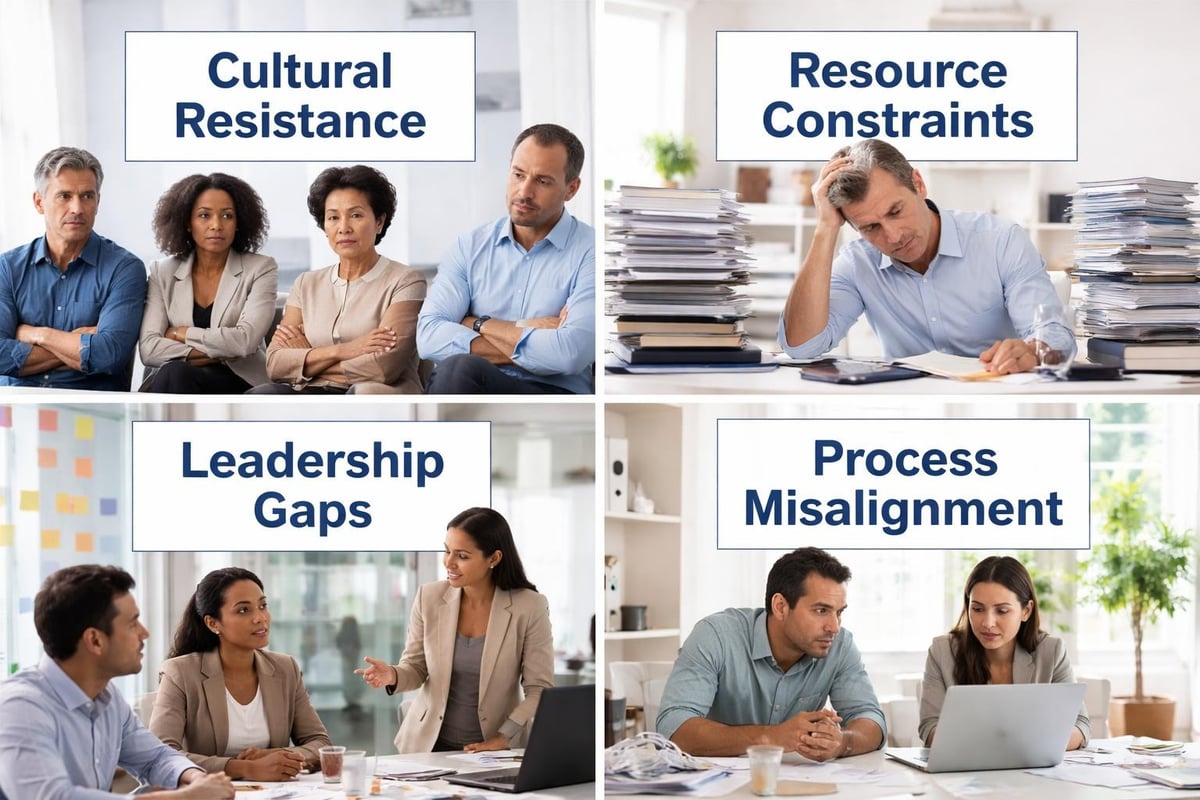
- Lack of clear ownership and accountability for innovation projects
- Insufficient resource allocation beyond initial pilot phases
- Resistance to change from middle management and frontline employees
- Misalignment between innovation goals and organizational capabilities
- Poor communication about the purpose and benefits of new initiatives
Organizations frequently underestimate the complexity of implementing innovation at scale. A promising pilot project succeeds in controlled environments but struggles when deployed across diverse teams, geographies, or customer segments.
Cultural barriers represent particularly stubborn obstacles. When existing reward systems, performance metrics, and management behaviors reinforce status quo operations, even well-designed innovation programs face headwinds.
Building Your Innovation Implementation Framework
Successful organizations approach implementing innovation as a systematic capability rather than isolated projects. This requires establishing clear frameworks that guide initiatives from conception through scaling.
Define Strategic Intent
Begin by articulating how innovation serves broader business objectives. Innovation for its own sake rarely delivers sustainable value. Instead, innovation strategy consulting emphasizes aligning innovation investments with specific strategic outcomes such as revenue growth, market expansion, or operational efficiency.
Your strategic intent should answer these questions:
- Which business problems will innovation address?
- What competitive advantages do we seek?
- How will we measure innovation success?
- What resources can we realistically commit?
- What timeframes align with market opportunities?
Establish Governance Structures
Effective governance balances creative freedom with strategic discipline. Implementing innovation requires decision-making frameworks that enable rapid experimentation while maintaining accountability.
| Governance Element | Purpose | Key Participants |
|---|---|---|
| Innovation Board | Strategic oversight and resource allocation | C-suite executives, business unit leaders |
| Portfolio Review | Evaluate project progress and funding decisions | Innovation leaders, finance, strategy teams |
| Working Groups | Execute specific initiatives and experiments | Cross-functional team members |
| Advisory Council | Provide external perspectives and expertise | Industry experts, customers, partners |
Regular governance meetings prevent innovation initiatives from languishing without resources or becoming disconnected from business realities. The Global Association for Innovation and Project Management emphasizes that structured governance actually accelerates innovation by providing clarity and removing bottlenecks.
Creating the Right Organizational Culture
Culture determines whether implementing innovation becomes embedded in organizational DNA or remains superficial. Leaders must actively shape environments where experimentation, learning, and calculated risk-taking flourish.
Psychological Safety and Experimentation
Teams hesitate to pursue innovative approaches when failure brings punishment rather than learning opportunities. Organizations excelling at implementing innovation cultivate cultures that incentivize failure as a path to breakthrough discoveries.
Practical approaches include:
- Celebrating intelligent failures that generate valuable insights
- Sharing lessons from unsuccessful experiments across the organization
- Protecting innovation teams from premature pressure for results
- Rewarding risk-taking behaviors, not just successful outcomes
Leadership Behaviors That Enable Innovation
Executive sponsorship extends beyond initial project approval. Leaders implementing innovation successfully demonstrate consistent behaviors that signal genuine commitment:
- Allocating dedicated time to innovation discussions and reviews
- Participating directly in innovation activities and experiments
- Removing organizational barriers and political obstacles
- Defending innovation investments during budget pressures
- Recognizing and promoting innovation champions
When leaders visibly prioritize innovation through their calendar, questions, and recognition patterns, the entire organization receives permission to do likewise. Understanding the relationship between innovation and business transformation helps leaders frame innovation as strategic imperative rather than optional initiative.
Designing Effective Innovation Processes
Process discipline enables rather than constrains creativity when properly designed. Implementing innovation benefits from structured workflows that maintain momentum while allowing flexibility for learning and adaptation.
Stage-Gate Models with Agile Flexibility
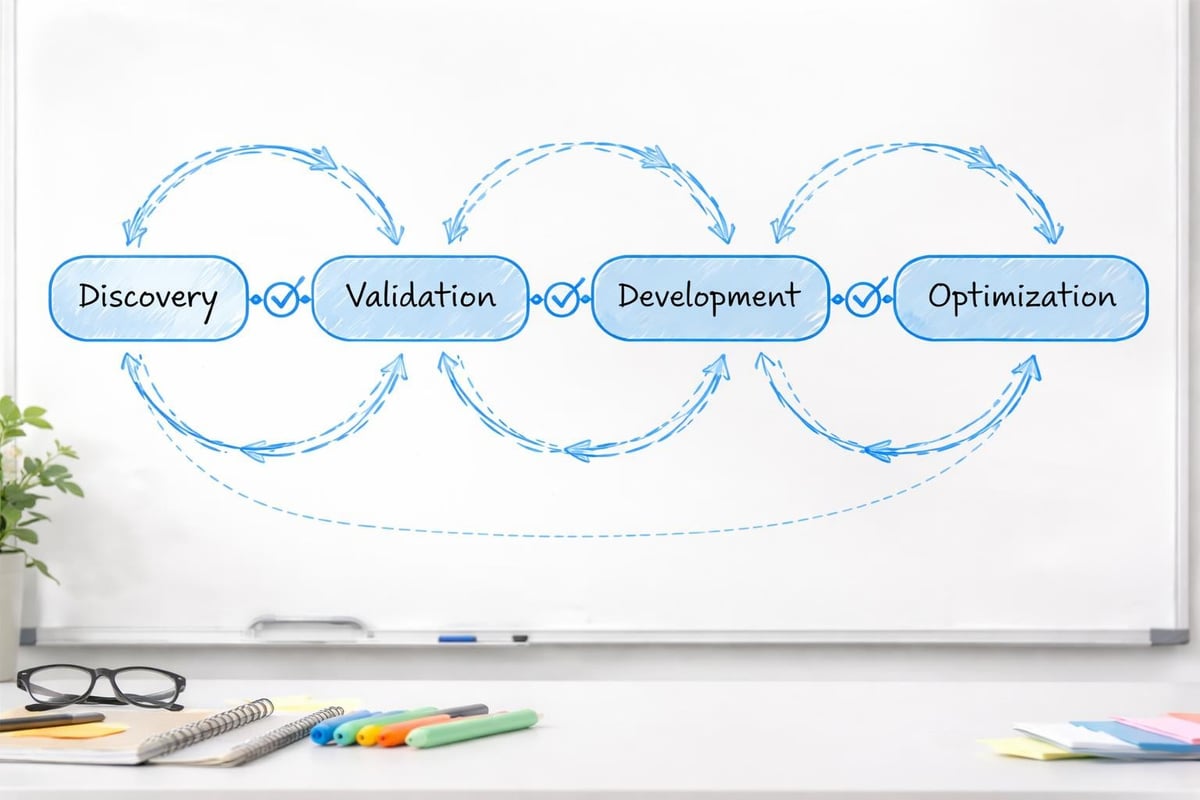
Traditional stage-gate processes provide useful checkpoints for major resource commitments but require adaptation for innovation's inherent uncertainty. Modern approaches combine stage-gate discipline with agile methodologies:
- Discovery: Identify opportunities through market research, customer insights, and technology scanning
- Validation: Test assumptions through rapid prototyping and customer experiments
- Development: Build minimum viable products incorporating user feedback
- Scaling: Expand successful solutions systematically across target markets
- Optimization: Refine and improve based on performance data
Each stage includes clear criteria for advancement while permitting iteration within stages. Effective innovation management practices emphasize learning over prediction, adjusting processes as insights emerge.
Cross-Functional Collaboration
Innovation rarely succeeds within functional silos. Implementing innovation demands integration across departments, each contributing essential perspectives:
- Marketing provides customer insights and market intelligence
- Operations ensures feasibility and scalability
- Finance evaluates business cases and resource allocation
- Technology enables digital capabilities and infrastructure
- Legal manages intellectual property and regulatory compliance
Creating formal mechanisms for cross-functional collaboration accelerates implementation. This includes dedicated innovation spaces, regular working sessions, shared success metrics, and co-location of team members when possible.
Leveraging Technology and AI for Innovation
Technology serves as both enabler and subject of innovation initiatives. Organizations implementing innovation in 2026 increasingly harness artificial intelligence to enhance ideation, decision-making, and execution capabilities.
AI Applications in Innovation Implementation
Modern AI platforms transform how organizations approach implementing innovation across the value chain:
- Idea generation using generative AI to explore solution spaces
- Market analysis leveraging predictive analytics for opportunity assessment
- Customer insights through natural language processing of feedback data
- Prototype development accelerating design iterations with AI tools
- Performance monitoring via real-time analytics dashboards
The integration of technology and consulting expertise allows organizations to implement innovation more systematically while maintaining human judgment for strategic decisions.
Building Digital Innovation Capabilities
Beyond specific AI applications, successful organizations develop comprehensive digital capabilities supporting innovation:
| Capability | Description | Business Impact |
|---|---|---|
| Data Infrastructure | Centralized, accessible data platforms | Faster insights and evidence-based decisions |
| Collaboration Tools | Digital workspaces for distributed teams | Seamless cross-functional innovation |
| Analytics Platforms | Self-service business intelligence | Democratized data-driven experimentation |
| Innovation Management Software | Portfolio tracking and resource allocation | Improved governance and visibility |
These capabilities compound over time, creating sustainable advantages in implementing innovation compared to competitors relying on manual processes.
Measuring Innovation Performance
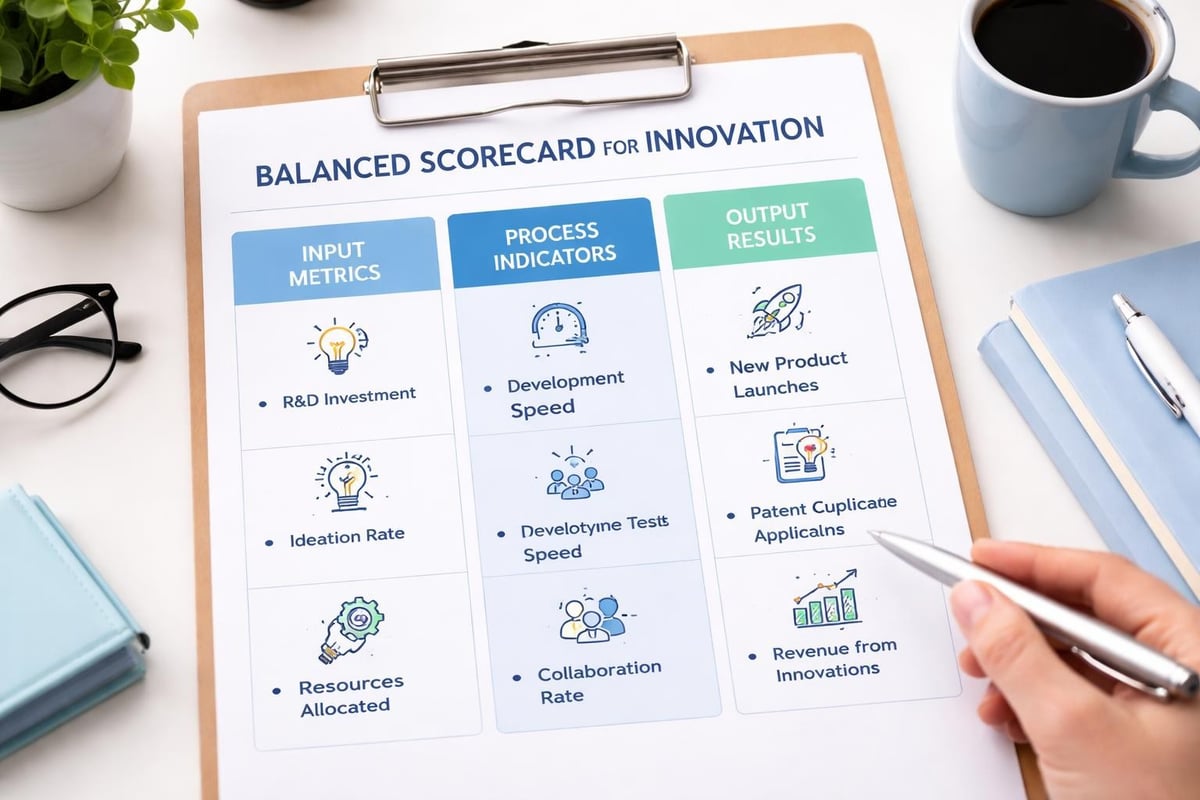
Organizations struggle to measure innovation because traditional financial metrics lag implementation efforts by months or years. Effective measurement systems balance leading indicators predicting future success with lagging metrics confirming business impact.
Balanced Innovation Metrics
Comprehensive measurement frameworks track innovation across multiple dimensions:
Input Metrics:
- R&D investment as percentage of revenue
- Time allocation to innovation activities
- Number of active innovation projects
- Diversity of innovation portfolio
Process Metrics:
- Cycle time from idea to market
- Conversion rates between innovation stages
- Employee participation in innovation programs
- Cross-functional collaboration frequency
Output Metrics:
- Revenue from new products or services
- Market share in new segments
- Customer satisfaction with innovations
- Return on innovation investment
Regularly reviewing these metrics helps organizations refine their approach to implementing innovation. The design thinking and innovation consulting methodology emphasizes continuous measurement and learning cycles.
Setting Realistic Expectations
Innovation metrics should reflect the uncertainty inherent in creating new value. Setting expectations that 100% of initiatives succeed discourages bold experimentation. Instead, portfolio approaches recognize that breakthrough innovations offset numerous smaller failures.
Communicate clearly about expected success rates, typical timeframes for returns, and the learning value of unsuccessful experiments. This transparency builds organizational patience for implementing innovation while maintaining accountability.
Scaling Innovation Across the Organization
Pilot projects demonstrate feasibility but implementing innovation requires scaling successful concepts across business units, geographies, and customer segments. This scaling phase determines whether innovation delivers meaningful business impact.
Systematic Scaling Approaches
Organizations employ various strategies for expanding innovation beyond initial implementations:
- Standardize before scaling: Document processes, tools, and best practices
- Identify scaling champions: Deploy enthusiastic early adopters as advocates
- Adapt to local contexts: Customize implementation for different environments
- Build supporting infrastructure: Ensure systems and capabilities support expanded use
- Communicate success stories: Share wins to build momentum and credibility
Case studies from innovation leaders demonstrate that successful scaling requires as much planning and resource commitment as initial development. Organizations often underestimate this phase, leading to promising innovations that never achieve broad impact.
Overcoming Scaling Barriers
Common obstacles emerge when implementing innovation at scale:
- Resource constraints limiting simultaneous deployments
- Organizational complexity creating coordination challenges
- Market heterogeneity requiring significant adaptation
- Operational dependencies on legacy systems and processes
- Change fatigue from continuous transformation initiatives
Addressing these barriers requires executive intervention, dedicated scaling teams, and sometimes phased rollout approaches that prioritize high-value opportunities first.
Building Internal Innovation Capabilities
Sustainable competitive advantage comes from developing internal capabilities for implementing innovation rather than depending exclusively on external consultants or vendors. Organizations that excel at innovation invest systematically in capability building.
Training and Development Programs
Structured learning initiatives democratize innovation skills across the organization:
- Innovation methodology training covering design thinking, lean startup, and agile approaches
- Digital skills development building AI, data analytics, and technology competencies
- Customer insight techniques enhancing market research and user experience capabilities
- Business model innovation teaching strategic frameworks for growth
- Change management skills preparing leaders to guide transformation
These programs should combine theoretical frameworks with hands-on application to real business challenges. Innovation management workshops that engage participants in solving actual problems generate stronger learning outcomes than abstract training.
Creating Innovation Communities
Formal and informal networks accelerate capability development and knowledge sharing. Communities of practice allow innovation practitioners to exchange experiences, troubleshoot challenges, and develop collective expertise. Research on guilds supporting internal startups demonstrates how these communities facilitate software product innovation through collaborative problem-solving.
Establishing such communities requires:
- Regular meeting cadences for sharing and learning
- Digital platforms connecting distributed participants
- Executive sponsorship providing legitimacy and resources
- Rotating leadership building engagement across members
- External connections bringing fresh perspectives from outside the organization
Learning from Implementation Challenges
Every organization encounters obstacles when implementing innovation. The differentiator lies not in avoiding challenges but in learning systematically from setbacks and adjusting approaches accordingly.
Common Implementation Pitfalls
Recognizing frequent mistakes helps organizations avoid repeating them:
- Launching too many initiatives without adequate focus or resources
- Failing to secure sufficient executive commitment beyond initial approval
- Neglecting change management and stakeholder engagement
- Underestimating time and investment required for meaningful results
- Losing patience and canceling initiatives prematurely
- Allowing operational demands to consistently override innovation priorities
Organizations benefit from conducting structured post-implementation reviews that capture lessons for future initiatives. This institutional learning compounds over time, improving success rates and implementation efficiency.
Adapting to Market Feedback
Market response provides critical signals for adjusting innovation strategies. Implementing innovation requires balancing conviction in vision with responsiveness to customer feedback. The Blue Ocean Strategy approach emphasizes creating new market spaces while remaining grounded in customer value.
Establish feedback loops that:
- Capture quantitative performance data continuously
- Gather qualitative customer insights regularly
- Analyze competitive responses and market trends
- Synthesize learnings into actionable adjustments
- Communicate changes transparently to stakeholders
This adaptive approach prevents organizations from persisting with flawed strategies while avoiding reactive pivots that abandon promising innovations too quickly.
Integrating Innovation with Core Operations
Sustainable innovation requires integration with existing operations rather than isolation in separate innovation units. While dedicated innovation teams provide focus and expertise, ultimate success depends on embedding innovation capabilities throughout the organization.
Balancing Exploration and Exploitation
Organizations must simultaneously optimize current business models while exploring future opportunities. This ambidexterity proves challenging because exploration and exploitation demand different mindsets, metrics, and management approaches.
Successful organizations create:
- Separate but connected structures for core and innovation activities
- Shared strategic intent aligning both portfolios
- Talent rotation between exploration and exploitation roles
- Balanced resource allocation protecting innovation from short-term pressures
- Common values emphasizing both excellence and experimentation
Research on Lean internal startups in large companies identifies enablers and inhibitors of software product innovation, providing insights for balancing these competing demands.
Making Innovation Business as Usual
The ultimate goal transcends implementing innovation projects to institutionalizing innovation as standard business practice. This transformation requires:
- Incorporating innovation responsibilities into job descriptions and performance evaluations
- Allocating ongoing budgets for experimentation and learning
- Establishing innovation as standing agenda item in business reviews
- Celebrating innovation contributions in company communications
- Recruiting for innovation mindset and capabilities
- Designing physical and digital environments that encourage creativity
When innovation becomes integrated into daily operations rather than separate initiative, organizations build sustainable competitive advantages through continuous adaptation and renewal.
Implementing innovation successfully requires systematic frameworks, supportive culture, disciplined processes, and sustained leadership commitment. Organizations that master these elements transform innovation from sporadic activity into core strategic capability, driving continuous growth and market relevance. Six Paths Consulting partners with ambitious leaders to build these innovation capabilities, combining AI-powered strategic insights with proven methodologies to accelerate your innovation implementation and achieve measurable business results.