

The competitive landscape of 2026 demands more than incremental improvements. Organizations seeking sustainable growth must fundamentally rethink how they create, deliver, and capture value. An innovation business model represents this strategic shift, transforming the core architecture of how companies operate and compete. For ambitious leaders, understanding and implementing innovative business models has become essential for discovering untapped market opportunities and achieving breakthrough revenue performance.
Understanding the Innovation Business Model Framework
An innovation business model goes beyond product development or service enhancements. It fundamentally reimagines the mechanisms through which an organization generates value for customers and captures returns. This approach requires examining every component of your business architecture, from customer relationships to revenue streams, and identifying opportunities for transformative change.
The distinction between traditional business models and innovation-driven approaches lies in their scope and ambition. While conventional models optimize existing structures, an innovation business model strategy challenges foundational assumptions about market dynamics, customer needs, and value delivery mechanisms.
Core Components of Business Model Innovation
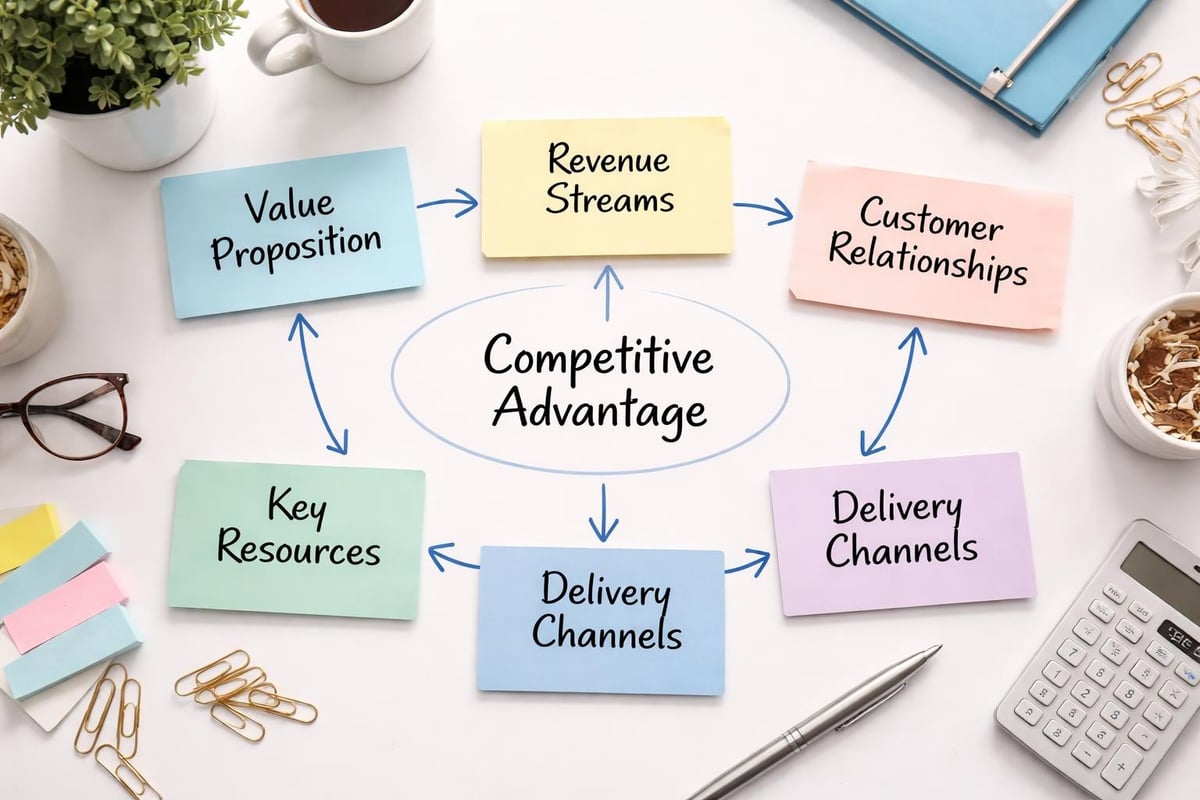
Every innovation business model consists of interconnected elements that work together to create competitive advantage:
- Value proposition design that addresses unmet customer needs or creates entirely new market categories
- Revenue architecture that captures value through novel pricing mechanisms or monetization strategies
- Customer engagement models that transform how organizations interact with and serve their markets
- Operational infrastructure that enables efficient delivery of innovative value propositions
- Partnership ecosystems that leverage external capabilities and resources
These components must align cohesively to support strategic objectives. Organizations that successfully implement business model innovation typically begin by identifying which elements offer the greatest potential for transformation and competitive differentiation.
Strategic Approaches to Business Model Innovation
Developing an effective innovation business model requires systematic methodology and strategic thinking. Organizations must balance creativity with analytical rigor, ensuring that innovative concepts translate into viable business realities.
Market Opportunity Analysis
Successful business model innovation begins with deep market understanding. This involves identifying gaps in current offerings, emerging customer needs, and technological shifts that enable new value delivery methods. Innovation strategy consulting helps organizations uncover these opportunities through structured analysis and strategic foresight.
The most transformative business models often emerge from reconsidering fundamental market assumptions. Companies that question conventional wisdom about customer preferences, distribution channels, or competitive boundaries frequently discover unprecedented growth opportunities.
Value Creation Mechanisms
Different innovation business models employ distinct approaches to value creation:
- Product-to-Service Transformation – Converting traditional product sales into ongoing service relationships
- Platform Development – Creating ecosystems that connect multiple customer segments and generate network effects
- Subscription Economics – Building recurring revenue through membership or access-based models
- Freemium Structures – Offering basic services freely while monetizing premium features or capabilities
- Data Monetization – Leveraging customer insights and analytics as revenue-generating assets
| Business Model Type | Primary Value Driver | Revenue Mechanism | Competitive Advantage |
|---|---|---|---|
| Platform | Network effects | Transaction fees | Market dominance |
| Subscription | Recurring relationships | Monthly/annual fees | Predictable revenue |
| Freemium | Volume conversion | Premium upgrades | Rapid market penetration |
| Razor-Blade | Consumable sales | Ongoing purchases | Customer lock-in |
| Licensing | IP monetization | Royalty payments | Asset leverage |
Organizations exploring business model transformation must carefully evaluate which approach aligns with their capabilities, market position, and strategic objectives.
Industry Examples of Innovation Business Models
Examining real-world implementations provides valuable insights into how organizations successfully deploy innovation business models. These examples demonstrate the transformative potential of reimagining fundamental business architecture.
Technology Sector Innovations
Apple revolutionized consumer electronics not just through product design but through an integrated ecosystem that combines hardware, software, services, and content. This innovation business model creates multiple revenue streams while increasing customer lifetime value through platform lock-in effects. The success of their approach demonstrates how business model innovation can establish lasting competitive moats.
Netflix transformed entertainment consumption by shifting from physical distribution to streaming subscriptions. This innovation business model eliminated traditional constraints while creating personalized experiences that traditional competitors couldn't match. Their data-driven content development further demonstrates how innovative business models enable new strategic capabilities.
Industrial Sector Transformations
Manufacturing companies increasingly adopt servitization models, exemplified by Rolls-Royce's "power-by-the-hour" approach for aircraft engines. Rather than selling engines outright, they charge airlines based on operating hours, aligning incentives and creating stable revenue streams. This innovation business model shifted their business from product sales to performance partnerships.
Construction equipment manufacturers like Hilti similarly transformed by offering tool management services rather than just equipment sales. This approach addresses customer pain points around maintenance, inventory management, and capital expenditure while creating stronger customer relationships and recurring revenue.

Implementing Your Innovation Business Model
Translating strategic vision into operational reality requires structured implementation approaches. Organizations must navigate organizational resistance, resource allocation challenges, and market validation requirements while building their innovation business model.
Development Process and Validation
The journey from concept to implementation follows distinct phases:
Phase 1: Ideation and Conceptualization – Generate multiple business model possibilities through structured creativity techniques and market analysis. Frameworks for innovation provide systematic approaches to expanding solution spaces beyond conventional thinking.
Phase 2: Prototyping and Testing – Develop minimum viable business models that test core assumptions with real customers. This stage validates whether the innovation business model addresses genuine market needs and generates expected value.
Phase 3: Refinement and Scaling – Iterate based on market feedback, optimizing components for efficiency and effectiveness before full-scale deployment.
Organizations benefit from understanding different innovation approaches to select methodologies that fit their industry context and organizational capabilities.
Overcoming Implementation Challenges
Common obstacles to innovation business model implementation include:
- Organizational inertia and resistance to change from stakeholders invested in current models
- Resource constraints that limit experimentation and development capacity
- Cannibalization concerns about new models impacting existing revenue streams
- Capability gaps requiring new skills, technologies, or partnerships
- Regulatory or compliance barriers that restrict business model options
Addressing these challenges requires executive sponsorship, clear communication about strategic rationale, and phased implementation approaches that demonstrate value while managing risk. Strategy and transformation consulting helps organizations navigate these complexities through experienced guidance and proven methodologies.
Building Organizational Capabilities for Continuous Innovation
Sustainable competitive advantage requires more than implementing a single innovation business model. Organizations must develop institutional capabilities for ongoing business model evolution and adaptation.
Developing Innovation Culture
Creating an environment that supports business model innovation requires cultural transformation alongside strategic initiatives. Leadership must encourage experimentation, tolerate calculated failures, and reward creative thinking about value creation and delivery.
Key cultural elements include:
- Permission to question existing assumptions about markets and operations
- Cross-functional collaboration that breaks down siloed thinking
- Customer-centric orientation that prioritizes solving real problems
- Data-driven decision making balanced with strategic intuition
- Agile methodologies that enable rapid iteration and learning
Organizations can accelerate capability development through training programs that build in-house innovation skills, ensuring teams possess the tools and mindsets necessary for continuous business model evolution.
Technology Enablers for Business Model Innovation
Artificial intelligence and advanced analytics have become critical enablers for modern innovation business models. These technologies unlock possibilities that were previously unattainable, from hyper-personalization at scale to predictive service delivery.
AI-powered capabilities that support innovation business models include:
- Customer behavior prediction and personalization engines
- Dynamic pricing optimization based on real-time demand signals
- Automated service delivery that reduces operational costs
- Predictive maintenance that enables outcome-based business models
- Pattern recognition that identifies new market opportunities
| Technology | Business Model Application | Strategic Benefit |
|---|---|---|
| AI/Machine Learning | Personalization, prediction | Customer retention |
| IoT Sensors | Usage-based pricing | Revenue optimization |
| Blockchain | Transparent transactions | Trust building |
| Cloud Computing | Scalable infrastructure | Cost flexibility |
| Data Analytics | Insight monetization | New revenue streams |
Organizations exploring AI-powered strategic innovation can leverage these technologies to create business models that were impossible just years ago.
Measuring Innovation Business Model Success
Effective implementation requires clear metrics that track performance against strategic objectives. Traditional financial measures alone inadequately capture the multidimensional value that innovation business models create.
Performance Indicators and Metrics
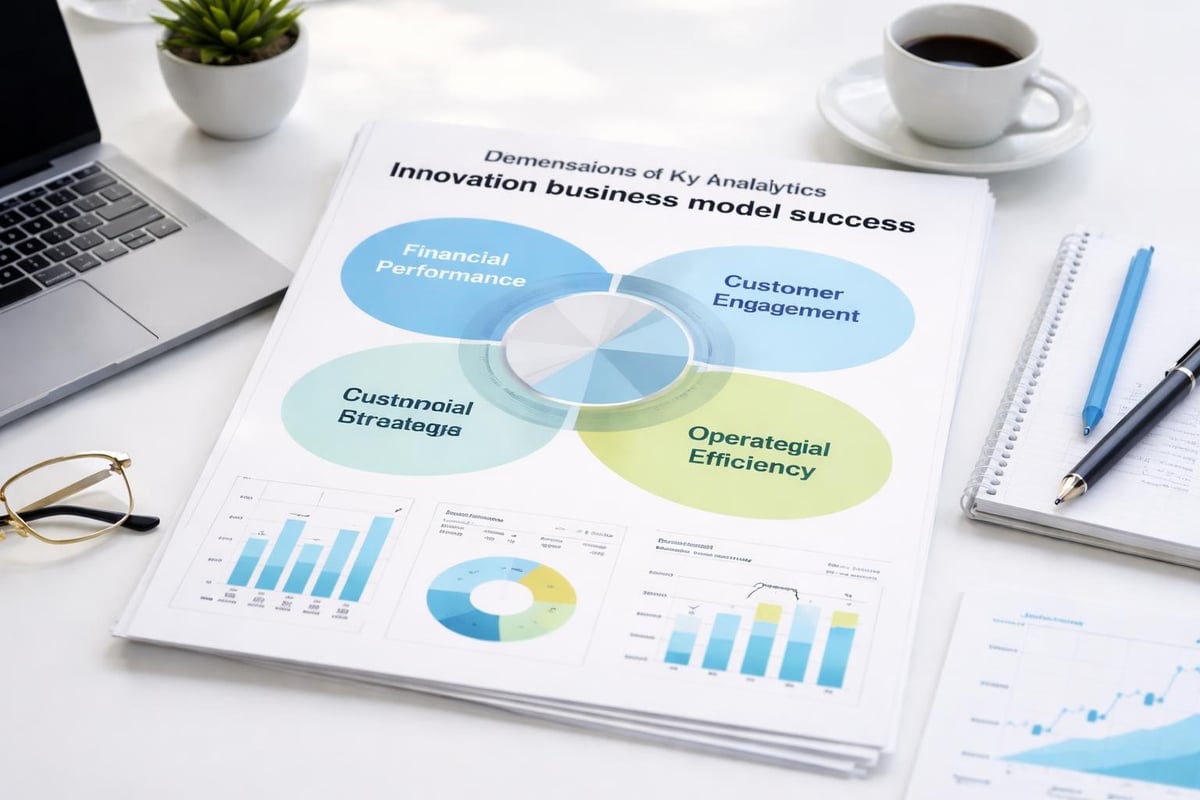
Comprehensive measurement frameworks address multiple dimensions:
Financial Metrics track revenue growth, profitability, customer lifetime value, and capital efficiency. These indicators demonstrate whether the innovation business model achieves intended economic outcomes.
Customer Metrics measure adoption rates, engagement levels, retention, net promoter scores, and market penetration. These signals reveal whether the model resonates with target audiences and creates sustainable competitive advantage.
Operational Metrics assess efficiency, scalability, and execution quality. They indicate whether the organization can deliver on the value proposition reliably and profitably.
Innovation Metrics evaluate experimentation velocity, learning rates, and portfolio diversity. These forward-looking indicators predict future adaptability and competitive resilience.
Organizations should establish baseline measurements before implementation and track progress regularly. Developing robust business strategies includes defining success criteria and measurement frameworks from the outset.
Strategic Positioning Through Business Model Innovation
An innovation business model serves as a powerful competitive weapon when aligned with broader strategic positioning. Organizations must ensure their business model choices reinforce their intended market position and competitive advantages.
Differentiation Strategies
Different strategic positions require different business model approaches. Cost leaders employ innovation business models that drive operational efficiency and scale economies. Differentiators develop models that justify premium pricing through unique value delivery. Niche players create specialized models that serve specific segments exceptionally well.
The most successful organizations align every business model element with their strategic intent. This coherence amplifies competitive advantage and creates barriers to imitation. Value proposition design ensures that business model innovations deliver distinct value that customers recognize and reward.
Ecosystem Development and Partnerships
Modern innovation business models increasingly rely on ecosystem orchestration rather than vertical integration. Platform businesses, in particular, succeed by attracting complementary partners who enhance the core value proposition.
Strategic partnership considerations include:
- Identifying capabilities that partners deliver more effectively than internal development
- Establishing governance structures that balance control with flexibility
- Creating incentive alignment that motivates ecosystem participation
- Building standards and interfaces that enable seamless integration
- Developing trust mechanisms that support collaboration
Companies that master ecosystem development can rapidly scale their innovation business model by leveraging external resources and capabilities. This approach reduces capital requirements while accelerating market penetration.
Future Trends Shaping Business Model Innovation
The landscape for innovation business models continues evolving rapidly. Forward-thinking organizations monitor emerging trends that create new opportunities or threaten existing approaches.
Sustainability and Purpose-Driven Models
Consumer preferences increasingly favor organizations that demonstrate environmental and social responsibility. Innovation business models that integrate sustainability often discover competitive advantages through enhanced brand reputation, regulatory compliance, and operational efficiency.
Circular economy approaches, carbon-neutral operations, and social impact metrics are becoming standard components of next-generation business models. Organizations that proactively incorporate these elements position themselves advantageously as regulations tighten and customer expectations evolve.
Emerging Market Dynamics
Several macro trends are reshaping the business model innovation landscape:
Personalization at Scale – Advanced data analytics enable mass customization that was previously economically unfeasible, creating opportunities for premium pricing and customer loyalty.
Outcome-Based Models – Customers increasingly prefer paying for results rather than products or services, driving shift toward performance-based contracts and risk-sharing arrangements.
Instant Gratification Economics – On-demand delivery and immediate fulfillment expectations push organizations toward new logistical and operational models.
Privacy and Data Governance – Increasing regulation around data usage requires business models that balance personalization with privacy protection.
Organizations developing innovative ideas for business growth must account for these evolving market conditions and customer expectations.
Integrating Innovation Across the Organization
An innovation business model succeeds only when the entire organization aligns behind its execution. This integration requires coordination across functions, clear communication of strategic intent, and appropriate resource allocation.
Cross-Functional Alignment
Marketing, operations, finance, technology, and human resources must all adapt to support the innovation business model. Siloed execution undermines even the most brilliant strategic concepts. Leadership must actively break down functional barriers and create collaborative structures that enable seamless execution.
Regular communication about business model evolution keeps teams informed and engaged. Creative consulting approaches can facilitate cross-functional workshops that build shared understanding and commitment to innovation initiatives.
Resource Allocation and Investment
Innovation business models typically require upfront investment before generating returns. Organizations must balance funding for core operations with resources for business model development and testing. Portfolio approaches that manage multiple initiatives at different maturity stages help manage risk while pursuing growth opportunities.
Investment decisions should consider both financial projections and strategic learning value. Early-stage business model experiments may not generate immediate profits but provide invaluable market insights that inform future initiatives.
Innovation business models represent the frontier of strategic competition in 2026, offering organizations pathways to sustainable growth and market leadership through fundamental value creation transformation. Success requires systematic approaches to opportunity identification, rigorous testing and validation, organizational capability development, and continuous adaptation to evolving market dynamics. Six Paths Consulting helps ambitious leaders navigate this complex journey through AI-powered strategic innovation expertise, developing breakthrough business models that unlock new market opportunities and drive measurable revenue growth. Our proven methodologies and training programs empower organizations to build lasting innovation capabilities that fuel ongoing competitive advantage.