

Organizations face mounting pressure to innovate, adapt, and outmaneuver competitors in an increasingly complex business environment. Yet the most sophisticated strategies and cutting-edge technologies fall short without leaders equipped to execute them effectively. Leadership development consulting bridges this critical gap, transforming leadership potential into measurable business outcomes through structured programs, personalized coaching, and strategic capability building. For organizations committed to sustainable growth and competitive advantage, investing in leadership development has shifted from optional to essential.
The Strategic Value of Leadership Development Consulting
Leadership development consulting delivers far more than traditional training sessions or motivational workshops. These engagements fundamentally reshape how organizations identify, cultivate, and deploy leadership talent across all levels.
The measurable impact speaks volumes. Companies that invest strategically in leadership development report higher employee engagement scores, improved retention rates among high-potential talent, and accelerated revenue growth compared to industry peers. The consulting approach ensures these initiatives align directly with business objectives rather than existing as standalone HR programs.
Organizations often struggle to build leadership capabilities internally due to several constraints:
- Limited expertise in designing comprehensive development frameworks
- Difficulty creating unbiased assessment and feedback mechanisms
- Insufficient resources to deliver consistent, scalable programs
- Challenges in measuring and demonstrating ROI from development initiatives
- Inability to identify blind spots within existing leadership culture
External consultants bring objective perspectives, proven methodologies, and specialized expertise that internal teams cannot easily replicate. This outside viewpoint proves particularly valuable when addressing cultural issues, succession planning gaps, or transformational change initiatives.
Aligning Leadership Development With Innovation Objectives
For organizations prioritizing innovation strategy consulting as a growth driver, leadership development takes on additional significance. Leaders must not only manage current operations effectively but also champion innovation initiatives, navigate ambiguity, and foster cultures where calculated risk-taking flourishes.
Leadership development consulting tailored for innovation-focused organizations addresses unique competency requirements. These programs emphasize strategic foresight, creative problem-solving, cross-functional collaboration, and the ability to balance exploration of new opportunities with exploitation of existing capabilities. According to research on effective leadership development, development must be viewed as a continuous process rather than isolated events, particularly critical when building innovation capabilities that require sustained practice and reinforcement.
Core Components of Effective Leadership Development Programs
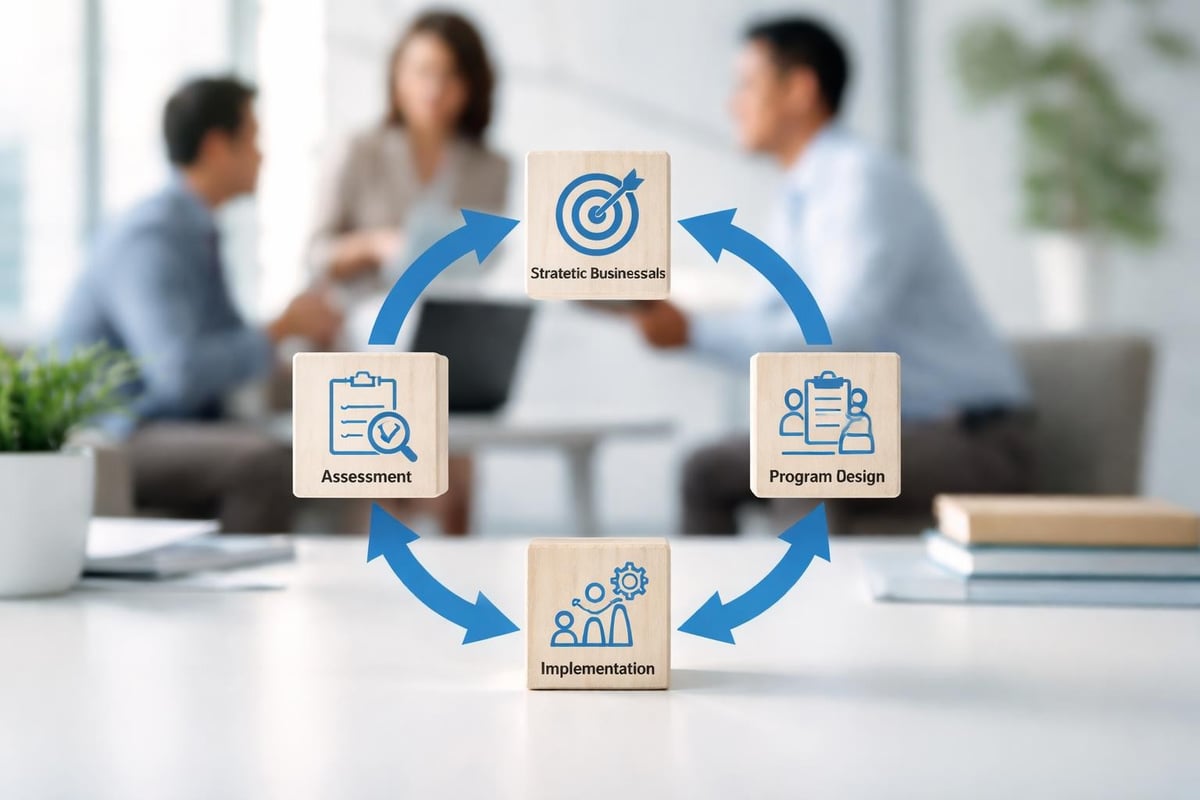
Comprehensive leadership development consulting engagements typically incorporate several interconnected elements that work synergistically to accelerate capability building and ensure lasting behavioral change.
Assessment and Diagnostics
Every effective program begins with rigorous assessment to establish baseline capabilities and identify specific development needs. Consultants employ multiple evaluation methods including 360-degree feedback instruments, behavioral assessments, simulation exercises, and structured interviews. This diagnostic phase reveals not only individual leader strengths and gaps but also systemic patterns affecting organizational leadership effectiveness.
The assessment data drives personalized development planning while simultaneously highlighting organizational trends that inform broader strategic interventions. For instance, widespread deficits in strategic thinking might indicate the need for enhanced business acumen training, while collaboration challenges could signal structural or cultural barriers requiring attention.
Customized Program Design
Generic leadership training rarely delivers transformational results. Effective leadership development consulting creates tailored programs aligned with specific organizational contexts, industry dynamics, and strategic priorities. Best practices in leadership development emphasize blended learning approaches that combine various development modalities for maximum impact.
| Development Method | Primary Benefit | Ideal Application |
|---|---|---|
| Executive Coaching | Personalized guidance and accountability | C-suite and senior leaders |
| Action Learning Projects | Real-world application of concepts | Mid-level managers |
| Peer Learning Circles | Shared experiences and perspectives | Cross-functional leader groups |
| Formal Training Programs | Knowledge transfer and skill building | Broad leadership populations |
| Job Rotations | Expanded experience and perspective | High-potential talent |
Programs for innovation-focused organizations integrate frameworks and tools specific to creative innovation such as design thinking methodologies, business model innovation techniques, and approaches for identifying emerging market opportunities. Leaders learn not just to manage innovation initiatives but to personally model innovative thinking and behaviors.
Implementation and Integration
The execution phase separates mediocre programs from transformational ones. Skilled consultants ensure development activities integrate seamlessly with daily work rather than competing for attention as separate obligations. This requires careful scheduling, active sponsorship from senior leaders, and clear communication about program objectives and expectations.

Successful implementation also demands accountability mechanisms that maintain momentum and prevent participants from reverting to comfortable but less effective behaviors. Regular check-ins, progress reviews, and peer accountability structures keep development front and center even amid competing priorities.
Measuring Impact and Demonstrating ROI
Organizations rightfully expect leadership development consulting investments to deliver measurable returns. Sophisticated measurement frameworks track impact across multiple levels, from individual behavioral change to team performance improvements to organizational outcomes.
Leading indicators provide early signals that development is taking hold. These might include increased use of specific leadership practices, higher quality strategic conversations, or improved employee engagement scores within leaders' teams. These metrics emerge relatively quickly and help validate that programs are on track.
Lagging indicators demonstrate ultimate business impact but require longer timeframes to manifest. These encompass metrics such as revenue growth rates, innovation pipeline value, customer satisfaction improvements, and talent retention statistics. The key lies in establishing clear linkages between leadership capabilities and these business outcomes.
Effective measurement approaches combine quantitative data with qualitative insights gathered through interviews, case studies, and narrative assessments. This mixed-method approach captures the full story of how leadership development drives organizational success.
The Consulting Perspective on Leadership Development
Leadership development represents a critical soft skill within the consulting profession itself, enhancing decision-making, communication, and client relationships. Consultants who excel at developing leadership in client organizations typically possess deep expertise across multiple domains:
- Organizational psychology and adult learning principles
- Change management and culture transformation
- Industry-specific business challenges and opportunities
- Assessment tools and psychometric instruments
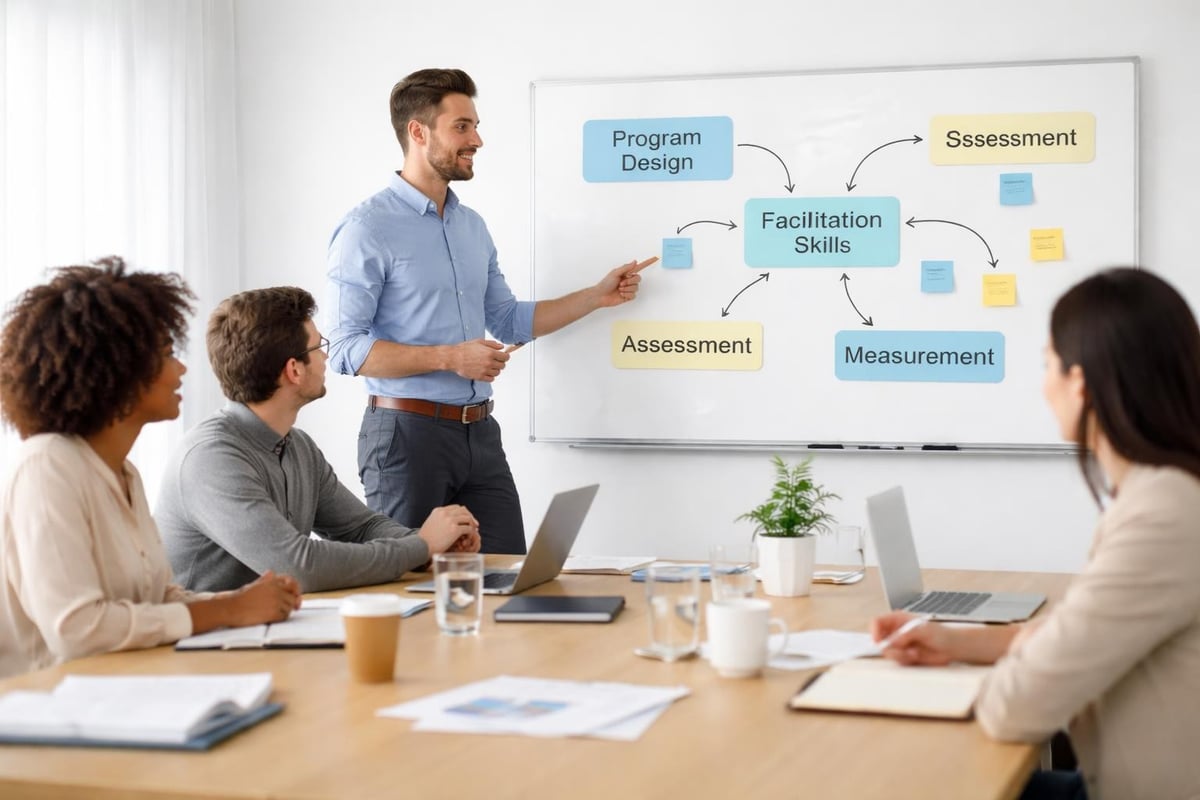
- Facilitation and executive coaching methodologies
This multidisciplinary expertise enables consultants to design programs that address the complete system rather than isolated skill deficits. They recognize that leadership effectiveness depends not only on individual capabilities but also on organizational structures, processes, culture, and strategic clarity that either enable or constrain leadership impact.
Selecting the Right Leadership Development Consulting Partner
Organizations face no shortage of firms offering leadership development services, making partner selection a critical decision. Understanding what leadership consultants do and how to choose one helps organizations make informed choices aligned with their specific needs and contexts.
Evaluation criteria should extend beyond surface-level factors. While credentials, experience, and client references matter, organizations benefit from deeper exploration of consulting approach, methodology rigor, and cultural fit. The most effective partnerships emerge when consultants truly understand the organization's strategic context, competitive dynamics, and cultural nuances.
Key questions to explore during the selection process include:
- How does the consulting approach integrate leadership development with broader strategic initiatives?
- What evidence demonstrates the methodology's effectiveness across different organizational contexts?
- How will the engagement be customized rather than applying standardized program templates?
- What specific expertise does the consulting team bring regarding our industry and strategic priorities?
- How does the measurement framework connect leadership development to business outcomes?
For innovation-focused organizations, additional considerations include the consultant's understanding of frameworks for innovation, experience developing innovation leadership capabilities, and ability to help leaders navigate the unique challenges of driving transformational change. Building strong brand identity through leadership also matters, which is why consulting partners should understand aspects like brand development and how leadership behaviors reinforce or undermine brand promises.
Building Innovation Leadership Capabilities at Scale
Organizations committed to innovation as a competitive advantage require leadership capabilities distributed throughout the organization, not concentrated solely at the top. Leadership development consulting for innovation-oriented firms emphasizes building these capabilities at scale while maintaining quality and consistency.
Cascading Development Approaches
Effective programs often employ cascading models where senior leaders participate first, then sponsor and facilitate development for the next level, creating multiplicative impact. This approach accomplishes several objectives simultaneously: developing capabilities across leadership levels, demonstrating visible commitment from senior leaders, and creating common language and frameworks that enhance collaboration.
The cascading model proves particularly powerful when combined with real business challenges as development vehicles. Leaders at each level tackle authentic strategic questions or innovation opportunities while building their capabilities, delivering both learning and business value.
Creating Internal Capability
Forward-thinking organizations use leadership development consulting engagements not just to develop current leaders but to build internal capability for sustaining development over time. Consultants transfer methodologies, tools, and facilitation approaches to internal teams who can then deliver ongoing programs independently.
This capability-building focus aligns perfectly with training programs that build in-house innovation capabilities, ensuring organizations can continuously evolve leadership competencies as strategies and market conditions shift. Internal teams gain the expertise to design programs, facilitate learning experiences, and measure impact without permanent dependence on external support.
Integrating Leadership Development With Strategic Transformation
Leadership development consulting delivers maximum value when tightly integrated with broader strategic and transformation initiatives rather than treated as parallel workstreams. Organizations undergoing strategy and transformation consulting engagements should view leadership development as an essential enabler of strategic success.
This integration manifests in several ways. Strategy development sessions become leadership development opportunities where executives practice strategic thinking, collaborative decision-making, and communication skills. Implementation planning incorporates explicit development objectives ensuring leaders build the capabilities needed to execute new strategies. Progress reviews assess both business results and leadership capability evolution.
Leading Through AI-Powered Transformation
The rise of artificial intelligence as a strategic tool presents unique leadership development challenges and opportunities. Leaders must understand AI capabilities and limitations, identify high-value AI applications, guide ethical AI deployment, and help teams adapt to AI-augmented work environments.
Organizations exploring business AI solutions benefit when leadership development programs include AI literacy, change leadership for technology adoption, and strategic thinking about AI-driven business model innovation. Leaders learn to ask the right questions about AI investments, assess vendor claims critically, and champion pragmatic AI adoption that delivers measurable business value.
For firms specializing in AI-powered innovation, leadership development takes on additional dimensions. Leaders must champion a test-and-learn culture, balance quick wins with longer-term AI capability building, and navigate the organizational change implications of intelligent automation.
Advanced Leadership Development Strategies
Organizations seeking to maximize leadership development impact often employ sophisticated strategies beyond basic training and coaching programs. These advanced approaches accelerate development, deepen integration with business operations, and create sustainable capability building systems.
Experiential Learning and Simulations
Immersive learning experiences create safe environments for leaders to practice complex skills, make strategic decisions, and receive immediate feedback without real-world consequences. Business simulations, role-playing scenarios, and case-based learning enable leaders to compress years of experience into concentrated development periods.
Innovation-focused simulations challenge leaders to identify market opportunities, design new business models, navigate resource allocation decisions, and respond to competitive threats. These experiences build not only technical innovation skills but also the judgment, resilience, and adaptive capacity required for innovation leadership.
Strategic Cohort Development
Organizations increasingly create cohort-based programs that develop groups of leaders simultaneously. Cohorts build peer networks that provide ongoing support, accountability, and collaborative problem-solving long after formal programs conclude. The shared experience creates common language, frameworks, and relationships that enhance organizational collaboration and alignment.
Strategic cohorts might be composed of high-potential leaders being prepared for senior roles, cross-functional teams leading major initiatives, or leaders from acquired companies being integrated into the parent organization. The cohort structure amplifies individual development through peer learning and creates organizational capability through enhanced networks.
| Cohort Type | Primary Objective | Typical Duration |
|---|---|---|
| High-Potential Pipeline | Prepare future senior leaders | 12-18 months |
| Functional Excellence | Deepen specialized expertise | 6-9 months |
| Innovation Champions | Build innovation leadership | 9-12 months |
| Integration Acceleration | Align acquired company leaders | 3-6 months |
| Strategic Initiative Teams | Deliver business results while developing capabilities | Project duration |
Future Directions in Leadership Development Consulting
The leadership development consulting field continues evolving in response to changing organizational needs, emerging technologies, and evolving understanding of how adults learn and develop capabilities. Several trends are reshaping the discipline and expanding what effective development looks like.
Personalization at scale represents a significant frontier. Technology platforms now enable highly individualized learning pathways while maintaining efficiency and consistency across large leader populations. Adaptive learning algorithms recommend content, experiences, and connections based on individual assessment results, learning preferences, and development objectives.
Virtual and hybrid delivery models expanded rapidly in recent years and continue maturing. Sophisticated virtual programs now deliver development experiences previously possible only in person, including breakout discussions, simulation exercises, and collaborative problem-solving. The flexibility of virtual delivery enables more frequent, shorter interactions that research suggests may enhance learning retention compared to intensive but infrequent in-person sessions.
Data analytics and AI are transforming how consultants assess capabilities, predict leadership success, and personalize development approaches. Analyzing patterns across thousands of leaders reveals insights about which development approaches work best for different leader types, business contexts, and organizational cultures. However, these tools work best when combined with human judgment and contextual understanding rather than replacing consultant expertise.
Organizations focused on developing business strategies increasingly recognize that leadership development consulting represents strategic investment rather than tactical expense. The most successful firms integrate leadership development into their strategic planning processes, ensuring capabilities evolve in step with strategic priorities and market opportunities.
Leadership development consulting transforms organizational capability, enabling businesses to execute strategies, drive innovation, and navigate complexity with confidence. The most effective programs align tightly with strategic objectives, employ blended development approaches, measure impact rigorously, and build sustainable internal capability. Six Paths Consulting partners with ambitious leaders to develop the innovation leadership capabilities required for discovering new market opportunities and accelerating revenue growth through AI-powered strategic innovation, combining leadership development with strategy formulation and implementation support to drive measurable business results.