

Management and consulting firms have become indispensable partners for organizations navigating complexity, digital transformation, and competitive disruption in 2026. These specialized advisory organizations provide strategic guidance, operational expertise, and innovative solutions that enable businesses to identify new revenue streams, optimize performance, and adapt to rapidly changing market conditions. As the global management consulting services market approaches $541 billion, the role of these firms has expanded beyond traditional advisory services to encompass AI-powered insights, innovation frameworks, and capability-building programs that empower organizations to compete effectively.
The Evolving Role of Management and Consulting Firms
The landscape of professional advisory services has transformed dramatically as businesses face unprecedented challenges and opportunities. Management and consulting firms now serve as strategic partners who bring specialized expertise, objective perspectives, and proven methodologies to complex business problems.
Strategic Advisory and Business Transformation
Modern consulting engagements extend far beyond simple recommendations. Firms partner with leadership teams to reimagine business models, identify untapped market opportunities, and implement transformative strategies that drive measurable results.
Key areas of strategic focus include:
- Business model innovation and revenue diversification
- Market entry strategies and competitive positioning
- Organizational restructuring and change management
- Digital transformation and technology integration
- Performance optimization and operational excellence
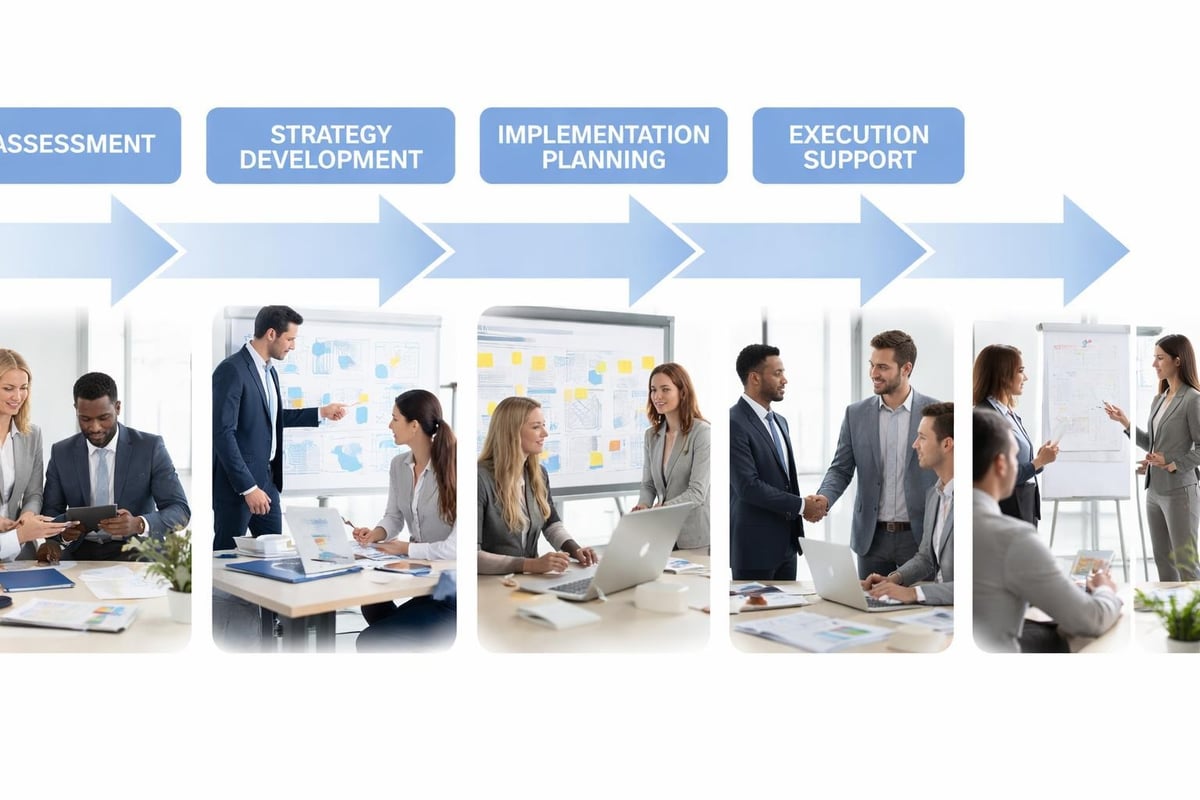
The shift toward outcome-based consulting has elevated the importance of implementation support and capability transfer. Organizations increasingly seek partners who can not only develop strategies but also build internal competencies that sustain competitive advantage over time.
Data-Driven Decision Making and AI Integration
The integration of artificial intelligence and advanced analytics has revolutionized how management and consulting firms deliver value. Technology consulting revenue is projected to surpass $400 billion in 2026, reflecting the growing demand for data-driven insights and intelligent automation.
Consulting firms leverage sophisticated analytical tools to uncover patterns, predict market trends, and optimize decision-making processes. This analytical rigor enables organizations to move from intuition-based strategies to evidence-based planning that reduces risk and maximizes return on investment.
| Analytical Capability | Business Application | Strategic Value |
|---|---|---|
| Predictive modeling | Market forecasting | Revenue optimization |
| Customer analytics | Experience design | Loyalty improvement |
| Operational intelligence | Process optimization | Cost reduction |
| Competitive intelligence | Strategy formulation | Market positioning |
| Risk assessment | Portfolio management | Resource allocation |
Service Offerings and Specialization Areas
Management and consulting firms have developed increasingly specialized practices to address specific industry challenges and functional needs. This specialization allows firms to deliver deeper expertise and more relevant solutions.
Innovation and Growth Strategy
Innovation-focused consulting has emerged as a critical service area as organizations seek sustainable growth in saturated markets. Firms specializing in frameworks for innovation help businesses discover blue ocean opportunities, develop breakthrough products, and create differentiated customer experiences.
Innovation consulting methodologies include:
- Blue Ocean Strategy for uncontested market creation
- Design thinking for customer-centered innovation
- Business model canvas for strategic experimentation
- Jobs-to-be-Done for opportunity identification
- Lean startup principles for rapid validation
These approaches enable organizations to systematically explore new possibilities, test hypotheses quickly, and scale successful innovations efficiently. The focus on driving innovation through structured processes reduces uncertainty and accelerates time-to-market for new offerings.
Digital Transformation and Technology Strategy
Digital transformation remains a primary driver of consulting demand as organizations modernize infrastructure, adopt cloud solutions, and implement automation technologies. Management and consulting firms guide clients through technology selection, implementation roadmaps, and organizational change required for successful adoption.
The emphasis on technology and consulting integration reflects the reality that strategic success increasingly depends on technological capabilities. Firms help clients evaluate emerging technologies, assess readiness, and develop phased implementation plans that minimize disruption while maximizing value capture.
Operational Excellence and Performance Improvement
Operational consulting focuses on enhancing efficiency, reducing costs, and improving quality across business processes. Consultants apply best practice methodologies, lean principles, and continuous improvement frameworks to identify inefficiencies and implement sustainable solutions.
This work often involves detailed process mapping, performance benchmarking, and capability assessment to establish baseline metrics and improvement targets. The goal is to create measurable impact on key performance indicators while building internal capabilities for ongoing optimization.
Selecting the Right Consulting Partner
Choosing an appropriate consulting partner requires careful evaluation of expertise, methodology, cultural fit, and track record. Organizations must assess their specific needs and match them with firms that possess relevant capabilities.
Evaluation Criteria for Consulting Firms
Experience and Industry Knowledge
Deep industry expertise enables consultants to understand context, anticipate challenges, and apply proven solutions adapted to specific market dynamics. Firms with demonstrated success in relevant sectors bring valuable insights that accelerate problem-solving and reduce implementation risk.
Methodological Approach
The frameworks and processes that firms employ significantly influence engagement effectiveness. Organizations should evaluate whether consultants rely on proprietary methodologies, established frameworks like ISO 20700 guidelines for management consulting, or customized approaches tailored to client circumstances.
Implementation Support and Knowledge Transfer
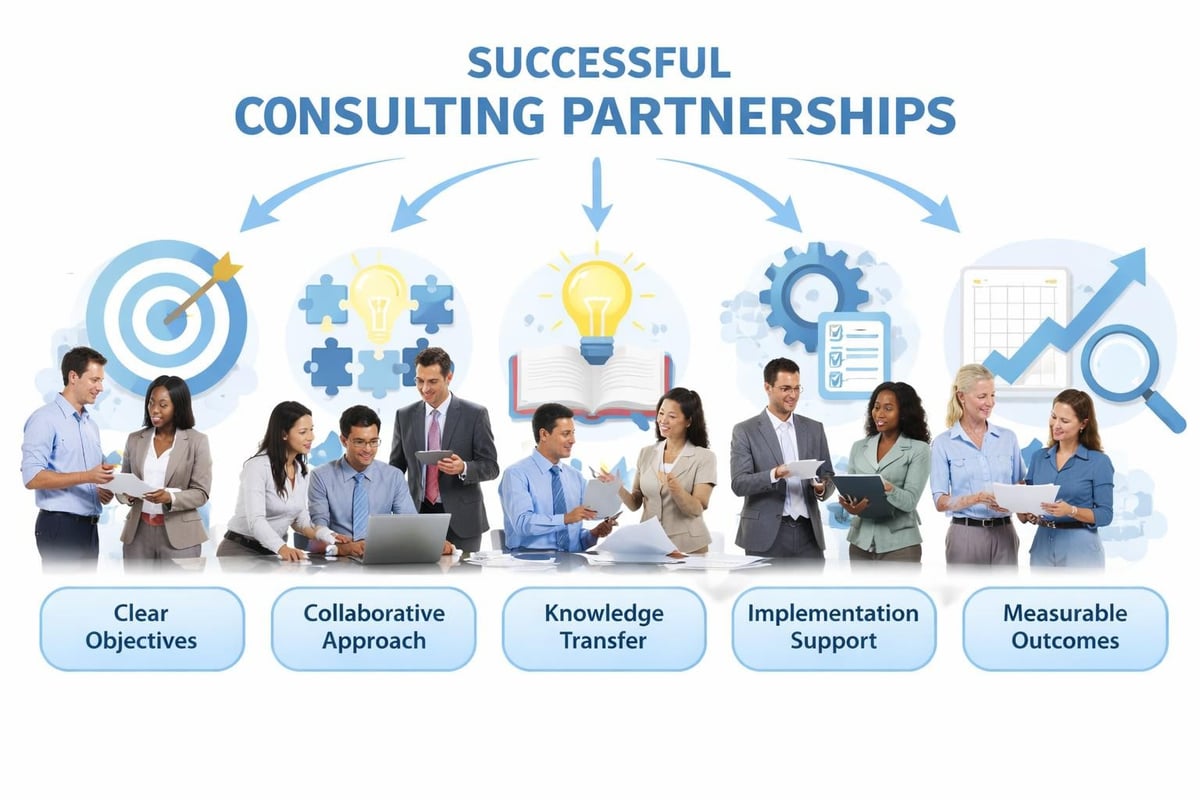
Sustainable value creation requires building internal capabilities, not just delivering recommendations. The best strategy consulting companies emphasize capability transfer through training programs, workshops, and hands-on collaboration that empower client teams to maintain momentum after engagement completion.
Engagement Models and Pricing Structures
Management and consulting firms offer various engagement models designed to align incentives and match client preferences for risk-sharing and collaboration intensity.
| Engagement Model | Structure | Best Suited For |
|---|---|---|
| Project-based | Fixed scope and timeline | Defined initiatives with clear deliverables |
| Retainer | Ongoing advisory support | Continuous strategic guidance |
| Value-based | Compensation tied to results | Performance improvement initiatives |
| Hybrid | Combined elements | Complex, multi-phase transformations |
| Training programs | Capability building | Internal skill development |
Understanding these models helps organizations structure engagements that maximize value while managing budget constraints effectively. The trend toward outcome-based pricing reflects increasing client demand for measurable results rather than activity-based billing.
Industry Trends Shaping Consulting Services
Several powerful trends are reshaping how management and consulting firms operate and deliver value to clients in 2026.
Specialization and Niche Focus
The breadth of business challenges has led many firms to develop concentrated expertise in specific industries, functions, or methodologies. This specialization enables deeper insights and more relevant solutions but requires clients to potentially engage multiple partners for comprehensive support.
Top management consulting firms increasingly position themselves around distinctive capabilities rather than attempting to serve all needs. This positioning creates clearer value propositions and attracts clients seeking specific expertise.
Sustainability and ESG Integration
Environmental, social, and governance considerations have become central to strategic planning. Management and consulting firms help organizations assess ESG performance, develop sustainability strategies, and integrate responsible practices into operations and decision-making frameworks.
This trend reflects stakeholder expectations for corporate responsibility and the growing recognition that sustainable practices drive long-term value creation. Consultants guide clients through ESG assessment processes and strategy development that balances profitability with positive social and environmental impact.
Remote and Hybrid Delivery Models
The normalization of remote work has transformed consulting delivery models. Firms now blend virtual collaboration with strategic on-site engagement, reducing costs while maintaining relationship quality and insight depth.
Benefits of hybrid consulting models:
- Reduced travel expenses and environmental impact
- Increased flexibility for both consultants and clients
- Access to broader talent pools unconstrained by geography
- Enhanced documentation and knowledge capture through digital tools
- More frequent touchpoints and continuous collaboration
This evolution has made consulting services more accessible to mid-market organizations and startups that previously found traditional models cost-prohibitive.
AI-Powered Consulting and Automation
Artificial intelligence is transforming both how consultants work and the services they deliver. AI consulting companies help clients implement intelligent automation, while simultaneously using AI tools to enhance research, analysis, and insight generation.
Trends in management consulting indicate accelerating adoption of machine learning for pattern recognition, natural language processing for document analysis, and predictive analytics for scenario planning. These capabilities enable consultants to process larger datasets, identify subtle trends, and deliver insights faster than traditional methods allow.
Building Internal Innovation Capabilities
Forward-thinking organizations recognize that sustainable competitive advantage requires developing internal capabilities rather than perpetual dependence on external advisors. Management and consulting firms increasingly focus on capability transfer and skill development.
Training and Workshop Programs
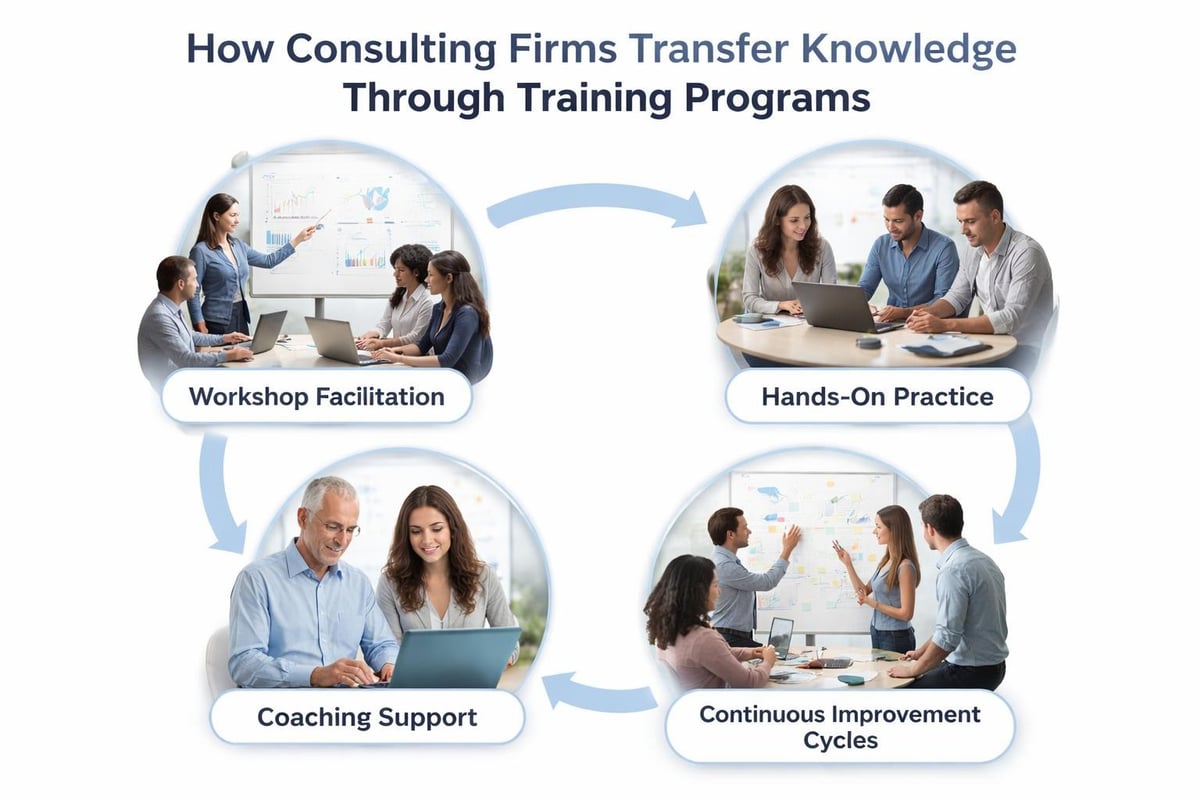
Structured training programs enable organizations to build expertise in strategic frameworks, innovation methodologies, and analytical techniques. Design thinking workshops, Blue Ocean Strategy sessions, and creativity training empower teams to apply proven methodologies independently.
These programs typically combine theoretical foundations with practical application, allowing participants to work on real business challenges while learning new approaches. The experiential learning model accelerates skill acquisition and ensures immediate relevance to organizational priorities.
Change Management and Organizational Development
Implementing new strategies requires managing human dimensions of transformation. Change management training and Tipping Point Leadership programs help organizations overcome resistance, build momentum, and sustain new behaviors and processes.
Effective change management addresses both rational and emotional elements of transformation, creating alignment between strategic direction and individual motivations. This comprehensive approach increases success rates for major initiatives while building organizational resilience.
Measuring Consulting Impact and ROI
Demonstrating tangible value from consulting engagements requires establishing clear metrics, tracking progress, and attributing outcomes to specific interventions. Management and consulting firms must articulate expected impact and measure actual results.
Performance Metrics and Success Indicators
Financial metrics:
- Revenue growth from new products or markets
- Cost reduction from process improvements
- Profitability enhancement through pricing or mix optimization
- Return on investment for strategic initiatives
Operational metrics:
- Cycle time reduction for key processes
- Quality improvement and defect reduction
- Customer satisfaction and Net Promoter Score changes
- Employee engagement and retention improvements
Strategic metrics:
- Market share gains in target segments
- Speed to market for new offerings
- Innovation pipeline value and conversion rates
- Competitive positioning improvements
The business strategy and management consulting market increasingly emphasizes outcome measurement and value documentation as clients demand accountability for engagement investments.
Long-Term Value Creation
Beyond immediate project outcomes, effective consulting relationships generate lasting organizational capabilities that continue producing value long after engagement completion. This sustained impact comes from embedded skills, improved processes, and enhanced strategic thinking capabilities throughout the organization.
Organizations that successfully develop business strategies with consulting support often experience compounding benefits as teams apply learned methodologies to subsequent challenges independently. This multiplication effect represents the highest form of consulting value delivery.
Future Outlook for Management and Consulting Firms
The consulting industry continues evolving in response to technological advancement, changing client expectations, and emerging business challenges. Several developments will shape the industry's trajectory through the remainder of this decade.
Emerging opportunities:
- AI strategy and implementation – Guiding organizations through artificial intelligence adoption and integration
- Sustainability transformation – Supporting net-zero commitments and circular economy transitions
- Resilience building – Enhancing organizational adaptability to disruption and uncertainty
- Ecosystem orchestration – Designing and managing partner networks and platform businesses
- Talent strategy – Addressing workforce challenges in competitive labor markets
Market research indicates continued robust growth for management and consulting firms that adapt service offerings to these emerging needs while maintaining focus on measurable value delivery.
The convergence of strategy, technology, and innovation capabilities positions specialized firms to capture significant opportunities. Organizations seeking to identify profitable business models and launch new businesses quicker will increasingly rely on consulting partners who combine strategic insight with implementation expertise.
Success in the consulting industry requires continuous learning and adaptation. Tips for consulting success emphasize developing deep expertise, maintaining professional networks, and staying current with emerging methodologies and technologies.
Management and consulting firms play a vital role in helping organizations navigate complexity, seize opportunities, and build capabilities for sustained success. The integration of AI-powered analytics, proven innovation frameworks, and capability-building approaches creates comprehensive value that extends far beyond traditional advisory services. Six Paths Consulting specializes in driving revenue growth and profitability through strategic innovation, helping ambitious leaders discover new market opportunities and develop breakthrough business models. Whether you need to accelerate growth, build innovation capabilities, or transform your organization's strategic approach, our team combines rigorous methodology with practical implementation support to deliver measurable results.