In today's fast-paced business landscape, organizations are turning to consulting workshops to spark transformation and drive innovation. These sessions have become essential for leaders, consultants, and teams seeking real, measurable impact.
This guide will show you how to master consulting workshop success in 2026, equipping you to navigate new challenges and achieve tangible results. You'll discover the latest trends, proven planning strategies, facilitation techniques, and effective follow-up methods.
Ready to overcome common obstacles and unlock your organization's potential? Explore actionable frameworks and expert tips to elevate your next workshop and achieve breakthrough outcomes.
The Evolving Role of Consulting Workshops in 2026
In 2026, the consulting workshop stands out as a powerful engine for business transformation and innovation. Organizations are no longer treating workshops as one-time events. Instead, they are integrating these sessions into their ongoing strategic processes, driving tangible value across teams and initiatives.
The Strategic Value of Workshops
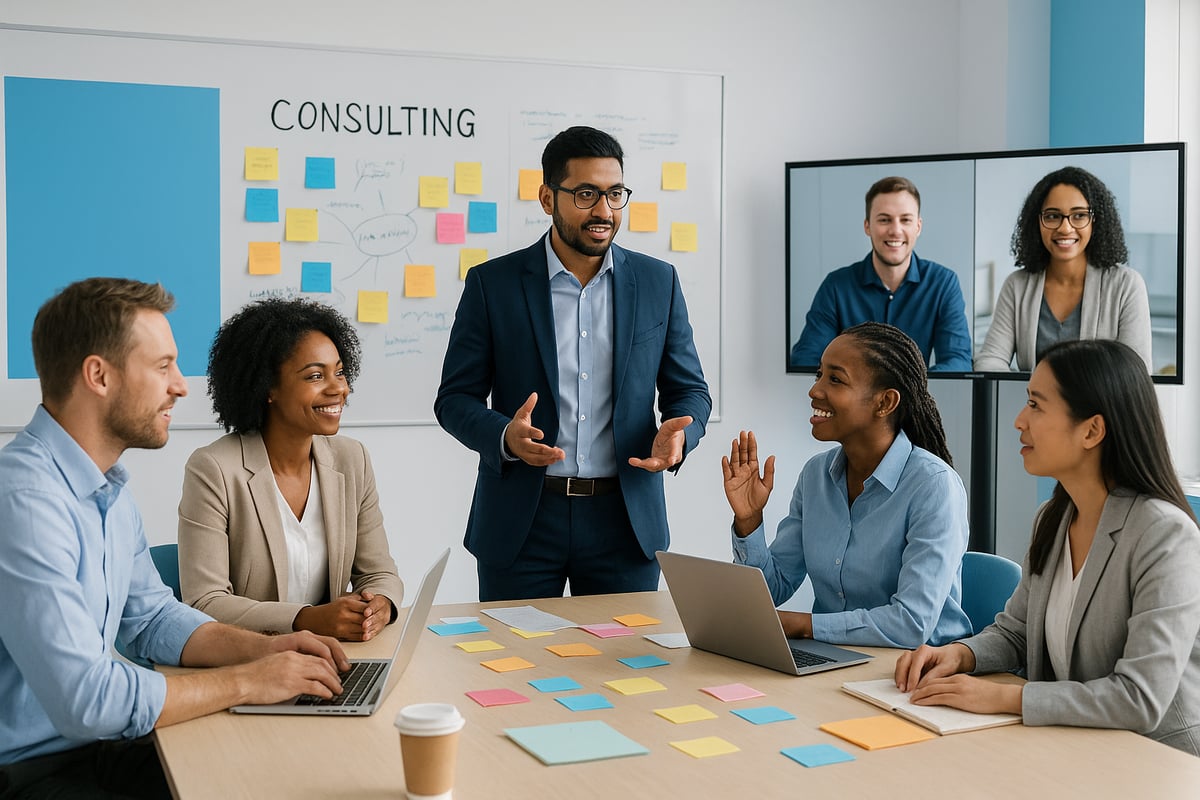
A consulting workshop now serves as a catalyst for rapid decision-making, innovation, and organizational transformation. With digital disruption accelerating and hybrid work becoming the norm, expectations around workshops have shifted significantly.
Today’s consulting workshop is designed to break down silos, foster cross-functional alignment, and address complex challenges that demand diverse perspectives. Companies use these workshops to accelerate strategy development, streamline operations, and drive digital transformation. For example, scenario planning sessions have helped organizations pivot quickly in response to market shifts.
Recent data shows that 70 percent of organizations report faster project delivery after adopting structured workshops (source: Flevy Blog). With the global tech consulting market projected to surpass $400 billion in revenue in 2026, demand for high-impact consulting workshop solutions continues to rise. Learn more about these market trends in the Tech Consulting Market Growth Projections.
A consulting workshop is no longer just a meeting. It is a strategic tool for aligning stakeholders, unlocking innovation, and delivering measurable business results.
Trends Shaping Workshop Design and Delivery
Several key trends are shaping how the consulting workshop is designed and delivered in 2026. The rise of hybrid and virtual workshops has enabled global participation, making it easier to bring together teams from different regions and backgrounds.
Inclusivity and psychological safety are now central to workshop design. Facilitators actively seek out diverse voices and create spaces where every participant feels comfortable contributing. The integration of AI tools for real-time data analysis, ideation, and instant feedback is transforming how insights are generated and shared.
Sustainability and ESG (Environmental, Social, and Governance) topics are becoming standard agenda items, reflecting broader organizational priorities. Leading firms are also leveraging scenario planning workshops to future-proof their strategies and prepare for market uncertainty.
A consulting workshop that incorporates these trends is better positioned to deliver value, foster engagement, and drive actionable outcomes. Organizations that adapt quickly to new ways of working are seeing measurable improvements in workshop effectiveness and impact.
Common Pitfalls and How to Avoid Them
Despite the clear benefits, many organizations encounter pitfalls when running a consulting workshop. Common issues include unclear objectives, lack of measurable outcomes, and poor stakeholder engagement. Misaligned expectations or over-reliance on outdated facilitation methods can derail even the best-intentioned sessions.
Another frequent challenge is failing to capture and implement the insights generated during the workshop. Without a structured approach to documentation and follow-up, valuable ideas can be lost or forgotten.
To avoid these pitfalls, successful organizations use pre-workshop interviews to clarify goals and expectations. They establish clear success metrics and assign accountability for post-workshop action items. Regular follow-up ensures that insights are translated into measurable results.
By proactively addressing these challenges, leaders can ensure every consulting workshop delivers on its promise of driving transformation and innovation.
Step-by-Step Blueprint: Planning and Designing a High-Impact Consulting Workshop
Designing a high-impact consulting workshop requires a structured approach, attention to detail, and a focus on outcomes. Each step in the planning process builds a foundation for engagement, alignment, and measurable success. Below, you will find a blueprint to guide you through every stage of consulting workshop planning, from defining objectives to pre-session preparation.
Step 1: Define Purpose, Scope, and Success Metrics
Every consulting workshop starts with a clear purpose. Begin by articulating the business challenge or opportunity you want to address. Is your goal to align on strategy, solve a pressing issue, or generate innovative ideas? Clarifying these intentions sets the tone for the entire project.
Next, align the workshop’s scope with organizational strategy and stakeholder needs. This ensures the session remains focused and relevant. Work closely with sponsors to avoid scope creep and maintain alignment.
Set measurable KPIs for your consulting workshop. These may include decision quality, speed of execution, participant engagement, or post-workshop implementation rates. For example, using OKRs (Objectives and Key Results) allows you to track progress and success. Consider the following table for KPI examples:
| Objective | Sample KPI |
|---|---|
| Align on digital strategy | 80% consensus by session end |
| Generate new ideas | 30 actionable concepts |
| Accelerate decision-making | Key decision in 2 hours |
Defining these elements early ensures every consulting workshop is outcome-driven and positioned for impact.
Step 2: Stakeholder Analysis and Engagement
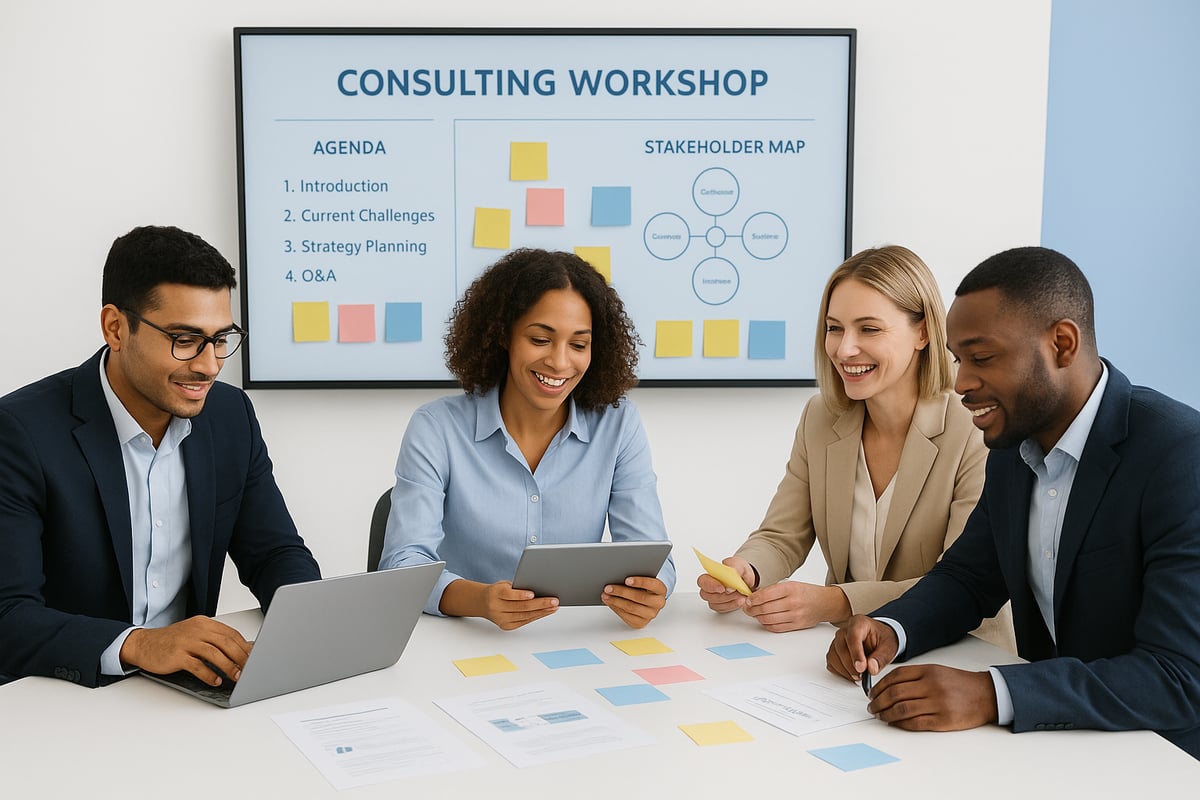
Stakeholder engagement is at the core of any successful consulting workshop. Map out key participants, influencers, and final decision-makers. Understanding their roles and interests helps you design sessions that foster buy-in and drive results.
Conduct pre-workshop interviews or surveys to uncover expectations and potential concerns. This not only builds rapport but also surfaces hidden agendas or conflicting priorities. By proactively addressing these dynamics, your consulting workshop becomes a platform for open dialogue.
Effective engagement strategies include:
- Inviting cross-functional teams for diverse perspectives
- Creating clear communication channels before the event
- Using pre-session materials to align everyone on context
Data shows that cross-functional consulting workshops can increase solution adoption by 40 percent, highlighting the value of robust stakeholder analysis and early involvement.
Step 3: Agenda and Method Selection
Choosing the right format and agenda is essential for consulting workshop success. Start by selecting a workshop method that fits your objectives, such as Charrette for consensus-building, Delphi for expert input, or World Café for idea generation. Each method offers unique benefits and suits different challenges.
Structure the agenda to maintain energy and creativity. Consider a mix of plenary sessions, focused sprints, and interactive breakout groups. Digital tools like collaborative whiteboards or polling apps can keep hybrid or remote participants fully engaged.
For example, the World Café method encourages small-group conversations that build consensus and surface breakthrough ideas. When planning your consulting workshop, ensure methods and timing support your desired outcomes and participant experience.
A well-designed agenda increases engagement, minimizes fatigue, and drives actionable results for every consulting workshop.
Step 4: Logistics and Technology Setup
Logistics and technology are critical for a seamless consulting workshop. Choose a venue—physical, virtual, or hybrid—that supports collaboration and accessibility. Ensure all participants can contribute equally, regardless of location or ability.
Prepare a technology checklist that covers collaboration platforms, polling tools, and digital whiteboards (such as Miro or Mural). Plan for contingencies like technical issues or connectivity problems. Assign specific roles for tech support and scribing to keep the session running smoothly.
For a comprehensive list of essential tools and resources, explore the Management Consulting Tools page, which details the platforms and templates most effective for consulting workshops.
Attention to these details ensures your consulting workshop runs efficiently and supports full participation.
Step 5: Pre-Workshop Preparation
Thorough preparation is the final step before launching your consulting workshop. Send pre-read materials that outline the session’s purpose, context, and expectations. This helps participants arrive informed and ready to contribute.
Foster psychological safety and trust by sharing ground rules and team norms ahead of time. Assign roles such as facilitator, scribe, timekeeper, and tech support to clarify responsibilities.
Consider using pre-workshop surveys or icebreakers to boost engagement and surface initial ideas. This early interaction can energize participants and set a collaborative tone.
By investing in preparation, you set the stage for a consulting workshop that is focused, inclusive, and primed for measurable impact.
Mastering Workshop Facilitation for Maximum Engagement and Results
Effective facilitation is the linchpin of any successful consulting workshop. Facilitators shape the environment, drive engagement, and ensure every voice is heard. In today's dynamic landscape, mastering these skills can mean the difference between a lackluster session and a transformative experience.
A consulting workshop thrives when participants feel empowered to contribute, collaborate, and innovate. As organizations face new complexities, the demand for expert facilitation grows. Let us explore the essential skills, tools, and strategies that set top facilitators apart.

Essential Facilitation Skills and Mindsets
Facilitating a consulting workshop requires a unique blend of skills and mindsets. Active listening is fundamental, as it ensures participants feel valued and understood. Neutrality is equally important, allowing the facilitator to guide discussions without bias or influencing outcomes.
Adaptability sets great facilitators apart. Unexpected challenges can arise, and the ability to pivot ensures the consulting workshop remains productive. Creating psychological safety encourages all participants, regardless of hierarchy, to share their perspectives.
Successful facilitators foster trust and openness. They employ storytelling to make complex topics relatable and drive deeper insights. Managing group dynamics, energy levels, and conflict is a continuous process. The facilitator must remain present, observant, and ready to intervene when necessary.
By cultivating these mindsets, facilitators create an environment where innovation flourishes. Every consulting workshop benefits from a leader who is attentive, impartial, and responsive to participants’ needs.
Tools and Techniques for Effective Facilitation
The right tools and techniques elevate a consulting workshop from ordinary to outstanding. Visual thinking strategies, such as whiteboards, mind maps, and journey mapping, help participants organize ideas and see connections. Structured ideation methods like brainstorming, SCAMPER, and Six Thinking Hats unleash creativity while maintaining focus.
Decision-making frameworks, including dot voting and impact/effort matrices, guide groups toward consensus and actionable outcomes. Data shows that workshops using structured facilitation methods see 30 percent higher engagement.
Digital tools are now essential, especially for hybrid sessions. Platforms like Miro and Mural support real-time collaboration and idea capture. For those seeking to deepen their facilitation toolkit, exploring Innovation Workshop Methods offers practical approaches tailored to modern challenges.
Selecting the appropriate tools and techniques ensures every consulting workshop delivers measurable impact and sustained engagement.
Hybrid and Virtual Facilitation Best Practices
Hybrid and virtual consulting workshop formats are now standard, requiring facilitators to adapt their approach. Effective virtual facilitation hinges on clear communication, robust digital platforms, and intentional engagement strategies.
Breakout rooms help recreate the intimacy of small-group discussions. Digital sticky notes and real-time polling tools foster participation, even among remote attendees. Facilitators must pay close attention to energy levels and watch for signs of disengagement, such as silence or inactivity.
Equal participation is a priority. Rotating speaking roles, inviting input from quieter voices, and setting clear expectations create a level playing field. Managing “Zoom fatigue” involves frequent breaks, varied activities, and concise agendas.
The best facilitators treat technology as an enabler, not a barrier. By embracing these best practices, every consulting workshop—regardless of format—can achieve high engagement and meaningful outcomes.
Overcoming Common Facilitation Challenges
Facilitators in a consulting workshop frequently encounter dominant or disengaged participants. Addressing these dynamics requires tact and structure. Setting clear ground rules at the outset establishes expectations and helps maintain a respectful environment.
Cultural and language differences can also pose challenges, especially in global teams. Facilitators should encourage inclusive language, clarify terms, and remain sensitive to diverse perspectives. Timeboxing activities keeps sessions focused while allowing space for creative exploration.
Rotating roles, such as assigning participants as scribes or timekeepers, increases ownership and participation. When challenges arise, facilitators must remain calm, listen actively, and realign the group with the workshop’s objectives.
A consulting workshop’s success depends on the facilitator’s ability to manage both people and process. With preparation and the right techniques, even the most complex sessions can yield exceptional results.
Proven Workshop Methods and When to Use Them
Selecting the right consulting workshop method is crucial for driving effective outcomes and achieving organizational goals. In today's dynamic business environment, leaders and consultants must understand not only what each method offers but also when and how to deploy them for maximum impact. The choice of method can influence everything from team alignment to innovation speed.
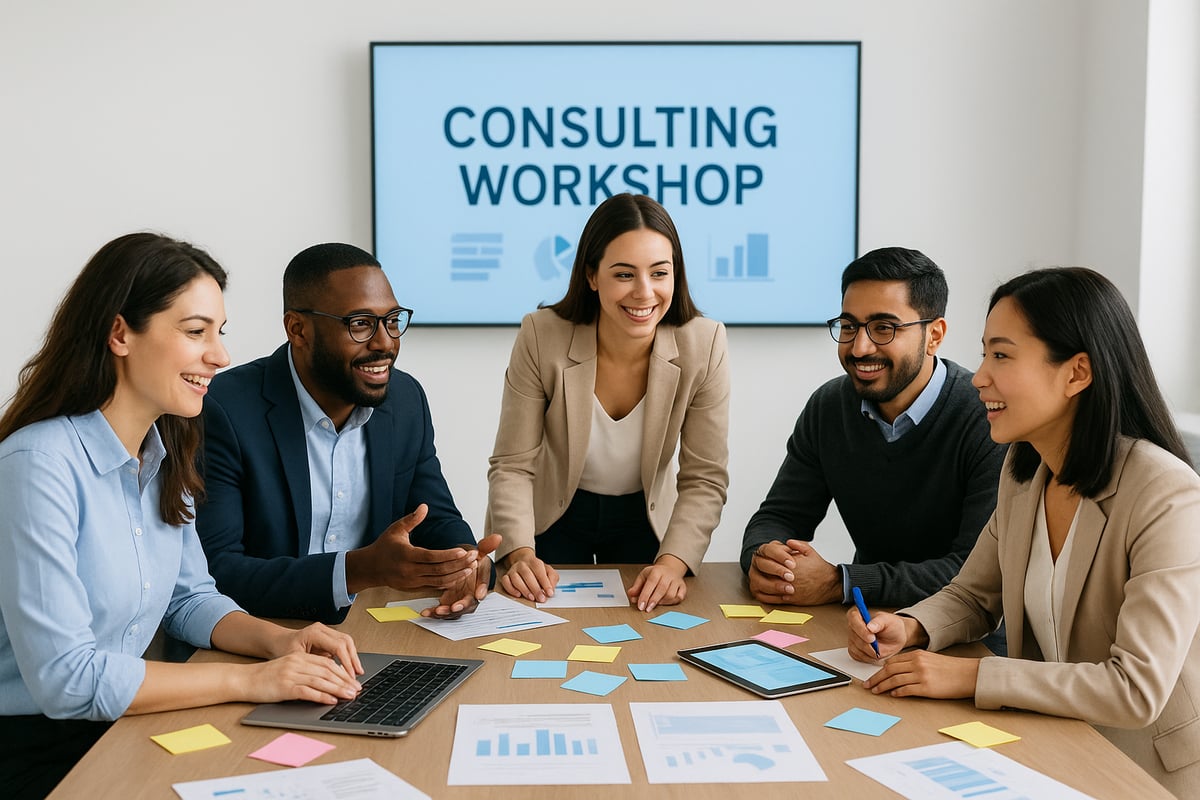
Overview of Top Consulting Workshop Methods
Several consulting workshop methods have proven effective for a range of organizational challenges. Each method brings a unique approach to problem-solving, decision-making, and team engagement.
- Charrette: Ideal for complex, multi-stakeholder environments, the Charrette method brings together diverse voices to build consensus and develop actionable plans.
- Delphi: This technique leverages rounds of anonymous expert feedback to converge on informed opinions, making it valuable for forecasting or addressing technical issues.
- Consensus Conference: Used to resolve controversial or high-stakes topics, this approach helps groups reach agreement through structured dialogue.
- World Café: Emphasizing informal conversation in rotating small groups, World Café unlocks creativity and shared understanding, making it a powerful consulting workshop tool for idea generation.
- Scenario Planning: Organizations facing uncertainty use scenario planning to anticipate potential futures and shape robust strategies. For a detailed look at scenario planning in action, see the Scenario Analysis Framework Workshop.
These methods empower consultants and teams to tailor their approach, ensuring each consulting workshop addresses specific organizational needs.
Matching Method to Objective
Choosing the best consulting workshop method depends on your desired outcomes. Is the goal to generate ideas, make decisions, evaluate options, or plan for the future?
| Objective | Best Method(s) |
|---|---|
| Ideation | World Café, Charrette |
| Decision-Making | Delphi, Consensus Conference |
| Evaluation | Delphi, Focus Groups |
| Planning | Scenario Planning, Planning Cells |
For example, use a World Café when seeking broad input and creative solutions. When consensus is critical, opt for a Consensus Conference. Consulting workshop leaders should always align the method to stakeholder needs and project goals, increasing the likelihood of meaningful results.
Hybridization and Customization of Methods
Modern consulting workshop formats often combine elements from multiple methods to address complex, multi-phase challenges. Hybrid workshops might start with ideation using World Café, then transition to prioritization with dot voting or impact/effort matrices.
Adapting these methods for digital and hybrid environments is now standard. Tools like Miro and online polling platforms allow remote participants to engage fully, ensuring inclusivity and real-time collaboration. Hybrid consulting workshop formats can increase participation by up to 50 percent, making them vital for global organizations.
Customization includes adjusting agendas, integrating digital tools, and blending facilitation techniques. This flexibility helps consulting workshop facilitators respond to shifting team dynamics and evolving business needs.
Real-World Examples and Outcomes
Organizations worldwide are seeing measurable benefits from applying the right consulting workshop methods. For instance, a scenario planning session enabled a technology firm to pivot its business model in response to emerging industry trends. Similarly, World Café sessions have sparked breakthrough ideas during digital transformation initiatives.
Lessons from failed workshops often highlight the risks of mismatched methods or unclear objectives. Success stories, on the other hand, show that when a consulting workshop is designed and facilitated with intention, it drives alignment, innovation, and actionable outcomes. By learning from both successes and setbacks, leaders and consultants can refine their approach for lasting impact.
Ensuring Workshop Impact: Post-Workshop Execution and Measurement
Achieving lasting impact from a consulting workshop requires more than a well-designed session. True value is realized when workshop insights are captured, acted upon, and measured for results. The following steps ensure your consulting workshop delivers on its promise and drives real organizational change.
Capturing, Synthesizing, and Sharing Outcomes
Effective documentation is the cornerstone of consulting workshop success. Capture key decisions, insights, and next steps using digital boards, summary reports, and action trackers. Tools like Miro, Mural, and AI-powered platforms can synthesize discussions in real time, making it easier to distill actionable outcomes.
Consider leveraging AI and Automation Transform Service Delivery for advanced synthesis and instant recommendations. This approach ensures no valuable insight is overlooked and enables seamless knowledge transfer across teams.
Best practices for sharing outcomes include:
- Distributing concise, visual summaries to all stakeholders
- Using standardized templates for consistency
- Assigning clear owners to each action item
Timely and transparent communication maximizes the value gained from your consulting workshop.
Driving Accountability and Follow-Through
A consulting workshop achieves its full potential only when actions are implemented. Assign owners to each action item, set clear deadlines, and establish regular check-ins to monitor progress. Accountability should be built into the workshop process from the outset.
Organizations with structured follow-up protocols see 60% higher implementation rates. To reinforce accountability, consider escalation paths for critical initiatives and track progress using dedicated action trackers. For organizations navigating transformation, partnering with Change Management Companies can provide the expertise and frameworks needed for sustained results.
Key steps to drive follow-through:
- Assign clear responsibilities for each outcome
- Schedule progress reviews at defined intervals
- Use visual dashboards to track status
This disciplined approach transforms consulting workshop insights into measurable business impact.
Measuring Workshop Success and ROI
Measuring the success of a consulting workshop requires both quantitative and qualitative metrics. Track adoption rates, speed of implementation, participant satisfaction, and direct business impact. A combination of post-workshop surveys and ongoing stakeholder feedback creates a comprehensive view of workshop effectiveness.
Consider using a simple table to organize your metrics:
| Metric | Example |
|---|---|
| Adoption Rate | % of actions implemented |
| Decision Quality | Stakeholder ratings |
| Engagement Level | Participation data |
| Business Impact | Revenue, cost savings |
Regularly reviewing these metrics helps organizations refine their consulting workshop approach and demonstrate clear ROI to leadership.
Continuous Improvement and Learning
Continuous learning is vital for elevating consulting workshop outcomes over time. Conduct debriefing sessions with facilitators and participants to gather feedback and identify opportunities for improvement. Iterating workshop formats based on real-world results fosters agility and innovation.
To build a culture of workshop-driven progress:
- Encourage open discussion of lessons learned
- Adapt future agendas based on feedback
- Recognize and celebrate successful outcomes
A commitment to ongoing improvement ensures that each consulting workshop becomes more effective, reinforcing a culture where innovation and collaboration thrive.
Resources, Tools, and Further Learning for Workshop Excellence
Access to the right resources, tools, and learning opportunities is essential for unlocking consulting workshop excellence. This section highlights practical solutions and avenues for continuous improvement, ensuring every consulting workshop delivers measurable value.
Essential Workshop Planning and Facilitation Tools
Choosing the right tools can transform your consulting workshop outcomes. Digital whiteboards like Miro, Mural, and Lucidspark foster real-time collaboration, while survey platforms such as Slido and Mentimeter drive participant engagement.
Templates for agenda planning, stakeholder mapping, and action tracking streamline preparation. For a deep dive into method selection, explore Design Thinking Workshop Insights, which details proven frameworks to elevate your consulting workshop approach.
Equip your team with these solutions to boost clarity, inclusivity, and creativity during every session.
Recommended Reading and Training
Continuous learning is vital for consulting workshop mastery. Best practice guides from McKinsey, BCG, and Bain offer structured methodologies and practical case studies. Online facilitation courses and certifications help facilitators sharpen their skills for both in-person and hybrid workshops.
Industry reports on innovation and workshop effectiveness provide data-driven benchmarks. To stay ahead of emerging trends, review resources like Top Trends for Independent Consultants in 2026, which explores new technologies and evolving client needs relevant to consulting workshop success.
Prioritize ongoing education to ensure your workshops remain impactful and future-ready.
Community and Peer Learning
Building a strong professional network fosters consulting workshop excellence. Join facilitator associations and peer groups to exchange insights, troubleshoot challenges, and discover new methods.
Online forums and knowledge-sharing platforms connect you with global practitioners for real-time advice. Attend international workshops, webinars, and conferences to experience diverse facilitation styles and stay updated on industry advancements.
Active community involvement cultivates a culture of continuous improvement, helping you deliver consistently high-impact consulting workshop experiences.
As you’ve just explored, mastering consulting workshops in 2026 means more than following trends—it’s about strategically empowering your team to unlock new growth and innovation. If you’re ready to put these proven frameworks into practice and want tailored insight on how to elevate your organization’s workshops, I invite you to take the next step. Let’s identify your biggest opportunities and shape a plan built on real data and expertise. Book a complimentary session to discover how you can drive measurable results and lasting impact: Book a Free Opportunity Assessment