
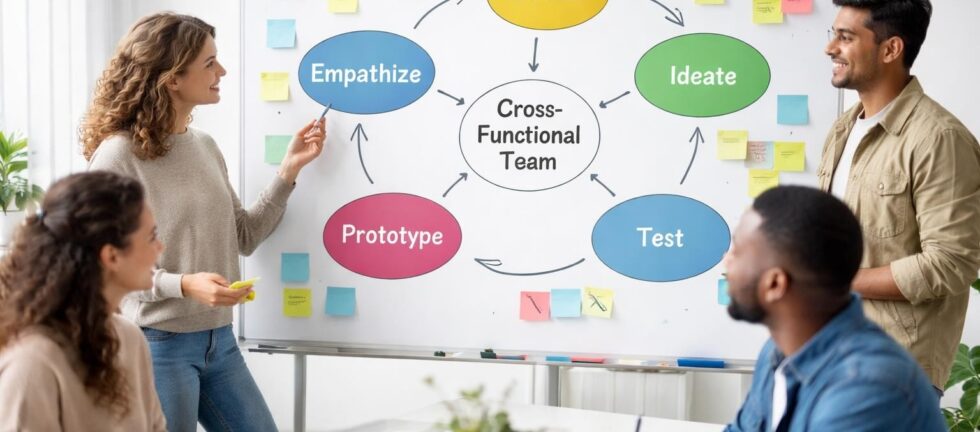
Organizations seeking sustainable competitive advantage in 2026 require more than innovative ideas-they need structured methodologies to transform those ideas into actionable strategies. A design thinking facilitator serves as the catalyst for this transformation, guiding teams through human-centered problem-solving approaches that unlock breakthrough solutions. These professionals blend strategic guidance with tactical execution, creating environments where creativity flourishes and innovation becomes systematic rather than accidental. As businesses increasingly recognize the value of developing innovative ideas for business growth, the demand for skilled facilitation has reached unprecedented levels.
Understanding the Design Thinking Facilitator Role
A design thinking facilitator orchestrates collaborative innovation sessions, ensuring teams navigate complex challenges using proven human-centered methodologies. Unlike traditional project managers, these professionals create psychological safety, encourage divergent thinking, and maintain productive momentum throughout iterative problem-solving cycles.
The role extends beyond simple meeting coordination. Design thinking facilitators architect experiences that shift organizational mindsets from solution-focused to problem-focused thinking. They strategically select tools, activities, and frameworks that match team dynamics and business objectives. This requires deep understanding of both design methodology and organizational psychology.
Core Responsibilities and Daily Functions
Design thinking facilitators manage multiple dimensions simultaneously. They prepare workshop environments, curate relevant activities, and adapt methodologies in real-time based on participant engagement.
Primary responsibilities include:
- Designing and structuring innovation workshops aligned with business objectives
- Selecting appropriate exercises for each design thinking phase
- Managing group dynamics and ensuring balanced participation
- Capturing insights and synthesizing findings into actionable frameworks
- Bridging communication gaps between technical and non-technical stakeholders
- Creating documentation that preserves workshop outcomes and learnings
According to research on design facilitation practices, facilitators must balance structure with flexibility, providing sufficient guidance without constraining creative exploration. This delicate equilibrium separates exceptional facilitators from merely competent ones.

Essential Skills for Effective Facilitation
The competencies required for design thinking facilitation span emotional intelligence, methodological expertise, and strategic business acumen. Organizations investing in internal innovation capabilities recognize these skills as foundational to sustainable competitive advantage.
Empathy and Human-Centered Understanding
Empathy represents the cornerstone of design thinking facilitation. A skilled design thinking facilitator cultivates environments where participants genuinely understand user needs, pain points, and aspirations. This goes beyond surface-level sympathy to deep comprehension of human motivations.
Effective facilitators model empathetic behavior, demonstrating active listening and suspending judgment. They create exercises that push teams beyond assumptions into authentic user understanding. This skill becomes particularly critical when facilitating sessions involving diverse stakeholder groups with competing priorities.
Empathy development techniques include:
- Conducting immersive user research exercises
- Creating persona development workshops
- Facilitating journey mapping sessions
- Encouraging perspective-taking through role-playing activities
Critical Thinking and Systems Perspective
Design thinking facilitators must analyze complex business ecosystems, identifying interconnected variables that influence problem spaces. The essential skills for Design Thinking facilitators emphasize systems thinking as crucial for meaningful innovation outcomes.
This competency enables facilitators to help teams see patterns, relationships, and leverage points within organizational challenges. Rather than accepting problems at face value, skilled facilitators guide participants through root cause analysis and systemic exploration.
| Skill Component | Application | Business Impact |
|---|---|---|
| Pattern Recognition | Identifying recurring themes across user interviews | Faster insight synthesis |
| Relationship Mapping | Visualizing stakeholder connections | Comprehensive solution development |
| Leverage Point Identification | Finding high-impact intervention opportunities | Resource optimization |
| Long-term Thinking | Considering future implications of decisions | Sustainable innovation outcomes |
Adaptability and Situational Intelligence
No two innovation sessions unfold identically. A design thinking facilitator must read room dynamics, adjust methodologies mid-session, and pivot when planned activities fail to generate desired engagement. This flexibility distinguishes masterful facilitation from rigid process execution.
Adaptability encompasses multiple dimensions: emotional, methodological, and temporal. Facilitators balance planned agendas with emergent opportunities, recognizing when to extend productive discussions and when to redirect stalled conversations. They modify complexity levels based on participant expertise and adjust pace according to energy levels.
Research exploring the role of a Design Thinking facilitator highlights adaptability as the differentiating factor between good and exceptional practitioners. This agility proves especially valuable when facilitating cross-functional teams with varying levels of design thinking experience.
Strategic Techniques for Workshop Success
Effective facilitation requires deliberate preparation, purposeful execution, and structured follow-through. Organizations partnering with design innovation companies benefit from facilitators who master these strategic techniques.
Pre-Workshop Design and Stakeholder Alignment
Successful design thinking sessions begin weeks before participants enter the room. A skilled design thinking facilitator invests substantial effort in understanding business context, stakeholder expectations, and desired outcomes.
Pre-workshop preparation includes:
- Stakeholder interviews to understand objectives, constraints, and success metrics
- Context research examining industry trends, competitive landscape, and organizational culture
- Participant profiling to anticipate group dynamics and customize engagement strategies
- Activity sequencing that builds momentum and cognitive scaffolding throughout sessions
- Material preparation ensuring tools, templates, and resources support intended outcomes
This groundwork enables facilitators to design experiences that balance rigor with creativity, delivering both immediate insights and sustainable capability building.
Managing Group Dynamics and Participation
Facilitators function as conductors orchestrating diverse voices into productive harmony. They amplify quiet contributors, redirect dominating personalities, and ensure psychological safety for vulnerable idea-sharing.
Techniques for balanced participation vary based on team composition. With hierarchical organizations, design thinking facilitators create structures that neutralize power dynamics. Anonymous idea generation, round-robin sharing, and forced-pairing exercises ensure junior team members contribute equally with senior executives.
The facilitator constantly monitors engagement levels, identifying when participants disconnect and deploying targeted interventions. A well-timed energizer, perspective shift, or activity modification can transform stagnant sessions into productive breakthroughs.
Synthesis and Insight Translation
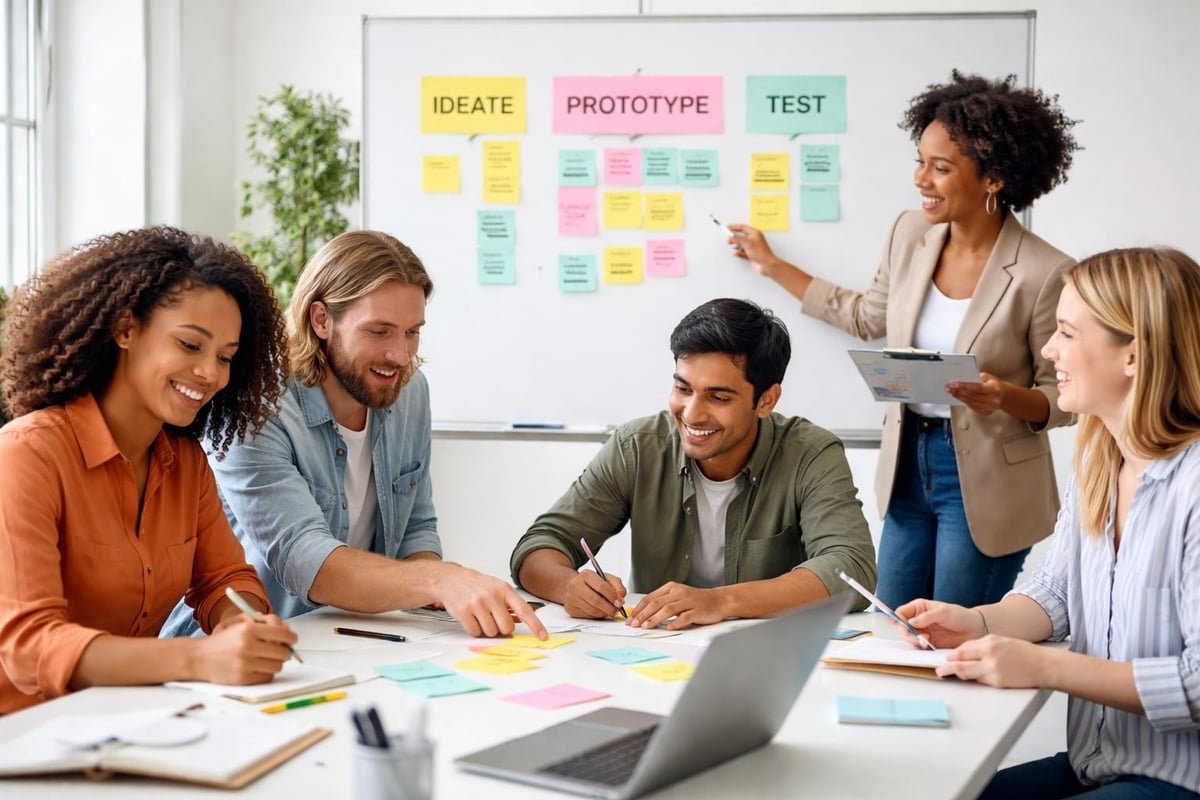
Perhaps the most challenging facilitation skill involves distilling hours of divergent exploration into coherent, actionable insights. A design thinking facilitator transforms sticky notes, sketches, and conversation fragments into strategic frameworks that guide decision-making.
This synthesis requires pattern recognition across multiple data sources. Facilitators identify themes, tensions, and opportunities emerging from user research, ideation sessions, and prototype feedback. They create visual representations-journey maps, service blueprints, opportunity matrices-that communicate complex insights accessibly.
The translation extends beyond documentation. Skilled facilitators help organizations understand implications, connect workshop outputs to strategic initiatives, and maintain momentum post-session. This bridge between ideation and implementation determines whether design thinking generates lasting value or becomes another abandoned initiative.
Building Organizational Capability
Organizations maximize innovation investment when they develop internal facilitation competencies rather than relying exclusively on external consultants. A design thinking facilitator who focuses on capability building creates sustainable transformation.
Training and Skill Development Approaches
Effective facilitator development combines theoretical knowledge with extensive practice. Programs should expose emerging facilitators to Design Thinking methodology fundamentals while providing opportunities to lead progressively complex sessions.
Capability building components:
- Foundational workshops covering design thinking principles and tools
- Apprenticeship models where novice facilitators observe and co-facilitate with experts
- Practice sessions using low-stakes scenarios for skill refinement
- Feedback mechanisms including peer review and participant evaluations
- Continuous learning through case studies, certification programs, and community engagement
Organizations investing in creativity workshops for teams benefit when internal facilitators can sustain innovation practices beyond initial consulting engagements.
Certification and Professional Development
The design thinking facilitation field has matured significantly, with numerous certification programs offering structured learning pathways. These credentials validate expertise and provide frameworks for continuous improvement.
Professional development extends beyond formal certification. Leading facilitators maintain active learning practices, experimenting with emerging methodologies, studying behavioral science research, and engaging with global practitioner communities. They attend conferences, contribute to knowledge sharing platforms, and refine approaches based on evolving best practices.
| Development Stage | Focus Areas | Expected Capabilities |
|---|---|---|
| Foundation | Basic methodology, tool selection, group management | Facilitate standard workshops with support |
| Intermediate | Complex stakeholder dynamics, custom activity design | Lead multi-day sessions independently |
| Advanced | Organizational transformation, strategic integration | Design capability-building programs |
| Expert | Methodology innovation, thought leadership | Influence field evolution, train facilitators |
Measuring Facilitation Impact
Sophisticated organizations require evidence that design thinking investments generate tangible business value. A skilled design thinking facilitator establishes metrics capturing both immediate session outcomes and long-term organizational impacts.
Immediate Workshop Metrics
Session-level measurement assesses participant engagement, satisfaction, and perceived value. While subjective, these indicators provide important feedback for facilitation improvement.
Key immediate metrics include:
- Participant engagement scores throughout different session phases
- Quality and quantity of ideas generated during ideation exercises
- Diversity of perspectives represented in outputs
- Clarity of insights synthesized from research activities
- Participant confidence in next steps and action items
Post-workshop surveys capture satisfaction levels and identify specific facilitation strengths and improvement opportunities. Leading facilitators systematically analyze this feedback, refining approaches based on participant experiences.
Long-term Business Outcomes
The ultimate facilitation success measure involves business impact: revenue growth, cost reduction, customer satisfaction improvement, or market share gains resulting from innovation initiatives. As detailed in research on seven key skills for Design Thinking facilitation, connecting workshop activities to business outcomes requires intentional outcome tracking.
Tracking mechanisms include innovation pipeline metrics, time-to-market measurements, and adoption rates for solutions developed through design thinking processes. Organizations should establish baseline metrics before facilitation interventions and monitor changes over subsequent quarters.

Navigating Common Facilitation Challenges
Even experienced design thinking facilitators encounter obstacles that threaten workshop effectiveness. Anticipating these challenges and preparing response strategies separates resilient facilitators from those who struggle when difficulties emerge.
Resistance to Creative Processes
Many professionals feel uncomfortable with ambiguity, visual thinking, and playful exercises characteristic of design thinking workshops. This discomfort manifests as skepticism, disengagement, or outright resistance.
Skilled facilitators address this challenge through multiple strategies. They establish clear connections between creative activities and business objectives, demonstrating how unconventional approaches yield superior outcomes. Sharing relevant case studies, particularly from similar industries, builds credibility and reduces skepticism.
Creating small early wins proves particularly effective. When resistant participants experience even minor breakthroughs, their openness to methodology increases substantially. Design thinking facilitators strategically sequence activities to generate these wins early in sessions.
Time Constraints and Scope Management
Organizations often allocate insufficient time for thorough design thinking processes, expecting breakthrough innovations from abbreviated workshops. Facilitators must balance stakeholder expectations with methodological integrity.
This requires transparent conversation about trade-offs. A design thinking facilitator helps leadership understand how time compression affects outcome quality and scope breadth. When constraints prove inflexible, facilitators focus efforts on highest-value activities, accepting that abbreviated sessions deliver narrower results.
Strategic scoping becomes essential. Rather than superficially addressing multiple challenges, effective facilitators concentrate on singular, well-defined problems where focused exploration yields actionable insights. This disciplined approach delivers greater value than scattered efforts across numerous topics.
The Future of Design Thinking Facilitation
The facilitation landscape continues evolving as technology, organizational structures, and global challenges reshape innovation requirements. Forward-thinking design thinking facilitators adapt practices to remain relevant and effective.
Digital and Hybrid Facilitation Models
Remote and hybrid work arrangements fundamentally changed facilitation dynamics. Virtual workshops present unique challenges around engagement, collaboration, and energy management. Sophisticated facilitators leverage digital tools-virtual whiteboards, collaborative platforms, breakout capabilities-to replicate in-person workshop benefits.
However, digital facilitation extends beyond tool proficiency. It requires understanding how screen fatigue affects attention spans, how to build connection without physical presence, and how to facilitate simultaneous collaboration across time zones. Successful facilitators develop distinct skill sets for virtual environments rather than simply transferring in-person approaches to digital platforms.
Integration with AI and Emerging Technologies
Artificial intelligence increasingly augments facilitation capabilities. AI tools assist with insight synthesis, pattern identification, and even real-time workshop adaptation based on engagement analytics. The design thinking facilitator role evolves from pure human facilitator to human-AI collaboration orchestrator.
This integration raises important questions about authenticity, creativity, and the human elements essential to innovation. Leading facilitators embrace technology while preserving the irreplaceable human dimensions-emotional intelligence, contextual judgment, and relationship building-that no algorithm replicates.
Organizations exploring AI-powered strategic innovation benefit when facilitators understand both technological possibilities and human-centered fundamentals. This balanced perspective ensures technology enhances rather than diminishes innovation quality.
Specialization and Domain Expertise
As design thinking matures, facilitation increasingly requires specialized knowledge beyond general methodology. Healthcare innovation demands different facilitation approaches than financial services transformation or manufacturing optimization.
Domain-specialized design thinking facilitators combine methodological expertise with deep industry knowledge, understanding regulatory constraints, technical possibilities, and stakeholder ecosystems specific to their sectors. This specialization enables more relevant activities, realistic prototyping, and actionable recommendations that generic facilitators struggle to provide.
The trend toward specialization creates opportunities for facilitators willing to develop vertical expertise alongside horizontal facilitation skills. Organizations value practitioners who speak their language and understand their unique challenges while bringing fresh methodological perspectives.
Mastering the design thinking facilitator role requires continuous learning, deliberate practice, and genuine commitment to human-centered innovation. The skills, techniques, and perspectives outlined above provide a foundation for facilitators seeking to drive meaningful organizational transformation through structured creative processes. Whether you're building internal innovation capabilities or seeking expert guidance to accelerate growth, Six Paths Consulting offers strategic innovation expertise and facilitator training programs designed to unlock your team's full creative potential and translate breakthrough ideas into profitable business outcomes.