
The modern business landscape demands more than traditional problem-solving approaches. Organizations seeking sustainable competitive advantage are turning to design thinking methodologies that place human needs at the center of innovation. A design thinking online course offers professionals and teams a structured pathway to master this transformative approach, combining theoretical foundations with practical application. As companies face increasingly complex challenges in 2026, the ability to empathize with users, prototype rapidly, and iterate based on feedback has become essential for driving meaningful innovation and revenue growth.
Understanding the Value of Structured Design Thinking Education
Design thinking represents a fundamental shift from conventional business methodologies. Rather than starting with technology or capabilities, this human-centered approach begins with understanding the people you're designing for. A design thinking online course provides the framework, tools, and mindset needed to implement this methodology effectively within your organization.
The structured learning environment of an online course offers several distinct advantages over self-directed study. Participants gain access to curated content developed by innovation experts, engage with real-world case studies, and practice applying concepts through guided exercises. Flexibility remains a critical benefit, allowing busy professionals to build capabilities without disrupting their core responsibilities.
Core Components of Effective Design Thinking Curricula
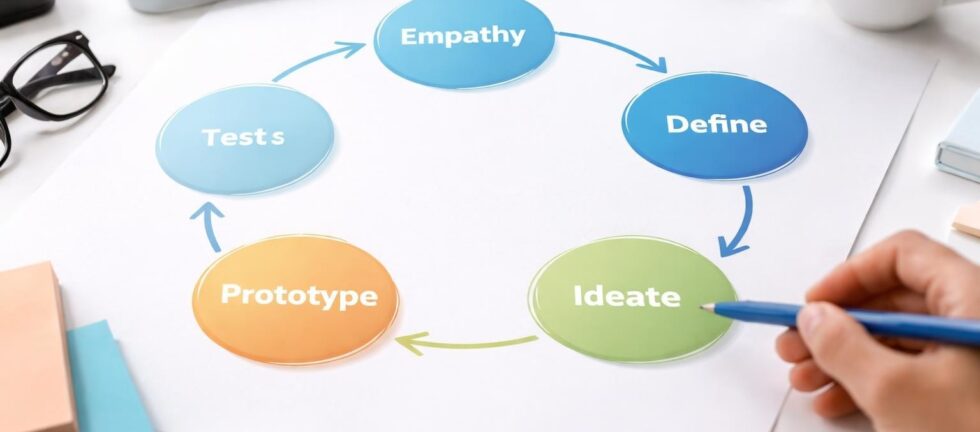
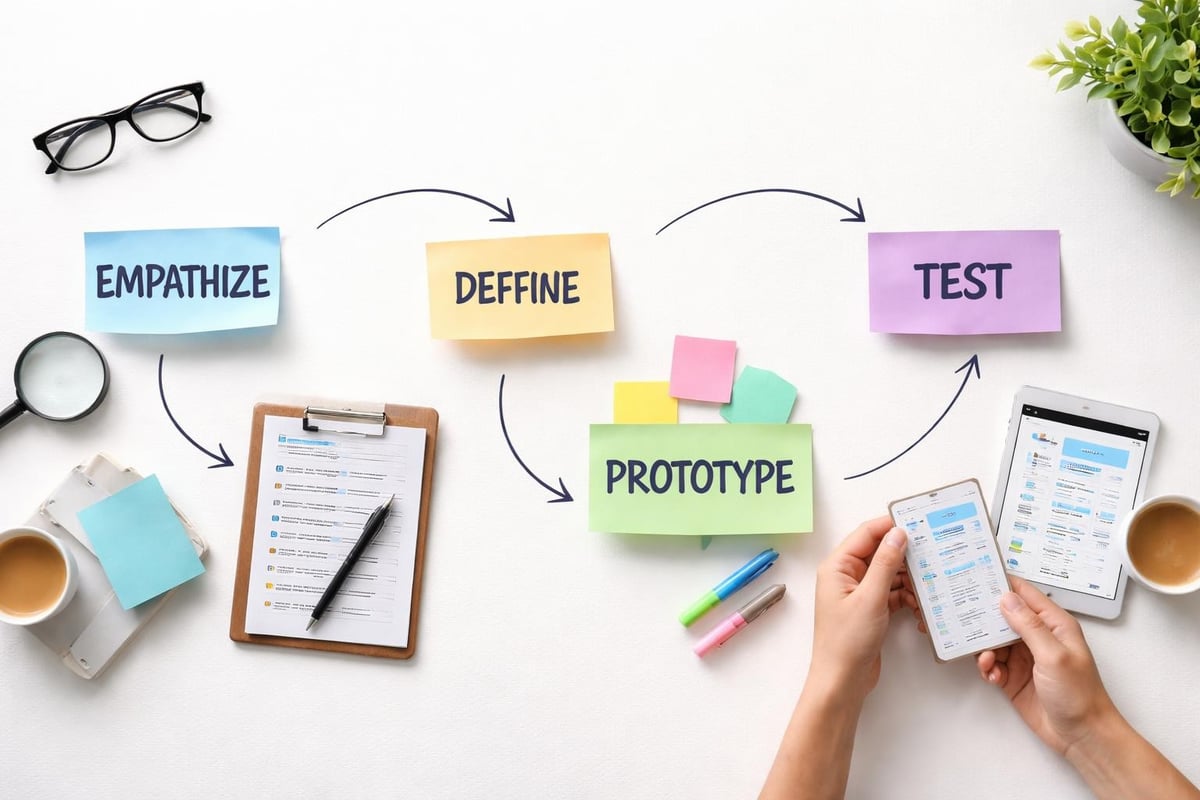
Quality programs cover five essential phases that form the foundation of the design thinking process:
- Empathize: Research techniques for understanding user needs, behaviors, and pain points
- Define: Methods for synthesizing research into actionable problem statements
- Ideate: Structured brainstorming and creative thinking exercises
- Prototype: Rapid prototyping approaches for testing concepts with minimal investment
- Test: Frameworks for gathering feedback and iterating on solutions
Leading institutions have developed comprehensive programs that balance theory with application. Platforms like IDEO U’s Hello Design Thinking course offer foundational concepts through interactive activities, while Harvard’s design thinking programs provide deeper exploration of principles for addressing complex business challenges.
Selecting the Right Design Thinking Online Course for Your Organization
Not all design thinking training programs deliver equal value. Organizations must evaluate options based on specific criteria aligned with their innovation objectives and team capabilities.
Key Selection Criteria
When assessing potential programs, consider these critical factors:
Learning Objectives Alignment: Does the curriculum address your specific innovation challenges? Some courses focus on product development, while others emphasize service design or organizational transformation.
Instructor Expertise: Examine the backgrounds of course creators and facilitators. Look for practitioners who have successfully applied design thinking in real business contexts rather than purely academic settings.
Interactive Elements: The most effective design thinking education involves hands-on practice. Evaluate whether the course includes exercises, peer collaboration opportunities, and feedback mechanisms.
Time Commitment: Programs range from intensive multi-week experiences to self-paced options spanning several months. Match the structure to your team's availability and learning preferences.
| Course Type | Duration | Best For | Learning Format |
|---|---|---|---|
| Foundational | 2-4 weeks | Individual contributors | Self-paced videos + exercises |
| Intermediate | 6-8 weeks | Team leads | Mixed cohort + independent work |
| Advanced | 10-12 weeks | Innovation leaders | Live sessions + capstone project |
| Executive | 3-5 days intensive | C-suite executives | Workshop-based with case studies |
Organizations seeking to build systematic innovation capabilities benefit from exploring design thinking in training programs that can be customized for their specific industry context and strategic priorities.
Practical Applications Across Business Functions
The versatility of design thinking extends far beyond product development. A comprehensive design thinking online course equips participants to apply the methodology across diverse organizational challenges.
Product and Service Innovation
Design thinking originated in product design but has evolved into a powerful tool for creating customer-centered offerings. Teams learn to validate assumptions before investing significant resources, reducing the risk of market failures. The iterative prototyping approach allows companies to test multiple concepts quickly and refine based on actual user feedback rather than internal opinions.
Product teams use design thinking to identify unmet needs and develop solutions that create genuine value. By empathizing with users throughout the development process, organizations avoid the common trap of building features that seem important internally but fail to resonate with customers.
Business Model Transformation
Innovative business models increasingly differentiate market leaders from followers. Design thinking provides frameworks for reimagining how organizations create, deliver, and capture value. Corporate innovation strategy initiatives leverage these principles to explore new revenue streams and market opportunities.
The approach encourages questioning fundamental assumptions about the business. What if we served a different customer segment? How might we deliver value through a subscription model rather than one-time purchases? These explorations, grounded in user research and rapid experimentation, can reveal breakthrough opportunities.

Building Internal Innovation Capabilities
Organizations that achieve sustained innovation success don't rely solely on external consultants or isolated initiatives. They develop internal capabilities that embed design thinking into their operational DNA.
Creating a Culture of Experimentation
A design thinking online course serves as a catalyst for cultural transformation. When multiple team members share a common innovation language and toolkit, collaboration improves dramatically. Cross-functional teams can move from debating opinions to testing hypotheses through structured experiments.
Leaders play a critical role in reinforcing these behaviors. By celebrating learning from failed experiments and allocating resources for prototyping, executives signal that innovation represents a core organizational priority rather than an occasional initiative.
Training programs help establish shared practices:
- Regular empathy sessions with customers and end-users
- Structured ideation workshops following defined facilitation protocols
- Rapid prototyping sprints with clear success metrics
- Feedback loops that inform continuous iteration
- Documentation practices that capture insights for future reference
Organizations serious about embedding innovation capabilities often complement online courses with ongoing coaching and community support. This combination ensures that concepts learned translate into consistent practice rather than remaining theoretical knowledge.
Measuring Impact and ROI
Executives rightfully demand evidence that training investments deliver tangible returns. Design thinking initiatives generate measurable impact across multiple dimensions:
| Metric Category | Example Measurements | Typical Improvement |
|---|---|---|
| Speed to Market | Time from concept to launch | 25-40% reduction |
| Innovation Success Rate | % of new offerings meeting targets | 30-50% increase |
| Customer Satisfaction | NPS or CSAT scores | 15-25 point improvement |
| Team Engagement | Innovation participation rates | 40-60% increase |
| Cost Efficiency | Resources spent on failed concepts | 20-35% reduction |
The most compelling ROI stories come from organizations that track specific initiatives through the full innovation lifecycle. Teams document baseline metrics before applying design thinking approaches, then measure outcomes after implementation. This before-and-after comparison provides concrete evidence of methodology impact.
Advanced Topics and Specialization Paths
As practitioners develop foundational competencies, many seek deeper expertise in specialized applications. Advanced design thinking online course options address these evolving needs.
AI-Powered Design Thinking
The integration of artificial intelligence with design thinking methodologies represents a frontier area for 2026. Forward-thinking programs explore how AI tools can enhance each phase of the process. Machine learning algorithms analyze user research data to identify patterns humans might miss. Generative AI accelerates prototyping by creating multiple design variations based on defined parameters.
However, technology serves as an enabler rather than a replacement for human judgment. The empathy and creative synthesis that define design thinking remain distinctly human capabilities. Courses addressing this intersection help participants leverage AI while maintaining the human-centered core of the methodology.
Industry-Specific Applications
Generic design thinking training provides valuable foundations, but industry-specific programs deliver accelerated value. Healthcare organizations face unique constraints around regulation and patient safety. Financial services companies must balance innovation with risk management and compliance requirements.
Specialized courses incorporate case studies and exercises tailored to industry contexts. Participants learn from peers facing similar challenges and develop solutions applicable to their specific environments. Frameworks for innovation often require adaptation based on industry dynamics and regulatory landscapes.

Choosing Between Self-Paced and Cohort-Based Learning
The structure of your design thinking online course significantly influences learning outcomes and application success. Both formats offer distinct advantages depending on organizational needs and learner preferences.
Self-Paced Learning Advantages
Flexibility represents the primary benefit of self-paced programs. Participants access content when it fits their schedules, making it easier to balance learning with work responsibilities. This format works particularly well for geographically distributed teams across multiple time zones.
Self-paced courses allow learners to spend additional time on challenging concepts while moving quickly through familiar material. This personalized progression can enhance comprehension and retention. Platforms offering comprehensive design thinking training typically provide extensive resources that participants can revisit as needed.
However, self-paced learning requires strong intrinsic motivation. Without scheduled deadlines or peer accountability, completion rates tend to be lower than cohort-based alternatives.
Cohort-Based Learning Benefits
Cohort programs create structured learning communities that enhance engagement and application. Participants benefit from:
- Peer learning: Exposure to diverse perspectives and approaches from fellow learners
- Accountability: Scheduled sessions and group deliverables maintain momentum
- Networking: Connections with professionals facing similar innovation challenges
- Real-time feedback: Immediate input from instructors and peers on exercises and projects
Courses like Coursera’s Design Thinking for User-Centricity often include cohort elements that foster collaboration and shared learning experiences. The social dimension of cohort learning frequently leads to insights and innovations that wouldn't emerge through individual study.
Integrating Design Thinking with Existing Strategic Frameworks
Smart organizations don't view design thinking as a replacement for existing strategic methodologies but rather as a complementary approach that enhances overall capabilities.
Alignment with Business Strategy Development
Design thinking excels at identifying customer-centered opportunities and validating concepts through rapid experimentation. When combined with traditional strategic planning processes, it provides a powerful mechanism for developing business strategies grounded in genuine market needs rather than internal assumptions.
The methodology addresses a common strategic planning weakness: the gap between identifying opportunities and creating implementable solutions. Design thinking's emphasis on prototyping and testing bridges this divide, transforming strategic aspirations into tangible offerings.
Complementing Blue Ocean Strategy
Organizations familiar with Blue Ocean Strategy find natural synergies with design thinking approaches. Both methodologies emphasize creating new value rather than competing in existing markets. Design thinking provides practical tools for exploring the untapped market spaces that Blue Ocean frameworks help identify.
The empathy phase of design thinking reveals noncustomers and their reasons for remaining outside current markets. This insight directly supports the Blue Ocean focus on expanding market boundaries by addressing previously unmet needs. Together, these approaches enable implementing innovation that creates differentiated value propositions.
Building Your Design Thinking Learning Roadmap
Successful capability building requires a thoughtful progression rather than treating training as a one-time event. Organizations should develop multi-phase learning roadmaps that build skills systematically.
Phase One: Foundational Understanding
Begin with broad awareness training that introduces core concepts to a wide audience. This foundational phase ensures common language and understanding across the organization. Many companies start by enrolling 20-30 employees representing diverse functions in an introductory design thinking online course.
Resources like LinkedIn Learning’s design thinking courses offer accessible entry points for building initial awareness. These programs typically require 5-10 hours of time investment, making them manageable for busy professionals.
Phase Two: Practitioner Development
Following foundational training, identify team members who will regularly apply design thinking in their roles. These practitioners require deeper expertise and hands-on experience with facilitation techniques. Intermediate courses should include substantial practice components where participants apply concepts to real organizational challenges.
Consider programs that incorporate coaching elements, providing feedback as practitioners facilitate their first workshops and innovation sprints. This guided application accelerates skill development and builds confidence.
Phase Three: Advanced Specialization
Develop advanced capabilities in team members who will champion innovation initiatives and train others. These individuals benefit from specialized programs addressing topics like:
- Facilitating complex stakeholder engagements
- Adapting design thinking for specific industry contexts
- Integrating emerging technologies with human-centered design
- Measuring and communicating innovation impact to executives
- Building organizational systems that sustain innovation practices
Advanced practitioners often pursue certification programs or university-affiliated courses like those offered through MIT’s design thinking programs that provide academic rigor and credential recognition.
Sustaining Momentum Beyond Initial Training
The most significant challenge organizations face isn't completing a design thinking online course but rather sustaining practices after formal training concludes. Without deliberate reinforcement, skills atrophy and teams revert to familiar patterns.
Creating Communities of Practice
Internal communities bring together practitioners to share experiences, troubleshoot challenges, and continue learning together. These groups might meet monthly to review recent projects, discuss application challenges, and explore advanced topics. Some organizations create digital collaboration spaces where members share resources, ask questions, and celebrate successes.
Communities of practice prevent innovation knowledge from remaining siloed within individuals. When practitioners regularly exchange insights, organizational capability compounds rather than remaining additive.
Embedding Design Thinking in Business Processes
The most effective approach involves integrating design thinking into existing workflows rather than treating it as a separate activity. Organizations modify stage-gate processes to include empathy research and prototyping phases. Product development templates incorporate design thinking deliverables. Performance reviews recognize innovation contributions and customer-centered thinking.
This systematic integration ensures that design thinking becomes "how we work" rather than "special innovation projects." Innovation on business operations requires this type of fundamental process redesign to achieve lasting transformation.
Refresher Training and Skill Updates
Schedule periodic refresher sessions that reinforce core concepts and introduce new developments in the field. Design thinking continues evolving, with new tools and applications emerging regularly. Annual or semi-annual update sessions keep teams current with best practices while reinforcing foundational skills.
These sessions also provide opportunities to recognize successes and learn from both wins and failures. Case study presentations by internal teams make abstract concepts concrete and demonstrate real-world applicability within your specific organizational context.
Investing in a design thinking online course represents a strategic decision that can fundamentally transform how your organization approaches innovation and creates value for customers. The methodologies, tools, and mindsets developed through structured training enable teams to move beyond incremental improvements toward breakthrough solutions that drive meaningful competitive advantage. Six Paths Consulting helps ambitious leaders build these critical innovation capabilities through customized training programs and strategic guidance that accelerates your journey from learning to implementation. Whether you're just beginning to explore human-centered innovation or seeking to scale existing practices across your organization, the right partnership can dramatically compress timelines and amplify impact.