

Project management consulting companies have evolved far beyond simple timeline coordination and resource allocation. In 2026, these specialized firms serve as strategic partners that bridge the gap between ambitious business visions and flawless execution. For organizations pursuing innovation-driven growth, the right project management consulting partner transforms complex initiatives into structured pathways that deliver measurable results. As businesses navigate AI integration, digital transformation, and rapidly changing market dynamics, the expertise these consultancies provide becomes increasingly vital for maintaining competitive advantage.
Understanding the Strategic Value of Project Management Consultancies
The landscape of project management consulting services has fundamentally shifted over the past decade. Modern project management consulting companies no longer simply manage tasks; they architect entire transformation journeys that align with strategic business objectives.
These firms deliver value through several critical dimensions:
- Strategic alignment between project execution and business outcomes
- Risk identification and mitigation frameworks tailored to industry contexts
- Change management protocols that ensure organizational adoption
- Technology integration expertise spanning AI, automation, and digital tools
- Knowledge transfer programs that build internal capabilities
Project management consulting companies bring specialized methodologies that most organizations cannot economically develop in-house. Their cross-industry experience enables pattern recognition that identifies potential obstacles before they materialize.
The Innovation-Execution Connection
For innovation-focused businesses, the connection between breakthrough ideas and market success depends entirely on execution quality. A brilliant business model means nothing if the implementation falters.
Project management consulting companies specializing in innovation contexts understand this unique challenge. They structure initiatives to maintain creative flexibility while imposing necessary discipline around milestones, resource allocation, and accountability. This balance proves particularly crucial when launching innovative ideas for business growth that require cross-functional coordination.
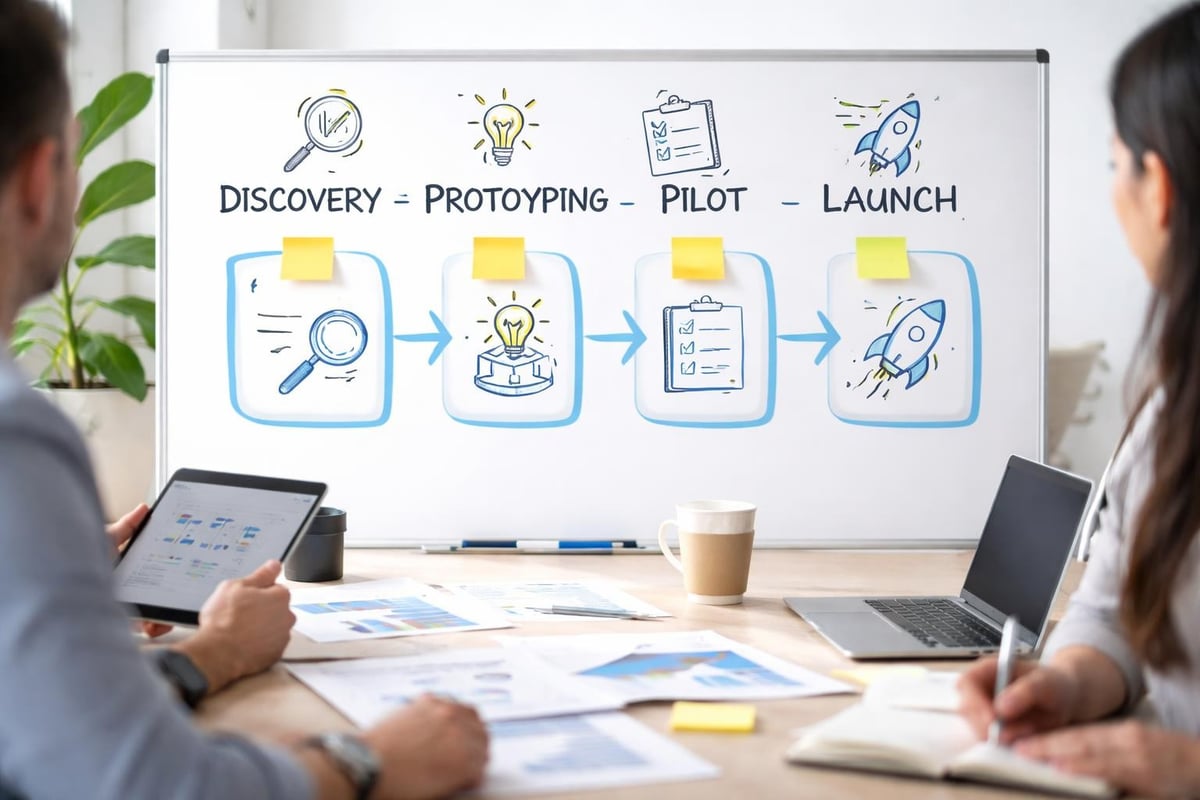
The most effective consultancies embed innovation principles directly into their project frameworks. Rather than treating innovation as chaotic and incompatible with structure, they create adaptive project architectures that accommodate iteration while maintaining forward momentum.
Core Service Offerings from Leading Firms
Project management consulting companies typically organize their services around client maturity levels and complexity needs. Understanding these service tiers helps organizations select the right engagement model.
| Service Category | Primary Focus | Typical Engagement Duration | Best For |
|---|---|---|---|
| PMO Establishment | Creating internal project management infrastructure | 6-12 months | Organizations building internal capabilities |
| Project Recovery | Rescuing failing initiatives | 3-6 months | Projects significantly off-track |
| Strategic Program Management | Managing portfolio of related projects | 12-24 months | Large-scale transformation efforts |
| Project Execution | End-to-end delivery of specific initiatives | Variable | Organizations lacking internal capacity |
Project Management Office (PMO) Development
Many project management consulting firms specialize in establishing and optimizing Project Management Offices. These internal structures standardize methodologies, centralize resources, and create governance frameworks that improve success rates across all initiatives.
A well-designed PMO provides:
- Consistent project intake and prioritization processes
- Standardized reporting that enables executive visibility
- Resource management systems that prevent overallocation
- Lessons learned repositories that compound organizational knowledge
- Quality assurance checkpoints that catch issues early
PMO consulting services often include both the initial design phase and ongoing optimization as organizational needs evolve. For companies pursuing multiple innovation initiatives simultaneously, a properly structured PMO prevents resource conflicts and ensures strategic alignment across the portfolio.
Digital Transformation Project Management
The complexity of digital transformation requires specialized project management expertise. Project management consulting companies with deep technology backgrounds help organizations navigate cloud migrations, AI implementation, system integrations, and digital customer experience overhauls.
These engagements typically span multiple business units and require careful orchestration of technical workstreams, organizational change initiatives, and stakeholder management. The consultancies provide frameworks that break overwhelming transformations into manageable phases while maintaining sight of the ultimate business objectives.
Selecting the Right Project Management Partner
Choosing among project management consulting companies requires careful evaluation of multiple factors beyond simple credentials and case studies. The alignment between consulting approach and organizational culture significantly impacts success probability.
Key evaluation criteria include:
- Industry-specific experience – Understanding sector nuances, regulatory requirements, and competitive dynamics
- Methodology flexibility – Ability to adapt frameworks rather than forcing rigid approaches
- Knowledge transfer commitment – Focus on building internal capabilities, not creating dependency
- Technology platform expertise – Familiarity with relevant project management software and integration requirements
- Cultural compatibility – Consulting style that matches organizational working norms
Methodology Considerations
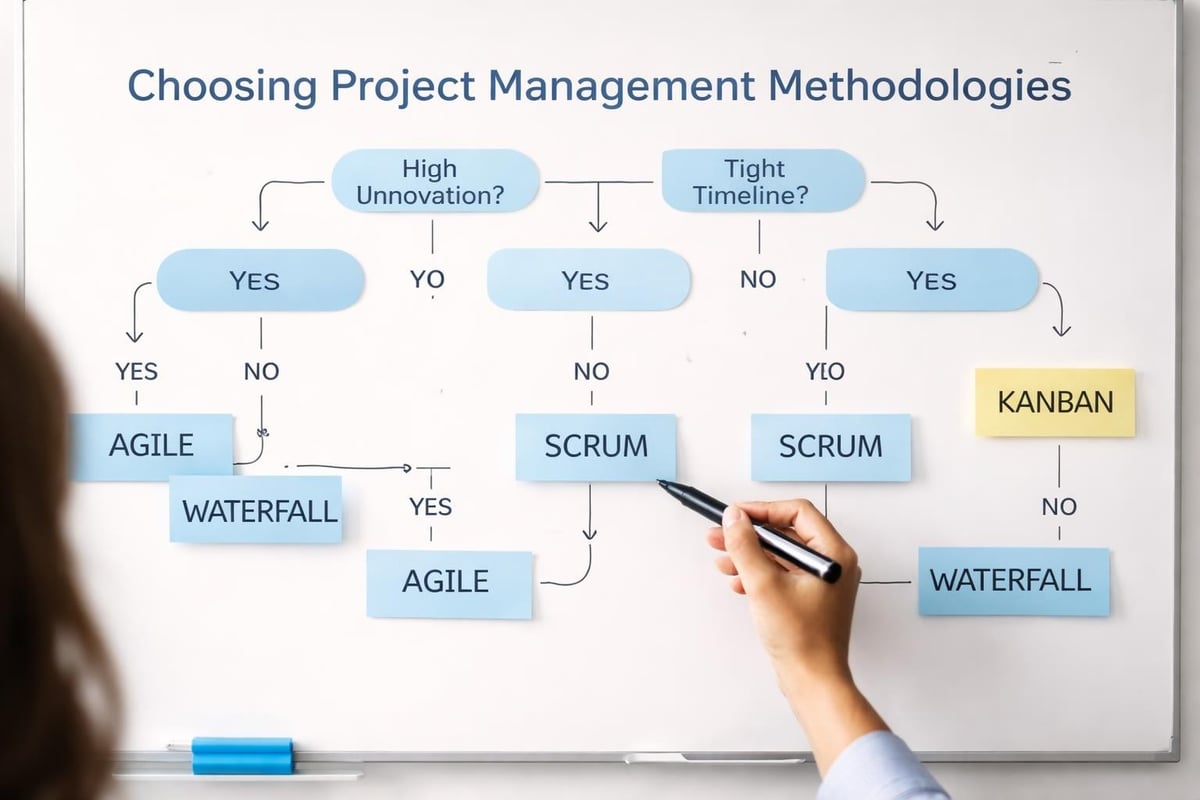
Different project management consulting companies emphasize different methodologies. Traditional firms may favor waterfall approaches with detailed upfront planning. Others specialize in Agile, Scrum, or hybrid frameworks that accommodate uncertainty.
For innovation projects, rigid adherence to traditional methodologies often proves counterproductive. The best consultancies bring methodological expertise but prioritize outcomes over process orthodoxy. They recognize when to impose structure and when to allow experimentation.
Organizations pursuing corporate innovation strategy initiatives benefit from consultancies experienced in balancing exploration and exploitation. These firms understand that innovation projects require different governance approaches than operational improvements.
Integration with Strategic Consulting
The distinction between project management consulting companies and strategic consulting firms continues to blur. Leading organizations increasingly seek partners who combine strategic insight with execution excellence.
This integration proves particularly valuable for initiatives emerging from strategic planning exercises. When top strategy consulting work identifies new market opportunities or business model innovations, seamless transition to structured implementation prevents the common strategy-execution gap.
The Strategy-to-Execution Bridge
Many strategic initiatives fail not because the strategy was flawed but because implementation lacked rigor. Project management consulting companies specializing in strategy execution create detailed roadmaps that translate high-level strategic directions into specific initiatives with defined owners, timelines, and success metrics.
This bridging function includes:
- Translating strategic objectives into measurable project deliverables
- Identifying critical path dependencies across initiative portfolios
- Creating governance structures that maintain strategic alignment during execution
- Establishing feedback loops that allow strategic course corrections
- Building accountability frameworks that drive ownership at all levels
For businesses working with innovation consulting firms, project management expertise ensures innovative concepts actually reach market rather than dying in pilot purgatory.
Emerging Trends Reshaping Project Management Consulting
The project management consulting landscape continues evolving rapidly in response to technological advancement and changing organizational needs. Several trends are fundamentally reshaping how these companies operate and deliver value.
AI-Powered Project Intelligence
Artificial intelligence now enables project management consulting companies to offer predictive analytics that forecast delays, budget overruns, and resource conflicts before they occur. Machine learning algorithms analyze historical project data to identify patterns associated with success and failure.
AI applications in modern project consulting include:
- Automated risk scoring based on project characteristics and environmental factors
- Natural language processing of project communications to detect emerging issues
- Predictive resource modeling that optimizes allocation across portfolios
- Automated status reporting that frees project managers for strategic activities
- Sentiment analysis of stakeholder feedback to gauge adoption resistance
These technological capabilities allow consultancies to shift from reactive problem-solving to proactive risk mitigation. The human expertise focuses on strategic decisions while AI handles data analysis and pattern recognition.
Remote and Hybrid Project Delivery
The shift toward distributed teams has forced project management consulting companies to develop new frameworks for virtual collaboration, asynchronous communication, and remote stakeholder engagement. Traditional approaches built around co-located teams and conference room meetings no longer suffice.
Leading consultancies now bring specialized expertise in digital collaboration platforms, virtual workshop facilitation, and remote change management. They help organizations establish communication protocols, select appropriate technology stacks, and create team norms that maintain productivity across time zones.
Building Internal Project Management Capabilities
Forward-thinking organizations recognize that while external project management consulting companies provide valuable expertise, long-term success requires strong internal capabilities. The most valuable consulting engagements focus on knowledge transfer and capability building.
| Capability Building Approach | Description | Long-term Impact |
|---|---|---|
| Embedded Consulting | Consultants work alongside internal teams | High knowledge transfer, cultural integration |
| Training Programs | Structured workshops and certification support | Standardized skills across organization |
| Shadowing Arrangements | Internal staff observe consultant execution | Practical learning in real contexts |
| Documented Playbooks | Custom methodology guides for organization | Repeatable processes independent of consultants |
Training and Certification Support
Many project management consulting companies offer training programs designed to build internal project management competencies. These programs range from foundational project management principles to advanced portfolio management and organizational change leadership.
Certification support helps organizations build credentialed project managers who can lead initiatives independently. While certifications from bodies like the Project Management Institute provide valuable foundational knowledge, practical application in organizational contexts requires additional coaching and mentorship.
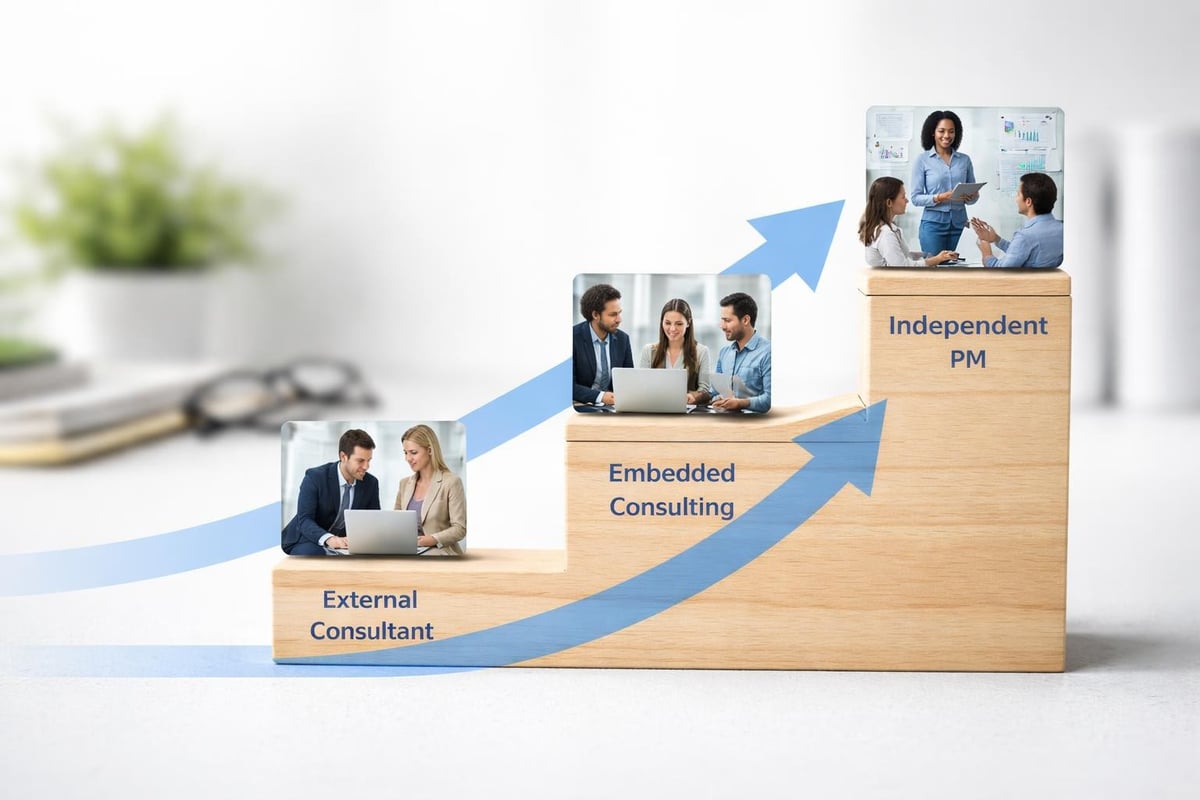
The most effective capability building programs combine formal training with real-world application on actual business initiatives. Consultants mentor internal staff through live projects, providing coaching and feedback while gradually reducing direct involvement.
Measuring Success and ROI
Evaluating project management consulting companies requires clear metrics that extend beyond simple on-time, on-budget delivery. While those fundamental measures matter, strategic value creation demands broader assessment frameworks.
Comprehensive success metrics include:
- Business outcome achievement relative to strategic objectives
- Internal capability improvement measured through post-engagement assessments
- Process maturity advancement across project management dimensions
- Stakeholder satisfaction scores from executive sponsors and team members
- Knowledge retention demonstrated through independent project execution
- Return on investment calculated against both direct costs and opportunity costs
The challenge of measuring consulting ROI stems from attribution complexity. When projects succeed, isolating the consulting contribution from internal efforts, market conditions, and timing factors proves difficult. The most sophisticated organizations establish baseline measurements before engagements begin and track improvement trajectories over time.
Long-term Value Creation
The highest-performing project management consulting companies focus on creating lasting organizational improvements rather than simply completing individual projects. Their engagements leave behind stronger processes, more capable people, and better decision-making frameworks.
This long-term perspective aligns with business transformation strategy approaches that recognize sustainable competitive advantage comes from continuous improvement in execution capabilities. Organizations that view consulting as capability investment rather than temporary capacity augmentation achieve superior results.
Industry-Specific Project Management Expertise
While core project management principles apply across contexts, industry-specific nuances significantly impact success probability. Project management consulting in construction, for example, requires deep understanding of regulatory compliance, site coordination, and contractor management that differs substantially from software development project management.
Project management consulting companies often develop vertical specializations that allow them to bring relevant experience and pre-built frameworks to client engagements. This specialization accelerates value delivery and reduces the learning curve consultants face when entering new client environments.
Innovation and Technology Sectors
For companies in innovation-intensive industries, project management must accommodate high uncertainty and frequent pivots. Traditional critical path methodologies that assume stable requirements prove inadequate.
Specialized consultancies bring frameworks adapted to innovation contexts, including stage-gate processes with kill criteria, rapid prototyping methodologies, and portfolio approaches that balance multiple parallel experiments. They understand how to structure product innovation projects that maintain budget discipline while preserving creative exploration.
These firms recognize that innovation project management requires different risk tolerances, governance structures, and success metrics compared to operational improvement initiatives. They help organizations create dual operating systems that execute core business efficiently while exploring new opportunities systematically.
Common Challenges and Mitigation Strategies
Even experienced project management consulting companies encounter predictable challenges that can derail engagements. Understanding these common obstacles helps both consultants and clients establish preventive measures.
Frequent engagement challenges include:
- Resistance from internal project managers who view consultants as threats to their authority
- Scope creep as stakeholders request additional services beyond original agreements
- Data access limitations that prevent consultants from fully understanding organizational context
- Executive sponsor attention dilution as competing priorities emerge
- Cultural misalignment between consulting approach and organizational norms
Successful consulting engagements address these challenges proactively through clear governance structures, explicit stakeholder management plans, and transparent communication protocols. The best consultancies invest heavily in relationship building and change management alongside technical project execution.
Organizational Change Resistance
Project management improvements inevitably require people to change how they work. This change dimension often determines success or failure more than technical project management competence.
Leading project management consulting companies incorporate change management expertise throughout their engagements. They identify resistance sources, develop targeted communication strategies, and create incentive structures that reward adoption of new approaches. This holistic view recognizes that perfect processes mean nothing if people refuse to follow them.
Organizations can amplify consulting impact by partnering with change management firms that specialize in the human dimension of transformation alongside the technical project management expertise.
The Future of Project Management Consulting
As we progress through 2026, project management consulting companies face both disruption and opportunity from technological advancement, evolving client expectations, and shifting competitive dynamics. The firms that thrive will be those that embrace change while maintaining core value delivery.
Emerging developments include:
- Platform-based project delivery where consulting firms provide access to proprietary technology platforms alongside human expertise
- Outcome-based pricing models that tie consulting fees directly to measurable business results rather than time and materials
- Global talent marketplaces that allow rapid assembly of specialized project teams from distributed expert networks
- Automated project management for routine initiatives, freeing consultants to focus on complex, high-value engagements
- Sustainability integration as environmental and social governance requirements become standard project constraints
The most forward-thinking consultancies are already experimenting with these models, recognizing that client expectations continue evolving toward faster, more flexible, and more accountable consulting relationships.
Project management consulting companies serve as critical partners for organizations navigating complex initiatives that require specialized expertise and proven frameworks. The right consulting engagement delivers not just successful project completion but lasting capability improvements that compound over time. Whether you're launching innovation initiatives, executing digital transformation, or building internal project management infrastructure, Six Paths Consulting combines strategic insight with execution excellence to turn ambitious visions into measurable results through AI-powered innovation frameworks and comprehensive capability building programs.