
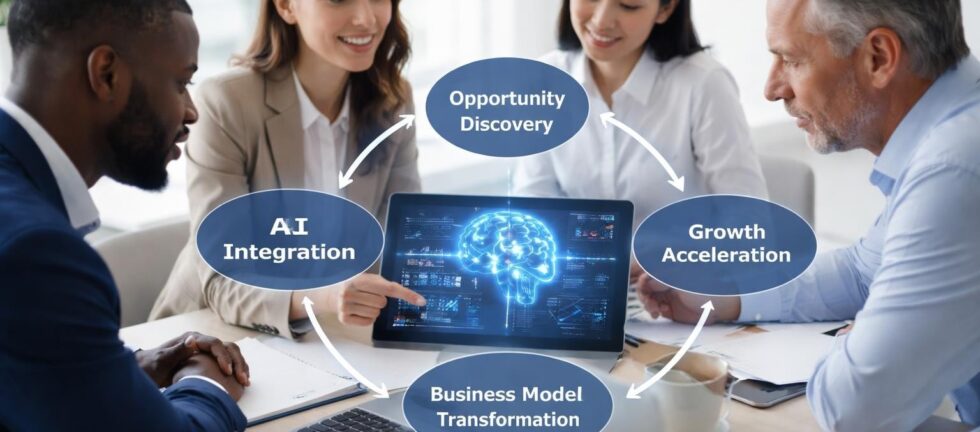
The convergence of artificial intelligence and strategic consulting has fundamentally altered how businesses approach growth, innovation, and competitive advantage. As organizations navigate increasingly complex markets in 2026, ai management consulting has emerged as a critical discipline that combines traditional strategic thinking with cutting-edge AI capabilities to unlock unprecedented value. This evolution represents more than just adopting new tools-it signifies a comprehensive transformation in how consulting firms deliver insights, how businesses make decisions, and how leaders identify opportunities that drive sustainable revenue growth.
The Transformation of Strategic Consulting Through AI
The consulting industry has witnessed a remarkable shift as AI technologies mature and become more accessible. Traditional consulting models relied heavily on manual data analysis, extensive research teams, and experience-based pattern recognition. Today, AI tools for consulting enable firms to process vast datasets, identify market patterns, and generate strategic insights at speeds previously unimaginable.
Redefining Value in AI-Powered Consulting
The question of value delivery has become paramount as consulting firms integrate AI capabilities into their service offerings. Redefining value in the age of AI involves shifting from time-based billing to outcome-based models where clients pay for measurable results rather than consulting hours. This transformation aligns perfectly with the principles of top strategy consulting, where strategic insights must translate directly into competitive advantages and financial performance.
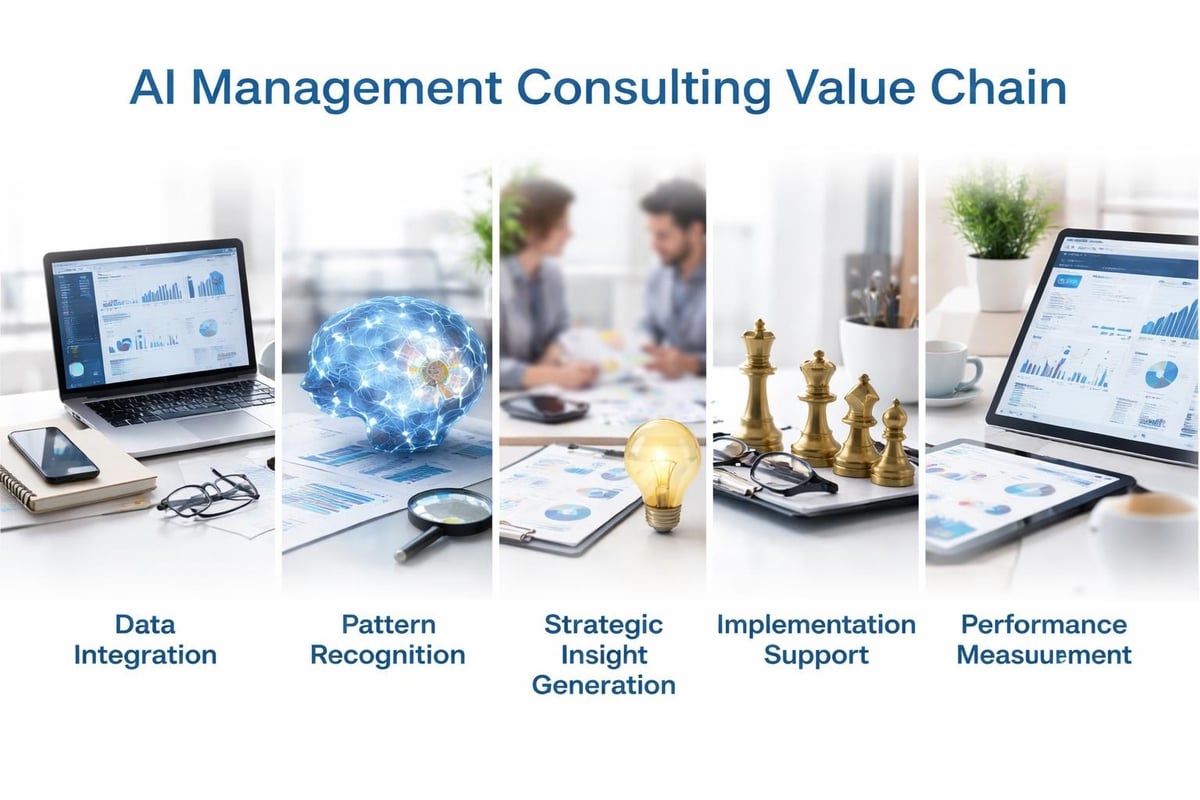
Key value drivers in modern ai management consulting include:
- Accelerated opportunity identification through predictive analytics
- Data-driven market segmentation and customer insight generation
- Automated competitive intelligence gathering and analysis
- Real-time strategy simulation and scenario planning
- Measurable impact tracking and continuous optimization
Strategic Applications of AI Management Consulting
Organizations engaging with ai management consulting firms seek solutions across multiple strategic domains. The applications extend far beyond simple automation, touching every aspect of business strategy and execution.
Revenue Growth and Market Expansion
AI-powered strategic consulting enables businesses to identify untapped revenue streams with remarkable precision. By analyzing market data, customer behavior patterns, and competitive dynamics simultaneously, consultants can reveal opportunities that traditional methods might overlook. This capability directly supports revenue growth initiatives by providing leaders with actionable intelligence about where to invest resources for maximum return.
Machine learning algorithms can process customer feedback, purchase histories, and market trends to identify micro-segments with high conversion potential. This granular understanding allows companies to develop targeted offerings that resonate with specific customer needs, driving both acquisition and retention.
Business Model Innovation and Transformation
Business model transformation represents one of the most impactful applications of ai management consulting. AI systems can analyze successful business models across industries, identify transferable patterns, and suggest innovative approaches tailored to specific market contexts.
| Traditional Consulting Approach | AI-Enhanced Consulting Approach |
|---|---|
| Historical case study analysis | Real-time pattern recognition across global datasets |
| Limited scenario testing | Thousands of simulated scenarios with probability analysis |
| Quarterly strategic reviews | Continuous monitoring and adaptive recommendations |
| Expert intuition-based insights | Data-validated insights combined with expert judgment |
| Generic industry benchmarks | Customized competitive intelligence with predictive elements |
The integration of AI capabilities with human strategic thinking creates a powerful combination. While algorithms excel at processing information and identifying patterns, experienced consultants provide the context, creativity, and judgment necessary to translate insights into actionable strategies.
Building Innovation Capabilities Through AI Consulting
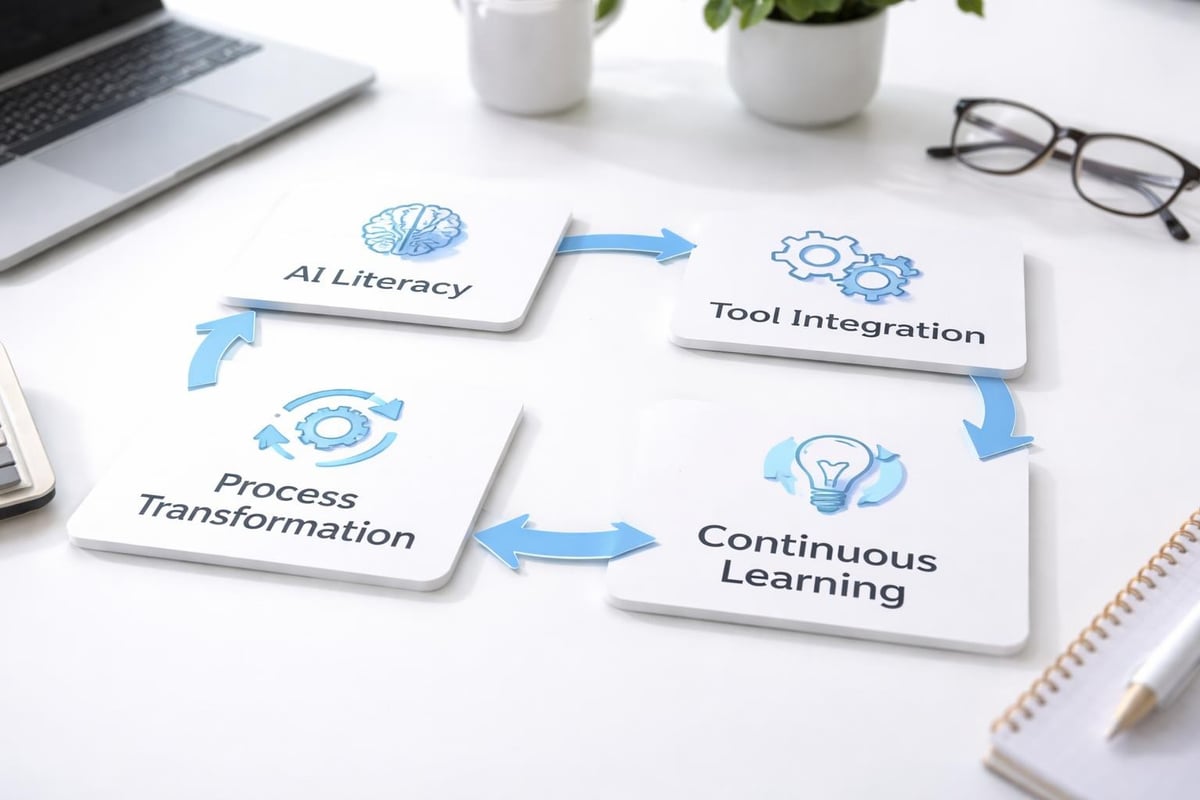
Forward-thinking organizations recognize that engaging with ai management consulting should build internal capabilities rather than create dependency. Corporate innovation strategy now includes developing AI literacy across leadership teams and embedding AI-powered tools into decision-making processes.
Training and Capability Development
Effective ai management consulting includes comprehensive training programs that empower teams to leverage AI tools independently. These programs cover data literacy, AI-assisted decision-making frameworks, and ethical AI deployment principles. Organizations that invest in building these capabilities position themselves to sustain competitive advantages long after initial consulting engagements conclude.
Essential components of AI capability building:
- Executive education on AI strategy and governance
- Technical team training on AI tool implementation
- Cross-functional workshops on AI-enabled innovation processes
- Change management support for AI adoption
- Continuous learning programs to keep pace with AI evolution
The democratization of AI tools means that businesses of all sizes can access capabilities once reserved for large enterprises. For ecommerce businesses navigating platform optimization and growth strategies, communities like Talk Shop provide practical insights where merchants share real-world experiences with AI-powered tools for inventory management, customer personalization, and conversion optimization.
The Role of AI in Product and Service Innovation
Product innovation has been revolutionized by AI capabilities that enable rapid prototyping, customer feedback analysis, and market validation at scale. AI management consulting firms help organizations establish innovation processes that leverage these capabilities systematically.
Accelerating Development Cycles
AI-powered customer research tools can analyze millions of data points to identify unmet needs, emerging trends, and feature preferences. This intelligence dramatically shortens the discovery phase of product development, allowing teams to move quickly to prototyping and testing with high confidence in market fit.
Natural language processing analyzes customer reviews, support tickets, and social media conversations to extract product improvement opportunities. Sentiment analysis reveals not just what customers want but the emotional drivers behind their preferences, enabling more compelling value propositions.
Market Opportunity Discovery
Identifying white space opportunities requires analyzing competitive positioning, customer needs, and market dynamics simultaneously. AI systems excel at this multidimensional analysis, revealing gaps that represent genuine market opportunities rather than simply underserved niches with insufficient demand.
Innovative ideas for business growth emerge from the intersection of customer insights, technological capabilities, and market timing. AI management consulting helps organizations systematically explore these intersections rather than relying on serendipitous discovery.
Implementation Strategies and Change Management
The technical capabilities of AI are only valuable when effectively integrated into organizational workflows and decision-making processes. AI consulting encompasses both the strategic vision and the practical implementation required to realize value from AI investments.
Overcoming Adoption Barriers
Organizations face multiple challenges when implementing AI-powered strategies, including technical infrastructure gaps, skill deficiencies, cultural resistance, and unclear ROI expectations. Effective ai management consulting addresses these barriers through comprehensive change management approaches.
Common implementation challenges and solutions:
- Data readiness: Establishing data governance frameworks and quality standards
- Technical infrastructure: Identifying appropriate technology stack and integration approaches
- Talent gaps: Developing hiring strategies and upskilling programs
- Change resistance: Creating stakeholder alignment through education and quick wins
- Measurement frameworks: Defining success metrics and establishing tracking systems
Major consulting firms have recognized the critical importance of supporting AI implementation. OpenAI partnerships with consultancy firms demonstrate how technology providers and strategic advisors collaborate to ensure successful enterprise adoption.
Strategic Positioning for AI-Driven Future
As AI capabilities continue to advance, how AI is reshaping management consulting demands that firms continuously evolve their service offerings and value propositions. Organizations must position themselves to capitalize on AI-driven opportunities while managing associated risks.
Ethical AI and Responsible Innovation
The ethical dimensions of AI deployment have become central to ai management consulting. Firms must guide clients in developing governance frameworks that ensure AI systems align with organizational values, comply with evolving regulations, and maintain stakeholder trust.
Responsible AI practices include bias detection and mitigation, transparency in algorithmic decision-making, data privacy protection, and accountability mechanisms. These considerations aren't merely compliance requirements-they're essential elements of sustainable competitive advantage as customers and regulators demand ethical AI deployment.
Competitive Intelligence and Market Positioning
AI-powered competitive intelligence tools provide real-time insights into competitor strategies, market movements, and emerging threats. This continuous monitoring enables dynamic strategy adjustment rather than periodic strategic planning cycles that can quickly become outdated.
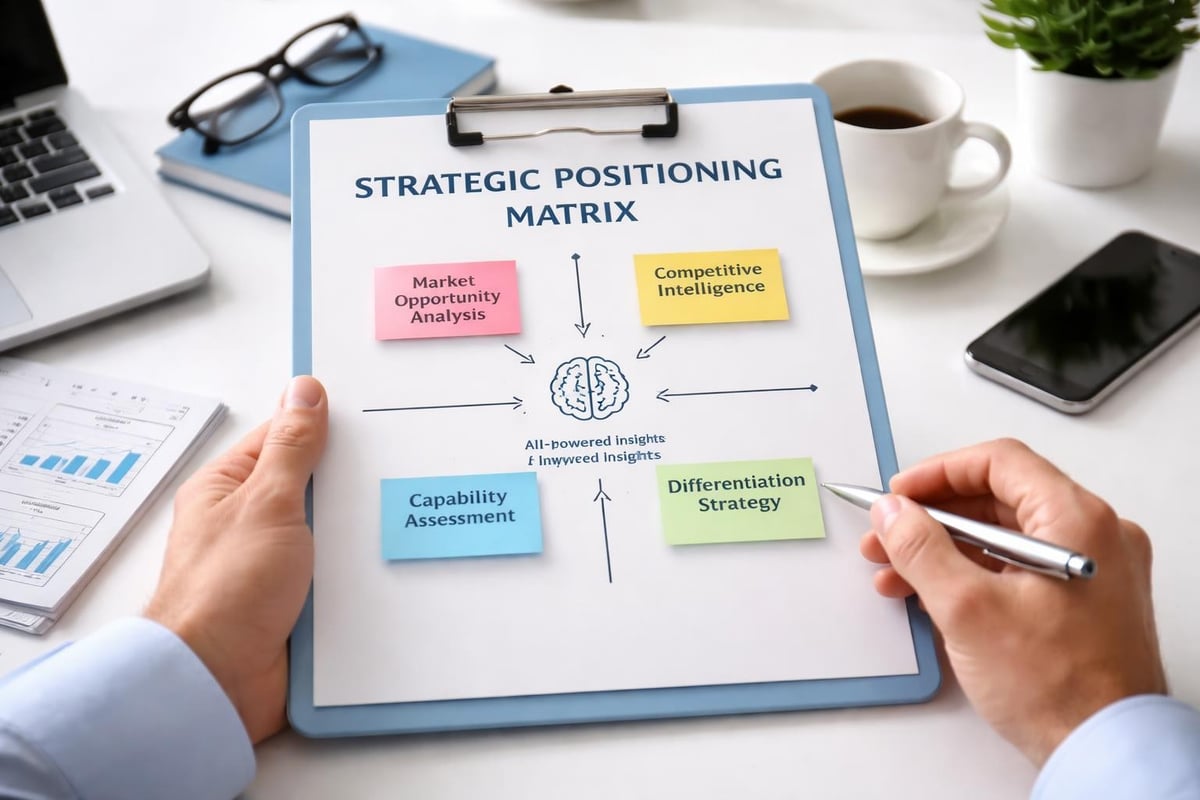
Sophisticated ai management consulting approaches combine automated monitoring with expert interpretation to distinguish between temporary market fluctuations and fundamental shifts requiring strategic response. This combination of machine efficiency and human judgment creates more resilient strategies.
Measuring Impact and ROI
Demonstrating tangible value from ai management consulting engagements requires robust measurement frameworks that track both immediate outcomes and long-term strategic impact. Traditional consulting metrics focused on deliverable completion and client satisfaction, but AI-enabled consulting demands more rigorous outcome measurement.
Performance Metrics and KPIs
Organizations should establish clear performance indicators before initiating AI consulting engagements. These metrics might include revenue growth rates, market share gains, customer acquisition costs, innovation pipeline metrics, or operational efficiency improvements.
| Metric Category | Traditional Baseline | AI-Enhanced Target | Measurement Frequency |
|---|---|---|---|
| Time to market | 12-18 months | 6-9 months | Quarterly |
| Customer insight depth | Survey-based segments | Behavioral micro-segments | Continuous |
| Strategy validation cycles | Annual planning | Real-time scenario testing | Monthly |
| Innovation success rate | 15-20% | 35-45% | Per initiative |
| Competitive intelligence coverage | Quarterly reports | Daily automated updates | Continuous |
The shift toward outcome-based pricing models means consulting firms share accountability for results. This alignment of incentives creates stronger partnerships where consultants remain engaged in implementation and optimization rather than simply delivering recommendations.
Integration with Existing Strategic Frameworks
AI management consulting doesn't replace proven strategic frameworks but enhances them with data-driven insights and predictive capabilities. Frameworks for innovation remain foundational, but AI augments their application with unprecedented analytical power.
Enhancing Traditional Strategy Tools
Classic tools like SWOT analysis, Porter's Five Forces, and value chain mapping gain new dimensions when powered by AI. Machine learning algorithms can identify subtle competitive threats, emerging opportunities, and value creation possibilities that manual analysis might miss.
The combination of structured strategic thinking and AI-powered insight generation creates more comprehensive and actionable strategies. Consultants who master this integration deliver superior value compared to those relying solely on traditional methods or those who treat AI as a standalone capability.
Client-Centric AI Deployment
Client centricity takes on new meaning in AI-enabled consulting. Beyond understanding client needs, firms can now predict future challenges, proactively identify opportunities, and customize solutions with unprecedented precision.
AI systems can analyze client-specific data, industry trends, and broader economic indicators to generate tailored recommendations that reflect each organization's unique context, capabilities, and strategic objectives. This level of customization was previously impossible at scale.
Future Trajectories in AI Management Consulting
The evolution of ai management consulting continues to accelerate as new AI capabilities emerge and organizations become more sophisticated in their strategic AI deployment. Looking ahead, several trends will shape the consulting landscape.
Emerging developments include:
- Autonomous strategy generation systems that propose complete strategic plans for human review
- Virtual consulting assistants that provide 24/7 strategic guidance to client teams
- Predictive market modeling that forecasts industry disruptions years in advance
- AI-powered merger and acquisition target identification and due diligence
- Automated innovation portfolio optimization based on real-time performance data
These advancements won't replace human consultants but will fundamentally alter their role. Strategic advisors will focus increasingly on judgment, creativity, relationship building, and change leadership while AI handles data processing, pattern recognition, and scenario analysis.
The consulting firms that thrive will be those that successfully blend technological capabilities with deep industry expertise, strategic creativity, and genuine partnership with clients. This combination creates value that neither pure technology providers nor traditional consultants can match independently.
AI management consulting represents a fundamental evolution in how organizations approach strategy, innovation, and growth in an increasingly complex business environment. By combining advanced AI capabilities with proven strategic frameworks and deep industry expertise, businesses can identify opportunities, validate strategies, and execute transformations with unprecedented speed and precision. Six Paths Consulting empowers ambitious leaders to harness AI-powered strategic innovation for discovering new markets, developing breakthrough business models, and building the internal capabilities needed to sustain competitive advantage in the AI-driven future.