

Organizations seeking sustainable competitive advantage increasingly recognize that external expertise must be complemented by internal capability development. The strategic integration of consulting and training has emerged as a critical approach for businesses aiming to transform their operations, embrace innovation, and build lasting organizational competencies. This dual approach enables companies to solve immediate challenges while simultaneously developing the skills needed to navigate future disruptions independently. As the business landscape continues to evolve with artificial intelligence and digital transformation reshaping entire industries, the relationship between expert consultation and comprehensive training programs has become more symbiotic than ever before.
The Evolution of Consulting and Training in 2026
The consulting industry has undergone significant transformation over the past decade, with training programs becoming an integral component rather than an afterthought. Modern consulting engagements now prioritize knowledge transfer and capability building as core deliverables alongside strategic recommendations. This shift reflects a fundamental change in how organizations view consultant relationships, moving from dependency models to partnership frameworks that emphasize empowerment.
Today's consulting and training landscape is shaped by several converging forces. The integration of generative AI and specialized expertise has created new opportunities for consultants to deliver both strategic insights and hands-on learning experiences. Organizations no longer seek consultants who simply provide reports; they demand partners who can transfer knowledge effectively and build internal teams capable of sustaining innovation long after the engagement concludes.
Why Organizations Invest in Combined Approaches
The business case for integrating consulting and training stems from multiple strategic imperatives. Companies face increasing pressure to innovate while managing costs, creating a natural tension between hiring external experts and developing internal capabilities. This dynamic has accelerated the demand for consulting models that explicitly include training components.
Key drivers behind consulting and training investments include:
- Rapid technology adoption requiring new skills across the organization
- Competitive pressures demanding faster innovation cycles
- Need for sustainable competitive advantages that can't be easily replicated
- Cost optimization through reduced dependency on external consultants
- Cultural transformation initiatives requiring widespread behavior change
Organizations that successfully implement consulting and training programs report measurable improvements in innovation outcomes, employee engagement, and long-term strategic agility. The global educational consulting and training market continues to expand as businesses recognize these benefits and prioritize capability development investments.
Designing Effective Consulting and Training Programs
Creating impactful consulting and training initiatives requires thoughtful design that balances theoretical knowledge with practical application. The most successful programs integrate multiple learning modalities, ensuring participants can immediately apply new concepts to their specific business challenges. This application-focused approach distinguishes transformative training from generic professional development offerings.
Core Components of Successful Programs
Effective consulting and training programs share several essential characteristics that drive meaningful outcomes. These elements work together to create learning experiences that stick and generate measurable business impact.
| Component | Purpose | Implementation Approach |
|---|---|---|
| Diagnostic Assessment | Identify capability gaps and strategic priorities | Stakeholder interviews, skills audits, strategic analysis |
| Customized Content | Align training with specific business challenges | Industry-specific case studies, relevant frameworks |
| Hands-on Workshops | Enable practical application of concepts | Facilitated sessions, simulation exercises, real project work |
| Ongoing Support | Ensure knowledge retention and application | Coaching sessions, resource materials, community platforms |
| Impact Measurement | Validate program effectiveness and ROI | Performance metrics, behavior tracking, business outcomes |
The consulting component provides the strategic direction and expert insights, while the training element ensures those insights become embedded organizational capabilities. This integration is particularly critical for innovation initiatives that require sustained effort and cultural change.
Leveraging AI in Consulting and Training
Artificial intelligence has become a powerful enabler for both consulting delivery and training effectiveness. AI-powered tools can analyze vast amounts of business data to identify strategic opportunities, while simultaneously personalizing learning pathways based on individual participant needs and progress. This dual application makes consulting and training programs more efficient and impactful.
Forward-thinking firms now incorporate AI tools directly into their training programs, teaching participants not just strategic frameworks but also how to leverage technology for ongoing innovation. This approach aligns with broader trends shaping the consulting industry, where technological proficiency has become inseparable from strategic competency.
Organizations can apply design thinking methodologies in training to create more engaging and effective learning experiences that mirror real-world innovation processes. This experiential approach helps participants internalize new capabilities more effectively than traditional lecture-based formats.
Building Internal Innovation Capabilities
The ultimate goal of consulting and training initiatives is to develop self-sufficient teams capable of driving continuous innovation. This capability building extends beyond individual skills to encompass organizational systems, processes, and culture. Sustainable innovation requires both the knowledge of what to do and the organizational infrastructure to support ongoing experimentation and improvement.
Structuring Training for Lasting Impact
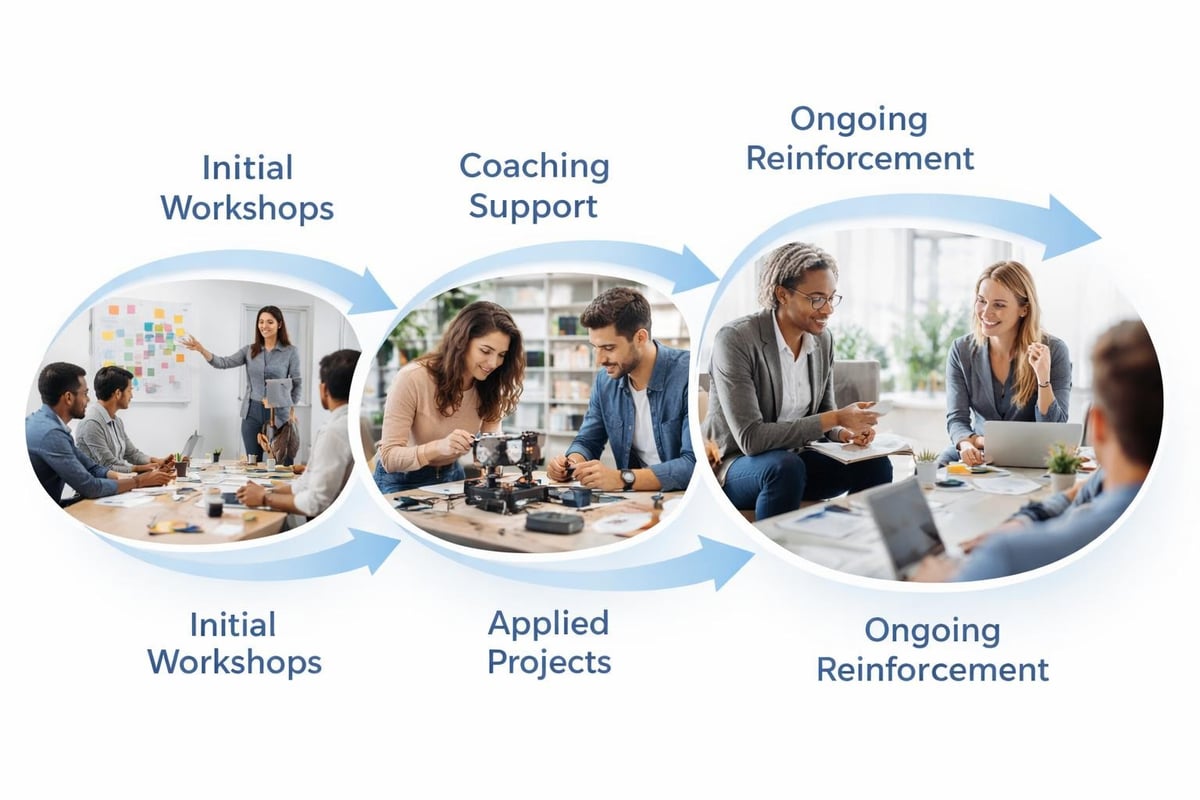
Lasting capability development demands more than one-time training events. Organizations must design learning journeys that span multiple touchpoints and reinforce key concepts through varied experiences. This structured approach ensures knowledge moves from awareness to proficiency to mastery over time.
Essential elements of impactful training journeys include:
- Foundation workshops that establish common language and core frameworks
- Applied learning sessions where teams work on real business challenges
- Coaching and mentoring to support application in daily work
- Peer learning communities that enable knowledge sharing and problem-solving
- Refresher sessions that reinforce concepts and introduce advanced techniques
- Measurement checkpoints that track progress and identify additional support needs
Organizations benefit from using proven management consulting tools within their training programs, giving participants frameworks they can immediately apply to their strategic challenges. This practical focus accelerates capability development and demonstrates tangible value.
Training Internal Teams to Maximize Consultant Value
When organizations do engage external consultants, properly trained internal teams can extract significantly more value from these relationships. The best practices for training internal teams to work with consultants emphasize preparation, active participation, and knowledge capture as critical success factors.
Internal teams trained in strategic thinking and innovation methodologies engage more productively with consultants, asking better questions and challenging assumptions constructively. This collaborative dynamic leads to richer insights and more actionable recommendations. Additionally, trained teams can better evaluate consultant proposals and select partners whose expertise genuinely complements internal capabilities.
Strategic Applications Across Business Functions
Consulting and training programs deliver value across multiple organizational functions, each with unique requirements and success metrics. While innovation initiatives often receive the most attention, the principles apply equally to operations, marketing, finance, and other critical business areas.
Innovation and Growth Initiatives
Innovation-focused consulting and training programs help organizations systematically discover and develop opportunities for innovation across their value chains. These programs typically combine strategic frameworks like Blue Ocean Strategy with hands-on workshops where teams identify uncontested market spaces and develop differentiated offerings.
Effective innovation training goes beyond ideation to encompass the full innovation lifecycle, including concept development, business model design, prototyping, testing, and scaling. Participants learn to apply business model innovation principles to create new revenue streams and competitive advantages.
Strategic Transformation Programs
Organizations undergoing significant strategic shifts require consulting and training support to navigate transitions successfully. These programs help leaders communicate vision, middle managers translate strategy into action, and frontline employees understand their roles in the transformation. The consulting component provides the strategic roadmap, while training ensures widespread capability to execute.
Strategic transformation initiatives benefit from combining external expertise with internal innovation capabilities to ensure changes stick beyond the initial implementation phase. This approach creates self-reinforcing transformation momentum rather than dependency on external support.
Measuring Consulting and Training Impact
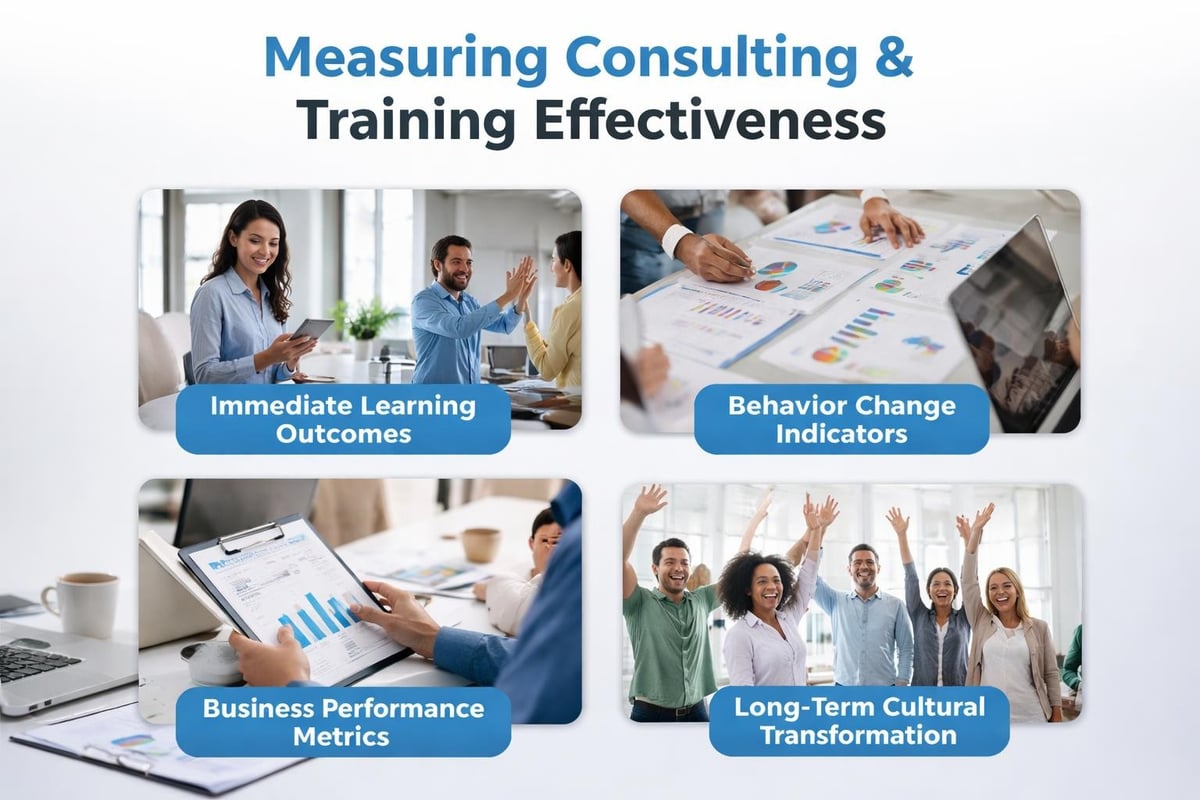
Demonstrating tangible return on investment remains a critical challenge for consulting and training programs. Organizations need robust measurement frameworks that track both immediate learning outcomes and long-term business impact. This dual focus ensures programs deliver value while continuously improving based on evidence.
Quantitative and Qualitative Metrics
Comprehensive measurement approaches combine hard metrics with softer indicators of capability development and cultural change. This balanced perspective provides a complete picture of program effectiveness.
| Metric Category | Example Measures | Data Collection Method |
|---|---|---|
| Learning Outcomes | Knowledge assessments, skill demonstrations, certification rates | Tests, practical exercises, evaluations |
| Behavior Change | Application of tools, innovation activity, collaboration patterns | Observation, self-reports, peer feedback |
| Business Results | Revenue growth, cost savings, time-to-market, customer satisfaction | Financial systems, operational metrics, surveys |
| Cultural Impact | Innovation mindset, risk tolerance, cross-functional collaboration | Culture surveys, focus groups, retention data |
The importance of measuring success and impact through both quantitative and qualitative metrics ensures consulting and training investments receive appropriate scrutiny while allowing for the reality that some benefits manifest gradually over time.
Continuous Improvement Cycles
High-performing consulting and training programs incorporate regular feedback loops and iterative refinement. This continuous improvement mindset mirrors the innovation capabilities these programs aim to develop, creating alignment between program design and intended outcomes.
Organizations should establish baseline measurements before program launch, track progress at regular intervals, and conduct comprehensive reviews at program completion and six-month follow-ups. This longitudinal approach reveals whether capability development persists and continues generating value over time.
Selecting the Right Consulting and Training Partners
Choosing appropriate consulting and training partners significantly impacts program success. Organizations must evaluate potential partners across multiple dimensions, including industry expertise, training methodology, cultural fit, and track record of sustainable impact.
Critical Selection Criteria
When evaluating consulting and training providers, organizations should look beyond credentials and presentations to assess real capability to deliver transformative outcomes. The right partner combines deep domain expertise with proven training design skills and a genuine commitment to knowledge transfer.
Key factors in partner selection include:
- Relevant experience in your industry and with similar organizational challenges
- Training philosophy that emphasizes application and capability building over information delivery
- Methodological rigor grounded in proven frameworks and best practices
- Flexibility to customize content and approach based on your specific needs
- Technology integration that leverages modern tools to enhance learning and application
- Post-program support structures that extend beyond initial training delivery
Organizations benefit from reviewing case studies and speaking with references to understand how potential partners have delivered consulting and training programs to similar clients. This due diligence reveals whether partners can walk the talk regarding capability building and sustainable impact.
Building Long-Term Partnerships
The most valuable consulting and training relationships evolve from transactional engagements to strategic partnerships. These enduring relationships enable consultants to develop deep understanding of organizational context, making subsequent programs more targeted and effective. Long-term partners become trusted advisors who can anticipate needs and proactively recommend capability development initiatives.
Emerging Trends Shaping the Future
The consulting and training landscape continues to evolve in response to technological advances, changing workforce expectations, and shifting business priorities. Organizations that stay ahead of these trends can design programs that remain relevant and impactful despite rapid external change.
Specialization and Niche Expertise
The trend toward specialized, niche consulting reflects client demand for deep expertise in specific domains rather than generalist advisory services. This specialization extends to training programs, with organizations seeking partners who understand the unique challenges and opportunities within their industries. Innovative ideas for business growth increasingly come from specialists who combine industry knowledge with strategic frameworks.
Hybrid and Digital Delivery Models
While in-person workshops retain value for certain activities, consulting and training programs increasingly incorporate digital components to enhance flexibility and accessibility. Hybrid models combine the best of both approaches, using technology to extend program reach while preserving face-to-face interaction for high-value collaborative work.
Digital platforms enable asynchronous learning, just-in-time resource access, and community building that extends program impact beyond scheduled sessions. These capabilities make consulting and training programs more adaptable to diverse learning styles and organizational constraints.
Integration with Ongoing Operations
Rather than treating consulting and training as separate initiatives, leading organizations embed capability development within ongoing operations. This integration might include innovation sprints that combine consulting guidance with hands-on training, or regular learning sessions built into project rhythms. This approach normalizes continuous learning and reduces the artificial separation between "doing work" and "learning how to work better."
Overcoming Common Implementation Challenges
Even well-designed consulting and training programs encounter obstacles during implementation. Anticipating and planning for common challenges increases the likelihood of successful outcomes and sustained impact.
Addressing Resistance and Skepticism
Employees who have experienced ineffective training in the past may approach new programs with skepticism. Overcoming this resistance requires demonstrating early value, involving participants in program design, and creating visible leadership support. Consulting and training initiatives succeed when participants see clear connections between program content and their daily challenges.
Organizations can build credibility by starting with pilot programs that deliver quick wins before scaling across the organization. These proof points help build momentum and overcome institutional resistance to change.
Ensuring Time and Resource Commitment
Capability development requires sustained time investment from participants, which can conflict with operational pressures. Successful programs explicitly address this tension by aligning training timing with business cycles, designing efficient learning experiences, and securing leadership commitment to protect participant time.
The most effective consulting and training approaches integrate learning into the flow of work rather than adding it as a separate burden. This integration might include applying new frameworks to current projects during training sessions or scheduling coaching conversations around existing meetings.
Maintaining Momentum Beyond Initial Enthusiasm
Initial program excitement often fades as participants return to daily routines and competing priorities. Sustaining momentum requires deliberate design choices including spaced learning sessions, accountability structures, visible celebration of wins, and ongoing executive engagement. Organizations that build these elements into program architecture see significantly higher rates of lasting behavior change.
Strategic consulting and training programs represent powerful levers for building organizational innovation capabilities and driving sustainable competitive advantage. By combining expert insights with structured capability development, organizations can solve immediate challenges while building the internal competencies needed for long-term success. Six Paths Consulting specializes in designing and delivering integrated consulting and training programs that empower leaders to drive innovation, discover new market opportunities, and build lasting capabilities through AI-powered strategic methodologies. Connect with us to explore how we can help your organization accelerate growth through customized consulting and training solutions.