

Choosing the right consulting partner can define the trajectory of your business growth. The global consulting industry continues to expand, with technology consulting revenues expected to surpass $400 billion in 2026, reflecting unprecedented demand for strategic guidance and innovation capabilities. Top business consulting companies combine deep industry expertise with advanced methodologies to help organizations navigate market complexity, unlock new revenue streams, and build sustainable competitive advantages. Whether you're seeking digital transformation support, innovation strategy development, or operational excellence, understanding what distinguishes leading consulting firms enables better partner selection and project outcomes.
What Defines Top Business Consulting Companies
Leading consulting firms distinguish themselves through specific capabilities that extend beyond traditional advisory services. These organizations invest heavily in proprietary methodologies, cutting-edge research, and industry-specific knowledge that creates measurable client value.
Core differentiators include:
- Proven track record of revenue growth and profitability improvements across diverse industries
- Specialized expertise in emerging technologies like artificial intelligence and machine learning
- Global delivery capabilities with local market knowledge
- Thought leadership that shapes industry conversations and best practices
- Long-term partnership approaches rather than transactional engagements
The most successful firms balance strategic thinking with tactical execution. They don't just deliver recommendations; they work alongside leadership teams to implement solutions and build internal capabilities.
Service Specializations That Matter
Top business consulting companies typically organize their offerings around client needs rather than rigid service categories. Strategy consulting addresses fundamental questions about market positioning, competitive advantage, and growth direction. Innovation consulting helps organizations develop new products, services, and business models that create differentiated value.
Specialized firms like Six Paths Consulting focus specifically on AI-powered strategic innovation, recognizing that today's competitive landscape requires both strategic clarity and technological sophistication. This focused approach often delivers superior results compared to generalist firms attempting to cover all services.
Leading Global Consulting Powerhouses
The most recognized names in consulting have built their reputations over decades of client service across industries and geographies. These firms offer comprehensive capabilities that address virtually any business challenge.
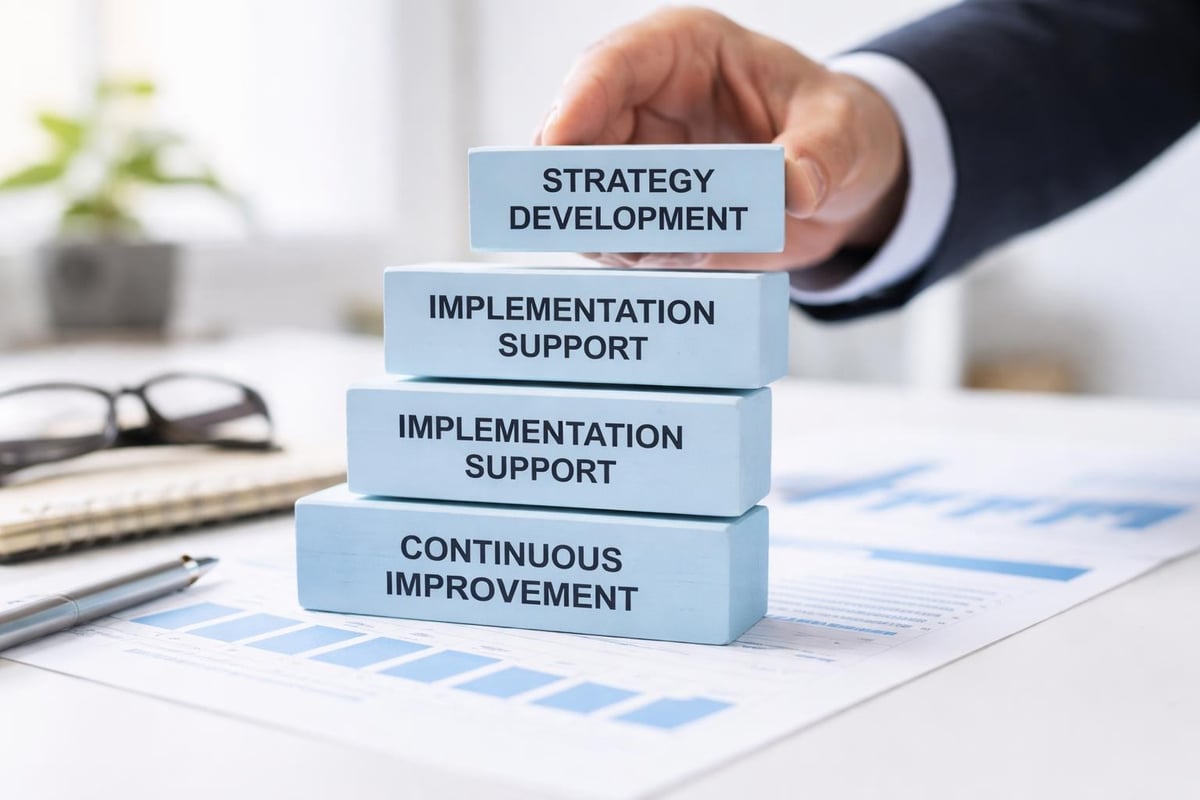
McKinsey & Company stands as perhaps the most influential management consulting firm globally, known for rigorous analytical approaches and deep industry expertise. Their work spans corporate strategy, operational transformation, and organizational design. Boston Consulting Group (BCG) brings similar breadth with particular strength in innovation strategy and digital transformation initiatives.
Bain & Company emphasizes results-oriented engagements with performance-based pricing models in some cases. Their private equity practice has become especially prominent, helping investment firms evaluate acquisition targets and improve portfolio company performance.
Deloitte Consulting, PwC Advisory, EY Consulting, and KPMG Advisory collectively represent the "Big Four" accounting firms' consulting arms. These organizations combine traditional strategy work with deep implementation capabilities in technology, risk management, and regulatory compliance.
| Firm Category | Key Strengths | Typical Engagement Types |
|---|---|---|
| Strategy Houses | Deep analytical rigor, CEO-level access | Corporate strategy, market entry, M&A |
| Big Four Advisory | Implementation scale, technology integration | Digital transformation, ERP deployment, compliance |
| Specialized Boutiques | Domain expertise, innovation focus | New product development, business model innovation, market research |
Specialized and Boutique Consulting Firms
While global powerhouses dominate headlines, specialized consulting firms often deliver superior value for specific needs. These organizations build concentrated expertise in particular industries, functional areas, or methodologies.
Roland Berger exemplifies the successful European strategy boutique model, combining strategic advisory with strong implementation support. EY-Parthenon, the strategy consulting division of Ernst & Young, brings transaction-oriented strategy expertise alongside broader EY capabilities.
Innovation-focused firms represent a growing segment among top business consulting companies. These specialists help organizations develop breakthrough products, services, and business models that create new market space. Key innovation consulting services include:
- Blue ocean strategy development to identify uncontested market opportunities
- Design thinking workshops to generate customer-centric solutions
- Business model innovation to create new revenue streams
- New product development processes from concept to launch
- Innovation capability building through training and coaching
Firms specializing in strategy and transformation recognize that sustainable competitive advantage increasingly comes from innovation capability rather than operational efficiency alone. This shift has elevated the importance of consultants who combine strategic thinking with creative problem-solving methodologies.
Industry-Specific Expertise
Top business consulting companies increasingly organize around industry verticals to develop concentrated expertise. Healthcare consulting requires understanding of regulatory frameworks, reimbursement models, and clinical workflows. Financial services consulting demands knowledge of risk management, regulatory compliance, and digital banking trends.
Technology sector consulting focuses on rapid scaling, product-market fit, and ecosystem strategy. Manufacturing consulting addresses Industry 4.0 transformation, supply chain optimization, and sustainability initiatives. Firms serving multiple industries develop transferable methodologies while maintaining deep sector knowledge.
Emerging Trends Reshaping the Consulting Industry
The consulting landscape continues to evolve rapidly as client needs shift and new capabilities become essential. Current trends shaping the industry include artificial intelligence integration, outcome-based pricing, and democratized expertise delivery.
Artificial intelligence transformation represents the most significant consulting opportunity in decades. Organizations need guidance on AI strategy development, use case identification, implementation roadmaps, and capability building. Leading firms now offer AI consulting services that combine strategic thinking with technical expertise.
Personalization and Customization
Generic recommendations no longer satisfy sophisticated clients. Top business consulting companies now deliver highly customized solutions tailored to specific organizational contexts, cultures, and capabilities. This personalization extends beyond analysis to include implementation support and capability transfer.
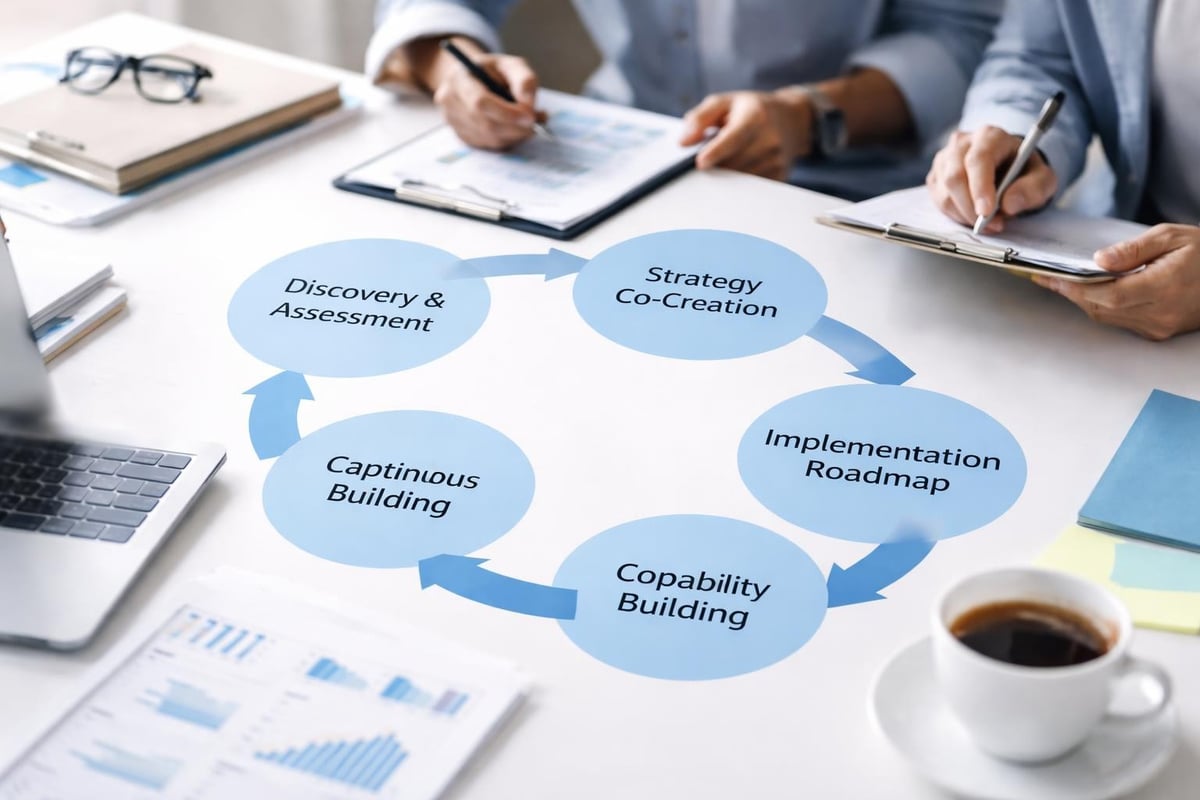
Data-driven insights enable unprecedented customization. Consultants now analyze client-specific data to generate recommendations grounded in actual performance patterns rather than industry benchmarks alone. Advanced analytics identify optimization opportunities invisible to traditional analysis methods.
The shift toward business model innovation requires consultants to move beyond efficiency improvements toward fundamental reinvention. This approach questions core assumptions about value creation, delivery, and capture to identify transformational opportunities.
Digital Capabilities and Technology Integration
Digital transformation consulting has evolved from niche specialty to core offering across top business consulting companies. Key trends in 2026 emphasize cloud-native architectures, ecosystem orchestration, and AI-augmented decision making.
Consultants now help clients develop comprehensive digital strategies that align technology investments with business objectives. This work includes:
- Platform strategy development for ecosystem business models
- Cloud migration roadmaps balancing speed, cost, and risk
- Customer experience transformation across digital touchpoints
- Data strategy and governance frameworks
- Cybersecurity and risk management approaches
Technology consulting increasingly intersects with innovation consulting as digital capabilities enable new business models. Organizations leveraging technology and consulting together achieve superior outcomes compared to treating these domains separately.
Sustainability and ESG Integration
Environmental, social, and governance considerations now influence every aspect of business strategy. Top business consulting companies help organizations develop sustainability strategies that create competitive advantage rather than merely ensuring compliance.
Leading firms integrate ESG factors into corporate strategy, operations design, and innovation pipelines. Sustainability consulting trends emphasize measurable impact, stakeholder alignment, and value creation through responsible business practices.
Climate strategy consulting addresses carbon reduction pathways, circular economy business models, and resilience building. Social impact consulting helps organizations strengthen community relationships and workforce engagement. Governance consulting ensures accountability mechanisms align with stakeholder expectations.
Evaluating Consulting Firms for Your Needs
Selecting among top business consulting companies requires systematic evaluation aligned with specific organizational priorities. The right partner for one situation may prove unsuitable for another based on capability fit, cultural alignment, and engagement approach.
Critical evaluation criteria include:
- Relevant experience in your industry, geography, and challenge type
- Methodology alignment with your organizational culture and decision-making style
- Team composition including partner involvement and junior consultant capabilities
- Value proposition articulating expected outcomes and success metrics
- Pricing structure reflecting fair value and risk-sharing where appropriate
Request case studies demonstrating relevant experience and measurable results. Interview proposed team members to assess expertise depth and communication effectiveness. Clarify engagement governance including decision rights, review cadences, and escalation processes.
| Evaluation Factor | Questions to Ask | Warning Signs |
|---|---|---|
| Relevant Experience | What similar challenges have you solved? What results did you achieve? | Vague generalities, lack of specific metrics |
| Methodology Fit | How will you approach our unique situation? What frameworks will you use? | Rigid templates, one-size-fits-all solutions |
| Team Quality | Who will work on our project day-to-day? What are their backgrounds? | Junior-heavy teams, frequent turnover |
| Value Commitment | How will we measure success? What guarantees do you offer? | No outcome focus, input-based pricing only |
Cultural and Strategic Alignment
Beyond technical capabilities, successful consulting engagements require cultural compatibility and strategic alignment. Firms with collaborative approaches work effectively with organizations valuing partnership. Directive consultants suit situations requiring rapid decision making and external authority.
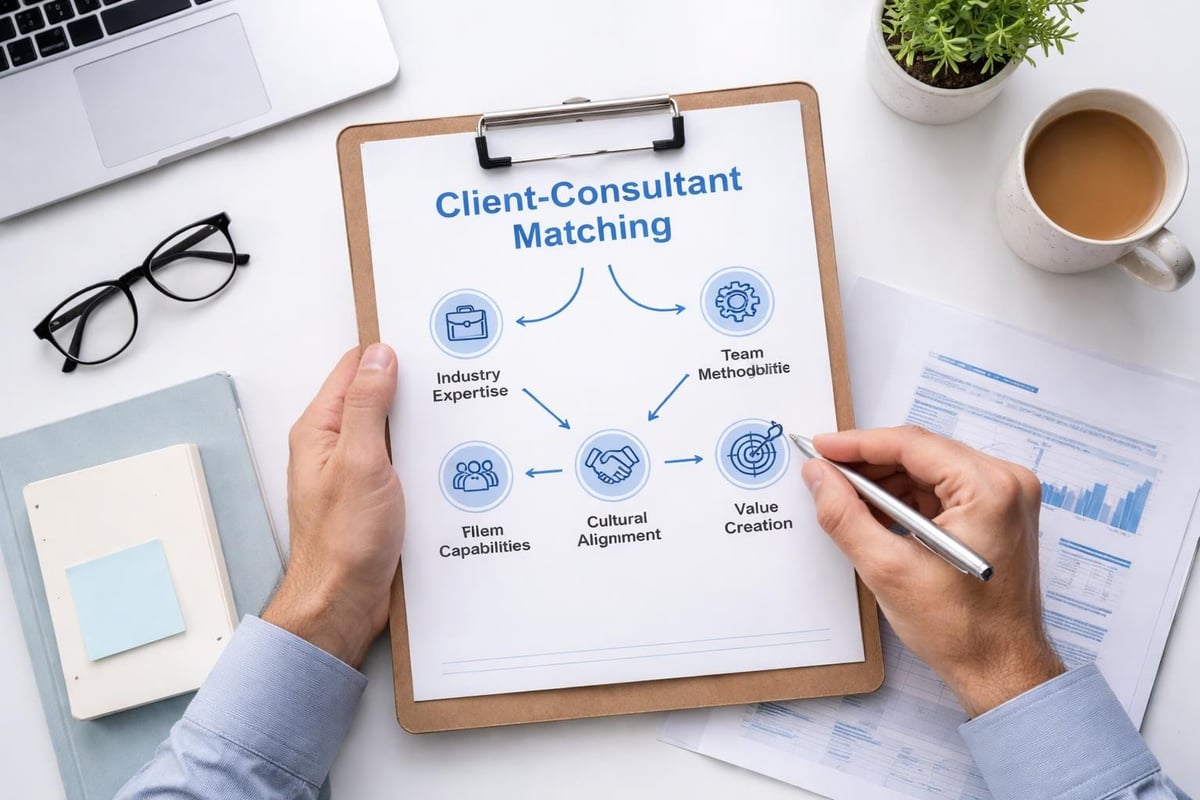
Strategic alignment ensures consulting recommendations support long-term vision rather than generating conflicting priorities. Firms specializing in revenue consulting understand that all initiatives must ultimately drive top-line growth and profitability.
Innovation Consulting as Competitive Differentiator
Among top business consulting companies, innovation specialists create distinctive value by helping organizations discover and exploit new growth opportunities. Traditional consulting often optimizes existing business models; innovation consulting fundamentally reimagines value creation.
New product development consulting accelerates time-to-market while reducing innovation risk through structured processes. Design thinking workshops generate customer insights that inform breakthrough solutions. Business model innovation identifies non-traditional revenue streams and competitive moats.
Innovation consulting deliverables typically include:
- Market opportunity assessments identifying white space and unmet needs
- Innovation strategy frameworks aligning projects with growth objectives
- Ideation facilitation generating diverse solution concepts
- Business case development quantifying value and investment requirements
- Implementation roadmaps detailing launch plans and success metrics
- Capability building programs transferring innovation expertise internally
Organizations building internal innovation capabilities achieve sustainable competitive advantage compared to those relying permanently on external consultants. Top firms therefore emphasize knowledge transfer and skill development throughout engagements.
Strategic Frameworks for Innovation
Leading innovation consultants leverage proven frameworks that structure creative thinking while maintaining flexibility for unique contexts. Business frameworks provide common language and analytical rigor to innovation processes.
Blue Ocean Strategy helps organizations create uncontested market space by simultaneously pursuing differentiation and low cost. Jobs-to-be-Done theory uncovers customer motivations beyond superficial preferences. Business Model Canvas enables rapid prototyping of value creation, delivery, and capture mechanisms.
These frameworks accelerate innovation while reducing execution risk. Organizations applying frameworks for innovation systematically outperform those relying solely on creative intuition.
Building Internal Capabilities Through Consulting Partnerships
The most valuable consulting engagements strengthen organizational capabilities beyond solving immediate challenges. Top business consulting companies increasingly position themselves as capability builders rather than merely problem solvers.
Capability transfer occurs through multiple mechanisms including training programs, co-working arrangements, and documented methodologies. Consultants working alongside client teams create learning opportunities superior to traditional advisory models. Consulting workshops provide concentrated skill development in specific domains.
Organizations developing strong internal capabilities reduce consulting dependency over time while maintaining relationships for specialized expertise and external perspective. This approach optimizes total cost of ownership while building strategic self-sufficiency.
Training and Development Programs
Structured training programs accelerate capability building across teams. Leading consulting firms offer customized curricula addressing specific organizational needs rather than generic content.
Effective training programs include:
- Executive workshops for leadership alignment and sponsorship
- Practitioner training building functional skills and methodologies
- Coaching and mentoring supporting on-the-job application
- Tools and templates enabling independent execution
- Community building fostering peer learning and best practice sharing
Firms specializing in capability building recognize that sustainable transformation requires behavioral change alongside strategic direction. Driving innovation systematically requires cultural evolution supporting experimentation and calculated risk-taking.
The Future of Business Consulting
The consulting industry continues evolving as client needs shift and new capabilities become table stakes. Successful firms anticipate these changes and develop offerings addressing emerging requirements.
Artificial intelligence will fundamentally reshape consulting delivery models. AI-augmented consultants leverage machine learning for data analysis, pattern recognition, and scenario modeling while focusing human expertise on strategic thinking and relationship building. This combination delivers superior outcomes at improved economics.
Platform-based consulting models democratize expertise access through digital channels. Organizations access frameworks, tools, and guidance without full-service engagements for appropriate situations. This approach expands consulting accessibility while creating new revenue models.
Outcome-based pricing aligns consultant and client interests through shared risk and reward. Rather than billing for time, firms increasingly tie compensation to measurable results including revenue growth, cost reduction, or capability development metrics. This shift requires confidence in methodologies and willingness to accept performance risk.
Industry specialization will intensify as generalist approaches prove insufficient for complex challenges. Firms developing deep domain expertise in specific sectors or functional areas create defensible competitive positions. Organizations seeking strategy experts increasingly prioritize relevant experience over brand recognition.
Selecting among top business consulting companies requires understanding your specific needs, evaluating firm capabilities systematically, and ensuring strategic and cultural alignment. The right consulting partner accelerates growth, builds competitive advantages, and strengthens organizational capabilities for sustained success. Six Paths Consulting helps ambitious leaders discover new market opportunities and develop innovative business models through AI-powered strategic innovation, combining rigorous frameworks with practical implementation support to drive measurable revenue growth and profitability.