

The demand for skilled business consultants continues to accelerate as organizations navigate increasingly complex market dynamics, technological disruption, and competitive pressures. Business consulting training has emerged as a critical pathway for professionals seeking to develop the strategic thinking, analytical capabilities, and client management skills necessary to drive meaningful organizational change. Whether you're building an internal consulting capability or preparing to enter the consulting field, structured training programs provide the frameworks, methodologies, and practical experience essential for success in this demanding profession.
The Foundation of Effective Business Consulting Training
Professional development in consulting extends far beyond theoretical knowledge. Successful business consulting training integrates analytical rigor with practical application, enabling consultants to diagnose complex business challenges and deliver actionable solutions.
Core Competencies Every Consultant Needs
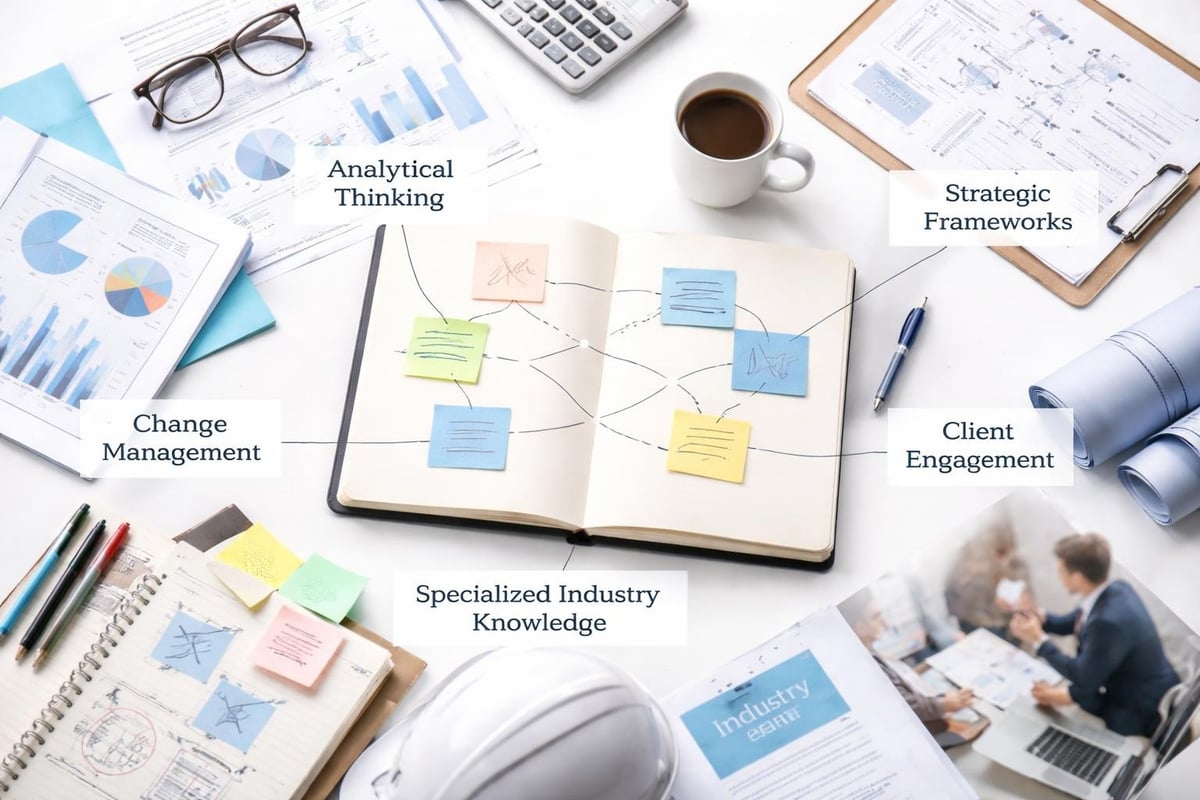
The modern consultant operates at the intersection of strategy, innovation, and execution. Training programs must address multiple skill dimensions simultaneously:
- Strategic analysis and problem-solving frameworks
- Data interpretation and insight generation
- Client relationship management and communication
- Change management and implementation expertise
- Industry-specific knowledge and market dynamics
Organizations like top innovation consulting firms recognize that consulting excellence requires both breadth and depth. Consultants need broad exposure to various industries and challenges while developing specialized expertise in specific domains.
Structured Learning Pathways
Formal training programs provide systematic skill development through carefully sequenced learning modules. These programs typically progress from foundational concepts to advanced applications, ensuring consultants build capabilities incrementally.
| Training Level | Focus Areas | Duration | Outcomes |
|---|---|---|---|
| Foundation | Consulting basics, frameworks, analysis | 4-8 weeks | Core methodology understanding |
| Intermediate | Client engagement, specialized tools | 8-12 weeks | Independent project capability |
| Advanced | Innovation, transformation, leadership | 12-16 weeks | Strategic advisory mastery |
Many professionals pursue business consulting courses and certifications to supplement workplace learning with structured academic content. These programs offer flexibility while maintaining rigor, allowing participants to learn at their own pace.
Developing Innovation-Focused Consulting Skills
Innovation consulting demands specialized capabilities beyond traditional strategic analysis. Consultants must facilitate creative thinking, identify emerging opportunities, and guide organizations through uncertain transformation journeys.
Innovation Methodologies and Frameworks
Effective business consulting training for innovation specialists incorporates proven methodologies that balance structure with creativity. Participants learn to apply frameworks that generate breakthrough insights while maintaining practical feasibility.
Design thinking represents a cornerstone methodology that consultants use to uncover customer needs and develop novel solutions. Through design thinking in training, professionals learn to facilitate ideation sessions, prototype rapidly, and test assumptions iteratively.
Key innovation frameworks covered in comprehensive training:
- Blue Ocean Strategy for discovering uncontested market spaces
- Jobs-to-be-Done for understanding customer motivations
- Business Model Canvas for designing innovative business models
- Lean Startup for validating concepts through experimentation
- Stage-Gate processes for managing innovation portfolios
These frameworks for innovation provide consultants with structured approaches to guide clients through ambiguous innovation challenges. Training programs emphasize when to apply each framework and how to adapt tools to specific client contexts.
Building AI-Powered Consulting Capabilities
The integration of artificial intelligence into consulting practice represents one of the most significant skill shifts in 2026. Business consulting training now includes modules on leveraging AI for enhanced analysis, pattern recognition, and strategic recommendation development.
Consultants learn to combine human judgment with machine intelligence, using AI tools to process vast datasets while maintaining the critical thinking necessary for contextual interpretation. This hybrid approach enables faster insights without sacrificing the nuanced understanding that separates exceptional consultants from average practitioners.
Client Engagement and Relationship Management
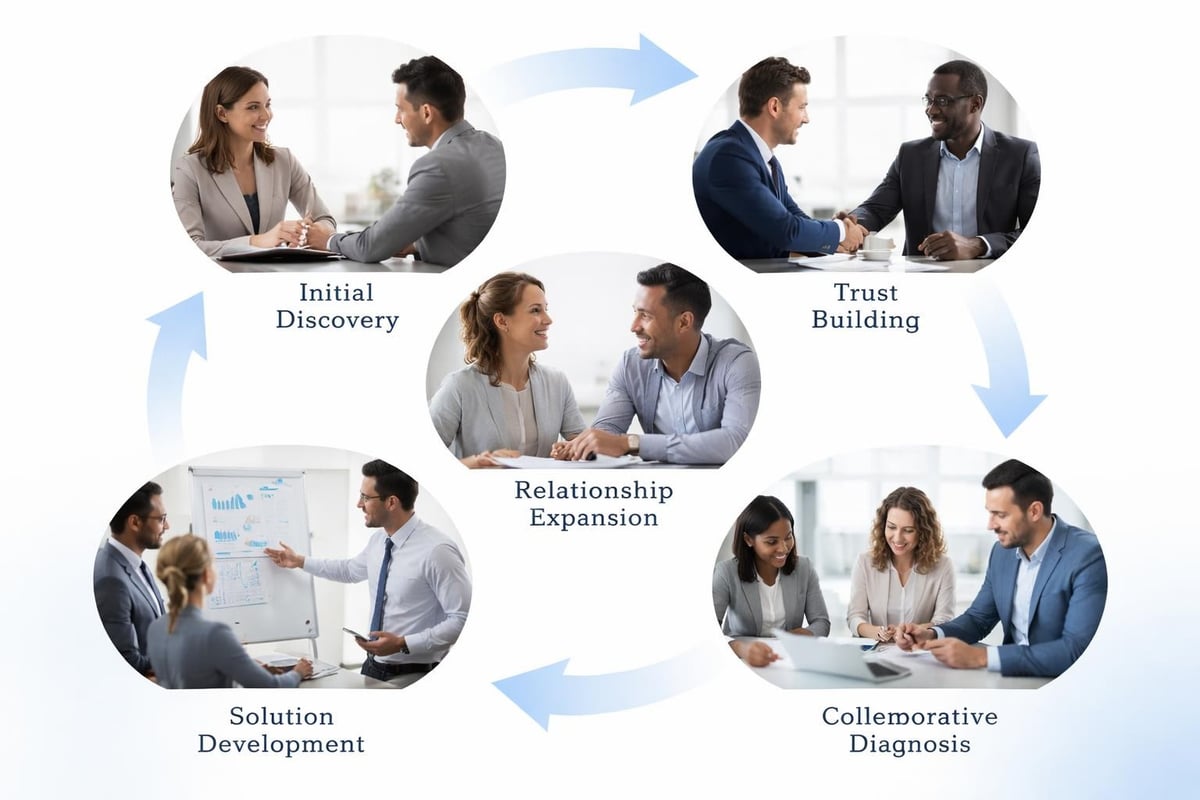
Technical expertise means little without the ability to engage clients effectively, build trust, and navigate organizational politics. Business consulting training must develop interpersonal competencies alongside analytical skills.
Communication Excellence
Consultants serve as translators, converting complex analysis into clear recommendations that diverse stakeholders can understand and act upon. Training programs emphasize multiple communication modes:
- Executive presentations that distill insights into decision-ready formats
- Workshop facilitation that engages teams in collaborative problem-solving
- Written reports that document findings with clarity and precision
- One-on-one coaching that builds client capability over time
The essential skills for business consultants include active listening, persuasive storytelling, and adaptive communication styles that resonate with different audience types.
Managing Challenging Client Dynamics
Every consulting engagement encounters obstacles. Effective training prepares consultants for common challenges:
- Resistance to change from stakeholder groups
- Political tensions between organizational factions
- Unrealistic client expectations about timelines or outcomes
- Resource constraints that limit implementation capacity
- Competing priorities that divert attention from strategic initiatives
Experienced trainers use case studies and role-playing exercises to help participants develop strategies for navigating these situations professionally. Learning to maintain objectivity while demonstrating empathy becomes crucial for long-term client relationships.
Specialized Domains Within Consulting
As organizations face increasingly complex challenges, consulting has fragmented into specialized practice areas. Business consulting training often allows participants to develop expertise in specific domains aligned with their interests and market demand.
Growth and Transformation Consulting
Consultants focused on revenue growth help clients identify new market opportunities, optimize pricing strategies, and design go-to-market approaches for new offerings. This specialization requires deep understanding of customer segmentation, competitive positioning, and sales channel dynamics.
Training in growth consulting covers:
- Market sizing and opportunity assessment methodologies
- Customer journey mapping and experience optimization
- Pricing psychology and value-based pricing models
- Sales process design and channel strategy development
- Growth experimentation and rapid testing frameworks
Business Model Innovation
The ability to reimagine how organizations create, deliver, and capture value represents a high-impact consulting capability. Business model innovation training teaches consultants to challenge fundamental assumptions about industry structure and competitive dynamics.
Participants learn to identify when incremental improvements prove insufficient and transformational change becomes necessary. They develop skills in facilitating leadership teams through the uncomfortable process of questioning their current business logic and exploring radically different approaches.
Building Internal Consulting Capabilities
Organizations increasingly recognize the value of developing internal innovation capabilities rather than relying exclusively on external consultants. Business consulting training for internal teams follows a different trajectory than programs designed for consulting firm employees.
Adapting Consulting Skills for Internal Roles
Internal consultants navigate unique challenges that external advisors rarely face. They must balance objectivity with organizational loyalty, maintain credibility despite lacking external authority, and sustain relationships across multiple projects with the same stakeholders.
Distinctive aspects of internal consulting training:
| External Consultants | Internal Consultants |
|---|---|
| Project-based relationships | Ongoing stakeholder management |
| Clear entry and exit points | Continuous organizational presence |
| Authority from expertise and objectivity | Influence through relationships and track record |
| Broad industry exposure | Deep organizational knowledge |
| Fresh perspective advantage | Context and history understanding |
Training programs for internal teams emphasize political navigation, sustained influence without authority, and balancing multiple competing requests from internal clients. These professionals become strategic assets when properly developed through targeted business consulting training.
Creating Sustainable Innovation Systems
Beyond individual project execution, internal consultants often lead efforts to build organizational innovation capabilities. This involves designing processes, establishing governance structures, and cultivating innovation mindsets throughout the enterprise.
Training for this systems-level work includes change management principles, organizational design concepts, and metrics development for tracking innovation performance over time. Participants learn to move beyond individual projects toward creating self-sustaining innovation ecosystems.
Practical Application and Experiential Learning
The gap between knowing consulting frameworks and applying them effectively in real situations can only be bridged through practice. Comprehensive business consulting training incorporates experiential elements that simulate authentic consulting challenges.
Case Study Analysis and Problem Solving
Real-world cases provide rich learning environments where participants analyze complex situations, develop recommendations, and defend their approaches against scrutiny. Effective case-based learning mirrors actual consulting work:
- Ambiguous problem statements requiring clarification and scoping
- Incomplete information necessitating assumptions and hypotheses
- Multiple viable solution paths with different trade-offs
- Stakeholder perspectives that conflict or compete
- Implementation considerations that constrain theoretical ideals
Through repeated case analysis, consultants develop pattern recognition abilities that accelerate diagnosis in future engagements. They learn to identify analogous situations and adapt proven approaches to new contexts.

Mentorship and Peer Learning
Consulting remains partially an apprenticeship profession despite increasing codification of methodologies. Business consulting training benefits enormously from mentorship components where experienced practitioners share tacit knowledge accumulated through years of client work.
Peer learning also accelerates development. Cohort-based training programs create communities where participants share perspectives, challenge assumptions, and learn from each other's experiences. These relationships often extend beyond formal training periods, providing ongoing professional networks.
Measuring Training Effectiveness and ROI
Organizations investing in business consulting training rightfully expect tangible returns. Measuring training impact requires both quantitative metrics and qualitative assessments.
Performance Indicators for Training Programs
Effective evaluation tracks multiple dimensions of training effectiveness:
- Knowledge acquisition through pre and post-training assessments
- Skill application measured through project performance reviews
- Client satisfaction scores for consultants post-training
- Revenue impact from improved consultant productivity
- Employee retention rates among trained consultants
Organizations developing internal capabilities should track how training translates into measurable business outcomes. Did trained employees identify new growth opportunities? Did innovation projects achieve faster time-to-market? These outcome metrics justify continued investment in capability development.
Continuous Learning and Skill Refreshment
The consulting field evolves rapidly as new methodologies emerge, technologies advance, and market dynamics shift. Business consulting training cannot be a one-time event but must constitute an ongoing commitment to professional development.
Many firms establish continuous learning cultures where consultants regularly update skills through workshops, conferences, online courses, and self-directed study. Finding authoritative sources becomes essential for consultants committed to staying current with industry best practices and emerging trends.
Selecting the Right Training Program
The proliferation of consulting training options creates both opportunity and confusion. Professionals seeking business consulting training must evaluate programs based on multiple criteria aligned with their development goals.
Program Selection Criteria
Reputation and Credibility: Training providers with strong industry recognition and experienced faculty typically deliver higher quality instruction. Research program alumni outcomes and employer partnerships when evaluating options.
Curriculum Alignment: Ensure program content matches your specific development needs. Innovation consulting requires different emphases than operations consulting or financial advisory work.
Learning Format and Flexibility: Consider whether synchronous classroom learning, asynchronous online modules, or hybrid formats best suit your schedule and learning preferences. Many professionals explore free and low-cost consulting training options before committing to intensive programs.
Practical Application Opportunities: Programs incorporating real projects, simulations, or client work provide more valuable preparation than purely theoretical instruction.
Network and Community: The relationships formed during training often prove as valuable as the content itself. Evaluate the caliber of fellow participants and ongoing alumni engagement.
Integration with Strategic Frameworks
Superior business consulting training connects tactical skills with strategic thinking frameworks that guide high-level decision making. Consultants must operate comfortably at both detailed and conceptual levels.
Strategic Analysis Tools
Training programs covering management consulting tools equip consultants with analytical frameworks for evaluating competitive position, industry attractiveness, and strategic options. These tools provide structured approaches to complex strategic questions.
Porter's Five Forces, SWOT analysis, PESTLE frameworks, and value chain analysis represent foundational tools that every consultant should master. Advanced training explores how to combine multiple frameworks for comprehensive strategic assessment.
Connecting Strategy to Execution
The strategy-execution gap challenges many organizations. Effective consultants not only develop brilliant strategies but also design implementation roadmaps that translate ambition into reality. Training must address this critical connection between thinking and doing.
Participants learn to develop actionable recommendations that account for organizational capabilities, resource constraints, and change readiness. They practice breaking transformational visions into sequenced initiatives with clear ownership and milestones.
Business consulting training represents a strategic investment in professional capability development, equipping individuals and organizations with the skills to navigate complex challenges, drive innovation, and deliver measurable results. As the consulting landscape evolves with AI integration and specialized practice areas, continuous learning becomes essential for maintaining relevance and impact. Six Paths Consulting helps organizations build these critical capabilities through comprehensive training programs that combine strategic frameworks with practical application, empowering teams to identify growth opportunities and execute innovation initiatives that drive sustainable competitive advantage.